Book Review: “Searching for the Last Anglo-Saxon King: Harold Godwinson, England’s Golden Warrior” by Paula Lofting

We all know the story of William the Conqueror and the Norman Conquest. William claimed he was the heir of Edward the Confessor instead of his rival Harold Godwinson. Harold was seen as a villain throughout history thanks to the Norman sources, but what was the historical Harold Godwinson like? Was he a malicious usurper who had to die at the Battle of Hastings for the rightful King William I to take the throne or is there more to his story than his death? Paula Lofting scoured the archives to find the truth about this maligned man in her book, “Searching for the Last Anglo-Saxon King: Harold Godwinson, England’s Golden Warrior.”

I want to thank Paula Lofting and Pen and Sword Books for sending me a copy of this book. I will be honest I am not super familiar with the life of Harold Godwinson other than his role in the Battle of Hastings and from the book “The House of Godwin” by Michael John Key. It’s been a while since I dived into the story of the Godwin family and the Norman Conquest, so I was hoping to learn something new about Harold Godwinson.

Harold Godwinson was King of England for only nine months and nine days, but he left quite an impact. What makes him an interesting character is how he rose to the position of power to become a king. It all had to do with his family connections. Lofting lays out the origins of the Godwins, especially Harold’s father Earl Godwin. What makes the Godwin family is that Harold’s father Godwin and his brother Tostig would end up in exile or an enemy to the crown numerous times and yet it was Harold, his brother-in-law, who Edward chose to succeed him due to his loyalty and his strengths.

Then, in walks William Duke of Normandy, the illegitimate son of Robert Duke of Normandy, who not only became the new Duke of Normandy but desired the crown of England. Well, the only thing Harold could do was defend England from this invasion. Lofting goes into great detail about the multiple battles that were fought the most famous one, the Battle of Hastings, where King Harold died. She also goes into detail about the theories about where Harold Godwinson might have been buried after the battle.

As someone who is a relative novice to this subject, I found myself getting lost while reading the first half of this book which detailed the origins of the family and the drama that led Harold to the throne. It was very detailed and a real challenge for me to follow along. Once we hit the introduction of Duke William and Harold’s path to the throne, it became a better read for me. I think if you are interested in the Anglo-Saxon world, the Godwins, and the Battle of Hastings, I would recommend you read, “Searching for the Last Anglo-Saxon King: Harold Godwinson, England’s Golden Warrior” by Paula Lofting.

Book Review: “Mary Tudor: Queen of France” by Amy McElroy

The life of a 16th-century princess is not all that it is cracked up to be. You can have jewels, and glamorous dresses, attend the glittering yet treacherous court, and have numerous homes. You must marry the person the king says you should marry to create strong alliances for the kingdom, so the concept of marrying for love is not in your vocabulary. You had to ensure your opinions were kept in line with the monarch’s views so you didn’t meet a disastrous end. In other words, the closer you are to the throne, the more scrutiny is forced upon you. No one understood this advice better than Mary Tudor, the daughter of King Henry VII and the younger sister of Henry VIII. She was a daughter, a sister, a wife, a queen, a duchess, and a mother. Her remarkable story is told in Amy McElroy’s book, “Mary Tudor: Queen of France.”

I want to thank Pen and Sword Books and Net Galley for sending me a copy of this book. I have read Amy McElroy’s previous books, “Women’s Lives in the Tudor Era” and “Educating the Tudors,” and I enjoyed both books. When I heard that she would write her first-ever biography on Mary Tudor, I jumped at the chance to read it because Mary is my favorite of the children of Henry VII and Elizabeth of York.

McElroy begins with a quick overview of the conflict that brought the Tudors to the throne, the Wars of the Roses. The marriage of Mary’s parents, Henry VII and Elizabeth of York united the kingdom and started the Tudor dynasty. Like any dynasty, it was important to have heirs, spares, and daughters who could be used essentially as pawns in the marriage market to create strong alliances. Mary’s eldest brother Arthur married Katherine of Aragon to form an alliance with Spain and her older sister Margaret married James IV of Scotland for another alliance. From a young age, Mary Tudor was a proposed bride for Charles of Castile, the son of King Philip the Handsome and Queen Joanna of Castile and Aragon, who would become Holy Roman Emperor Charles V. Unfortunately, this marriage plan fizzled, but another bride groom was waiting in the wing, King Louis XII of France.

Mary’s marriage to King Louis XII of France and her time as Queen of France did not last long because Louis died mere months after their wedding. Now Mary could have returned to England or stayed in France and waited for another royal match to happen, but Mary chose option number three. Mary’s heart belonged to her brother Henry VIII’s best friend Charles Brandon, and the two devised a plan to marry in secret. It was out of the ordinary and it did create quite the scandal, but at the end of the day, it was a love match. Charles and Mary had a family and were involved in court politics including the Great Matter, before Mary died on June 26, 1533.

I think what has impressed me about McElroy’s books, including this one, is her ability to reveal something new to the subject material. While I knew quite a bit about Mary’s life, it was the marriage negotiations and her inner circle that truly fascinated me. If you want a new book about the sister of Henry VIII with new insight into her life and the politics of marriage, I highly suggest you read, “Mary Tudor: Queen of France” by Amy McElroy.

Book Review: “Scotland’s Medieval Queens: From Saint Margaret to Margaret of Denmark” by Sharon Bennett Connolly

Scotland is a land of beauty and a culture all its own, but when it comes to the history of the Scottish monarchy only one word will suffice, messy. The tales of the Scottish monarchy are full of tragedies, violence, and bloody ends. As so often with many other monarchies we tend to focus on the men who wore the crown and those around them, but what about the tales of the queens who stood beside their husbands? The stories of the medieval queens of Scotland have often been overlooked for their more famous husbands, until now. Sharon Bennett Connolly has compiled the stories of these queens in her latest book, “Scotland’s Medieval Queens: From Saint Margaret to Margaret of Denmark.”
I want to thank Pen and Sword Books and Net Galley for sending me a copy of this book. I am a big fan of Sharon Bennett Connolly and her books, so when I heard that she was writing a book about Scottish medieval queens, I knew I wanted to read it. I know very little about Scottish history, other than the Stewarts because of a different book, so I was excited to learn more.

As Connolly states in her introduction, her inspiration for this book was from the Shakespearean play Macbeth, specifically the character of Lady Macbeth. A historical figure who has been much maligned in history, Lady Macbeth’s actual name was Gruoch, and her story and Macbeth’s make a fabulous introduction to her book. We stay in the 11th century with the first queen featured heavily in this text, and that is the only saint, Saint Margaret, the wife of Malcolm III and the one who reformed the Scottish Church.

We get to explore the daughters-in-law of Saint Margaret, Ethelreda of Northumbria, Sybilla of Normandy, and Matilda of Senlis who played more quiet roles than the saintly woman whose shoes they were trying to fill. It should be noted that there were some women like Ada de Warenne who never sat on a throne or wore a crown but were the mother of a future King of Scotland, Malcolm IV the Maiden. Since Malcolm never married or had kids, the throne passed to his brother William the Lion, who was not a huge fan of the English and helped establish the Auld Alliance, with his wife Queen Ermengarde by his side. Although the Scottish did not have the best relationships with the English, it did not mean that they didn’t try to establish peace through marriage with English princesses like Joan of England and Margaret of England. Along the way, a princess of Scotland named Margaret of Scotland married Erik II of Norway, and their daughter Margaret Maid of Norway would become the first Queen Regent of Scotland, albeit for a short period.

After the death of Margaret Maid of Norway, there was to no one’s surprise, a fight for the throne that culminated with John Balliol becoming King of Scotland. The throne would pass to Robert the Bruce, with a feature from a certain rebel named William Wallace. Things were not easy for the Bruce women such as Elizabeth de Burgh and Marjorie Bruce. We also had women like Joan of the Tower and Margaret Drummond who tried to help David Bruce of Scotland rule with different results. Finally, we reach the origins of the House of Stewart with women like Euphemia Ross, Annabella Drummond, Joan Beaufort, Mary of Guelders, and finally Margaret of Denmark. Each woman added something different to the story of Scotland and had to deal with war, executions, childbirth, religious matters, and political intrigue in their unique ways to better Scotland.

I have to applaud Connolly for the amount of history she was able to cover in a single book as she covered four centuries worth of Scottish royal history and made it relatively easy to follow along. I learned so much about Scotland’s royal history and the remarkable women who were queens of Scotland. If you want a fantastic introduction to the turbulent world of medieval Scotland and the women who helped shape the monarchy, I strongly recommend you read, “Scotland’s Medieval Queens: From Saint Margaret to Margaret of Denmark” by Sharon Bennett Connolly.

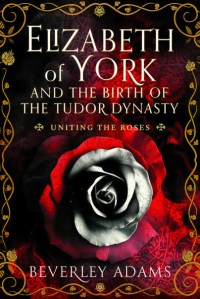
Book Review: “Elizabeth of York and the Birth of the Tudor Dynasty: Uniting the Roses” by Beverley Adams

Throughout English history, some of the most famous queens have been associated with the Tudor dynasty. We have the six wives of Henry VIII (Catherine of Aragon, Anne Boleyn, Jane Seymour, Anna of Cleves, Catherine Howard, and Catherine Parr), Queen Mary I, and Queen Elizabeth I. However, one Tudor queen is often overlooked for her daughters-in-law and granddaughters, the first Tudor queen, Elizabeth of York. So who was Elizabeth of York and what role did she play in the transition between the Plantagenet dynasty and the Tudor dynasty? Beverley Adams hopes to enlighten readers about this remarkable queen in her latest book, “Elizabeth of York and the Birth of the Tudor Dynasty: Uniting the Roses.”

I want to thank Pen and Sword Books and Net Galley for sending me a copy of this book. While I know quite a bit about Elizabeth of York, the Wars of the Roses, and the origins of the Tudor dynasty, I wanted to see how Adams would portray these topics for beginners. 

To begin with, Adams lays out the origins of the conflict that we know today as the Wars of the Roses with Edward III and his sons, John of Gaunt 1st Duke of Lancaster, and Edmund of Langley, 1st Duke of York. This led to a clash between King Henry VI and Richard Duke of York. Elizabeth of York’s father, the future King Edward IV, was the son of Richard Duke of York and he had to fight for his throne. Adams explores Elizabeth’s childhood as the eldest child of Edward IV and his wife Elizabeth Woodville during this tumultuous period of English history, which would form the foundation of what kind of queen she would be in the future.

Everything changed when Edward IV died suddenly, which meant that Elizabeth’s younger brother became Edward V and left Richard Duke of Gloucester as Lord Protector. For some reason, Richard Duke of Gloucester decided to take matters into his own hands, took control of the country, declared the children of Edward IV and Elizabeth Woodville illegitimate (including Elizabeth of York), and was crowned King Richard III in a matter of months. Some resisted the new king including the son of Margaret Beaufort and Edmund Tudor, Henry Tudor. Margaret Beaufort and Elizabeth Woodville arranged a marriage between Henry and Elizabeth that would occur if Henry was able to defeat Richard III and become King of England, which he did at the Battle of Bosworth Field. The rest of this book is dedicated to showing how Elizabeth of York was as a wife, queen, and mother as she dealt with death, treachery from Lambert Simnel and Perkin Warbeck, and triumphs as she was able to see the start of the Tudor dynasty.

I think Adams does a decent job with a book that is an introduction to Elizabeth of York, the Wars of the Roses, and the beginning of the Tudor dynasty. There are some myths that she repeats to debunk, but I feel like, in some places, Elizabeth of York was not the main focus, which was a bit disappointing. Overall, if you want a solid introductory book to the life and times of the first Tudor queen, I would recommend you read, “Elizabeth of York and the Birth of the Tudor Dynasty: Uniting the Roses” by Beverley Adams.

Book Review: “Stuart Spouses: A Compendium of Consorts from James I of Scotland to Queen Anne of Great Britain” by Heather R. Darsie

English royal history is filled with fantastic stories of triumphs and tribulations, grand romances, and divorces that shook the foundations of the monarchy. It is also filled with struggles over religion, wars both inside England and with foreign nations, and heartbreaking child losses. We often think about the spouses of the Plantagenets and the Tudors when we think about royal romances, but we shouldn’t forget about the dynasties that came after, like the Stuarts. So how did the Stuart dynasty come to be and how did the unions between monarchs and their significant others affect the dynasty and England? Heather R. Darsie explores this often-overlooked dynasty and the stories of their marriages and romances in her latest book, “Stuart Spouses: A Compendium of Consorts from James I of Scotland to Queen Anne of Great Britain.”

I want to thank Pen and Sword Books and Net Galley for sending me a copy of this book. I didn’t know much about the Stuarts before reading this book, except for those associated with the Plantagenets and the Tudors. I wanted to learn more about the Stuarts because I tend to stop after the death of Elizabeth I, so when I heard that Darsie was writing a book about the consorts of the Stuart dynasty, it was intriguing to me.

Darsie begins by explaining that she will be exploring the entirety of the Stuart dynasty, starting with its patriarch Walter Fitzalan, Stewart of Scotland for David I of Scotland in the 1100s. It is a fascinating story of how the family went from serving the monarchy to being the rulers of Scotland, all the way up to 1406 when James I became King of Scotland. The first royal consort that Darsie discusses might be familiar to anyone who knows about the origins of the Tudors, Joan Beaufort. We then track the Scottish story of the Stuarts through the death of Mary Queen of Scots through their significant others such as Mary of Guelders, Margaret of Denmark, Margaret Tudor, Madeleine of Valois, Marie de Guise, Francis II of France, Henry Stewart Lord Darnley, and James Hepburn 4th Earl of Bothwell.

It was under James VI of Scotland that things changed drastically for both England and Scotland as James became King James I of England with the death of Elizabeth I, and so James’ wife Anna of Denmark became the first Stuart Queen of England. This is the segment that I thoroughly enjoyed because they were new stories for me. We have Henriette Marie of France, a Catholic queen who married Charles I who was a Protestant, which did not have a happy ending as we get to see the English Civil War play out and the execution of Charles I on January 30, 1649. Darsie also includes the stories of the women who married Oliver Cromwell and his son Richard Cromwell, both Lord Protectors of England when the monarchy was not popular. Eventually, the Stuarts returned to their place on the English throne with Charles II and his queen Catherine of Braganza; followed by the women who married James Stewart Duke of York, Anne Hyde and Mary of Modena. James would become James II before the Glorious Revolution led by William of Orange, which led to the co-rulers William III and Mary II. Finally, we reach the tragic tale of Queen Anne of Great Britain and her Prince Consort George of Denmark.

I was so impressed with the amount of stories over centuries that Darsie was able to cover in this book. It was a fantastic introduction to Scottish Stuart history, how the dynasty survived, and created international relationships that allowed England to thrive. There were tales of tragedies, but there were also alliances that created stronger bonds, religious rifts, and romances. This was another triumph for Darsie and it is a book that made me interested in reading more about the Stuarts. If you are like me and you want a book that is a fantastic introduction to the Stuart monarchs and their consorts, I highly recommend you read, “Stuart Spouses: A Compendium of Consorts from James I of Scotland to Queen Anne of Great Britain” by Heather R. Darsie.

Book Review: “The Most Maligned Women in History” by Samantha Morris

Throughout history, women have been seen as pious mothers, wives, or daughters who stayed in their lane or vile manipulators who wanted power and were willing to do anything to maintain their status. While the former group of women would be an interesting study, as the saying goes, well-behaved women seldom make history. So why did certain women receive a villainess lens when we look at their lives and what do the historical records tell us about them? Samantha Morris has chosen to take the stories of these misunderstood maidens and tell them in her latest book, “The Most Maligned Women in History.”
I want to thank Pen and Sword Books and Net Galley for sending me a copy of this book. I enjoyed the previous books that I have read by Samantha Morris which covered Lucrezia and Cesare Borgia and Girolamo Savonrola When I heard that she was writing a book about maligned women in history, it caught my attention immediately as I wanted to see which women would be discussed in this book.

As Morris states in her introduction, there are numerous women who she could have chosen for this book she could make a second book, but in the end, she selected eleven women from different countries and centuries to highlight. The eleven women in this book are Cleopatra VII, Empress Wu, Joan of Arc, Lucrezia Borgia, Anne Boleyn, Elizabeth Bathory, Catherine the Great, Marie Antoinette, Lizzie Borden, Empress Dowager Cixi, and Iva Toguri the “Tokyo Rose.” Morris takes the time to tell their stories succinctly while explaining why they are considered maligned.

I do appreciate the fact that she included women from different walks of life and different centuries to show how women have been vilified throughout history. We had women who were born queens, those who were mistresses or concubines and became rulers, and average women who did extraordinary things to the ire of those in charge. While I knew some of these stories like Anne Boleyn, Marie Antoinette, Cleopatra, and Lucrezia Borgia, others were completely new to me, such as Empress Wu, Empress Dowager Cixi, and Iva Toguri. The other women in this book were names that I had heard mentioned and knew some elements of their tales, but I didn’t know their full stories.

I found this book such a fun read full of vivacious women who were not afraid to go beyond the status quo. I do hope Morris will write a sequel book and include even more women from the past who have been viewed as maligned and maybe include women from Africa, Australia, and South America to show women from even more diverse backgrounds. If you want a delightful and insightful book about women who had some bad reputations, I highly suggest you read, “The Most Maligned Women in History” by Samantha Morris.

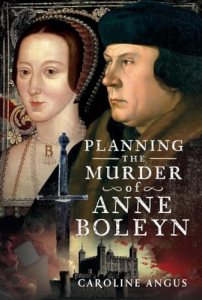
Book Review: “Planning the Murder of Anne Boleyn” by Caroline Angus

The 16th century was filled with tales of remarkable women. Still, one of the most defining figures of the century was a woman of noble birth who the King of England fell in love with and decided that he was going to divorce his first wife of over twenty years to marry her. The Great Matter caused a great scandal across Europe, however, it was a love match that would not last long. The relationship between Henry VIII and his second wife Anne Boleyn would turn volatile and in the end, Anne and the men around her would be executed. We often blame Anne Boleyn’s death at the foot of Henry VIII’s right-hand man Thomas Cromwell, but who was behind the death of this famous queen? Caroline Angus has chosen to re-examine the case to find out who was truly responsible for the fall of this famous queen in her latest book, “Planning the Murder of Anne Boleyn.”

I would like to thank Pen and Sword Books and NetGalley for sending me a copy of this book. I have enjoyed previous books by Caroline Angus, so when I heard that she was writing a book about Anne Boleyn’s “ trial,” I was curious to see what new insights she would bring to the case.

Angus begins by explaining to her audience that this case is hard to put together centuries after the fact because papers pertaining to the case were destroyed after the verdict was carried out. She then dives into how the fall of Anne Boleyn and the men around him happened, starting with the aftermath of the Great Matter, and the divorce between Henry VIII and Katherine of Aragon. We see how the Boleyns rose to power and Henry was so infatuated with Anne that he knew she would be the next Queen of England. Angus explores the men and women who served Anne Boleyn and Thomas Cromwell, it was fascinating to see how they would shape the case against the queen. Finally, we get to see the rivalry between Thomas Cromwell and Anne Boleyn develop regarding religious reform issues and Princess Mary’s place in the line of succession.

The second half of this book focuses on the actual fall, trial, and execution of Anne Boleyn and the men who were associated with her. Angus takes the time to do a diary-style section, starting at the time when the idea to remove Anne from power to her actual execution to show her readers how quick this “case” was and to show that Henry wanted her out of his life permanently. She has taken the available information and the gaps left behind to create a plausible case for what truly happened in these few weeks. Angus shows what Princess Mary and Jane Seymour had to do with the fall of Anne Boleyn. We also see that most people knew that Anne Boleyn and the men around her were innocent and didn’t deserve to die, but it was a foregone conclusion as the king wanted them dead.

Overall, I found this enjoyable and enlightening with the new information Angus brought to the table. Yes, there is a bit of repetition of information already shared in previous books about Anne Boleyn, but it was one of the most infamous cases in English history, so it has been examined for centuries. It’s hard to show new information about this case without repeating facts that we already know but I think Angus does an excellent job of balancing the old and the new information about this case. If you want a solid book specifically about the fall of Anne Boleyn, I recommend you read, “Planning the Murder of Anne Boleyn” by Caroline Angus.

Book Review: “Courting the Virgin Queen: Queen Elizabeth I and Her Suitors” by Carol Ann Lloyd

As humans, we love a good love story. Tales of courtships, grand confessions of love, over-the-top weddings, and marriages that last decades. These seem like high expectations, especially when we compare these expectations to royal courtships of the past. The majority of royals married and they were more focused on political matches instead of love. However, few chose a different path altogether, they decided to be single. One of the most famous monarchs with a single status was Queen Elizabeth I of England, the Virgin Queen So why did Elizabeth stay single throughout her reign, and how did she navigate her numerous suitors? Carol Ann Lloyd tries to answer these questions in her latest book, “Courting the Virgin Queen: Queen Elizabeth I and Her Suitors.”

I want to thank Pen and Sword Books and Net Galley for sending me a copy of this book. I enjoyed Lloyd’s previous book, “The Tudors by the Numbers,” so when I heard about this book and that it would be about Elizabeth I and her romances, I knew I wanted to read it.

Lloyd breaks her book down into sections focusing on the suitors and the aspects that made her reign rather unique. While she was a child, Elizabeth’s primary purpose was to create a powerful alliance with another country, however, issues of legitimacy and religion hampered any real chance of her marrying anyone before she became queen. Once she was crowned, the marriage market became even more complicated as she not only had a great number of eligible suitors both in England and abroad, she needed to make sure her kingdom was secure and that she remained in power. She had to balance her natural and her political body of a ruler, a task that was difficult for a man to accomplish let alone a queen whose legitimacy and religious standings were on shaky grounds.

I think Lloyd did a great job of presenting new information about Elizabeth I, her suitors, and how different aspects of courting affected how the queen ruled. I will say that the way the book was organized did hinder my enjoyment of this book a little bit. I think it would have made more sense to have the aspects of Elizabeth’s courting and how it affected her reign before diving into her numerous suitors and why things didn’t go so well, which led to Elizabeth becoming the titular Virgin Queen.

Overall, I did find this a rather informative and fascinating read. If you want a solid book about Elizabeth I and her numerous romances, I recommend you read, “Courting the Virgin Queen: Queen Elizabeth I and Her Suitors” by Carol Ann Lloyd.

Book Review: “The Female Tudor Scholar and Writer: The Life and Times of Margaret More Roper” by Aimee Fleming

When we think about the great female minds of the 16th century, we often think about those closest to the throne. Women of privilege who were destined to rule or to be a queen consort in a far-off land where their education would be imperative for the success or failure of their respective dynasty. However, some women did not live a life of glitz and glamor and received an equally impressive education. One such woman was the daughter of the great statesman Sir Thomas More, Margaret More Roper. Her remarkable story is told in the debut book by Aimee Fleming, “The Female Tudor Scholar and Writer: The Life and Times of Margaret More Roper.”

I want to thank Pen and Sword Books and Net Galley for sending me a copy of this book. I have heard the name Margaret More Roper mentioned in several books about Sir Thomas More, but she is more of a footnote. I have always wanted to learn more about her life, especially her childhood, so when I heard about this book, I jumped at the chance to read it.

Margaret More Roper was the eldest child of Sir Thomas More and his first wife Joanna. She had three other siblings, Elizabeth, Cecily, and John, and a household filled with other children under Sir Thomas More’s care, including Margaret’s future husband William Roper. Fleming takes the time to show how Sir Thomas More and his second wife Alice gave his children, especially Margaret, a rather remarkable education that proved significant for Margaret and her path in life. We do see the famous More School grow and scholars such as Erasmus recognize the talent of Margaret and her siblings, especially in the fields of translations and letter writing. For the bulk of the first part of this book, Fleming focuses on the rise and fall of Sir Thomas More with the More family and school in the background, which is understandable, but I do wish we got a tad more about the education of these exceptional children.

Many consider the final meeting between Sir Thomas More and Margaret at his prison cell and his final letter to her as the end of her story, but as Fleming explains, there was so much more to Margaret’s story than this singular moment. Margaret was a wife, and a mother of five children (Alice, Margaret, Mary, Thomas, and Anthony). She also translated and published works in her name, which was unheard of for a woman, especially someone who was not of noble birth. When Margaret Roper More died around Christmas of 1544, she left a legacy that would inspire other women in her family, including her daughter Mary, to fight for an academic life.

Overall, I found this was a well-written debut biography about Margaret More Roper. It was a fascinating read to learn about Margaret’s life and the More family with a heavy focus on the academic life in 16th century England. If you would like to read a book about a strong academic woman from Tudor England, I suggest you read, “The Female Tudor Scholar and Writer: The Life and Times of Margaret More Roper” by Aimee Fleming.

Book Review: “Tudor Executions: From Nobility to the Block” by Helene Harrison

Tudor ExecutionsTreason is the crime of betraying one’s country or monarch by trying to overthrow the government or kill a sovereign. While many English dynasties dealt with treason in their ways, the most infamous were the Tudors and how they dealt with the nobility. By the end of 1572, there were no more dukes in England, until 1623 when George Villiers became the Duke of Buckingham. What was classified as treason during the Tudor dynasty and why did the members of the nobility have to die? Helene Harrison hopes to answer these questions in her latest book, “Tudor Executions: From Nobility to the Block.”

I would like to thank Pen and Sword Books and Net Galley for sending me a copy of this book. I enjoyed Harrison’s previous book about Elizabethan Rebellions, so when I heard that she was writing a new book about Tudor executions, I knew I wanted to read it.

Harrison begins by giving her readers a quick overview of what treason meant during the time of the Tudors through the numerous Treason Acts, the significance of the Act of Attainders and scaffold speeches. She also explains that this book explores the lives and ultimate deaths of nine men and five women and that each chapter can be read separately as an essay. The 14 figures that are featured in this book are: Edward Plantagenet 17th Earl of Warwick, Edward Stafford, 3rd Duke of Buckingham, Queen Anne Boleyn, George Boleyn Viscount Rochford, Margaret Pole, Countess of Salisbury, Queen Katherine Howard, Jane Boleyn Viscountess Rochford, Henry Howard Earl of Surrey, Thomas Seymour 1st Baron Seymour of Sudeley, Edward Seymour 1st Duke of Somerset, John Dudley 1st Duke of Northumberland, Queen Jane Grey, Thomas Howard 4th Duke of Norfolk, and Robert Devereux 2nd Earl of Essex.

With each case, Harrison explores their origins, how they gained fame, their ultimate falls from grace, and their fate on the execution block. The main focus of each chapter is to show what each monarch considered treasonous behavior, which varied from case to case. We see charges range from treason for having royal blood to being too ambitious, adultery to down right rebellious acts. The Tudors did not hold back when it came to noble women as two queens, Anne Boleyn and Katherine Howard, were executed which was a first for England.

I think Harrison does a decent job in sharing the stories about these nobles and their unfortunate ends. Though there were no real surprises in this book, but the way Harrison presented the information was easy to follow. She shows that the closer one is to the throne, the more likely they would fall victim to power, greed and paranoia. If you are a Tudor nerd who is interested in the more gruesome side of the glamorous Tudor court, I would suggest you read, “Tudor Executions: From Nobility to the Block” by Helene Harrison.