
 In human history, when citizens have disagreed with a new law or those in charge, they often stage a protest to show their frustration. When their voices are not heard, people often turn to rebellions and revolts to make sure their opinions matter. We might think that revolution and rebellion as a form of protest are modern ideas, but they go back for centuries. Revolutions and rebellions shaped history, no more so than in the middle ages. In his latest book, “Rebellion in the Middle Ages: Fight Against the Crown,” Matthew Lewis examines the origins of the most famous rebellions in medieval England and how they transformed the course of history.
I want to thank Pen and Sword Books and Net Galley for sending me a copy of this book. I have been a fan of Matthew Lewis’ books for years now, and I wanted to read his latest book. The topic appealed to me, and I wanted to see something new about these rebellions.
Lewis begins with the Norman invasion and those who resisted William the Conqueror as king to understand the vast history of rebellions in middle ages England. The most famous of these rebels was a man named Hereward the Wake. We then move to the Anarchy, a battle between cousins, Empress Matilda, the rightful heir, and Stephen of Blois, her cousin and the one who would inevitably be King of England. Empress Matilda’s son Henry II would become King Stephen’s heir, but the first Plantagenet king had to endure numerous rebellions from his friend Thomas Becket and his sons.
Moving into the halfway point of the middle ages, Lewis explores how the first and second Barons’ Wars were fought over the rights of the average citizen kings like John were put in their place with the Magna Carta. Some rebellions had other goals, like the deposition of Edward II in favor of his son Edward III and Henry of Bolingbroke’s revolt against his cousin Richard II, and of course, the Wars of the Roses with the deposition of Henry VI. It was not just the nobility that decided to rebel against the monarchy, as we see with the Peasants’ Revolt, led by Wat Tyler, and the Jack Cade Rebellion. The cost for rebellions could be extremely high, as men like Simon de Montfort, Hugh Despenser the Younger, and Richard Duke of York would find out.
Individually, every one of these rebellions would have numerous books dedicated to deciphering the intricacies of why the rebels did what they did. However, Lewis has taken on the mammoth task of combining these tales into one comprehensive nonfiction book easy to read for novices and experts alike. This book is another triumph for Matthew Lewis. If you want an excellent book that examines the origins of medieval rebellions and how they impacted English history, “Rebellion in the Middle Ages: Fight Against the Crown” by Matthew Lewis is the ideal book for your collection.
 When it comes to studies into the Tudor dynasty, many different approaches have been taken in the past. We have examined every monarch, their spouses, how they lived, what they wore, and the various political events that defined the dynasty. The list is endless to the different studies that have been done with the Tudors, yet there are still new areas of study that are being explored. One of those areas of study is how individuals with disabilities survived in the past. How did society treat those who had disabilities, and what rights did they have according to the laws of the land? In her first non-fiction book, “Disability and the Tudors: All the King’s Fools,” Philippa Vincent-Connolly explores the lives of famous fools and monarchs with disabilities to discover how they were treated by Tudor society.
 The period of human history that we know today as the Middle Ages spanned over a thousand years, and within that time, significant progress was made into understanding our world. Inventions and discoveries were made not just in Europe but throughout the known world during this time. One area of study that saw a lot of change was medical studies and understanding the human body. How did physicians heal the sick during the Middle Ages, and how did their experiences change their field of study? These questions and more are all explored in Juliana Cummings’ latest book, “Medicine in the Middle Ages: Surviving the Times.”
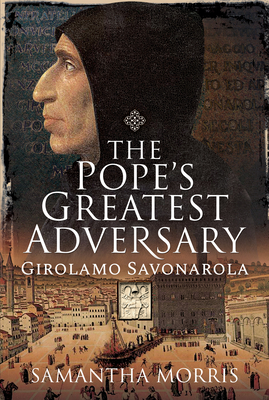 When we think about men who challenged the Church and are known as Reformers, we tend to think of Martin Luther, Jan Hus, and John Calvin. However, a man fought against corruption in his beloved Florence who should be included in the list of great reformers. He was a Dominican monk who was not afraid to preach against sin and took aim at the most powerful men in all of Italy, including Pope Alexander VII. His sermons were so scandalous that they would lead to his demise upon a pyre in the middle of Florence. His name was Girolamo Savonarola, and his story is told in Samantha Morris’s latest biography, “The Pope’s Greatest Adversary: Girolamo Savonarola.”

 A man ahead of his time who never finished the tasks that he was given as his mind was constantly racing, thinking of new ideas. This is what we consider a genius or a Renaissance Man today, but during Leonardo da Vinci’s time, it was just considered odd. Leonardo da Vinci was an enigma. He could make the impossible possible. His art seemed to leap off the canvas with its realism. However, there are still so many mysteries surrounding his life and his works. What made this one artist/inventor so fascinating for centuries? In her book, “The Real Leonardo da Vinci” Rose Sgueglia opens the curtain to reveal Leonardo da Vinci’s truth and inner circle.
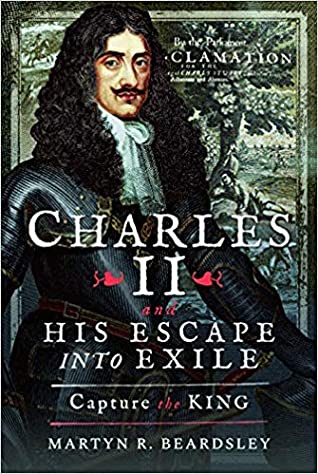 On January 30, 1649, the Stuart monarchy took a major hit when Charles I was tried and executed by the Rump Parliament, making way for the Commonwealth of England to take control. His eldest son, Charles II, fled England leaving the control of the country in the hands of Oliver Cromwell. Two years later, in 1651, Charles tried to make his triumphant return to restore the monarchy. However, it failed miserably at the Battle of Worcester on September 3, 1651; Charles II was able to escape with the help of those loyal to the crown. The story of his escape from Cromwell’s men and his exile in Europe are told in Martyn R. Beardsley’s book, “Charles II and His Escape into Exile: Capture the King.”
 Adventures of a Tudor Nerd