
 The Plantagenets, a dynasty that ruled England for over three hundred years. At least that is if you include the Lancastrian and Yorkist kings. Otherwise, the reign of the Plantagenets ended with Richard II being overthrown. So, how did the Plantagenets fall? How did wars, favoritism, and the plague factor into the fall? Helen Carr examines these questions and the rule of three kings over the fourteenth century in her latest book, “Sceptred Isle: A New History of the Fourteenth Century.”
I have really enjoyed Helen Carr’s insight into medieval English history in her book, The Red Prince, so when I heard she was writing a book about the Plantagenets again, with a focus on the fourteenth century, I was excited to read it. The idea in this book that caught my attention was the idea that the Plantagenet dynasty ended when Henry of Bolingbroke overthrew Richard II. As someone who believes that the Plantagenet dynasty ended with the death of Richard III, the concept that it ended almost a century earlier is intriguing.
We begin our adventure with a double reburial of King Arthur and Queen Guinevere, the idea of King Edward I and his wife Eleanor of Castile. It was a kind gesture, but the prophecy that was left behind would be almost prophetic. With the death of King Edward I, the Hammer of the Scots, the throne passed to his son Edward II. While Edward I was a strong warrior, Edward II was a handsome prince who only cared about his favorites, Piers Gaveston and Hugh Despenser the Younger. It would cause those around him, including his wife, Isabella of France, and her lover, Roger Mortimer, to take action against him. Isabella and Mortimer placed Edward III on the throne, but they would soon learn that Edward III was not as passive as his father.
Edward III would return to the warrior state of mind like his grandfather Edward I. With his wife Philippa of Hainault, they would have a large family with many sons, including John of Gaunt and Edward the Black Prince. It would be Edward III who would try to take the French throne for England in a conflict known as the Hundred Years’ War (not the quickest war, and it didn’t go the way Edward III envisioned it). And to top it all off, Edward III had to deal with the emergence of the Black Death and how it affected not only his own family but England and Europe as a whole.
Before Edward III died, his heir, the Black Prince, died, which meant that the Black Prince’s son, Richard II, was destined to be the next king. However, youth and favoritism failed the king as chaos reigned ever since the start of his reign, with the Peasants’ Revolt, and ended with Henry of Bolingbroke becoming the first Lancastrian King, Henry IV.
This was another wonderful book by Helen Carr. It demonstrates Carr’s ability to balance extensive research with a narrative format to create an accessible history book that novices and experts will equally enjoy. My only qualm with this book, if you can call it an issue, is that I wanted it a bit longer so we get more analysis of how this one century affected English and European history as a whole. If you want a book that dives into the history of one of England’s most tumultuous centuries, I highly recommend you read “Sceptred Isle: A New History of the Fourteenth Century” by Helen Carr.
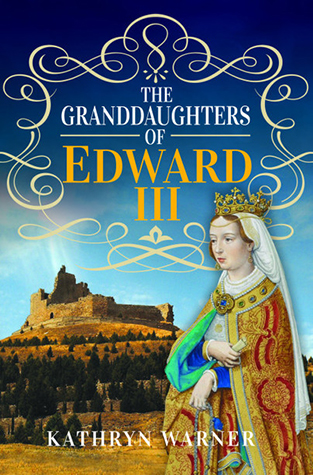 When we think about the legacy of Edward III, we often think about a warrior king who became king after his father, Edward II’s disastrous fall from grace. We know about his sons that he had with his beloved wife, Philippa of Hainault: Edward the Black Prince, Lionel of Antwerp, Duke of Clarence, John of Gaunt 1st Duke of Lancaster, Edmund of Langley, 1st Duke of York, and Thomas of Woodstock, Duke of Gloucester. Famously, we get the 15th-century conflict known as the Wars of the Roses through the descendants of Edward III. However, the male descendants only tell half the story of Edward III and Philippa of Hainault’s legacy in England and throughout Europe. In her latest book, “The Granddaughters of Edward III,” Kathryn Warner examines the lives of Edward III’s female descendants to better appreciate the strength of this group of branches of the Plantagenet family tree.
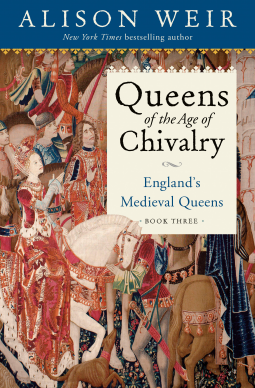 When we think of the title “medieval queen,” a few things come to mind. They were seen as mere trophy wives who were only suitable for making alliances and giving birth to children. It may be a cruel assessment for a modern audience, but that was the reality of the medieval world. However, the late Plantagenet queens decided to step outside the socially acceptable path for their lives and forged a new one. In Alison Weir’s latest nonfiction book, “Queens of the Age of Chivalry: England’s Medieval Queens,” she explores the lives of five Plantagenet queens who had to adapt quickly to the ever-changing world of late medieval England.
 Medieval princes are often viewed as men who will one day be king of their homeland or another country. They are seen as wealthy men with prestige and honor who live lavish lifestyles and go to war to earn titles and estates. One of these noble medieval princes was a man who married three times, including to his most beloved mistress. He was the son of Edward III, the uncle of Richard II, and the father of the queen of Castile and King Henry IV, the first Lancastrian king. His children, grandchildren, and great-grandchildren would rule in different European countries, even though he never had the chance to wear the crown of England or Castile for himself. His name was John of Gaunt, and his story is told in Kathryn Warner’s latest biography, “ John of Gaunt: Son of One King, Father to Another.”
 England throughout the centuries has known internal strife with civil wars to determine who had the right to rule the island nation. None more so than in the fifteenth century when a tug of war for the English crown broke out. Today, we call this time period “The Wars of the Roses”, but what was it all about? Who were the main figures during this time? What were the crucial battles that defined these wars? How did the Plantagenet Dynasty fall and how did the Tudors become the new dynasty to rule England? These questions and more are explored in Dan Jones’ book, “The Wars of the Roses: The Fall of the Plantagenets and the Rise of the Tudors”.
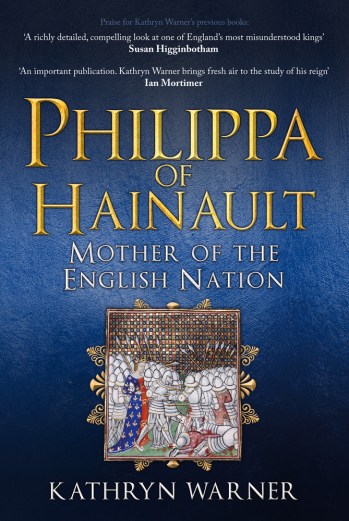 In medieval England, the queens were almost as famous, or infamous, as their husbands. In most cases, they came from royal backgrounds and their sons would become kings. That, however, was the case for Philippa of Hainault, the wife of King Edward III. She tends to be forgotten when it comes to discussing her famous husband, her infamous mother-in-law Isabella of France, and her sons whose children would go on to shape English history forever. That is until now. Kathryn Warner has decided to discover the truth about this rather remarkable woman in her latest biography, “Philippa of Hainault: Mother of the English Nation”.
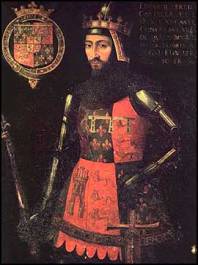 (Born March 6, 1340- Died March 15, 1399).
  (Born November 13, 1312- died June 21, 1377. Reigned from January 1327 until June 21, 1377).
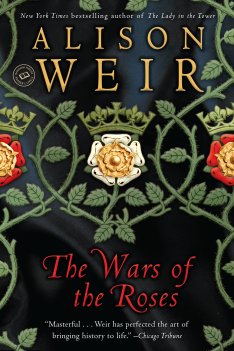 The Wars of the Roses was a series of wars from 1455 until 1487 for the throne of England. It is traditionally taught that it was between the houses of York and Lancaster, yet there were a lot more players involved than these two families. In fact the conflict started much earlier with the children of Edward III and Philippa of Hainault. The Lancasters were the descendants of John of Gaunt and his wife Blanche of Lancaster while the Yorks were descendants of Edmund of Langley Duke of York. This was a series over the question of who had the strongest claim to the throne. This question and the series of wars that would try to answer it is explored in depth in Alison Weir’s book “The Wars of the Roses”.
  Adventures of a Tudor Nerd