Book Review: “The Lives of Tudor Women” by Elizabeth Norton

In each era throughout history, we see how men and women adapt to the struggles and triumphs of the age. Take, for example, the 16th century, primarily in Tudor England. It was a time of great religious changes and dynamic rulers who would change the course of European history forever. While men had the most power, except for a handful of women, the majority of women struggled to survive each stage of life. So, what was life truly like for Tudor women? Elizabeth Norton explores this topic in her book, “The Lives of Tudor Women.”

I have been wanting to read this particular book for years. I have enjoyed the previous books that I have read by Elizabeth Norton, so when I saw she wrote a book about Tudor women, I knew I wanted to read it. 

Norton begins by explaining how this book would be broken down in her preface, which has one of my favorite introductory paragraphs in any book. This book is divided into sections that correspond with the Seven Ages of Man, which was made famous by William Shakespeare. These ages are: the infant, the schoolboy, the lover, the soldier, the justice of the peace, the ageing retiree, and the infirm elder. Obviously, with the lives of 16th-century women, these ages are altered a bit, especially for the soldier and the justice of the peace, but the premise remains the same. Each section focuses on one of these ages and the different aspects of life during that period in a person’s life. Norton also features small snippets of extra information that don’t fit into the narrative of the chapter, but are fascinating. 

The main characters, who are the main focus in this book, are a collection of stories of women from royals to rebels. Two Elizabeth Tudors bookmark the book, one will die as a child while the other became one of the most important rulers in European history, Queen Elizabeth I. We also get to see the stories of Elizabeth and Anne Boleyn, a prophetess, Elizabeth Barton, a businesswoman named Katherine Fenkyll, the widow Cecily Burbage, the heretic Anne Askew, a rebel named Margaret Cheyne, and an expatriate named Jane Dormer. These stories and the other smaller tales paint a picture of what it meant to be a female in Tudor England.

This was another delightful book by Elizabeth Norton. While I did know some of the stories and the information featured in this book, other stories were brand new and thrilling to read about. Norton breathed new life into women’s history during the 16th century with this book. If you want a fresh approach to Tudor England with new women to learn about, I highly recommend you read “The Lives of Tudor Women” by Elizabeth Norton.

Guest Post: “Spotlight for ‘Bess-Tudor Gentlewoman’ by Tony Riches

I am pleased to welcome Tony Riches to my blog to share a blurb for his latest novel, “Bess-Tudor Gentlewoman.” I would like to thank Tony Riches and The Coffee Pot Book Club for allowing me to participate in this blog tour. 

Blurb: 

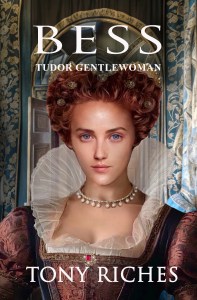
Bess Throckmorton defies her notorious background and lack of education to become Queen Elizabeth’s Gentlewoman and trusted confidante. 

Forced to choose between loyalty and love, duty and desire, will she risk her queen’s anger by marrying adventurer Sir Walter Raleigh without permission? 

Entangled in a web of intrigue, from the glittering Palace of Whitehall to the cells of the Tower of London, Bess endures tragedy and injustice, becoming a resilient, determined woman who takes nothing for granted. 

Can she outwit her enemies, protect her family, and claim her destiny in a world where women are pawns and survival is a game of deadly consequences? 

This is the true story of the last of the Elizabethans, which ends the story of the Tudor dynasty – and introduces their successors, the Stuarts. 

Buy Link: 

Universal Buy Link: https://mybook.to/BESS  

This title is available to read on #KindleUnlimited. 

Author Bio: 

Tony Riches is a full-time UK author of Tudor historical fiction. He lives with his wife in Pembrokeshire, West Wales, and is a specialist in the lives of the early Tudors. 

As well as his Elizabethan series, Tony’s historical fiction novels include the best-selling Tudor trilogy and his Brandon trilogy (about Charles Brandon and his wives). 

For more information about Tony’s books, please visit his website, and his blog, The Writing Desk, and find him on social media. 

Author Links

Website: https://www.tonyriches.com/  

Blog: http://tonyriches.blogspot.co.uk/  

Twitter / X: https://twitter.com/tonyriches  

Facebook: https://www.facebook.com/tonyriches.author/  

Instagram: https://www.instagram.com/tonyriches.author/  

Bluesky: https://bsky.app/profile/tonyriches.bsky.social  

Amazon Author Page: https://www.amazon.co.uk/stores/Tony-Riches/author/B006UZWOXA  

Goodreads: https://www.goodreads.com/author/show/5604088.Tony_Riches  


Book Review: “The Shakespeare Secret” by DJ Nix

Everyone knows the story of William Shakespeare—the famed poet, actor, and playwright who revolutionized English literature forever. There have been a series of debates about whether or not Shakespeare truly wrote the plays or someone else did. Well, what if a group of women employed William Shakespeare as a sort of spokesperson for their plays? Can this group of women survive to write another day? This is the premise of DJ Nix’s novel. “The Shakespeare Secret.”

I would like to thank Alcove Press and Net Galley for sending me a copy of this novel. I have not read a lot of novels about the writing of Shakespeare’s plays, but I have heard the many theories on who actually wrote them. When I saw that this novel would focus on a group of women as the so-called authors of the plays, it was such a fun idea that I decided to give it a go.

So, just who were these three women who were the authors of the plays? We begin with Mary Herbert, Countess of Pembroke, who has just returned to the court of Queen Elizabeth I after a three-year absence. She is not one for court life, but she soon finds herself enjoying the company of others below her station. Take, for example, Emilia Bassano, a court musician and mistress to Lord Chamberlain, Baron Hunsdon. And then we have Jane Daggett, the new Mistress of the Wardrobe for the Queen’s Men, a company that was the starting point for a young Will Shakespeare. One fateful day, these three women met and decided to write a play, which would become known as The Taming of the Shrew. Since this was a group of women writing a play, they needed a man to act as their spokesperson to make sure that their play would be performed. Enter young Will Shakespeare, who wanted to make a name for himself.

It seems like such an innocent prospect, that is, until Robert Cecil and his spy Hardwood catch wind of what they think is a Catholic plot against Queen Elizabeth I. Talk about making a mountain out of a molehill. Now, Mary, Emilia, and Jane must escape suspicion while navigating life, love, and playwriting, with Will along for the ride. This was a relatively predictable plot, and I felt a bit bored by the middle of this novel. While the characters are well written, it is hard for me to imagine this group of women together and using the formal Shakespearean dialogue. Other than the few historical characters and locations, it does not feel like Elizabethan England (especially with the mention of tea).

Overall, it’s an okay novel, but it could have been better. The premise had a lot of potential, but it kind of turned into a sappy ending, which is not a bad thing, but I wanted more. If you want a novel about the alternative history of the writing of the early Shakespearean plays, you might enjoy “The Shakespeare Secret” by DJ Nix.

Guest Post: “Excerpt from ‘ Try Before You Trust: To All Gentlewomen and Other Maids in Love’” by Constance Briones

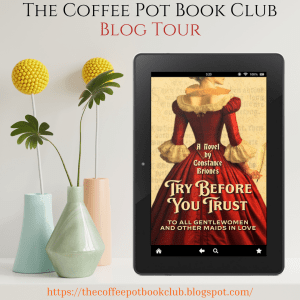
I am pleased to welcome Constance Briones to my blog today to share an excerpt from her novel, “Try Before You Trust: To All Gentlewomen and Other Maids in Love.” I would like to thank Constance Briones and The Coffee Pot Book Club for allowing me to be part of this blog tour.

Excerpt:

On a brisk September morn in the ninth year of Queen Elizabeth’s reign, I arrived at the Bramwell House, the London estate of Lady Bramwell, a widowed baroness and my new mistress. The fiery hue of the red brick facade made the house seem indestructible as it stood bold and vibrant in the late morning sunlight on the bank of the Thames. I counted eight chimney stacks and forty mullioned windows with diamond-shaped glass and mused whether I would find friend or foe within. 


As I gazed at the gables and corner turrets, my sisters’ sweet laughter reverberated in the cool breeze that swept across my cheeks. How they twirled and giggled with delight when my mother promised that, like me, when they reach the age of eighteen, they too will venture from home to work for a grand lady, acquiring superior housewifery skills that would help them snag a well-bred gentleman. 


Blurb: 

What if Taylor Swift found herself penning songs about love in Elizabethan England when women were required to be chaste, obedient, and silent? 

Isabella Whitney, an ambitious and daring eighteen-year-old maidservant turned poet, sets out to do just that. Having risked reputation and virtue by allowing her passions for her employer’s aristocratic nephew to get the better of her, Isabella Whitney enters the fray of the pamphlet wars, a scurrilous debate on the merits of women. 


She’s determined to make her mark by becoming the first woman to write a poem defending women in love, highlighting the deceptive practices of the men who woo them. Her journey to publication is fraught with challenges as she navigates through the male-dominated literary world and the harsh realities of life in sixteenth-century London for a single woman. 

Loosely based on the life of Elizabethan poet Isabella Whitney, this is a compelling tale of a young woman’s resilience and determination to challenge the status quo and leave her mark in a world that was not ready for her. 

Buy Link: 

Universal Buy Link: https://books2read.com/u/3Jly0J  

Author Bio: 

Constance Briones has a Master’s in Woman’s History, which informs her writing. 

She first learned about the subject of her debut historical fiction novel, the sixteenth-century English poet Isabella Whitney, while doing research for her thesis on literacy and women in Tudor England. Isabella Whitney’s gusty personality to defy the conventions of her day, both in her thinking and actions, impressed Constance enough to imagine that she would make a very engaging literary heroine. 

As a writer, Constance is interested in highlighting the little-known stories of women in history. She is a contributing writer to Historical Times, an online magazine. When not writing, she lends her time as an educational docent for her town’s historical society. 

She contently lives in Connecticut with her husband and Maine coon sibling cats, Thor and Percy. 

Author Links

Facebook: www.facebook.com/constancebrionesauthor  

LinkedIn: www.linkedin.com/in/constance-briones-a55a9168 

Pinterest: www.pinterest.com/constancebrionesauthor  

Amazon Author Page: www.amazon.com/stores/author/B0CPX8T7CB/about 

Book Review: “Power, Treason, and Plot in Tudor England: Margaret Clitherow, an Elizabethan Saint” by Tony Morgan

60530456 (1)The Tudor dynasty was a time of significant political change, but it was also a time of tremendous religious change. Each Tudor monarch had a different view on the divide between Catholics and Protestants. Although we have an idea of what it might have been like during the reign of Mary I, the way Elizabeth I tackled the issue of religion during her reign. One story of how Catholics were treated in the so-called “Golden Age” of Elizabethan England is the story of Margaret Clitherow. She helped hide a couple of Catholic priests and ended up suffering for her actions by being crushed to death. Tony Morgan tells her story and how she became a Catholic martyr in his book, “Power, Treason, and Plot in Tudor England: Margaret Clitherow, an Elizabethan Saint.”

Thank you, Pen and Sword Books and Casemate, for sending me a copy of this book. I have heard the name Margaret Clitherow mentioned a few times in books about Elizabeth I, but I found out about her tragic tale.

With each monarch came dramatic changes, and by the time Elizabeth was on the throne, Protestants were safe, and Catholics were on the run. Morgan breaks each chapter into sections: how England was changing, how York was dealing with the changes, and how the changes in York affected Margaret Clitherow and her family. It is a great way to give the audience an understanding of why these changes involved a family of business owners like the Middletons and her husband, John Clitherow, a butcher. Margaret was raised to be a Protestant, but in her heart, she would always be a Catholic recusant.

Margaret Clitherow was no stranger to prison, as she had landed behind bars several times before her last case. In it, she was convicted of hiding a couple of Catholic priests, which was against the act of 1585 known as the “Act Against Jesuits, Seminary Priests and Such Other Like Disobedient Persons.” When brought to court, Margaret refused to plead either guilty or not guilty, creating a dilemma; the court ultimately decided she was guilty and sentenced her to death by being crushed by large rocks. What we know of the trial and execution is due to the book by Father John Mush called “A True Report of the Life and Martyrdom of Mrs. Margaret Clitherow.”

I found some parts of the book a tad dry, but that was because it dealt with religious politics and new laws. When it came to the actual story of Margaret Clitherow and her family drama, Morgan did an excellent job of introducing his audience to a new figure who fought for what she believed was right until the bitter end. If you want a book that teaches you about the Catholic resistance during the Elizabethan era and wants to know about Margaret Clitherow, “Power, Treason, and Plot in Tudor England: Margaret Clitherow, an Elizabethan Saint” by Tony Morgan should be on your list of books to read.

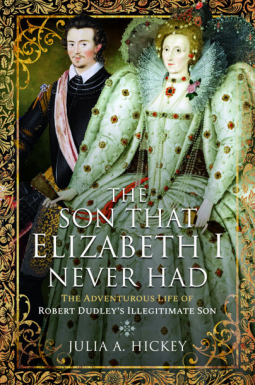
Book Review: “The Son that Elizabeth I Never Had: The Adventurous Life of Robert Dudley’s Illegitimate Son” by Julia A. Hickey

cover260109-mediumWhen we study the life of Queen Elizabeth I, the image of a virgin queen who never married tends to come to mind. Of course, she had a man who she favored above all others, Robert Dudley, but he married several times to Amy Robsart and Lettice Knollys. It was with Lettice Knollys that Robert Dudley was able to produce his heir, aptly named Robert Dudley Lord Denbigh, who unfortunately died at a young age. Robert Dudley was left without a legitimate heir, but he did have another son, albeit an illegitimate son, also named Robert Dudley. Julia A Hickey has decided to examine the life of the illegitimate Robert Dudley in her book, “The Son that Elizabeth I Never Had: The Adventurous Life of Robert Dudley’s Illegitimate Son.”

Thank you, Pen and Sword Books and Net Galley, for sending me a copy of this book. I am always in the mood to learn about someone from the Tudor period I have never heard about before. I did not know that Robert Dudley had an illegitimate son and that he might have been married before he married Lettice Knollys, so I was excited to learn more about this mysterious son.

Hickey begins her biography about this often forgotten Dudley by exploring the origins of the Dudley family and how his father was able to rise from the ashes to become Queen Elizabeth’s favorite. I think she did a decent job explaining Dudley’s history, but Hickey tends to jump around instead of staying in chronological order with specific issues, which is a pet peeve for me. I also felt like this background information went on for a bit too long, but that might have been because I had just recently read a biography about Dudley, so most of the background information was not new to me.

Robert Dudley had fallen in love and allegedly married one of Elizabeth I’s maids of honor, Douglas Sheffield, who was Robert “Robin” Dudley’s mother. Robert Dudley would later marry Lettice Knollys to the ire of Queen Elizabeth I and had a son named Robert Dudley to add to the confusion, known as Lord Denbigh or “the noble imp.” After Robert’s legitimate son, we see the rise of Robin Dudley, as he became an explorer and trader in the silk industry. We also see Robin Dudley dealing with romantic scandals, notably leaving England, his wife Alice Leigh, and their growing family to flee to France with his mistress and future wife, Elizabeth Southwell. Robin and Elizabeth were married even though Robin never divorced Alice, thus committing bigamy and making him an enemy of the Stuarts, especially King James I.

Robin was also allegedly involved in the Essex Rebellion but only stayed in prison for a short time. He tried to gain legitimacy through a court case arguing that his parents were indeed married, but it failed spectacularly. Besides the scandals, Robin was an adventurer and deeply fascinated with navigation; his most notable work, The Secrets of the Sea, was the 1st atlas of the sea ever published. It was interesting to see how Robin’s life transformed as he worked in Italy until the end of his life and how he dealt with living during the reigns of Elizabeth and the early Stuarts in different ways.

I wanted to learn more about the early Stuart kings and the different issues that Hickey included in this book that were unfamiliar to me. Robert “Robin” Dudley lived quite a fascinating life, and I think he would have made his father Robert Dudley proud with his adventures to new lands and the book The Secrets of the Seas. Suppose you are also interested in learning more about Robert Dudley and his illegitimate son. In that case, I recommend reading “The Son that Elizabeth I Never Had: The Adventurous Life of Robert Dudley’s Illegitimate Son” by Julia A. Hickey.

Book Review: “Imprisoning Mary Queen of Scots: The Men Who Kept the Stuart Queen” by Mickey Mayhew

cover258870-medium (1)Throughout history, there have been a select number of cases of monarchs becoming prisoners either in war or in times of peace. One of the most famous cases of a monarch’s imprisonment during the 16th century was the case of Mary Queen of Scots. While there have been many tales of her infamous imprisonment and execution, there has not been much attention to the men and woman who acted as Mary Queen of Scots’ jailers. Who were the men and woman Elizabeth I put in charge of guarding the Scottish queen while she was in England? What were the conditions of her imprisonment, and what were the castles and manors like when the queen arrived? Mickey Mayhew explores these questions in his book, “Imprisoning Mary Queen of Scots: The Men Who Kept the Stuart Queen.”

I want to thank Pen and Sword Books and NetGalley for sending me a copy of this book. I have heard good things about Mickey Mayhew’s previous books that Pen and Sword Books have published, so when I saw this title, I wanted to read it. I have not read many books about Mary Queen of Scots’ imprisonment in England, so I was looking forward to learning something new.

Mayhew begins his nonfiction book by exploring Mary Queen of Scots’ origins and how she ended up being a prisoner in England. Next, he looks at the jailers in charge of Mary’s well-being while she was in England. Mayhew focuses on jailers in this book: Sir William Douglas, Henry 9th Lord Scrope, Sir Francis Knollys, Thomas Howard 4th Duke of Norfolk, Bess of Hardwick, Ralph Sadler, Sir Amyas Paulet, and Sir Drue Drury. Remarkably, we as readers get background information about every jailer and how their time with the prisoner queen affected them differently. For example, the imprisonment was so much of a strain that it tore the marriage between Thomas Howard, 4th Duke of Norfolk, and Bess of Hardwick apart. We also see how the conditions of the castles and manors that Mary was housed in affected her mentally and physically. Some places that Mary was housed in included Carlisle Castle, Bolton Castle, Tutbury Castle, Sheffield Manor Lodge, and the infamous Fotheringhay Castle.

Like any prisoner, there are always escape attempts and plots afoot, and Mary Queen of Scots was no exception. Mayhew explores the famous schemes like Ridolfi and Babington and more minor attempts by Mary and those loyal to her. He also explores how jailers lived their lives after Mary Queen of Scots died. He concludes by examining how each jailer has been portrayed in literature and film/TV shows.

The one thing I wish Mayhew had not done in this book would have been to call Mary I “Bloody Mary” and Elizabeth I “Elizabeth Tudor.” Elizabeth I and Mary I were queens like Mary Queen of Scots, and their nicknames, especially Mary I, should not define who they were as rulers.

Overall, I think Mayhew did an excellent job making the topic of Mary Queen of Scots’ jailers exciting for his audience. It was a well-researched book that allows you to view Mary’s imprisonment and jailers differently. If you want to learn more about Mary Queen of Scots and her jailers, I recommend reading “Imprisoning Mary Queen of Scots: The Men Who Kept the Stuart Queen” by Mickey Mayhew.

Guest Post: Excerpt from “Raleigh: Tudor Adventurer by Tony Riches”

Raleigh Tudor Adventurer Tour BannerToday, it is my pleasure to welcome back to the blog Tony Riches to share an excerpt from his latest Elizabethan novel, “Raleigh: Tudor Adventurer. I want to thank Tony Riches and The Coffee Pot Book Club for allowing me to be part of this tour. 

Excerpt

I’d never seen the presence chamber so crowded. The queen sat on her gilded throne, flanked on both sides by her ladies in their best gowns. Every space was filled with courtiers, and I was pleased to see all the members of the Privy Council, including Lord Burghley and my nemesis, Sir Christopher Hatton.

There were gasps and muttered comments as we entered. I’d been right. Her Majesty’s newest subjects were the talk of London, and I had become the center of attention. I strode forwards and bowed, relishing the moment.

‘Your Majesty, I present Manteo and Wanchese, from the New World, now claimed as the empire of Virginia.’

Although we’d provided them with warmer clothing, as they suffered with the cold of London in autumn, they were bare-chested and bare-footed, showing their tattooed bodies. With iridescent feathers in their plaited hair, they dressed in loincloths, with black furs draped over their shoulders, increasing their wild appearance.

As prepared in our rehearsal at Durham House, they marched confidently through the crowded chamber and fell to their knees before the queen. Manteo greeted her in his own language, then Wanchese opened a small box containing the bracelet of pearls.

The queen stared at her visitors with open curiosity, then took the pearl bracelet and turned to me. ‘We wish to thank them. Do they understand any English?’

‘These men are chieftains of their people, and the bracelets are a gift from their queen, Your Majesty. Chief Manteo is learning a little English, and Master Thomas Harriot is learning what he can of their language.’

‘Tell Master Harriot to explain that we thank their queen for her gift, and commend their bravery in making the journey to England.’ She turned the pearl bracelet in the light and looked up at me. ‘Did your men discover gold or jewels?’

‘What they found is worth more than gold or jewels, Your Majesty.’ I paused and looked around the chamber, aware of my new status. ‘They discovered rich, fertile land, stretching as far as they could see, and claimed it in the gracious name of Your Majesty.’ I pointed to Manteo and Wanchese. ‘These men made my captains most welcome, and will help us understand the opportunities of the country of Virginia for the benefit of your colonists.’

* * *

The first of my rewards proved a surprise. I’d been appointed the junior Member of Parliament for Devon. Parliament had not met for twelve years, and my tax on broadcloth exports was unpopular with influential wool merchants in Exeter, so my new appointment was unexpected.

Sir Francis Walsingham was quick to explain. ‘This is the fifth meeting of the queen’s reign, which the Privy Council has recommended to discuss national security.’

‘There is talk at court that the Throckmorton Plot is only part of a wider Catholic conspiracy.’

Sir Francis nodded. ‘My informers on the Continent discovered plans for an invasion of England led by Henry, Duke of Guise, financed by the Spanish and the Vatican.’ He frowned. ‘We have to do whatever we can to prevent a simultaneous revolt of English Catholics.’

‘Do you think they might try?’ With a jolt, I realized how quickly everything I’d built up could vanish, like a morning mist.

‘You’ve seen the seditious pamphlet they call Leicester’s Commonwealth?’

‘I have, but no one, apart perhaps from the Earl of Leicester, takes it too seriously—’

‘That’s where you’re wrong, Master Raleigh. The Catholic faction draws encouragement from such works, and there are thousands of copies in circulation on the Continent. The pamphlet is a threat to our queen. We mustn’t forget Prince William of Orange was murdered by a man he trusted, a Catholic named Balthasar Gérard, who used a pistol at close range.’ Sir Francis shook his head. ‘He was assassinated at dinner in his own house, a reminder why we have to be prepared for anything.’

‘What do you wish me to do?’

‘A new act is to be put before Parliament, for the safety of the queen, to prevent any open invasion or rebellion, or any attempt to injure Her Majesty. Any person found guilty will be disbarred from inheriting the throne, and sentenced to death for treason.’

‘Including the queen’s cousin, Mary, Queen of Scots?’

He nodded. ‘Catholic sympathizers in Parliament will do all they can to delay, so use your influence to ensure the act is passed.’

I looked at him in surprise. I had no experience of politics or as a Member of Parliament and hadn’t seen myself as capable of political influence. Sir Francis Walsingham sat like a spider in the complex web of court, and his words proved that, at last, I’d achieved my ambition.
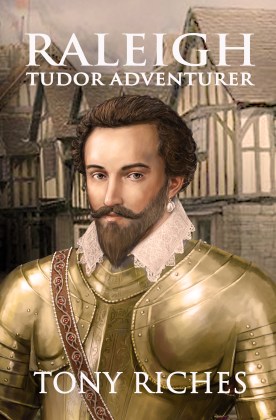
Raleigh coverRaleigh – Tudor Adventurer

(The Elizabethan Series, Book 3)

By Tony Riches

Blurb

Tudor adventurer, courtier, explorer, and poet Sir Walter Raleigh has been called the last true Elizabethan.

He didn’t dance or joust, didn’t come from a noble family, or marry into one. So how did an impoverished law student become a favorite of the queen and Captain of the Guard?

The story, which began with the best-selling Tudor trilogy, follows Walter Raleigh from his first days at the Elizabethan Court to the end of the Tudor dynasty.

Buy Links:

Available on #KindleUnlimited.

Universal Link: mybook. to/Raleigh

Amazon UK: https://www.amazon.co.uk/dp/B09Z98J183

Amazon US: https://www.amazon.com/dp/B09Z98J183

Amazon CA: https://www.amazon.ca/dp/B09Z98J183

Amazon AU: https://www.amazon.com.au/dp/B09Z98J183

Tony Riches Author (1)Author Bio:

Tony Riches

Tony Riches is a full-time UK author of best-selling historical fiction. He lives in Pembrokeshire, West Wales, and is a specialist in the lives of the Tudors. He also runs the popular Stories of the Tudors Podcast’ podcast and posts book reviews and guest posts at his blog, The Writing Desk. For more information, visit his website tonyriches.com and find him on Facebook and Twitter @tonyriches.

Social Media Links:

Blog: https://tonyriches.blogspot.com/

Website: https://www.tonyriches.com/

Podcast: https://tonyriches.podbean.com/

Twitter: https://twitter.com/tonyriches

Facebook: https://www.facebook.com/tonyriches.author

Instagram: https://www.instagram.com/tonyriches.author/

Amazon Author Page: https://www.amazon.com/author/tonyriches

Book Review: “Becoming Anne: Connections, Culture, Court” by Owen Emmerson and Kate McCaffrey

278021206_976866119687329_5395301118592288697_nWhen we study the past, the stories of queens often begin when they marry their prince or the king. We don’t see their formative years unless they are extraordinary. One of the more extraordinary queens in English history was Anne Boleyn, a woman who was able to capture the heart of King Henry VIII, divide her nation, and gave birth to the legendary Queen Elizabeth I. We all know how the story of Anne Boleyn ends, but how did she become the woman who would one day be Queen of England? Hever Castle currently has an exhibition about Anne Boleyn’s formative years. This corresponding book, “Becoming Anne: Connections, Culture, Court” by Owen Emmerson and Kate McCaffrey, gives readers an in-depth look into her early years.

“Becoming Anne: Connections, Culture, Court,” the exhibition to celebrate the 500th anniversary of Anne Boleyn’s debut at the English Court on March 4, 1522, is currently running at Hever Castle until November 9, 2022, for anyone interested in attending. For those who cannot participate in this exhibit, like me, “Becoming Anne: Connections, Culture, Court” by Owen Emmerson and Kate McCaffrey is perfect for celebrating this momentous event in Tudor history.

We begin our exploration of Anne Boleyn’s formative years by looking at how the Boleyn family rose to a prominent position at Henry VIII’s court. Thomas Boleyn rose through the ranks and married well to Lady Elizabeth Howard. The Boleyn children were given the best possible education to secure great marriages. Anne’s education inside England and throughout Europe defined her as a captivating figure in history. Her international education included stays at the court of Margaret of Austria in Mechelen, Queen Mary Tudor, and Queen Claude in France, Louise of Savoy, and Marguerite of Angouleme.

Emmerson and McCaffrey have written a book that combines the latest in Boleyn research from the top experts, including Lauren Mackay, Elizabeth Norton, Tracy Borman, and Claire Ridgway, to name a few. For a companion book for an exhibit about Anne Boleyn, I found this book informative and was complemented by the gorgeous images that the authors included. If you want a delightfully informative and beautifully illustrated book about Anne Boleyn’s formative years, I recommend reading “Becoming Anne: Connections, Culture, Court” by Owen Emmerson and Kate McCaffrey.

Guest Post: “Why I Write Dual Timeline Novels and Why I Choose Present Day” by Clare Marchant

The Queen's Spy Tour BannerToday, I am pleased to welcome Clare Marchant to my blog to discuss her latest novel, “The Queen’s Spy,” and her use of dual timelines. I would like to thank The Coffee Pot Book Club and Clare Marchant for stopping by on this tour. 

I have always loved reading dual timeline novels. I love history (of course!), and although I also read many historical books, both fiction and non-fiction, I love that connection between the past and the present, waiting to find out when the two worlds will meet.

I often wax lyrical about how I am fascinated with the connections that bind us all together, whether family ties, our links to places, objects, or indeed each other. We are all woven together by the way that we are threaded together with everything that we touch. We all have special items, be it family heirlooms or gifts, jewelry, or a book; perhaps that means something special to us. Something that will eventually belong to someone else. When it comes to history, these associations take on a whole new persona as they link over the years or centuries, and I love investigating this through my writing by tying the two stories together through a shared theme, a shared connection.

In Saffron Hall, that relationship, the object that tied the two stories together, was the book of hours. I have a fascination for old illuminated manuscripts, so I wanted to use one of these exquisite small prayer books as the object that united together my two protagonists, showing how the theme, ‘while I breathe, I hope’ touched the lives of them both. They both learn that they must live with the hurt they have endured and to keep taking each day at a time until things get better – they keep breathing and keep hoping. That eventually, time will help them to move on.

In The Queen’s Spy, the object is the triptych that Tom paints, showing his journey, which mirrors in some respects the one in the present day that Mathilde is taking. They are both connected by their shared background of being shunned by society for separate reasons. By being ‘different’ and having to face prejudice and leaving them to lead a peripatetic lifestyle never accepted by those around them. They are always searching for somewhere they will be recognized for who they are and loved for it. By investigating the painting, Mathilde begins to learn more about herself and her place in this world.  And she learns the book’s theme, that she cannot change the past, but she can change the future.

The reason why I choose present-day as my alternative timeline to the Tudor one is that despite the apparent differences to our daily lives between the way we now live compared to how they did in the sixteenth century, I think it shows just how much these morals that guide us affect us all whenever we lived. We are just the same in our hearts, with similar fears, hopes, desires, and despair. People love, they grieve, they laugh, and they cry. In every life, there are shared experiences, precious objects…and precious people.

The Queen's Spy Cover(Blurb)

1584: Elizabeth I rules England. But a dangerous plot is brewing in court, and Mary Queen of Scots will stop at nothing to take her cousin’s throne.

There’s only one thing standing in her way: Tom, the queen’s trusted apothecary, who makes the perfect silent spy…

2021: Travelling the globe in her campervan, Mathilde has never belonged anywhere. So when she receives news of an inheritance, she is shocked to discover she has a family in England.

Just like Mathilde, the medieval hall she inherits conceals secrets, and she quickly makes a haunting discovery. Can she unravel the truth about what happened there all those years ago? And will she finally find a place to call home?

Buy Links:

Amazon UK: https://www.amazon.co.uk/Queens-Spy-gripping-historical-fiction-ebook/dp/B08R6Q4CC9

Amazon US: https://www.amazon.com/Queens-Spy-gripping-historical-fiction-ebook/dp/B08R6Q4CC9

Amazon CA: https://www.amazon.ca/Queens-Spy-gripping-historical-fiction-ebook/dp/B08R6Q4CC9

Amazon AU: https://www.amazon.com.au/Queens-Spy-gripping-historical-fiction-ebook/dp/B08R6Q4CC9

Barnes and Noble: https://www.barnesandnoble.com/w/the-queens-spy-clare-marchant/1139196760

Waterstones: https://www.waterstones.com/book/the-queens-spy/clare-marchant/9780008454357

Kobo: https://www.kobo.com/gb/en/ebook/the-queen-s-spy-2

iBooks: https://books.apple.com/gb/book/the-queens-spy/id1554626619

Audio: https://amzn.to/2QRzT2K

Clare MarchantAuthor Bio:

Growing up in Surrey, Clare always dreamed of being a writer. Instead, she followed a career in IT before moving to Norfolk for a quieter life and re-training as a jeweler.

Now writing full time, she lives with her husband and the youngest two of her six children. Weekends are spent exploring local castles and monastic ruins or visiting the nearby coast.

Social Media Links:

Twitter: https://twitter.com/ClareMarchant1

Facebook: https://www.facebook.com/claremarchantauthor

Instagram: https://www.instagram.com/claremarchant1/?hl=en

Amazon Author Page: https://amzn.to/3fkuf2r