Book Review: “The House of Beaufort: The Bastard Line that Captured the Crown” by Nathen Amin

51ygXgS66nL._SX327_BO1,204,203,200_The houses of York, Lancaster, the  Nevilles, the Howards, the Mowbrays, the Percys, and the Tudors are often recognized as the families involved in the Wars of the Roses. However, there was one more house that was just as important as the others; the Beauforts. The Beauforts were the sons and daughters of John of Gaunt, Duke of Lancaster and his mistress Katherine Swynford. They were considered bastards since they were born out of wedlock, yet they were connected to the house of Lancaster and rose to power by their own right. They would help change not only English history but the history of Europe forever. The Beauforts made a huge impact during the Hundred Years War and the Wars of the Roses, yet many people only recognize Margaret Beaufort and Edmund Beaufort 2nd Duke of Somerset. The Beauforts don’t get much attention. Nathen Amin, the founder of The Henry Tudor Society, wanted to tell the story of this remarkable family.  It is in his book “The House of Beaufort: The Bastard Line that Captured the Crown”, that the Beauforts are given the attention that they rightfully deserve.

Nathen Amin explains why he chose to focus on the Beauforts:

The Beauforts are a family often encountered when reading or studying the fifteenth century and the Wars of the Roses, although commonly relegated to supporting roles in the life and times of more prominent figures like Richard, duke of York, Edward IV, and Henry IV, V, and VI. They were always in the background, serving a king, counselling a king, and even fighting for or against a king. …Yet, there were few family units more influential in the governance of England during the period, and none more devoted to defending the Lancasterian dynasty, whether against France in the last vestiges of the Hundred Years War, or against the House of York in a new war of a very different kind. Born as bastards to a mighty prince, the Beauforts were the right-hand men of their royal kinsmen, amassing considerable authority on the national and continental stage. From uncertain beginnings, the Beauforts became earls, dukes and cardinals, and in time kings themselves, their blood seeping into every corner of the English artistocracy within a few generations of their birth. (Amin, 7).

So how exactly were the Beauforts able to accomplish all of this, going from bastards to kings? It starts with John of Gaunt marrying his mistress Katherine Swynford, making his four children with Katherine legitimate and they were given the name “Beaufort”, after his second marriage did not work out. After their half-brother King Henry IV( also known as Henry of Bolingbroke) became king, he allowed his half-siblings to obtain royal status, however, they could not be in line for the English throne.

John of Gaunt and Katherine Swynford’s four children found a way to live successful lives without pursuing the English throne and they continued to support their Lancasterian family. John Beaufort became the 1st Earl of Somerset and his children became earls, counts, dukes and his daughter Joan became Queen of Scotland. John Beaufort’s granddaughter was Margaret Beaufort, the mother of the future King Henry VII. Henry Beaufort was able to become a very wealthy man and was promoted all the way to Cardinal of England, quite a feat for an English man at that time. Thomas Beaufort became the  1st Duke of Exeter and his sister Joan Beaufort Countess of Westmoreland was the matriarch of the powerful Neville family.

The Beauforts went through numereous highs and lows as they worked hard to protect England and the honor of their Lancastrian relations. Nathen Amin is able to navigate the complex world of the English court during both the Hundred Years War and the Wars of the Roses to give us the intricate story of the Beaufort family. As someone who is acquianted with parts of the Beaufort family story, I found this book rather fascinating and very informative. This was my first time reading a book by Nathen Amin and I cannot wait to read more of his books. In a complex time, it would be easy to forget one person, but Amin spends the time to write about each Beaufort child and how they made a difference.

The only real issue I had with the book was the family tree. I wished that there were birth and death dates included because I found myself getting a tad bit confused about who was who, especially when some of the Beauforts shared the same name and a similar title.

Overall, I found this book extremely fascinating and informative. Amin’s writing style is easy to understand and he brings the Beauforts from the background and onto center stage. They may have started as illegitimate children of John of Gaunt and Katherine Swynford, but they rose to be dukes and kings. If you want to learn more about this remarkable family and their influence in both the Hundred Years War and the Wars of the Roses, I absolutely recommend that you read “The House of Beaufort: The Bastard Line that Captured the Crown” by Nathen Amin.

Biography: Elizabeth of York

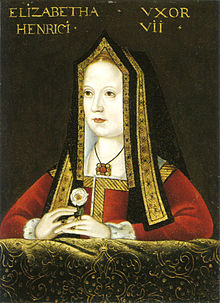
220px-Elizabeth_of_York_from_Kings_and_Queens_of_England(Born February 11, 1466- Died February 11, 1503). Daughter of King Edward IV and Elizabeth Woodville. Married to King Henry VII. Mother of Arthur, Prince of Wales, Margaret, Queen of Scots, Henry VIII, King of England and Mary, Queen of France.
Elizabeth of York was the daughter, niece, sister, wife and mother of kings. It was through her marriage with Henry VII that helped create the Tudor Dynasty.

Elizabeth of York was the eldest child of Edward IV and Elizabeth Woodville. She was born at the Palace of Westminster on February 11, 1466. She was christened at Westminster Abbey; her godparents were Jacquetta of Luxembourg, Duchess of Bedford, Cecily Neville, Duchess of York, and Richard Neville 16th Earl of Warwick. When she was three years old in 1469, she was briefly betrothed to George Neville, the nephew of Richard Neville, but it did not go far since his uncle would die two years later. In 1475, Louis XI agreed to arrange a marriage between nine year old Elizabeth of York to his son, Charles, the Dauphin of France; in 1482, Louis decided not to go along with the promised wedding.

Elizabeth’s world drastically changed forever when her father, Edward IV, suddenly died on April 9, 1483. Her young brother Edward V was proclaimed king and her uncle Richard Duke of Gloucester was named Lord Protector. On April 29, as previously agreed, Richard and his cousin, the Duke of Buckingham, met Queen Elizabeth’s brother, Anthony Woodville, 2nd Earl Rivers, at Northampton. The young king himself had been sent to Stony Stratford. Richard had Earl Rivers, his nephew Richard Grey and his associate, Thomas Vaughan, arrested. They were taken to Pontefract Castle, where they were executed on June 25 on the charge of treason against the Lord Protector after appearing before a tribuna. Richard took the young king under his protection, escorted him to London, and placed him in the Tower for his protection. After hearing about what had happened, Elizabeth Woodville took her children, including Elizabeth of York, her other daughters, her youngest son Richard Duke of York, and fled to sanctuary in Westminster Abbey. Elizabeth Woodville tried to keep her son Richard Duke of York away from Richard Duke of Gloucester, but she eventually did give up her son. We do not know how Elizabeth of York reacted to these events.

In early June of 1483, the marriage between Elizabeth’s parents, Edward IV and Elizabeth Woodville, was declared invalid because it is said that Edward IV had entered into a pre-contract marriage with Lady Eleanor Butler before he married Elizabeth Woodville. This meant that any children of Edward IV and Elizabeth Woodville were considered illegitimate, including Edward V, Richard Duke of York and Elizabeth of York. Since the children of George Duke of Clarence were barred from succession because of their father’s treason and execution, the next in line to the throne was Richard Duke of Gloucester. Richard was crowned King Richard III on July 6, 1483 and Elizabeth’s brothers disappeared. Some say that they were murdered, others say they escaped, but at this point we do not know what happened to Edward V and Richard Duke of York.

Elizabeth’s mother Elizabeth Woodville was now known as Elizabeth Grey and she decided to side with the Duke of Buckingham and Margaret Beaufort to put Margaret’s son Henry Tudor on the throne. Henry Tudor was the closest male Lancastrian heir and in order to cement this new alliance, Elizabeth Woodville and Margaret arranged that Henry would marry Elizabeth of York. Buckingham’s rebellion against Richard would fail and he would be killed on November 2, 1483. In December 1483, Henry Tudor made an oath in Rennes, France that he would marry Elizabeth of York when he became King of England. In January 1484, the act known as Titulus Regius was passed by Parliament, which confirmed under law that the marriage between Edward IV and Elizabeth Woodville was invalid.

On March 1, 1484, Elizabeth Woodville and her daughters left sanctuary after Richard III promised not to harm them and to arrange marriages for all of Elizabeth’s daughters. There were rumors that after Anne Neville in March 1485, Richard III’s wife, died that he was seeking to marry Elizabeth of York, but there is no evidence to support this claim. Soon after Anne Neville’s death, Richard III sent Elizabeth away from court to the castle of Sheriff Hutton and opened negotiations with King John II of Portugal to marry his sister, Joan, Princess of Portugal, and to have Elizabeth marry their cousin, the future King Manuel I of Portugal.

These marriage arrangements did not come to fruition. Elizabeth of York stayed at Sheriff Hutton during August 1485, when Henry Tudor invaded England and on August 22, 1485 when Richard III fell at the Battle of Bosworth Field and Henry Tudor became King. Henry did keep his promise and married Elizabeth of York on January 18, 1486. The couple’s first child, Arthur, was born on September 20, 1486.

During 1487, a young man named Lambert Simnel, claimed that he was the earl of Warwick, Elizabeth’s cousin, so Henry VII had the real earl of Warwick taken from the Tower and paraded through London. It was at the last battle of the Wars of the Roses, the Battle of Stoke Field on June 16, 1487 that Lambert Simnel was defeated. Henry decided to let the boy live and gave him a job at the castle. Elizabeth was crowned on November 25, 1487 and she would have seven children total, four survived into adulthood; Arthur, Henry, Margaret and Mary. Although Elizabeth had a strong claim to the throne, she did not seek to become queen regnant.
In the early 1490s, another threat to the peace emerged with the contention that Elizabeth’s younger brother, Richard, Duke of York, was still alive. Her aunt, Margaret of York, Dowager Duchess of Burgundy and James IV of Scotland, were sponsoring a young man, later revealed to be a youth named Perkin Warbeck. Warbeck received wide-spread support from amongst Yorkists, who did not like Henry VII. Ultimately, however, Warbeck could not command enough support at home or abroad, to mount a successful challenge and in 1497, he was captured.

Warbeck’s wife Lady Catherine Gordon was made one of the ladies-in-waiting for Queen Elizabeth of York. In June 1498, Warbeck was forced to make two public appearances at Westminster and Cheapside, where he admitted that he was not Richard Duke of York and that Margaret of Burgundy was to blame for the entire scheme. Henry VII was kind to Warbeck at the beginning, allowing him to live at court, but Warbeck tried to escape and it landed him in the Tower of London, close to Edward Plantagenet, 17th Earl of Warwick, son of the late George, Duke of Clarence. Warbeck and Warwick plotted to escape the Tower, but the plan was uncovered and both men were charged with treason. Perkin Warbeck was hanged at Tyburn on November 23, 1499. We don’t know if Elizabeth of York ever met Warbeck.

Elizabeth was a very pious woman and was very dedicated to her children’s wellbeing. Elizabeth was very involved in the marriage negotiations for her two eldest children, Arthur and Margaret, Arthur to Katherine of Aragon, daughter of Isabella I of Castile and Ferdinand II of Aragon, and Margaret to James IV of Scotland. Elizabeth helped convince Katherine’s parents that she would be well taken care of and with Margaret’s marriage, Elizabeth was concerned that she was getting married at such a young age.

In November 1501, Katherine of Aragon arrived in England and Elizabeth was part of the celebrations of the marriage. The following year, tragedy hit hard as Arthur died on April 2, 1502. This was a tragic loss for Henry and Elizabeth because this meant that there was only one heir to save the Tudor Dynasty, the young Henry Tudor. While Henry was grieving, it is said that Elizabeth comforted him and told her husband that they were still young enough to have more children. Later, Elizabeth would break down and it was Henry who consoled his wife. Elizabeth would have one more child, a girl named Katherine, on February 2, 1503, but the baby would not live long. Elizabeth of York would die on her 37th birthday, on February 11, 1503.

Biography: Perkin Warbeck

Biography: Perkin Warbeck. (Born around 1474- Died November 23, 1499).Son of John dePerkin_Warbeck-250x300 Werbecque and Katherine de Faro. Married to Lady Catherine Gordon. Perkin Warbeck was one of the pretenders during the reign of Henry VII. He would proclaim himself Richard IV, also known as Richard Duke of York, in 1494.

Perkin Warbeck was born at Tournai in Picardy in 1474 to a poor burgess named John de Werbecque and his wife Katherine de Faro. Warbeck’s early life is difficult to determine because the statements that he used during his confession have been seen as unreliable. From what we can tell, he was taken to Antwerp where he worked several jobs as a servant. He was for a time with an Englishman John Strewe at Middleburg, and then accompanied Lady Brampton, the wife of an exiled partisan of the house of York, to Portugal. Warbeck was also employed by a Portuguese knight named Vacz de Cogna. In 1491, Warbeck was hired by a Breton silk merchant named Pierre Jean Meno and was brought to Cork, Ireland. It was here at Cork that Warbeck would dress up in silks to attract customers and the rumors began to spread that he was the illegitimate son of either George Duke of Clarence or Richard III.

We do not know who encouraged him to become a pretender of Richard Duke of York, but he eventually took on the role. He said that his “brother” Edward V was killed in the Tower and that he, as Richard Duke of York, was spared. He was supposedly smuggled to Europe by Yorkist sympathizers and he was sworn to secrecy. To a lot of people, Warbeck’s story was believable. One of his biggest supporters was Edward IV’s sister Margaret of Burgundy, who in 1492, recognized him as her nephew and the rightful heir to the throne. We are not sure why Margaret accepted Warbeck as her nephew, but she did and helped educate him.

Warbeck travelled through Europe gaining support and recognition, most importantly from Maximilian I the Holy Roman Emperor and Charles VII of France. Maximilian was the one who encouraged Warbeck to proclaim himself Richard IV in October 1494 and to invade England. On July 3, 1495, Warbeck raised his forces and tried to land in England. Henry VII was one step ahead of Warbeck and stopped the invasion, arresting English nobles who supported Warbeck, and forced Warbeck to flee to Ireland, the Netherlands and eventually Scotland. It was there that James IV of Scotland became one of Warbeck’s closest allies since he wanted an alliance between France and Scotland. In order to cement this newfound alliance, James IV allowed Warbeck to marry his cousin Lady Catherine Gordon, the daughter of the earl of Huntly in January 1496.

In September 1496, James IV and Warbeck invaded England, but it failed miserably; it was more like a border skirmish than an invasion. After this failed invasion, Warbeck lost the support of Emperor Maximilian and James IV. Warbeck landed in Cornwall, where the Cornish had rebelled against Henry VII over high taxes. In September 1497, Warbeck raised a local force and besieged Exeter and Taunton before he panicked about the news about Henry VII’s army and fled. Warbeck was finally captured at Beaulieu in Hampshire.

Warbeck’s wife Lady Catherine Gordon was made one of the ladies-in-waiting for Queen Elizabeth of York. In June 1498, Warbeck was forced to make two public appearances at Westminster and Cheapside, where he admitted that he was not Richard Duke of York and that Margaret of Burgundy was to blame for the entire scheme. Henry VII was kind to Warbeck at the beginning, allowing him to live at court, but Warbeck tried to escape and it landed him in the Tower of London, close to Edward Plantagenet, 17th Earl of Warwick, son of the late George, Duke of Clarence. Warbeck and Warwick plotted to escape the Tower, but the plan was uncovered and both men were charged with treason. Perkin Warbeck was hanged at Tyburn on November 23, 1499.

Biography: The Princes in the Tower (Edward V and Richard Duke of York)

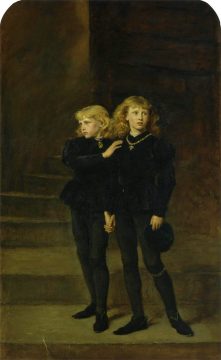
PrincesEdward V (Born November 2, 1470- Date of Death Unknown). Richard Duke of York (Born August 17, 1473- Date of Death Unknown). Sons of King Edward IV and Elizabeth Woodville. Richard was married to Anne Mowbray. Edward V and Richard Duke of York are known as “The Princes in the Tower”. They were placed in the Tower of London after their father’s death and were never seen again. Their disappearances and whether or not they were murdered has become one of the greatest mysteries in history.

Edward and Richard were both the sons of Edward IV and Elizabeth Woodville. Edward IV had married Elizabeth Woodville in secret, causing distrust between Edward and his biggest ally Richard Neville Earl of Warwick. With the rise of the Woodvilles, Warwick feared that they would overthrow his title of the second most powerful man in England.

Warwick decided to side with Edward’s power hungry younger brother George Duke of Clarence, and Louis XI of France, who promised Warwick land in France if he overthrew Edward. Warwick’s plan was to depose Edward and place George on the throne. Warwick had Edward imprisoned in the Tower, but when his reputation began to suffer, he released Edward in October 1469. Warwick and George both decided to reconciled with Edward but Edward never truly trusted either of them ever again.

Warwick knew that if he was going to restore his power, he had to discuss matters with Louis XI and Margaret of Anjou, which meant that he had to defect to the Lancastrian cause, which he did. In September 1470, Warwick and his rebellion made its way to England; Edward was unprepared and was forced to leave England on October 2 and seek aid from his brother in law the duke of Burgundy. His wife Elizabeth Woodville and their children were forced to seek sanctuary at Westminster Abbey. It was there on November 2, 1470 that the future Edward V was born.

Edward returned to England on March 11, 1471. His army defeated Warwick’s army at the Battle of Barnet, where Warwick and John Neville were killed. On May 4, 1471, Edward faced off against the Lancastrian army at the Battle of Tewkesbury, where the Lancastrians were finally defeated and Edward of Westminster was killed. Edward V was created Prince of Wales in June 1471. In 1473, Edward V was moved to Ludlow Castle and was created president of the Council of Wales and the Marches. Edward was in the care of the queen’s brother Anthony, Earl of Rivers, who was a renowned scholar.

Edward’s brother Richard was born on August 17, 1473. In May 1474, he was made Duke of York and the following year, Richard was made a Knight of the Garter. From this point on, the second son of the king was created Duke of York. On June 12, 1476, Richard was created Earl of Nottingham. It was on January 15, 1478 that Richard was married to Anne Mowbray, 8th Countess of Norfolk. The groom was around 4 years old and the bride was 5 years old. On February 7, 1477, Richard was created Duke of Norfolk and Earl Warenne. Richard’s brother Edward was arranged to be married to Anne of Brittany in 1480 to conclude an alliance between England and Brittany, but the marriage never happened. In November 1471, Anne Mowbray died and instead of her Mowbray estates passing onto the next heirs, William, Viscount Berkeley and to John, Lord Howard, Parliament ruled in January 1483 that the estates would pass onto Richard Duke of York.

On April 9, 1483, Edward IV died, leaving his eldest son Edward V to be king at the age of 12. Edward did not hear about his father’s death until April 14, 1483 since he was at Ludlow Castle at the time. Edward IV’s brother Richard Duke of Gloucester was named Lord Protector. On April 29, as previously agreed, Richard and his cousin, the Duke of Buckingham, met Queen Elizabeth’s brother, Anthony Woodville, 2nd Earl Rivers, at Northampton. At the queen’s request, Earl Rivers was escorting the young king to London with an armed escort of 2000 men, while Richard and Buckingham’s joint escort was 600 men. The young king himself had been sent to Stony Stratford. Richard had Earl Rivers, his nephew Richard Grey and his associate, Thomas Vaughan, arrested. They were taken to Pontefract Castle, where they were executed on June 25 on the charge of treason against the Lord Protector after appearing before a tribunal led by Henry Percy, 4th Earl of Northumberland. Richard took the young king under his protection, escorted him to London, and placed him in the Tower for his protection. Elizabeth Woodville took her daughters and Richard Duke of York and fled to sanctuary at Westminster Abbey yet again.

The coronation for Edward V was scheduled for June 1483, but it was postponed. On June 16, it is said that Richard Duke of York joined his brother in the Tower. It was around this time that Richard Duke of Gloucester announced that he believed that Edward IV’s marriage to Elizabeth Woodville had been illegal since Edward IV had a pre-contract marriage arrangement with Lady Eleanor Butler. This meant that his children with Elizabeth Woodville were considered illegitimate, including the young king Edward V and his brother Richard. This meant that the next in line to the throne, Richard Duke of Gloucester, was the rightful king. On June 25, 1483, King Edward V was deposed and Richard Duke of Gloucester became Richard III. We do not know if it is true if Edward IV did indeed enter into a pre-contract marriage with Lady Eleanor Butler.

Edward V and Richard Duke of York were last seen in the Tower in the summer of 1483. We do not know what happened to them. There are theories that they were murdered, which includes a list of suspects including their uncle Richard III as the main suspect. There are also theories that the boys somehow managed to escape the Tower and came back as pretenders like Lambert Simnel or Perkin Warbeck. The simple fact is right now, we do not know what happened to Edward V and Richard Duke of York, “the Princes in the Tower”.

Biography: King Richard III

mw05304(Born October 2, 1452- Died August 22, 1485). Son of Richard 3rd Duke of York and Cecily Neville. Married to Anne Neville. Father of Edward of Middleham, Prince of Wales.
Richard III is one of the most controversial kings in English history. His death at the Battle of Bosworth Field led to the beginning of the Tudor Dynasty.

Richard III was born to Richard 3rd Duke of York and Cecily Neville on October 2, 1452 at Fotheringhay Castle in Northamptonshire. Many believed that it was a difficult birth. What we do know from historical records is that he might have been breeched born, which means that he was born upside down, which might have led to his physical deformities. From what we do know from examining his skeleton is that he had scoliosis, a sideways curvature of the spine.

Richard’s father was one of the most important men in all of England. He was a loyal follower to King Henry VI and when Henry VI had his bouts of mental illness, it was Richard Duke of York who would become the Lord Protector. York’s enemy was Edmund Beaufort Duke of Somerset, who was an ally of Margaret of Anjou; York had Somerset arrested during his protectorate but when the king recovered, Somerset was released and all of York’s reforms were reversed. York decided to face off against Somerset at the First Battle of St. Albans in 1455, where Somerset was killed. This was the first major battle in The Wars of the Roses. Margaret of Anjou never trusted York, especially when the king decided to name York and his sons the next heir to the throne, dismissing his son Edward of Westminster. Margaret of Anjou formed the Lancastrian army to face off against York and his ally Richard Neville Earl of Warwick.

It would be on December 30, 1460 when Richard’s life would radically change. This was the day when his father and eldest brother Edmund Earl of Rutland both died at the Battle of Wakefield. As the next Duke of York, Richard’s brother Edward was left the task of avenging their father’s death, with the help of Richard Neville, Earl of Warwick. Edward did so at the Battle of Towton on March 29, 1461. This battle would ultimately lead to Edward being crowned king on June 28, 1461. Around the same time, Richard was declared Duke of Gloucester and made a Knight of the Garter and Knight of the Bath.

With this new title and his brother being King of England, Richard’s home life changed greatly. He moved to the castle of Middleham, home of Richard Neville Earl of Warwick, where he continued his education for at least four years. This was where he became friends with Francis Lovell and Robert Percy, two of his closest allied; he would also meet his future wife, Anne Neville, the daughter of the Earl of Warwick, here. Richard would leave Warwick’s household in 1468.
Warwick and Richard’s brother Edward IV were close since Warwick helped Edward become king. That was until Warwick found out that Edward had married Elizabeth Woodville instead of marrying the French princess that Warwick had in mind in order to create an English- French alliance. This was seen as an act of betrayal by not only Warwick, but the other lords of the court since it meant that Elizabeth’s family members would have a chance to marry well, thus allowing her family to move up in society. Around this time, Warwick was trying to arrange marriages for his daughters Anne and Isabel to George Duke of Clarence and Richard Duke of Gloucester, the brothers of the king. Edward did not approve of this idea at all.

Warwick decided to marry his daughter Isabel to George Duke of Clarence in July 1469, and Warwick tried to put George on the throne instead of Edward, which angered Edward IV and Parliament. Warwick took his family and his son-in-law George to France where Warwick reconciled with Margaret of Anjou. In order to cement their new alliance in order to get Henry VI back on the throne, Warwick had Anne marry Edward of Westminster, Prince of Wales, on December 13, 1470, making Anne Neville Princess of Wales. Their marriage would not last long.

During this time, Richard stayed loyal to his brother Edward and when Warwick came back in October 1470, Richard and Edward fled to Burgundy. They came back in March 1471. On April 14, 1471 at the Battle of Barnet, Warwick was killed. A few weeks later, on May 4, 1471 at the battle of Tewkesbury, Edward of Westminster, Prince of Wales, was killed and Henry VI was placed in the Tower. On May 21, 1471, King Henry VI was murdered. It is unknown who killed him, but many suspect that it was under the orders of King Edward IV. Some believe that Richard may have had a hand in this murder, but there is no evidence to either support or deny this claim.

Anne Neville was now a very powerful widow and there were again talks about her marrying Richard Duke of Gloucester. This made George Duke of Clarence nervous since he didn’t want to share the Warwick inheritance with his brother. George treated Anne like she was his ward and opposed her getting married. The story goes that George made Anne dress as a maid and hid her in a London shop, but Richard found her and escorted her to sanctuary at the Church of St Martin’s le Grand. George and Richard would feud about the lands that belonged to Anne and Isabel’s mother Anne Beauchamp. Edward resolved the matter by splitting the inheritance between the two sisters. This paved the way for Anne and Richard to be married, probably in the spring of 1472.

George would cause more trouble for Edward. Isabel died on December 22, 1476. Though it is believed that Isabel died of either consumption or childbed fever , George was convinced she had been poisoned by one of her ladies-in-waiting, Ankarette Twynyho, whom, as a consequence, he had judicially murdered in April 1477 right after her trial. The same year, George was eligible for Mary Duchess of Burgundy’s hand, but when Edward refused the marriage suit, George left court.

Edward was convinced that George was aiming at his throne after three of George’s men were tried for treason and were executed. George was thrown into prison, and in January 1478 the king unfolded the charges against his brother to the parliament. He had slandered the king; had received oaths of allegiance to himself and his heirs and had prepared for a new rebellion. Both Houses of Parliament passed the bill of attainder, and the sentence of death was announced. It is said that Edward gave his brother a choice on how he would die and George said that he would like to be drowned in a butt of Malmsey wine. What we do know is that George Duke of Clarence was executed in private in February 1478.

After George’s execution, Richard left court to take care of things in northern England. He conducted a few campaigns against James III of Scotland in 1482, which resulted in England regaining possession of Berwick, as well as the English advancing into Edinburgh. Richard was seen by his peers as a wise and strong general who ruled northern England and was granted palatine powers in the west in March 1483. Two months later, Richard’s world would change forever.

On April 9, 1483 Edward IV died and his son Edward V became king, Richard was named Lord Protector. On April 29, as previously agreed, Richard and his cousin, the Duke of Buckingham, met Queen Elizabeth’s brother, Anthony Woodville, 2nd Earl Rivers, at Northampton. At the queen’s request, Earl Rivers was escorting the young king to London with an armed escort of 2000 men, while Richard and Buckingham’s joint escort was 600 men. The young king himself had been sent to Stony Stratford. Richard had Earl Rivers, his nephew Richard Grey and his associate, Thomas Vaughan, arrested. They were taken to Pontefract Castle, where they were executed on June 25 on the charge of treason against the Lord Protector after appearing before a tribunal led by Henry Percy, 4th Earl of Northumberland. Richard took the young king under his protection, escorted him to London, and placed him in the Tower for his protection. After hearing about what had happened, the dowager queen Elizabeth Woodville took her children, including her daughters and her youngest son Richard Duke of York, and fled to sanctuary in Westminster Abbey.

At a council meeting on June 13 at the Tower of London, Richard accused William Hastings and others of having conspired against him with the Woodvilles. Hastings, once a loyal supporter of Richard and a staunch opponent of the Woodvilles, was executed without trial. On June 16, the dowager queen agreed to hand over the Duke of York to the Archbishop of Canterbury so that he might attend his brother Edward’s coronation. Richard was said to have been informed with information that Edward V was illegitimate because Edward IV had entered into a previous marriage contract. On June 22nd, the day which was supposed to be Edward V’s coronation, Dr. Ralph Shaa gave a sermon at Old St. Paul’s Cathedral declaring that Edward IV’s children, the young king, his brother and sisters, were illegitimate. On June 25, Parliament agreed that Edward V was illegitimate and the following day, June 26, Richard was proclaimed king. His joint coronation with his wife Anne Neville would occur on July 6, 1483, and his title was confirmed in an act of Parliament called the Titulus Regius, which was passed in January 1484.

We do not know what happened to the Princes in the Tower, Edward V and Richard Duke of York. They disappeared from sight after the summer of 1483, which has led many to speculate that Richard III had them murdered. At this point we cannot confirm or deny this theory. We don’t even know if they were murdered at all. It still remains one of the biggest unsolved mysteries in history.

Although secure on the throne, Richard had to deal with some rebellions. The main rebellion came from his once loyal supporter Henry Stafford, duke of Buckingham. Buckingham decided to support the Woodvilles, Henry Tudor and his mother Margaret Beaufort to have Henry Tudor replace Richard III as king of England.

A widespread plot was soon formed, but Richard had early warning, and on October 15, 1483, he issued a proclamation against Buckingham. Buckingham, as arranged, prepared to enter England with a large force of Welshmen. Buckingham’s troops were stopped by a massive flood on the Severn and he himself took refuge with a follower, Ralph Bannister, at Lacon Hall. Bannister betrayed him for a large reward, and on the November 1, 1483, Buckingham was brought to the king at Salisbury. Buckingham never saw Richard III and right after his trial on November 2, 1483, a Sunday, he was beheaded in the courtyard between the Blue Boar Inn and the Sarcen’s Head Inn near the marketplace at Salisbury.

Richard was actual a very good ruler. He treated his subjects fairly and was highly regarded as a monarch by the English and his European counterparts. He was a pious man and was a staunch supporter of the church. In April 1484, Richard’s only legitimate son, Edward of Middleham, died, leaving Richard and Anne devastated. On March 16, 1485, Anne Neville died of possibly tuberculosis. There were rumors that Richard was trying to marry his niece Elizabeth of York and he had poisoned Anne to do so, but there is no evidence to prove these rumors.

Henry Tudor was able to make it to England in August 1485. Richard faced off against Henry Tudor at the Battle of Bosworth Field, on August 22, 1485. Richard’s army outnumbered Henry’s by quite a bit. Richard divided his army, which outnumbered Henry’s, into three groups. One was assigned to the Duke of Norfolk and another to the Earl of Northumberland. Henry kept most of his force together and placed it under the command of the experienced Earl of Oxford. Richard’s vanguard, commanded by Norfolk, attacked but struggled against Oxford’s men, and some of Norfolk’s troops fled the field. Northumberland took no action when signaled to assist his king, so Richard gambled everything on a charge across the battlefield to kill Henry and end the fight. Seeing the King’s knights separated from his army, the Stanleys intervened; Sir William Stanley led his men to Henry’s aid, surrounding and killing Richard. Richard’s body was stripped naked and it was carried on a pack horse to the Greyfriars Church in Leicester. His remains were found in 2012 under a parking lot in Leicester and he was reburied at Leicester Cathedral on March 26, 2015.

Biography: Cecily Neville, Duchess of York

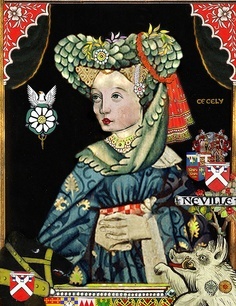
cecily_neville_originalAlso known as “the Rose of Raby” and “Proud Cis”. (Born May 3, 1415-Died May 31, 1495). Daughter of Ralph Neville, 1st Earl of Westmorland and Joan Beaufort. Married to Richard Plantagenet 3rd Duke of York. Mother of Anne, Duchess of Exeter, Edward IV, King of England, Edmund, Earl of Rutland, Elizabeth, Duchess of Suffolk, Margaret, Duchess of Burgundy, George, 1st Duke of Clarence and Richard III, King of England.
Cecily Neville was the mother of two kings of England, Edward IV and Richard III. She was known for her piety and her pride.

Cecily Neville was the daughter of Ralph Neville, 1st Earl of Westmorland and Joan Beaufort. Her paternal grandparents were John Neville, 3rd Baron Neville de Raby, and Maud Percy, daughter of Henry de Percy, 2nd Baron Percy. Her maternal grandparents were John of Gaunt, 1st Duke of Lancaster, and his third wife Katherine Swynford, thus making her a great granddaughter of King Edward III on her mother’s side of the family. She was born on May 3, 1415 at Raby Castle in Durham thus gaining the nickname “the Rose of Raby”. Her father Ralph Neville was granted the wardship of a young Richard Plantagenet, 3rd Duke of York and in 1424, she was betrothed to Richard. When Ralph Neville died in 1425, his widow Joan Beaufort was able to maintain the wardship of Richard Plantagenet. In October 1429, Richard and Cecily were married; their first child Anne was not born until August 1439.

Richard was made king’s lieutenant and governor general of France in 1441; Cecily and Anne moved to Rouen to be with him. They had a son Henry but he would die soon after he was born. On April 28, 1442, their son the future Edward IV was born in Rouen. He was baptized shortly afterward, which caused both his cousin Richard Neville, Earl of Warwick and his own brother George Duke of Clarence to question if he was actually the son of Richard Plantagenet. These claims were dismissed as attempts to remove Edward from the throne. Richard Plantagenet always acknowledged Edward as his own son. In total, Cecily and Richard would have 13 children including Edward IV, George Duke of Clarence and Richard III.

Richard had an enemy at court and that was Edmund Beaufort, 2nd Duke of Somerset, a cousin of Cecily Neville. Richard did not like how close Somerset was to the king and to Margaret of Anjou. In 1454, Henry VI had a mental breakdown and it was Richard, not Somerset, who was made Lord Protector and Richard threw Somerset in prison. Richard was removed from the post in 1455, all of his reforms were changed and Somerset was released from prison. This infuriated Richard and so he decided to march against Somerset at the First Battle of St. Albans where Somerset was killed. During this time, Cecily and her children were living in Ludlow Castle, even when Richard fled to Ireland and the European continent. In November 1459, Cecily travelled to London to plead for her husband’s cause to Parliament. Richard lost all of his titles but Cecily was able to get a grant of 600 pounds for her efforts in order to provide for her children.

1460 was a year of change for the York family. When the Yorkist army won at the Battle of Northampton in July 1460, Cecily moved her family to London where they stayed with the lawyer John Paston. Richard and his heirs were declared Henry VI’s successors in the Act of Accord, which made Cecily a queen-in-waiting. This pushed Edward of Westminster, Prince of Wales, out of the line of succession, which angered his mother Margaret of Anjou. Margaret led the Lancastrian army against the Yorkist army at the battle of Wakefield on December 30, 1460, where Richard Duke of York and his son Edmund Earl of Rutland were killed. Cecily sent her young sons George and Richard to the court of Philip II duke of Burgundy for their protection, making Philip an ally of the Yorkist cause.

Cecily’s son Edward took up the Yorkist cause with the help of Richard Neville, Earl of Warwick. Edward was able to defeat the Lancastrians and become king, making Cecily mother of the king. In 1461, Cecily included the royal arms of England on her own coat of arms, which hinted that her husband was the rightful king of England. When Edward married Elizabeth Woodville in 1464, he built a new queen’s quarter for Elizabeth and let Cecily stay in the old queen’s quarters. When Warwick and Cecily’s son George rebelled in 1469 against Edward, Cecily worked hard to get both sides to reconcile, which briefly happened. Warwick and George went to France and joined the Lancastrian cause. In 1470, the Lancastrian cause under Warwick overthrew Edward and placed Henry VI back on the throne. It only lasted for six months and on April 14, 1471, Edward came back to the throne and Warwick was killed.

Edward never really trusted George again and on February 18, 1478, George was executed for treason at the Tower of London. This must have been a difficult moment for Cecily as one son had another executed for treason. Edward IV would die suddenly on April 9, 1483, leaving his young son Edward V as the next king of England. He was 13 and his younger brother Richard was 10 years old. Richard, Cecily’s youngest son and the boys’ uncle, became their Lord Protector. He had the boys placed in the Tower and they were never seen again. There was an enquiry into Edward’s marriage to Elizabeth Woodville and they found that it was invalid and an Act of Parliament called the Titulus Regius declared that the Princes in the Tower were illegitimate and that paved the way for Richard to become Richard III on July 6, 1483. Cecily got along rather well with Richard’s wife Anne Neville and would often discuss religious matters with her, until Anne died.

On August 22, 1485, Richard III was killed at the Battle of Bosworth Field and Henry Tudor became Henry Tudor. Cecily’s husband and all four of her sons were dead by 1485, Edward IV was the only one by natural causes. On January 18, 1486, Cecily’s granddaughter Elizabeth of York married Henry VII and help bring forth the Tudor Dynasty. At this time, Cecily devoted her life to religious duties and she gain a reputation for her piety. Cecily Neville never married again and on May 31,1495, she died. She was buried in the tomb with her husband Richard and their son Edmund at the Church of St Mary and All Saints, Fotheringhay, Northamptonshire.

Biography: George Plantagenet 1st Duke of Clarence

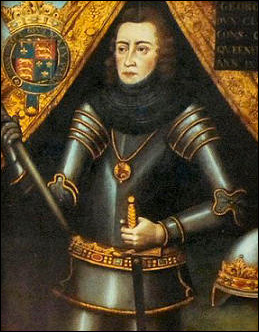
georgeclarence(Born October 21, 1449- Died February 18, 1478). Son of Richard Plantagenet, 3rd Duke of York and Cecily Neville, Duchess of York. Married to Isabel Neville, Duchess of Clarence.
Father of Anne of York, Lady Margaret Pole, Countess of Salisbury, Edward Plantagenet, 17th Earl of Warwick, Richard of York. George was a young man who believed that he would be a better king than his brother Edward IV. He revolted a few times and it led to his death by an unusual means.

George Plantagenet was born on October 21, 1449 to Richard Plantagenet, 3rd Duke of York and Cecily Neville, Duchess of York. His father died at the battle of Wakefield on December 30, 1460 and in March 1461, his brother became King Edward IV. George was created the 1st Duke of Clarence and a Knight of the Garter by his brother and the following year, he received the Honour of Richmond and was created lord-lieutenant of Ireland.

When George was named as a possible suitor for Mary, the daughter of Charles the Bold, later the Duke of Burgundy, he would enter into the influence of Richard Neville, 16th Earl of Warwick. Warwick, also known as “the kingmaker”, helped Edward IV become king but when Edward married Elizabeth Woodville instead of Bona of Savoy, which would have established an alliance with France, Warwick and Edward were not as close as they once were. Warwick decided to get back at Edward and in July 1469, George married Warwick’s daughter Isabel (or Isabella), which was a marriage that Edward did not support at all.

Warwick then started a series of uprisings in northern England; Edward was a popular king but his marriage with Elizabeth Woodville sullied his image a little while Warwick was seen as a national hero. Edward did employ an army, but when he saw that he was outnumbered, he dispersed his army and allowed himself to be captured by Warwick. Warwick had Edward imprisoned in the Tower, but when his reputation began to suffer, he released Edward in October 1469. Warwick and George both decided to reconciled with Edward but Edward never truly trusted either of them ever again.

George was loyal to his brother, but when Warwick deserted Edward and fled to France, George went with his father in law. On the way to France, Isabel gave birth to their first child, a girl, on 16 April 1470, in a ship off Calais. The child would not survive. Warwick joined forces with Margaret of Anjou and Louis XI of France to restore Henry VI to the throne. In September 1470, Warwick and his rebellion made its way to England. Warwick removed Henry VI from the Tower and restored him to the throne.

Henry VI rewarded George by making him next in line to the throne after his own son, removing Edward IV from the line of succession completely. Warwick had his younger daughter, Anne Neville, George’s sister-in-law, marry Henry VI’s son in December 1470. This obviously infuriated George since this meant that Warwick had no desire of making George the next king and so George secretly reconciled with his brother.

Warwick made a mistake and decided to take Louis XI’s advice and declare war on Burgundy. This forced the duke of Burgundy, who had stayed on the sidelines this entire time, to help Edward IV raise an army. Edward returned to England on March 11, 1471. His army defeated Warwick’s army at the Battle of Barnet in April 1471, where Warwick was killed. After Warwick’s death in April 1471 Clarence appears to have seized a vast sum of the estates Warwick owned. George did not gain all of Warwick’s properties as his younger brother Richard Duke of Gloucester married the widow Anne Neville. In March 1472 was created by right of his wife Earl of Warwick and Salisbury. A quarrel between George and Richard ensued, and in 1474 the king interfered to settle the dispute, dividing the Warwick estates between his brothers.

In 1475 George ‘s wife Isabel gave birth to a son, Edward, later Earl of Warwick. Isabel died on December 22, 1476, two months after giving birth to a short-lived son named Richard. Though it is believed that Isabel died of either consumption or childbed fever , George was convinced she had been poisoned by one of her ladies-in-waiting, Ankarette Twynyho, whom, as a consequence, he had judicially murdered in April 1477 right after her trial. The same year, George was eligible for Mary Duchess of Burgundy’s hand, but when Edward refused the marriage suit, George left court.

Edward was convinced that George was aiming at his throne after three of George’s men were tried for treason and were executed. George was thrown into prison, and in January 1478 the king unfolded the charges against his brother to the parliament. He had slandered the king; had received oaths of allegiance to himself and his heirs and had prepared for a new rebellion. Both Houses of Parliament passed the bill of attainder, and the sentence of death was announced. It is said that Edward gave his brother a choice on how he would die and George said that he would like to be drowned in a butt of Malmsey wine. What we do know is that George Duke of Clarence was executed in private either on February 17th or 18th 1478. Two of his children would outlive him: Edward earl of Warwick, who was executed in 1499, and Margaret Pole Countess of Salisbury.

Biography: Richard Neville,16th Earl of Warwick

62624506_129166816586Also known as “the Kingmaker”. (Born November 22, 1428- Died April 14, 1471). Son of Richard Neville, 5th Earl of Salisbury and Alice Montacute, 5th Countess of Salisbury. Married to Anne Beauchamp, 16th Countess of Warwick. Father of Isabel, Duchess of Clarence and Anne, Queen of England. Warwick “the Kingmaker” was the man who helped put Edward IV on the throne, but it was his greed for power and a broken alliance with Edward IV that would lead to his downfall.

Richard Neville was born on November 22, 1428 to Richard Neville, 5th Earl of Salisbury and Alice Montacute, 5th Countess of Salisbury. His father had gained his title of Earl of Salisbury through his marriage to Alice Montacute. We don’t know much about Richard’s childhood except that he was betrothed to Anne Beauchamp at the age of six. She was the daughter of daughter of Richard de Beauchamp, 13th Earl of Warwick, and of his wife Isabel Despenser, making Richard not only the heir to the earldom of Salisbury, but heir to a large part of the Montague, Beauchamp, and Despenser inheritance. With the death of Beauchamp’s son Henry, who was married to Richard’s sister Cecily in 1446 and the death of Henry’s daughter Anne in 1449, Richard found himself the new Earl of Warwick. This was disputed by Edmund Beaufort, 2nd Duke of Somerset, who married another one of Beauchamp’s daughters from Beauchamp’s first marriage, not because of the titles since the daughters were barred from the line of succession, but because of the land. Richard Neville was now the 16th Earl of Warwick.

Warwick became a knight probably at the coronation of Margaret of Anjou on April 22, 1445. He and his father helped to calm the unrest in the north. They may have helped in the war against Scotland in 1448-1449. When Richard, Duke of York, rose against the king in 1452, Warwick and his father sided with Henry VI and York’s revolt ultimately failed.

In June 1453, Somerset was granted custody of the lordship of Glamorgan, which was part of the Despenser inheritance. This made Warwick upset and a conflict started between the two men. Unfortunately, Somerset was an ally of Margaret of Anjou and was a favorite in the court of Henry VI so Warwick had no choice but  to align himself with York. When York became the Lord Protector when Henry VI fell ill, Warwick and his father decided to fully support York. York’s first protectorate would not last long and Somerset fell back into favor, which angered York and Warwick. Warwick rallied an army with York and Warwick’s father and met Somerset at the First Battle of St. Albans, where Somerset was killed. This battle was the start of the Wars of the Roses.

After the First Battle of St. Albans, Henry VI fell ill again and York became Lord Protector for a second time. It didn’t last long, but after York was removed from his position of Protector, Warwick was granted  the title of Constable of Calais, which would become a valuable position during the conflict of the Wars of the Roses. He was able to gain military experience, as well as gain important allies Charles VII of France and Philip the Good of Burgundy. In  September 1459, Warwick was able to help lead a Yorkist army to victory against the Lancastrians at the Battle of Blore Heath. In 1459, at the battle of Ludlow, the Lancastrians won and sent the Yorkists into hiding. York fled to Ireland with his son Edmund Earl of Rutland, while Warwick took Edward Earl of March with him to Calais. The Yorkists came back with a vengeance at the battle of Northampton, where Henry VI was taken captive.

In 1460 York officially declared his claim to the throne. After much discussion, it was agreed that after the king died, York and his sons would be the heirs to the throne, removing Edward of Westminster from the line of succession. Henry VI seemed to have been okay with this arrangement, but Margaret was beyond upset. She led the Lancastrian forces to face off against York at the battle of Wakefield on December 30, 1460. York and his son Edmund, Earl of Rutland, were killed in the battle. Edward was 18 at the time of his father’s death.

Edward was now in charge of the Yorkist faction and with the help of Warwick, he was able to defeat the Lancastrian army at both the battle of Mortimer’s Cross and the Second Battle of St. Albans in February 1461. On March 4, 1461, Edward declared himself king of England, a move that his father never attempted to make. Three weeks later at the Battle of Towton on March 29, 1461, the bloodiest battle on English soil, Edward  and Warwick were able to decisively beat Henry VI’s forces and secure Edward’s claim to the throne. Henry VI and Margaret of Anjou fled to Scotland to seek the aid of James III.

Edward was declared Edward IV and  was welcomed to the throne. Edward owed a lot to his cousin Warwick, also known from that point on as  “the Kingmaker”, and he rewarded him greatly. He was made the Chamberlain of England , High Admiral of England and Steward of the Duchy of Lancaster, along with several other offices. Warwick was considered the second most powerful man in England. Warwick’s  brothers also benefited: John Neville, Lord Montagu, was made Warden of the East March in 1463, and the next year created Earl of Northumberland. George Neville, Bishop of Exeter, was confirmed in his post as chancellor by King Edward, and in 1465 was promoted to the archbishopric of York. In the summer of 1462, Warwick was able to negotiate a truce with  both Scotland and France, which allowed Warwick to be granted Lancastrian properties.

Warwick and Edward were considered close. However that would change very quickly. Warwick knew that Edward would have to marry well and so under his own initiative, he set to secure an alliance with the French King Louis XI by marrying Edward IV to the French king’s daughter Bona of Savoy. Edward wasn’t really thrilled about an alliance with France; he had actually prefered an alliance with Burgundy. Edward decided to take the issue of  his marriage into his own hands. In May 1464, he secretly married Elizabeth Woodville, the daughter of the 1st Lord of Rivers and Jacquetta Rivers, and the widow of Sir John Grey. They were able to keep the marriage a secret for over four months and when it was announced, there was an uproar. Her family was always supporters of the Lancastrian cause and there was a rumor, that we cannot confirm or deny as of right now, that Edward entered into a similar marriage contract with Lady Eleanor Butler a year or two before he married Elizabeth.

Warwick was obviously the most upset about this marriage because he had spent so much time setting up an alliance  with France to be thwarted. With the rise of the Woodvilles, Warwick feared that they would overthrow his title of the second most powerful man in England. Edward thwarted Warwick’s plans to marry his family with the king’s and the final straw for Warwick was when Edward married his sister Margaret to Charles duke of Burgundy, cementing an alliance between England and Burgundy, which was not what Warwick wanted. Warwick realized that the gap between him and Edward was too large.

Warwick decided to side with Edward’s power hungry younger brother George Duke of Clarence, and Louis XI of France, who promised Warwick land in France if he overthrew Edward. Warwick’s plan was to depose Edward and  place George on the throne. In July 1469, Warwick successfully married George to his daughter Isabel, which was something that Edward did not approve of. Warwick then started a series of uprisings in northern England; Edward was a popular king but his marriage with Elizabeth Woodville sullied his image a little while Warwick was seen as a national hero. Edward did employ an army, but when he saw that he was outnumbered, he dispersed his army and allowed himself to be captured by Warwick. Warwick had Edward imprisoned in the Tower, but when his reputation began to suffer, he released Edward in October 1469. Warwick and George both  decided to reconciled with Edward but Edward never truly trusted either of them ever again.

Warwick knew that if he was going to restore his power, he had to discuss matters with Louis XI and Margaret of Anjou, which meant that he had to defect to the Lancastrian cause, which he did. In September 1470, Warwick and his rebellion made its way to England. John Neville switched sides, which left Edward unprepared and it forced him to leave England on October 2 and seek aid from his brother in law the duke of Burgundy. Warwick removed Henry VI from the Tower and restored him to the throne. Warwick made a mistake and decided to take Louis XI’s advice and declare war on Burgundy. This forced the duke of Burgundy, who had stayed on the sidelines this entire time, to help Edward IV raise an army. Edward returned to England on March 11, 1471. His army defeated Warwick’s army at the Battle of Barnet, where Warwick and John Neville were killed.

Biography: King Edward IV

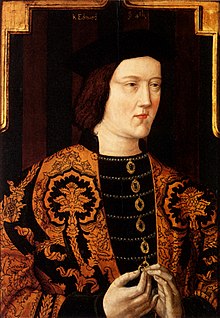
220px-Edward_IV_Plantagenet(Born April 28, 1442- Died April 9, 1483). Son of Richard, 3rd  Duke of York and Cecily Neville. Married to Elizabeth Woodville. Father of Elizabeth of York, Mary of York, Cecily of York, Edward V of England, Margaret of York, Richard of Shrewsbury, 1st Duke of York, Anne of York, George Plantagenet, 1st Duke of Bedford, Catherine of York, and Bridget of York. Edward IV was the first king from the house of York, but he was still a Plantagenet. He helped bring the country together, especially financially, but his one flaw was his private life, where he was unwise and naive. 

Edward IV was born on April 28, 1442 to Richard, 3rd Duke of York and Cecily Neville, and was given the title of the Earl of March. Richard Duke of York, Edward’s father, was the Lord Protector when Henry VI had his bouts of mental illness, but once the king got well, York was removed from the position and his reforms were reversed. One of his biggest rivals was  Edmund Beaufort, Duke of Somerset. In 1455, York had enough of Somerset and marched against him at the First Battle of St. Albans, where Somerset was killed. It was then that Margaret of Anjou took up her husband’s cause. She encouraged the new duke of Somerset Henry Beaufort to fight against York. The battlelines were being drawn. The Yorkists were led by Richard duke of York, Richard Neville earl of Salisbury and his son Richard Neville earl of Warwick. The Lancastrians were under Henry VI, but led by Margaret of Anjou, Somerset, and Henry Percy, third earl of Northumberland. In 1459, at the battle of Ludlow, the Lancastrians won and sent the Yorkists into hiding; however the Yorkists came back with a vengeance at the battle of Northampton.

In 1460 York officially declared his claim to the throne. After much discussion, it was agreed that after the king died, York and his sons would be the heirs to the throne, removing Edward of Westminster from the line of succession. Henry VI seemed to have been okay with this arrangement, but Margaret was beyond upset. She led the Lancastrian forces to face off against York at the battle of Wakefield on December 30, 1460. York and his son Edmund, Earl of Rutland, were killed in the battle. Edward was 18 at the time of his father’s death.

Edward was now in charge of the Yorkist faction and with the help of Richard Neville, the earl of Warwick, he was able to defeat the Lancastrian army at both the battle of Mortimer’s Cross and the Second Battle of St. Albans in February 1461. On March 4, 1461, Edward declared himself king of England, a move that his father never attempted to make. Three weeks later at the Battle of Towton on March 29, 1461, the bloodiest battle on English soil, Edward was able to decisively beat Henry VI’s forces and secure his claim to the throne. Henry VI and Margaret of Anjou fled to Scotland to seek the aid of James III.

Edward was declared Edward IV. He was welcomed to the throne. His focus was to rule wisely and gain the support of the nobles by limiting the policy of court favorites and placed the control of Crown lands under court officials. He wanted to make sure that his court was politically and financially sound. Edward owed a lot to his cousin Richard Neville, Duke of Warwick, also known as “the Kingmaker”, and he rewarded him greatly. He was made the Chamberlain of England and he was considered the second most powerful man in England. Warwick’s son John Neville was made earl of Northumberland after the battle of Hexham in May 1464, a hereditary title that belonged to the Percy family.  

Warwick and Edward were considered close. However that would change very quickly. Warwick knew that Edward would have to marry well and so under his own initiative, he set to secure an alliance with the French King Louis XI by marrying Edward IV to the French king’s daughter Bona of Savoy. Edward wasn’t really thrilled about an alliance with France; he had actually prefered an alliance with Burgundy. Edward decided to take the issue of  his marriage into his own hands. In May 1464, he secretly married Elizabeth Woodville, the daughter of the 1st Lord of Rivers and Jacquetta Rivers, and the widow of Sir John Grey. They were able to keep the marriage a secret for over four months and when it was announced, there was an uproar. Her family was always supporters of the Lancastrian cause and there was a rumor, that we cannot confirm or deny as of right now, that Edward entered into a similar marriage contract with Lady Eleanor Butler a year or two before he married Elizabeth.

Warwick was obviously the most upset about this marriage because he had spent so much time setting up an alliance  with France to be thwarted. With the rise of the Woodvilles, Warwick feared that they would overthrow his title of the second most powerful man in England. Edward thwarted Warwick’s plans to marry his family with the king’s and the final straw for Warwick was when Edward married his sister Margaret to Charles duke of Burgundy, cementing an alliance between England and Burgundy, which was not what Warwick wanted. Warwick realized that the gap between him and Edward was too large.

Warwick decided to side with Edward’s power hungry younger brother George Duke of Clarence, and Louis XI of France, who promised Warwick land in France if he overthrew Edward. Warwick’s plan was to depose Edward and  place George on the throne. In July 1469, Warwick successfully married George to his daughter Isabel, which was something that Edward did not approve of. Warwick then started a series of uprisings in northern England; Edward was a popular king but his marriage with Elizabeth Woodville sullied his image a little while Warwick was seen as a national hero. Edward did employ an army, but when he saw that he was outnumbered, he dispersed his army and allowed himself to be captured by Warwick. Warwick had Edward imprisoned in the Tower, but when his reputation began to suffer, he released Edward in October 1469. Warwick and George both  decided to reconciled with Edward but Edward never truly trusted either of them ever again.

Warwick knew that if he was going to restore his power, he had to discuss matters with Louis XI and Margaret of Anjou, which meant that he had to defect to the Lancastrian cause, which he did. In September 1470, Warwick and his rebellion made its way to England. John Neville switched sides, which left Edward unprepared and it forced him to leave England on October 2 and seek aid from his brother in law the duke of Burgundy. Warwick removed Henry VI from the Tower and restored him to the throne. Warwick made a mistake and decided to take Louis XI’s advice and declare war on Burgundy. This forced the duke of Burgundy, who had stayed on the sidelines this entire time, to help Edward IV raise an army. Edward returned to England on March 11, 1471. His army defeated Warwick’s army at the Battle of Barnet, where Warwick and John Neville were killed. On May 4, 1471, Edward faced off against the Lancastrian army at the Battle of Tewkesbury, where the Lancastrians were finally defeated and Edward of Westminster was killed. Margaret of Anjou was arrested and shortly afterward, King Henry VI died, possibly murdered under the orders of Edward IV.

Edward IV’s purpose on the second part of his reign was to work on establishing strong alliances, which he did with the dukes of Brittany and Burgundy, and the king of Aragon. In July 1475, Edward decided that he was going to try to recapture the English lands in France. His brothers George and Richard supported this idea, however this ended in disaster and Edward was forced to sign a peace treaty with Louis. George viewed this as a horrible defeat and so he plotted to remove his brother from the throne yet again. This was the last straw for Edward and he had George arrested and tried for treason. George was found guilty and was executed in February 1478; if the story about his execution is correct, he drowned in a butt of Malmsey wine.

Edward was a great supporter of the arts and was the primary patron of printing. He encouraged William Caxton to pursue his goal of printing the first book in England in November 1477. Edward also financed  major building jobs at Windsor Castle and Eltham Palace in Kent. Towards the end of his life, Edward fell ill, and on April 9, 1483, he died from either pneumonia or typhoid. He was just 40 years old and he left the throne to his son Edward V.

Biography: Richard Duke of York

richarddukeofyork-243x300Also known as Richard Plantagenet. (Born September 21, 1411- Died December 30, 1460). Son of Richard Earl of Cambridge and Anne Mortimer. Married to Cecily Neville. Father of Anne, Duchess of Exeter, Edward IV, King of England, Edmund, Earl of Rutland, Elizabeth, Duchess of Suffolk, Margaret, Duchess of Burgundy, George, Duke of Clarence, and Richard III, King of England. Richard Duke of York was the one who became Lord Protector to Henry VI, but when he didn’t get the respect he thought he deserved, challenged the king and claimed that he should be king, and started the Wars of the Roses.

Richard of York was born on 21 September 1411. He was the son of Richard, 3rd Earl of Cambridge, by his wife Anne de Mortimer, the daughter of Roger Mortimer, 4th Earl of March. Anne Mortimer was the great-granddaughter of Lionel, Duke of Clarence, the second surviving son of King Edward III. After the death in 1425 of Anne’s brother Edmund, the 5th Earl of March, this supplied Richard, of the House of York, with a claim to the English throne that was, under English law, arguably superior to that of the reigning House of Lancaster, descended from John of Gaunt, the third son of King Edward III. On his father’s side, Richard had a claim to the throne in a direct male line of descent from his grandfather Edmund, 1st Duke of York, fourth surviving son of King Edward III and founder of the House of York. Richard’s claim through his mother made him more eligible to be king than Henry VI, thus he adopted the last name “Plantagenet” in 1448 to mark his claim to the throne.

Richard’s mother is said to have died giving birth to him and his father was executed  in 1415 for his part in the Southampton plot that tried to remove Henry V from the throne and replace him with Edmund Mortimer. His father’s titles were forfeited, but not attainted, which meant that Richard at 4 years old, became his father’s heir. A few months later, Richard’s uncle Edward of Norwich, 2nd Duke of York, was slain at the Battle of Agincourt on October 25, 1415. Henry V decided to give the lands of the Duchy of York to Richard.

Richard was an orphan and he was considered property of the crown. His wardship was a very valued gift of the crown and it was granted to Ralph Neville, 1st Earl of Westmorland. Ralph Neville had a large family, 20 children who survived infancy,  with many daughters who needed husbands, so in 1424, Neville betrothed Richard to his daughter Cecily Neville. On February 2, 1425, Richard was created Duke of York, after his uncle Edmund Mortimer died. In October 1425, Ralph Neville died and his widow Joan Beaufort was given the wardship of Richard, which was even more valuable since Richard was now the Duke of York. On May 19, 1426 he was knighted at St Mary de Castro in Leicester by John, Duke of Bedford, the younger brother of King Henry V. In October 1429 or earlier, Richard and Cecily were married. York was there for Henry VI’s coronation on November 6, 1430 and he was also at Henry VI’s coronation in France when he became king of France on December 16, 1431. Finally, on May 12, 1432, York was finally given full control over his estates.

York was loyal to Henry VI and the Lancasters in the beginning. He worked with John Duke of Bedford, who was the English regent in France. Bedford died in 1435 and York took on the responsibility of being governor of France and Normandy from 1436 to 1437 and 1440 to 1445. At this time, York  was neutral in politics, but he seemed to have sided with Humphrey Duke of Gloucester in the idea of continuing the war with France. York wanted to apart of Henry VI’s council, but he was not allowed. On his return to England in 1450 York was seen as the opponent of the Duke of Somerset. He was as popular as Somerset was not and York had powerful allies in the Nevilles. In 1451, there was a claim in Parliament that York should be the next heir to the throne because the king did not have a son. This claim was not taken seriously and the one who proposed this was imprisoned.  

In 1452, York declared that he wanted to be the next heir to the throne so he summoned an army to march on London. It didn’t go well and York was placed on house arrest for two weeks and then he was forced to give an oath of allegiance to the king and promised that if he did want to pursue his claim, he would do it in a legal manner.

In the summer of 1453, York had lost all hope of becoming king and changing the government for the better as Margaret of Anjou became pregnant and the king’s half brother Edmund Tudor married Margaret Beaufort. Then in August of 1453, Henry VI had his first bout with mental illness reared its ugly head. He heard about the Battle of Castillon in Gascony, which ended the English hopes of winning the Hundred Years’ War, sending him into an unresponsive state. The Council decided to elect York as Lord Protector and one of the first things he did was to have Somerset arrested and placed in the Tower. In October of the same year, the son of Henry VI and Margaret of Anjou, Edward of Westminster Prince of Wales, was born dashing York’s chances of becoming the heir by peaceful means. York remained Lord Protector until 1455 when Henry VI recovered. Henry VI released Somerset and basically reversed every decision that York had made while he was Protector. This was the last straw for York.

York and his Neville allies, including Richard Neville, Duke of Warwick, marched to St. Albans where they faced off against Somerset and the Lancastrian forces that supported the king. Somerset was killed during the  First Battle of St Albans on May 22, 1455, and shortly after, the king had another bout of mental illness. York was declared Lord Protector yet again, but was removed from his post when the king recovered in 1456, but the king had accepted York and the Nevilles as an important part of the government. This reconciliation would not last long.

It was then that Margaret of Anjou took up her husband’s cause. She encouraged the new duke of Somerset Henry Beaufort to fight against York. The battlelines were being drawn. The Yorkists were led by Richard duke of York, Richard Neville earl of Salisbury and his son Richard Neville earl of Warwick. The Lancastrians were under Henry VI, but led by Margaret of Anjou, Somerset, and Henry Percy, third earl of Northumberland. In 1459, at the battle of Ludlow, the Lancastrians won and sent the Yorkists into hiding; however the Yorkists came back with a vengeance at the battle of Northampton.

In 1460 York officially declared his claim to the throne. After much discussion, it was agreed that after the king died, York and his sons would be the heirs to the throne, removing Edward of Westminster from the line of succession. Henry VI seemed to have been okay with this arrangement, but Margaret was beyond upset. She led the Lancastrian forces to face off against York at the battle of Wakefield on December 30, 1460. York and his son Edmund, Earl of Rutland, were killed in the battle. York was beheaded, his head was put on a spike wearing a paper crown and was displayed over Micklegate Bar at York.