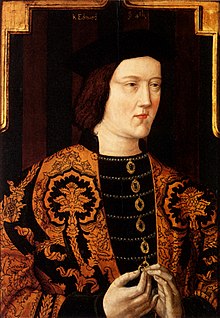
Biography: King Edward IV

220px-Edward_IV_Plantagenet(Born April 28, 1442- Died April 9, 1483). Son of Richard, 3rd  Duke of York and Cecily Neville. Married to Elizabeth Woodville. Father of Elizabeth of York, Mary of York, Cecily of York, Edward V of England, Margaret of York, Richard of Shrewsbury, 1st Duke of York, Anne of York, George Plantagenet, 1st Duke of Bedford, Catherine of York, and Bridget of York. Edward IV was the first king from the house of York, but he was still a Plantagenet. He helped bring the country together, especially financially, but his one flaw was his private life, where he was unwise and naive. 

Edward IV was born on April 28, 1442 to Richard, 3rd Duke of York and Cecily Neville, and was given the title of the Earl of March. Richard Duke of York, Edward’s father, was the Lord Protector when Henry VI had his bouts of mental illness, but once the king got well, York was removed from the position and his reforms were reversed. One of his biggest rivals was  Edmund Beaufort, Duke of Somerset. In 1455, York had enough of Somerset and marched against him at the First Battle of St. Albans, where Somerset was killed. It was then that Margaret of Anjou took up her husband’s cause. She encouraged the new duke of Somerset Henry Beaufort to fight against York. The battlelines were being drawn. The Yorkists were led by Richard duke of York, Richard Neville earl of Salisbury and his son Richard Neville earl of Warwick. The Lancastrians were under Henry VI, but led by Margaret of Anjou, Somerset, and Henry Percy, third earl of Northumberland. In 1459, at the battle of Ludlow, the Lancastrians won and sent the Yorkists into hiding; however the Yorkists came back with a vengeance at the battle of Northampton.

In 1460 York officially declared his claim to the throne. After much discussion, it was agreed that after the king died, York and his sons would be the heirs to the throne, removing Edward of Westminster from the line of succession. Henry VI seemed to have been okay with this arrangement, but Margaret was beyond upset. She led the Lancastrian forces to face off against York at the battle of Wakefield on December 30, 1460. York and his son Edmund, Earl of Rutland, were killed in the battle. Edward was 18 at the time of his father’s death.

Edward was now in charge of the Yorkist faction and with the help of Richard Neville, the earl of Warwick, he was able to defeat the Lancastrian army at both the battle of Mortimer’s Cross and the Second Battle of St. Albans in February 1461. On March 4, 1461, Edward declared himself king of England, a move that his father never attempted to make. Three weeks later at the Battle of Towton on March 29, 1461, the bloodiest battle on English soil, Edward was able to decisively beat Henry VI’s forces and secure his claim to the throne. Henry VI and Margaret of Anjou fled to Scotland to seek the aid of James III.

Edward was declared Edward IV. He was welcomed to the throne. His focus was to rule wisely and gain the support of the nobles by limiting the policy of court favorites and placed the control of Crown lands under court officials. He wanted to make sure that his court was politically and financially sound. Edward owed a lot to his cousin Richard Neville, Duke of Warwick, also known as “the Kingmaker”, and he rewarded him greatly. He was made the Chamberlain of England and he was considered the second most powerful man in England. Warwick’s son John Neville was made earl of Northumberland after the battle of Hexham in May 1464, a hereditary title that belonged to the Percy family.  

Warwick and Edward were considered close. However that would change very quickly. Warwick knew that Edward would have to marry well and so under his own initiative, he set to secure an alliance with the French King Louis XI by marrying Edward IV to the French king’s daughter Bona of Savoy. Edward wasn’t really thrilled about an alliance with France; he had actually prefered an alliance with Burgundy. Edward decided to take the issue of  his marriage into his own hands. In May 1464, he secretly married Elizabeth Woodville, the daughter of the 1st Lord of Rivers and Jacquetta Rivers, and the widow of Sir John Grey. They were able to keep the marriage a secret for over four months and when it was announced, there was an uproar. Her family was always supporters of the Lancastrian cause and there was a rumor, that we cannot confirm or deny as of right now, that Edward entered into a similar marriage contract with Lady Eleanor Butler a year or two before he married Elizabeth.

Warwick was obviously the most upset about this marriage because he had spent so much time setting up an alliance  with France to be thwarted. With the rise of the Woodvilles, Warwick feared that they would overthrow his title of the second most powerful man in England. Edward thwarted Warwick’s plans to marry his family with the king’s and the final straw for Warwick was when Edward married his sister Margaret to Charles duke of Burgundy, cementing an alliance between England and Burgundy, which was not what Warwick wanted. Warwick realized that the gap between him and Edward was too large.

Warwick decided to side with Edward’s power hungry younger brother George Duke of Clarence, and Louis XI of France, who promised Warwick land in France if he overthrew Edward. Warwick’s plan was to depose Edward and  place George on the throne. In July 1469, Warwick successfully married George to his daughter Isabel, which was something that Edward did not approve of. Warwick then started a series of uprisings in northern England; Edward was a popular king but his marriage with Elizabeth Woodville sullied his image a little while Warwick was seen as a national hero. Edward did employ an army, but when he saw that he was outnumbered, he dispersed his army and allowed himself to be captured by Warwick. Warwick had Edward imprisoned in the Tower, but when his reputation began to suffer, he released Edward in October 1469. Warwick and George both  decided to reconciled with Edward but Edward never truly trusted either of them ever again.

Warwick knew that if he was going to restore his power, he had to discuss matters with Louis XI and Margaret of Anjou, which meant that he had to defect to the Lancastrian cause, which he did. In September 1470, Warwick and his rebellion made its way to England. John Neville switched sides, which left Edward unprepared and it forced him to leave England on October 2 and seek aid from his brother in law the duke of Burgundy. Warwick removed Henry VI from the Tower and restored him to the throne. Warwick made a mistake and decided to take Louis XI’s advice and declare war on Burgundy. This forced the duke of Burgundy, who had stayed on the sidelines this entire time, to help Edward IV raise an army. Edward returned to England on March 11, 1471. His army defeated Warwick’s army at the Battle of Barnet, where Warwick and John Neville were killed. On May 4, 1471, Edward faced off against the Lancastrian army at the Battle of Tewkesbury, where the Lancastrians were finally defeated and Edward of Westminster was killed. Margaret of Anjou was arrested and shortly afterward, King Henry VI died, possibly murdered under the orders of Edward IV.

Edward IV’s purpose on the second part of his reign was to work on establishing strong alliances, which he did with the dukes of Brittany and Burgundy, and the king of Aragon. In July 1475, Edward decided that he was going to try to recapture the English lands in France. His brothers George and Richard supported this idea, however this ended in disaster and Edward was forced to sign a peace treaty with Louis. George viewed this as a horrible defeat and so he plotted to remove his brother from the throne yet again. This was the last straw for Edward and he had George arrested and tried for treason. George was found guilty and was executed in February 1478; if the story about his execution is correct, he drowned in a butt of Malmsey wine.

Edward was a great supporter of the arts and was the primary patron of printing. He encouraged William Caxton to pursue his goal of printing the first book in England in November 1477. Edward also financed  major building jobs at Windsor Castle and Eltham Palace in Kent. Towards the end of his life, Edward fell ill, and on April 9, 1483, he died from either pneumonia or typhoid. He was just 40 years old and he left the throne to his son Edward V.

Biography: Richard Duke of York

richarddukeofyork-243x300Also known as Richard Plantagenet. (Born September 21, 1411- Died December 30, 1460). Son of Richard Earl of Cambridge and Anne Mortimer. Married to Cecily Neville. Father of Anne, Duchess of Exeter, Edward IV, King of England, Edmund, Earl of Rutland, Elizabeth, Duchess of Suffolk, Margaret, Duchess of Burgundy, George, Duke of Clarence, and Richard III, King of England. Richard Duke of York was the one who became Lord Protector to Henry VI, but when he didn’t get the respect he thought he deserved, challenged the king and claimed that he should be king, and started the Wars of the Roses.

Richard of York was born on 21 September 1411. He was the son of Richard, 3rd Earl of Cambridge, by his wife Anne de Mortimer, the daughter of Roger Mortimer, 4th Earl of March. Anne Mortimer was the great-granddaughter of Lionel, Duke of Clarence, the second surviving son of King Edward III. After the death in 1425 of Anne’s brother Edmund, the 5th Earl of March, this supplied Richard, of the House of York, with a claim to the English throne that was, under English law, arguably superior to that of the reigning House of Lancaster, descended from John of Gaunt, the third son of King Edward III. On his father’s side, Richard had a claim to the throne in a direct male line of descent from his grandfather Edmund, 1st Duke of York, fourth surviving son of King Edward III and founder of the House of York. Richard’s claim through his mother made him more eligible to be king than Henry VI, thus he adopted the last name “Plantagenet” in 1448 to mark his claim to the throne.

Richard’s mother is said to have died giving birth to him and his father was executed  in 1415 for his part in the Southampton plot that tried to remove Henry V from the throne and replace him with Edmund Mortimer. His father’s titles were forfeited, but not attainted, which meant that Richard at 4 years old, became his father’s heir. A few months later, Richard’s uncle Edward of Norwich, 2nd Duke of York, was slain at the Battle of Agincourt on October 25, 1415. Henry V decided to give the lands of the Duchy of York to Richard.

Richard was an orphan and he was considered property of the crown. His wardship was a very valued gift of the crown and it was granted to Ralph Neville, 1st Earl of Westmorland. Ralph Neville had a large family, 20 children who survived infancy,  with many daughters who needed husbands, so in 1424, Neville betrothed Richard to his daughter Cecily Neville. On February 2, 1425, Richard was created Duke of York, after his uncle Edmund Mortimer died. In October 1425, Ralph Neville died and his widow Joan Beaufort was given the wardship of Richard, which was even more valuable since Richard was now the Duke of York. On May 19, 1426 he was knighted at St Mary de Castro in Leicester by John, Duke of Bedford, the younger brother of King Henry V. In October 1429 or earlier, Richard and Cecily were married. York was there for Henry VI’s coronation on November 6, 1430 and he was also at Henry VI’s coronation in France when he became king of France on December 16, 1431. Finally, on May 12, 1432, York was finally given full control over his estates.

York was loyal to Henry VI and the Lancasters in the beginning. He worked with John Duke of Bedford, who was the English regent in France. Bedford died in 1435 and York took on the responsibility of being governor of France and Normandy from 1436 to 1437 and 1440 to 1445. At this time, York  was neutral in politics, but he seemed to have sided with Humphrey Duke of Gloucester in the idea of continuing the war with France. York wanted to apart of Henry VI’s council, but he was not allowed. On his return to England in 1450 York was seen as the opponent of the Duke of Somerset. He was as popular as Somerset was not and York had powerful allies in the Nevilles. In 1451, there was a claim in Parliament that York should be the next heir to the throne because the king did not have a son. This claim was not taken seriously and the one who proposed this was imprisoned.  

In 1452, York declared that he wanted to be the next heir to the throne so he summoned an army to march on London. It didn’t go well and York was placed on house arrest for two weeks and then he was forced to give an oath of allegiance to the king and promised that if he did want to pursue his claim, he would do it in a legal manner.

In the summer of 1453, York had lost all hope of becoming king and changing the government for the better as Margaret of Anjou became pregnant and the king’s half brother Edmund Tudor married Margaret Beaufort. Then in August of 1453, Henry VI had his first bout with mental illness reared its ugly head. He heard about the Battle of Castillon in Gascony, which ended the English hopes of winning the Hundred Years’ War, sending him into an unresponsive state. The Council decided to elect York as Lord Protector and one of the first things he did was to have Somerset arrested and placed in the Tower. In October of the same year, the son of Henry VI and Margaret of Anjou, Edward of Westminster Prince of Wales, was born dashing York’s chances of becoming the heir by peaceful means. York remained Lord Protector until 1455 when Henry VI recovered. Henry VI released Somerset and basically reversed every decision that York had made while he was Protector. This was the last straw for York.

York and his Neville allies, including Richard Neville, Duke of Warwick, marched to St. Albans where they faced off against Somerset and the Lancastrian forces that supported the king. Somerset was killed during the  First Battle of St Albans on May 22, 1455, and shortly after, the king had another bout of mental illness. York was declared Lord Protector yet again, but was removed from his post when the king recovered in 1456, but the king had accepted York and the Nevilles as an important part of the government. This reconciliation would not last long.

It was then that Margaret of Anjou took up her husband’s cause. She encouraged the new duke of Somerset Henry Beaufort to fight against York. The battlelines were being drawn. The Yorkists were led by Richard duke of York, Richard Neville earl of Salisbury and his son Richard Neville earl of Warwick. The Lancastrians were under Henry VI, but led by Margaret of Anjou, Somerset, and Henry Percy, third earl of Northumberland. In 1459, at the battle of Ludlow, the Lancastrians won and sent the Yorkists into hiding; however the Yorkists came back with a vengeance at the battle of Northampton.

In 1460 York officially declared his claim to the throne. After much discussion, it was agreed that after the king died, York and his sons would be the heirs to the throne, removing Edward of Westminster from the line of succession. Henry VI seemed to have been okay with this arrangement, but Margaret was beyond upset. She led the Lancastrian forces to face off against York at the battle of Wakefield on December 30, 1460. York and his son Edmund, Earl of Rutland, were killed in the battle. York was beheaded, his head was put on a spike wearing a paper crown and was displayed over Micklegate Bar at York.

Biography: Margaret Beaufort

(Born May 31, 1443- Died June 29, 1509). Daughter of John Beaufort, 1st Duke of Somersetdownload (2) and Margaret Beauchamp of Bletsoe. Married to John de la Pole 2nd Duke of Suffolk, Edmund Tudor 1st Earl of Richmond, Sir Henry Stafford, and Thomas Stanley 1st Earl of Derby. Mother of Henry Tudor, later known as Henry VII. Margaret was the mother of the Tudor Dynasty. She never gave up on her son Henry Tudor.

Margaret Beaufort was born on May 31, 1443 to John Beaufort, 1st Duke of Somerset and Margaret Beauchamp of Bletsoe. She had seven half-siblings from her mother’s first marriage to Sir Oliver St John. Her father was the  second son of John Beaufort, 1st Earl of Somerset, the first son of John of Gaunt and Katherine Swynford. Margaret’s father went to France to fight for King Henry VI, but it went badly, and he either died from illness or committed suicide on May 27, 1444, leaving Margaret his sole heiress.

Under a deal that her father made with Henry VI, the king took wardship of Margaret, but the king broke that deal and passed on the wardship to William de la Pole 1st Duke of Suffolk. At this time, Margaret remained in her mother’s house to receive her education. On January 28, 1450, William de la Pole, who was not popular at all with Parliament, was ordered to be arrested. Between January 28 and February 7, 1450, Margaret and John de la Pole, the eldest son of William de la Pole, were married, yet they never lived together. With this marriage, William de la Pole was seen as reaching too far since Margaret was a potential heir for the throne and was charged with treason. William de la Pole was murdered on May 2, 1450. Margaret never recognized this marriage as she was under twelve when she was married.

In 1453, Margaret and her mother were called to court when Henry VI granted the wardship of Margaret to his half brothers Edmund and Jasper Tudor. With her first marriage annulled, it paved the way for the marriage between Margaret and Edmund. Margaret was 12 and Edmund was 24 at the time of the wedding on November 1, 1455. The marriage was consummated and soon Margaret was pregnant. Unfortunately, Edmund would never meet his son as he died on November 1, 1456 of the plague. Margaret gave birth to her only son Henry Tudor on January 28, 1457 at the age of 13. It was a difficult birth and Margaret was never to have another child after Henry.

Being a single mother and a young widow, Margaret knew that she had to marry again to make sure that she could financially survive. She arranged her own marriage and after the required one year of mourning was over, Margaret married Sir Henry Stafford on January 3, 1458. From what we can tell, it sounds like a happy marriage between Margaret and Sir Henry Stafford. When Henry was two years old, his uncle Jasper was granted wardship over him and so Margaret and Henry were seperated. After the Battle of Towton, Jasper fled to Scotland to help Margaret of Anjou, Edward Duke of York became Edward IV, and Henry Tudor was stripped of his lands and put in the custody of William Herbert. At this time, Margaret was able to keep in contact with her son.

In 1469, the House of Lancaster came back into power, but only for a short amount of time as the House of York came back into power. At the Battle of Barnet on April 14, 1471, Sir Henry Stafford was injured  fighting for the Yorkists and he would die from his wounds on October 4, 1471. Margaret was a widow again at the age of 28. Henry and Jasper fled the country for their own protection, leaving Margaret alone and in need of another husband and protector.

In June 1472, Margaret married her fourth and final husband Thomas, Lord Stanley. This was a marriage of convenience as Margaret was able to enter the court of Edward IV and Elizabeth Woodville in order to gain favor and secure her son’s return to England. Before this could happen, Edward IV died on April 9, 1483. The crown passed on to the king’s eldest son Edward V, but Edward and his brother Richard went to the tower for their own protection, never to be seen again. Their uncle Richard III became king, and even though Margaret carried the train at Queen Anne’s coronation, Richard stripped Margaret of all of her titles and land. During this time Margaret was plotting with Elizabeth Woodville to arrange a marriage between Henry Tudor and Elizabeth of York.

In 1483, Henry and Jasper failed to invade England. Richard found out that Margaret was part of this plot and she was charged with high treason, but instead of being executed, she was placed under house arrest. Margaret’s life changed for the better when her son was able to defeat Richard at the Battle of Bosworth Field on August 22, 1485, with the help of Margaret’s husband Thomas, Lord Stanley, and became King Henry VII.  Thomas, Lord Stanley was made Earl of Derby and Margaret was made Countess of Richmond and Derby. Margaret was able to see her son once again after 14 years apart. Margaret became the King Mother and was the second most important woman at court, next to Queen Elizabeth of York, who married Henry VII on January 18, 1486. Margaret was there to help with the births of her grandchildren, and the deaths of a few including Arthur Prince of Wales, who died on April 2, 1502.

Elizabeth of York would die on February 11, 1503, leaving Margaret’s son a widower. Thomas, Lord Stanley would die in 1504, and although she spent most of her son’s reign styling herself as a widow in order to have control over her own properties and finances, it still must have been a hard loss for Margaret. Margaret’s beloved son Henry VII died on April 21, 1509, and she took his death the hardest. Margaret Beaufort was able to see her grandson Henry VIII’s coronation on June 23, 1509, but then she died only six days later on June 29, 1509.

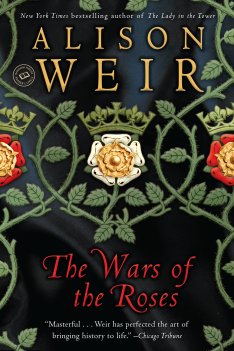
Book Review: “The Wars of the Roses” by Alison Weir

911GmwfEpdLThe Wars of the Roses was a series of wars from 1455 until 1487 for the throne of England. It is traditionally taught that it was between the houses of York and Lancaster, yet there were a lot more players involved than these two families. In fact the conflict started much earlier with the children of Edward III and Philippa of Hainault. The Lancasters were the descendants of John of Gaunt and his wife Blanche of Lancaster while the Yorks were descendants of Edmund of Langley Duke of York. This was a series over the question of who had the strongest claim to the throne. This question and the series of wars that would try to answer it is explored in depth in Alison Weir’s book “The Wars of the Roses”.
Alison Weir explains the struggle of studying this time period and what she is trying to accomplish in her book:

Sources for this period are meagre and often ambiguous, yet much research has been done over the last hundred years to illuminate a little for us what is often described as the twilight world of the fifteenth century. Many misconceptions have been swept away, yet even so the dynastic conflict still confuses many. My aim has been throughout to eliminate that confusion and try to present the story in chronological sequence, clarifying the problems of the royal succession in an age in which no certain rules of inheritance applied. I have also tried to bring the world of the fifteenth century to life by introducing as much contemporary detail as space permits, in order to make the subject relevant to any read, academic or otherwise. Chiefly, however, I have tried to re-tell an astonishing and often grim story of power struggles in high places that involved some of the most charismatic figures in English history. (Weir, xix).

Weir begins her book by explaining  what England in the fifteenth century was like before diving into the history of Edward III and the Plantagenets in the late 1300s. This may seem a little complex since there were many sons of Edward III, but the throne first went to Richard II, but when he was forced to abdicate, the throne went to Henry of Bolingbroke, who became Henry IV. He was the son of John of Gaunt and Blanche of Lancaster. John of Gaunt and his third wife Katherine Swynford had children who would become known as the Beauforts. They would become important later on.

Henry IV’s son would become Henry V who was married to Katherine of Valois. When Henry V died, their son Henry VI became king; he was a baby. His mother would remarry a Welsh man named Owen Tudor and they would have a few children, including Edmund and Jasper Tudor. Henry VI would marry Margaret of Anjou. Richard Earl of Cambridge, the son of Edmund of Langley, would have a son with his wife Anne Mortimer named Richard Plantagenet Duke of York. He would marry the “Rose of Raby” Cecily Neville and they would be the parents of Edward IV, George Duke of Clarence and Richard Duke of Gloucester, later Richard III.

This all may seem a bit complex, but it is important to understand how all of the players in the Wars of the Roses were connected. Henry VI was a weak king who was known for his madness and so someone had to lead the government. Richard Duke of York believed that he should have been Lord Protector, however Margaret of Anjou and her party at court had other ideas. The beginning of this conflict was a battle between court factions, but eventually it escalated rather quickly into a full on rebellion by Richard Duke of York. This was now a battle between the Yorks and the Lancasters. When Richard Duke of York died at the Battle of Wakefield on December 30, 1460, his son Edward took on the Yorkist cause and would become king after the battle of Towton on March 29, 1461, the bloodiest battle on English soil. After Towton, it was a battle between Edward IV and those who supported Henry VI, until 1471 when Edward IV ultimately won, thus ending the conflict between the Yorks and the Lancasters.

Weir chooses to end her book here at 1471 even though the Wars of the Roses will pick back up with the death of Edward IV in 1483 when his brother Richard becomes Richard III. Weir truly brought this time period to life. I have been studying the Wars of the Roses for a few years now and I have to say this book really simplified this complex family struggle in a way that makes sense. I love this book and I have read it several times. If you really want a great book that explains the causes of the Wars of the Roses, I highly recommend this book, “The Wars of the Roses” by Alison Weir. It is a fantastic introduction to this tumultuous time period.

Questions About The Wars of the Roses

The Wars of the Roses, the dynastic battle between the Yorks and the Lancasters for the throne of England, last from 1455 at the 1st Battle of St. Albans until 1487 at the Battle of Stoke Field. This is one of my absolute favorite time periods to study because it not only marked the beginning of the Tudor dynasty, but it was also so complex and full of intriguing questions. I have decided to take the questions that you all sent me and answer them to the best of my ability to start off August, which I have dedicated to exploring this time period in honor of the Battle of Bosworth Field. I hope this will encourage more discussions about this series of wars that changed English history forever.

1.) How mad was King Henry VI and was his condition widely known in court, the country, and France? If Henry VI wasn’t mad would York still have rebelled?

There are a lot of theories about King Henry VI and what exactly his “madness, but the leading theories are that it was either catatonic schizophrenia or a severe case of depression. Catatonic schizophrenia limits a person’s movements, which would explain why he is also known as the “sleeping king”. Compared to normal people, Henry VI would seem rather mad, but compare him to say someone like Charles VI of France, the father of Katherine of Valois who believed that he was made out of glass and couldn’t remember his wife and children, Henry VI’s madness doesn’t seem that bad. Margaret of Anjou and others close to the king kept his secret very close so at the beginning, his madness was only known in the court. As the Wars of the Roses progressed and seditious propaganda was made against Henry VI, I think the common people would have learned about his madness. As for the country of France, I am not sure if they knew about Henry VI’s madness because they do offer Margaret of Anjou aid to restore him back to the throne.

I believe that York would still have rebelled because it wasn’t just Henry’s madness that made him a less than average ruler. Henry was a pious, religious man who didn’t really like fighting. He didn’t have the courage that was needed in order to be a medieval ruler of England. I believe that York knew this and decided to act. At first, he might have only been fighting his enemies in court, but I think he believed that his bloodline had a better claim to the throne and he wanted to make England better, so he rebelled against Henry VI. It wasn’t because he was mad, but because he was a weak ruler, that York rebelled.

2.) Why did Lord Stanley, who was a staunch supporter of Richard III, switch sides and support Henry Tudor during the Battle of Bosworth Field? He would not have benefitted from supporting  Henry anymore than he had Richard and all of his wife’s estates were declared forfeit to himself. So couldn’t have been for financial gain?

This was the biggest switch during the Wars of the Roses, and ultimately it is what established the victory for Henry Tudor. Richard believed that he had Lord Stanley on his side, but the morning of the battle, Lord Stanley faked being sick to avoid fighting. Lord Stanley and his son Lord Strange sat on the sidelines during the battle. Then, when all hope seemed lost for Henry Tudor, Lord Stanley and Lord Strange come to the rescue. Lord Stanley broke his own oath Sans Changer (Without Changing)to help a young man, who was virtually unknown, become King of England and helped create the Tudor Dynasty.

So the question is why did he do it. Why did Lord Stanley switch sides? I believe he might have switched because he saw how much his wife Margaret Beaufort believed in her son’s cause. Think about it. She risked everything to make sure he was safe. Even when she had lost everything, Margaret was still funding his rebellion. Even though Lord Stanley saw favor from Richard III, it must have been disheartening for him to see Richard III’s closest allies being either killed or exiled. I think this must have freaked Lord Stanley out. He wanted to make sure that he would have survived so he took a risk and bet on the young man Henry Tudor.

3.) Do you think Edward IV regretted marrying Elizabeth Woodville instead of going with a foreign bride which could have given him an alliance and back up during the war?

I don’t think Edward IV ever regretted marrying Elizabeth Woodville. I believe he loved her very dearly. In the Historie of the Arrivall of Edward IV. in England and the Finall Recouerye of His Kingdomes from Henry VI (which is a very interesting read that I recommend if you want to study the Wars of the Roses), there is a moment where Edward IV returns to his throne in 1471 and sees his family again after being in exiled. He is described as having tears in his eyes as he embraces his wife and children. I believe that this passage, whether it was embellished a bit or not, shows Edward IV never regretted marrying Elizabeth Woodville. Sure a foreign bride may have established an alliance and back up during the war, but Edward was popular with the English people, even if his wife wasn’t popular with the people. Even with his numerous affairs, Edward IV’s true love was Elizabeth Woodville.

4.) Had Elizabeth (Woodville)Grey not gone into sanctuary before Richard III’s coronation, would she have survived his purge of her family members?

I really don’t think that Elizabeth (Woodville) Grey was in danger of being killed. Sure Richard III disliked the Woodvilles, but I don’t think he would have killed a woman, even if she was indeed the cause of his hatred towards one family. Richard III may have slandered his mother’s name, but I don’t think he would have murderous intentions towards women. I believe that she would have survived the purge of her family members.

5.) What was the nature of the relationship between Elizabeth of York and Richard III? Was it more than uncle and niece?

Elizabeth of York was the eldest daughter of Edward IV and Elizabeth Woodville. She was the niece of Richard III and there are some who say that he was planning on taking her as his wife after Anne Neville died. I believe that Richard III and Elizabeth of York had a normal uncle and niece relationship. We must remember that the Wars of the Roses was not only a series of wars that were fought on the battlefield, but also through propaganda. What better way to defame Richard III a bit further than claim that he had a relationship with his niece? There is no evidence that they had a relationship other than that of an uncle and niece.

6.) Was Edward IV a usurper?

A usurper is anyone who takes a position of power through force or illegal means. By this definition, Edward IV was indeed a usurper. He won his crown first at the battle of Towton on March 29, 1461, and then again at the battle of Tewkesbury in 1471. He took the crown of England twice. However, just because Edward IV was a usurper does not mean that he was a bad ruler. Henry VII was also a usurper and he was able to establish the Tudor dynasty, thus ending the Wars of the Roses and brought back a time of peace and prosperity to England. Edward IV did something similar while he reigned from 1471 until his untimely death in 1483. England had a strong and stable ruler, the opposite of what Henry VI was,  with Edward IV even though he was a usurper.

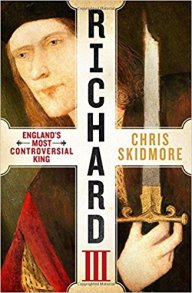
Book Review: “Richard III: England’s Most Controversial King” by Chris Skidmore

517EnSUqESL._SX324_BO1,204,203,200_When we often think about Richard III, we tend to focus on the princes in the tower, Bosworth Field where he died, and the discovery of his body in 2012. But he was a brother to a  king, a protector and he did rule as king of England. There should be more to his story than this. Chris Skidmore believed so and decided to write a modern biography on Richard called “Richard III: England’s Most Controversial King”.

There have been a lot of books written about Richard III, but Skidmore explains what separates his book from others:

This work has unapologetically been written as a narrative history of Richard’s life and reign; in doing so, attention has been paid mainly to the high courts politics of the age, and Richard’s role within this world. I have attempted to focus on how Richard constructed his own power base, for it was his northern affinity, constructed in his early years as duke, that would prove so crucial for him obtaining the throne…. Too much attention is traditionally paid to Richard’s individual role in his accession, when, like any political coronation, this was only possible with the support of certain  key members of the nobility, who backed regime change. Richard’s success depended as much upon their own individual grievances and ambitions as his own.(Skidmore, 11)

It was really these alliances that helped Richard III come onto the throne. Skidmore starts off his book with an interesting account of a Silesian knight named Niclas von Popplau and his encounter with Richard III’s court. It is not what those who have studied the “black legend” of Richard III would expect. Skidmore then dives into Richard’s childhood, the Wars of the Roses, the death of his father,  his brother Edward’s accession to king of England, and his brother George’s fall from grace and later execution.

These are such pivotal moments in Richard’s young life and they do shape what kind of king he would be, but it was his northern affinity and his relationship with men like the duke of Buckingham and Hastings that defined the motives that he would later take. For example, the murders of Lord Rivers and Lord Hastings seem like paranoia, but Skidmore sheds new light onto these murders. As to the most controversial moment of Richard III’s life, the disappearance of the princes in the tower, Skidmore does not spend a lot of time on the topic. As soon as Richard is crowned king, Skidmore talks about his policies as king and his relationships with foreign monarchies throughout Europe. Richard III’s reign was quite short; he only reigned for 788 days so it wasn’t a long time to establish the relationships he needed to with his European counterparts, like France and Scotland, which helped propel Henry Tudor’s claim to the throne of England.

In the last few chapters, Skidmore paints the scene for Bosworth Field, the battle between Richard III and Henry Tudor for the crown of England. He writes the actual battle in such a way that it makes you feel like you are witnessing the battle first hand, including the slaughter of Richard III and the way they discarded his body.

What I enjoy about Chris Skidmore is that he includes so much detail into his books and not the facts that those of us who are familiar with the topic necessarily are aware of. With this book, Skidmore shows his readers a different side of Richard III, one in which Richard III is king with powerful allies that helped him become king of England. Richard III may have been king for only 788 days, but his legacy has lasted for centuries and this book, “Richard III: England’s Most Controversial King” by Chris Skidmore, adds another perspective into his legacy. This book is very well written and is a fascinating read.

Book Review: “The Survival of the Princes in the Tower: Murder, Mystery and Myth” by Matthew Lewis

35888548One of the greatest mysteries of all time is what happened to the young princes, the sons of Edward IV, who were held in the Tower of London. Many people believed that they were killed. There are some who believe that Richard III had them murdered and there are some who say that Henry VII ordered the deed to be done. But what if they were never killed? What if they survived? That is the premise of Matthew Lewis’s book “The Survival of the Princes in the Tower: Murder, Mystery and Myth”.

I have always been one of those people who believed that the princes were indeed murdered and that the one who ordered their murders was Richard III. I have read the “sources” and I came to my own conclusions. A few months ago, I attended the Tudor Summit (for those of you who do not know what this, look it up it is a fantastic two- day summit with fellow Tudor nerds) and one of the speakers was Matthew Lewis. Normally I don’t pay attention to the Ricardian side of this debate, but his talk made me interested, so I decided to read his book.

I am really glad I decided to read this book. It gave me something new to think about when it comes to this mystery and it did it in such a constructive way that made sense. Lewis starts his book by exploring the facts and the different sources that made the case that the princes were murdered, and then he looks at why these sources have been misinterpreted and don’t tell the whole story. For example, the fact that More said that Edward IV died in his fifties when in fact he died when he was in his forties, which is a big age gap.  Lewis asks rather obvious questions about the anti- Ricardian argument like why did Elizabeth Woodville turn over to her sons if she believed that Richard III was truly evil. It was by going through these sources and these obvious questions that started to create a lot of doubt in my mind whether or not the side I was on in this debate was accurate.

Lewis then dives into the lives of those we call the “pretenders”, Lambert Simnel and image015Perkin Warbeck. These were the most famous pretenders and the ones who challenged Henry VII’s right to the throne. If they were really the princes in the tower, why were they defeated? Why were they considered pretenders? Lewis explores other people who could possibly be the princes, including a theory by amateur art historian Jack Leslau on “The Family of Sir Thomas More” by Hans Holbein the Younger.

The theory that Matthew Lewis presents in this book is very unique. In order to understand what he is trying to do, you have to be open to a different perspective on this quagmire of a topic: the princes in the tower. There are certain books that come along and totally shake what you believe in, but you should not be afraid to read these kinds of books. I did not know what to expect when I started this book, but Lewis presented an argument that made sense and made me question everything I thought I knew about this mystery. Now I want to reread the sources and try to understand them better. I would recommend this book for anyone who thinks Richard III is innocent, guilty, or you are unsure of your position in this debate. “The Survival of the Princes in the Tower: Murder, Mystery and Myth” by Matthew Lewis breathes new life into this debate and begs the question: what if the princes in the tower lived?

Top 5 “Tudor” Men to Study

Hello everyone! So a few weeks ago, I made a list of my top 5 Tudor women to study. This time around, I decided to focus on the men of this era. The reason that I have the word Tudor in quotations is that one of the men on this list is technically not a Tudor nor did he serve in the Tudor court. As always, this list is in no particular order and it might change after I do more research on the era. These men at the moment fascinate me and I look forward to learning more about them as I continue my exploration of the Tudor age.

1.) Jasper Tudor

The man in the sidelines who helped make the Tudor dynasty happen.80aa362b8647d5844194e415a130c3fd

Brother of Edmund Tudor, half- brother to Henry VI, and uncle to Henry Tudor. A man of many titles, but also a man who spent most of his adult life on the run. Jasper is one of those people who has an epic story, but he really doesn’t get a whole lot of attention and to me, that’s a little sad. I can’t even imagine what was going through his head when he found out that his brother died and that his widow Margaret Beaufort had a son. And that was just in a span of a few months. Now let’s throw in the fact that the time that Jasper was living in was the Wars of the Roses where they basically played musical chairs with the crown of England so one minute his half brother was king of England and the next he was a prisoner. Pretty stressful is putting it mildly. To add insult to injury, Jasper’s nephew Henry, was placed into York households to be raised and to watch over the young boy.

Jasper was always on the run, trying to keep himself and Henry safe. Whether in Wales or in France, where both Jasper and Henry were held as prisoners for very powerful people, Jasper worked hard to keep them alive. You would think that these two would lay low the rest of their lives. You would be wrong. Margaret Beaufort, Henry’s mother, had bigger plans for her son. With Henry VI dead and the Yorks on the throne with Edward IV and then Richard III, Margaret believed that her son was the next rightful king of England. So while Jasper and Henry were overseas in France, Margaret and Jasper orchestrated a coup d’etat. They were able to muster a force for Henry so that he could march against Richard III and on August 22, 1485, their plan worked. Henry was declared king and Jasper went back to his natural place, working for Henry’s good as his right hand man.

As the step brother of a king, I have often wondered why Jasper didn’t seize the crown for himself. This man was full of such intense loyalty for his family and had such an interesting life and yet he chose a life on the sidelines. I want to read biographies on him. Such a dynamic figure in Tudor history.

2.) Henry Tudor (later on Henry VII)

download (1)The man who would become king of England and the patriarch of the Tudor dynasty.  
As stated above, Henry’s life started off rough. Always on the run, he never knew his father and he never really got a chance to know his mother that well until after he became king. That all changed  at Bosworth Field when Richard III was killed and Henry became king. From rags to riches real quick. But if Henry wanted to end the constant calamity that the Wars of the Roses was causing, he needed to marry the right woman. His mother and Elizabeth Woodville arranged a marriage between Henry and Elizabeth of York, joining the houses of York and Lancaster. It was a brilliant move and helped put an end to the fighting. Henry and Elizabeth would have a large family including two sons, Arthur and Henry, thus starting the Tudor dynasty.

Henry is often thought of as being a mizer and a usurper or being a hero, but who was the true Henry? The more I study him, the more I realize how complicated this man was. He was not just a man who took the throne or a hero who started a brand new dynasty, but a family man and someone who knew heartache and love. There is something about Henry that is intriguing. His descendants might get all the attention for all their drama, but Henry Tudor was a man who built a dynasty out of practically nothing. He had to fight for all that he had against numerous pretenders who believed that he was not the rightful king. Overall, he was a survivor who became king.

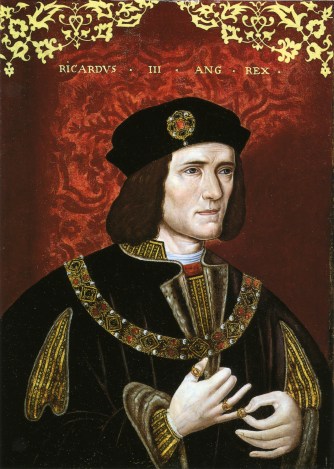
3.) Richard III

The “black legend”.

Now I know what you are thinking, Richard III is not a Tudor king or someone who King_Richard_III.jpgserved a Tudor king so why is he on this list? To me, Richard has just as much influence in creating the Tudor dynasty as the Tudors themselves. If you think about it, if he didn’t take the throne, then Henry wouldn’t have marched against him at the Battle of Bosworth Field. It was his death that helped start the Tudor dynasty.

I do tend to berate Richard quite a bit since I believe he did kill his nephews, but there is something about this man that keeps me wanting to learn more about him. I may think that he is a murderer but as a king, I am learning that he was pretty decent. Just like Henry Tudor was just a man who survived, so was Richard. The more I study these two, the more I am realizing how similar they were. Even though Richard only ruled for two years, there is still a lot that we do not know about him. Maybe he was a family man just like Henry. His childhood might have shaped the way he ruled England and how he handled his enemies.

Even though there has been quite a bit of research about Richard III in the last 500 years, he is still a mysterious legend and I look forward to learning more about him and his times.

4.) Henry VIII

henry-viii-of-england-1The man. The myth. The legend.

When you hear his name, instantly you think about his multiple marriages and his break from the Roman Catholic Church. But who was Henry VIII the man behind this legend? Henry was second in line to the throne behind his brother Arthur, but when Arthur died shortly after he was married to Katherine of Aragon, the throne passed on to Henry. To say Henry was not prepared for this, nor were his parents, would be the understatement of the year. But he had to carry on in his father’s place when he passed away. The boy who was once a scholar now had to become a king.  It was a tall order to fill and it looked like from the very beginning he was doing a pretty good job.

And then things changed rapidly when his attention moved from his first wife to his second, and so on and so forth. Henry’s major flaws were his wandering eyes and his anger. We think we know everything there is to know about Henry, but do we really? This legendary man seems almost too fanciful to be a real human being. But he was. He was flawed like everyone else. Though he was a king, he was still human.

That is what keeps me fascinated about Henry VIII and his life. How did the king figure compare and contrast to the man who was Henry VIII? Who was Henry VIII really? No matter how much I read about him and his reign, its his human aspects and how he dealt with his wives and children that keep me coming back for more. I believe that there is more to Henry VIII than most people realize.

5.) Robert Dudley

The man who almost married the “Virgin Queen”220px-Robert_Dudley

If you have studied Elizabeth I, you know Robert Dudley. He was the man who stayed by Elizabeth’s side through the good times and the bad, even when he was married not once but twice. His first wife Amy, died when she fell down a flight of stairs, but many believed that Robert had her poisoned so that he could marry the queen. Robert was always close to Elizabeth and some in the court believed that he was too close. But maybe Elizabeth knew this when she suggested that Robert should marry Mary Queen of Scots. This deal, however, fell through when Mary married Lord Darnley.

As Elizabeth grew older, Robert kept trying to propose marriage, but he was become restless. He had affairs with some of Elizabeth’s ladies and would later marry Lettice Knollys, a kinswoman of the Queen. Elizabeth was livid and banished both Robert and Lettice from court. Robert would come back into her good graces; Lettice would not.

Robert loved Elizabeth deeply and many suspect that she loved him back. It is said that after he died, she kept his last letter to her in a chest that she kept close to her. Robert was a man who loved the queen, but he could never have her as his wife.

I have often wondered what Robert felt towards his two wives Amy and Lettice. Did he actually love them or did he use them to get closer to Elizabeth? If he did marry the queen, what would England look like? These are only a few questions that come to my mind when I think of Robert Dudley.


These are my top 5 “Tudor” men to study. Who are your top 5?

Sir Thomas More and His Controversial History

When we think of Richard III and the Wars of the Roses, most of us will first think of Sir Thomas More and his “The History of King Richard III”. It is probably one of the most controversial sources about the Wars of the Roses out there and yet historians still use it. The question is why is there such an attraction to this book and why did Thomas More write it? It is my hope with this article to shed some light on this book, on More and what his possible intentions were when he wrote this book. I will be breaking this article into two parts; who Sir Thomas More was and what the book says. It is important to understand More’s background if we are to have any hope in understanding “The History of  King Richard III”. I will only be writing about More’s life up until the time he wrote this book because his later life under Henry VIII and his execution really do not explain the purpose of why More wrote this book.

Sir Thomas More: The Man

So who was Sir Thomas More and why should he matter? Robert Whittington in 1520 says:

More is a man of an angel’s wit and singular learning; I know not his fellow. For where is the man of that gentleness, lowliness and affability? As time requireth a man of marvellous mirth and pastimes; and sometimes of  as sad gravity; a man for all season. (Murphy, 1)

Thomas More was born on February 7, 1478 (Ackroyd, 6) to John More and Agnes Graunger. More’s childhood saw the transition from Edward IV as king  to Richard III and finally to Henry VII. He attended school for a while at St. Anthony’s and then went on to become a page for John Morton, Archbishop of Canterbury, a man that More deeply admired and who would appear in his History as a wise man. ( Ackroyd, 35)

After working for John Morton, More studied for a little bit at Oxford University. It was at Oxford where he was able to engage in humanism which is studying classic literature through the study of  the languages of antiquity and once that was mastered, using rhetoric to debate certain topics. (Johnson, 34-35) Humanism would come to shape the writings of More and his friend Erasmus of Rotterdam, who’s translation of the New Testament would go against the Vulgate, questioning the authority of the papacy, and influence those like Luther, even those Erasmus was a devout Catholic. ( Elton, 113). To put it another way, “Humanists were concerned with integrating, not separating, the human and the Christian.” (Murphy, 7)

More left Oxford without obtaining a degree and went to New Inn and later he was admitted to Lincoln’s Inn in London in 1496. Inns were not what we considered inns today; they were where men who interested in law went to study. ( Ackroyd, 53). He was sixteen at the time. Peter Ackroyd explains how More was able to balance both his religious studies with his study of law:

Religion and law were not to be considered separately; they implied one another. That is why law was considered to be perfect in itself, undamaged by the bad judgments of individual practitioners; the same argument, on the merits of the Mass as opposed to the virtue of the priest who offered it, was at the heart of Catholic eucharistic belief. That is why the law was also considered to permanent; it was what was known to be true, withstanding change or decay. (Ackroyd, 63).

This must be understood in order to understand More. To him, using religious terms to describe political events was just another part of daily life. Another part of his daily life was his family; in 1505, he married Jane Colt and they had four children: Margaret, Elizabeth, Cecily, and John.(Murphy, vii). Four years later, in 1509, Henry VIII became king of England and in 1510, More was made Under- Sheriff of London and was elected into Parliament. (Murphy, vii). Three years later, More wrote his “The History of King Richard III”, but he never finished it. (More, 3).  

More’s “The History of King Richard III”

Many argue that More wrote his “ The History of King Richard III” for propaganda of the Tudor Dynasty, especially for Henry VII, however Ackroyd points out something very interesting about their relationship:

It has often been suggested that, at a later date, More professed hostility towards the financial exactions which Henry VII tried to levy upon London. There is no evidence of any open dispute but certainly, at the time of the accession of his so, More composed a sharp attack upon the dead king. (Ackroyd, 84)

If this is the case then what was More’s intentions in writing this book? Before we try to  answer that question, we have to explore the text itself.

“The History of King Richard III” by Sir Thomas More is roughly less than a hundred pages in length. Relatively short for such a controversial text. It should be noted that this text is considered a “history” in the loosest possible sense. In fact, More wasn’t using recent histories from his time to formulate his own history, but being the humanist that he was,  he used histories from Sallust and Tacitus as examples. ( Ackroyd, 161). Another difference from a typical history is that More relies on oral sources for his history. ( Ackroyd, 161). Anyone who studies history knows that oral sources are not always the most reliable source because words can be misconstrued.

More doesn’t start his history of Richard III with say his birth; instead he starts his book with the death of Edward IV. He describes Edward as  “a goodly personage, and very princely to be hold: of heart courageous…” (More, 4). More then goes on to describe the protector of Edward’s children, Richard III, obviously starting with his physical appearances first (More, 8) and then describes who he was as:

…Close and secret, a deep dissimuler, lowly of countenance, arrogant of the heart, outwardly coumpinable where he inwardly hated, not letting to kiss whom he thought to kill; dispiteous and cruel, not for evil will alway, but often for ambition…. Friend and foe was ,such what indifferent….(More, 9)

Not the most courteous way to describe the brother of a king who would be a king himself, but as Sylvester notes, it is not because Richard was a Yorkist king but because he was a “dissimulating tyrant”(More, xv). Now Richard was not Edward’s choice as protector, in fact it was the Queen’s brother Sir Anthony Woodville, “a right honorable man, as valiant of hand as politic in counsel”(More, 15). However, Richard did not like this suggestion and so he had Lord Rivers and his men sent to prison and then later beheaded for “treason”. (More, 21).

Of course in Sir Thomas More’s book, there are no dates, which makes it difficult to pinpoint when these events exactly happened or if they happened at all, including the speeches that More included such as those of the Duke of Buckingham who is trying to convince the former Queen Elizabeth Woodville to hand over her other son to Richard.( More, 29-33). Likewise when Elizabeth refuses to give up her son (More, 35-39) and then later when she reluctantly agrees to do so (More, 41-42). These are very iconic speeches in this book that are full of passion and heartbreak.

So why would More included these either factual or fictitious speeches? Peter Ackroyd gives us an interesting insight into that question:

It is significant, too, that the most elaborate passages of More’s narrative are conceived as speeches; the merits of sanctuary for the royal children are the subject of long debate, for example, while the right of Richard to be king is explained in a number of orations. ‘The History of Richard III’ can be understood, then, as a lesson in the arts of disputation and rhetorical debate similar to those in which More engaged as a schoolboy and a scholar….In his grammatical work More was instructing those who might well be chosen to administer the government of the state: grammar was part of rhetoric, and rhetoric was part of public duty. (Ackroyd, 162-163).

This book is not just a “history” but it is also a lesson in rhetoric for those in government. More may have been a fan of reading history, but his true love was humanism and government, in which rhetoric and grammar were immensely important. It is that love of humanism and government that we see throughout the entire book.

More goes on with Richard’s case on why he should be king. After Richard gets rid of his traitorous former friend Lord Hastings (More, 49-54), he moves on to the important part of his argument; that his brother Edward was already married to a Mistress Shore before he married Elizabeth Woodville.(More, 55-58). Since his brother was already married, that meant that any children that he had with Elizabeth Woodville would be considered bastards, including the young king Edward V. This was damning enough but Richard wanted to make sure that it had legal backing he made a document, that declared the children of Edward IV and Elizabeth Woodville bastards. (More, 60-61). Richard also asks for Dr. Shaa to preach a sermon against Edward’s children with Elizabeth and the Duke of Buckingham giving his speech on how great Richard is (More, 70-76). This leads to the epic conclusion where Richard “reluctantly” takes the throne since he is the obvious choice to take crown since his brother’s heirs were declared bastards. Richard III has become King of England.

But there is one more piece to the puzzle. What happened to the young king and his brother? More leaves us questioning what happened to them because he speaks of rumors of  John Green, Sir Robert Brackenbury, the Constable of the Tower, Sir James Tyrell and John Dighton being ordered by Richard III to kill the brothers.(More, 85-90). One has to wonder if this is a credible theory or just rhetoric since More only heard this theory and the fact that there is no written evidence. More does not go into any more detail about this and “ends” the book with Bishop Morton trying to convince Richard III to lead the country with wisdom. (Ackroyd, 35). This is a very unusual ending for someone who is supposed to be writing the book as propaganda for the Tudor dynasty.

Conclusion

So knowing that More was writing this as more of an exercise on humanism and did not finish this book, how should we approach “The History of King Richard III”? I don’t believe that we should merely toss it out. It was not propaganda for the Tudor dynasty since it was written in 1513, before More’s political career really took off. The speeches can be seen as examples of rhetoric. There are some historical facts like the death of Lord Hastings and Lord Rivers, Elizabeth Woodville handing over her son to Richard, and legal document as well as Dr. Shaa’s sermon. Those match up with other sources. As for Mistress Shore and the murder of the princes of the tower, it’s a bit harder to prove since we do not have actual paper evidence to support either theory.

Overall I think More’s history should be understood as a take on history from a humanistic lens. It’s an important piece to read because some of the facts in this piece are in fact true and it gives us an interesting view into what a Tudor scholar thought about those who came immediately before the Tudors. “The History of King Richard III” by Sir Thomas More is a fascinating read for anyone who is interested in the Wars of the Roses, a darker view on Richard III, or on how humanism could be applied in a written sense. I  highly recommend that you read this book.

Want to Learn More about More? (Sources)

Ackroyd, Peter, and Diarmaid MacCulloch. The Life of Thomas More. London: Folio Society, 2017.

Elton, G. R. England Under the Tudors. London: Methuen, 1956.

Johnson, Paul. The Renaissance: A Short History. Bridgewater, NJ: Distributed by Paw Prints/Baker & Taylor, 2008.

More, Thomas. The History of King Richard III. Edited by Richard S. Sylvester. New Haven: Yale University Press, 1976.

Murphy, Anne. Thomas More. Liguori, MO: Triumph Books, 1997.


“Whitewashing” History: Good Idea or Something to be Avoided?

Herodotus, the father of the study of history, once said that the study of history was used “to preserve the memory of the past by putting on record the astonishing achievements both of our own and of other peoples.”(Herodotus, 41). As we study the past, we tend to make our own opinions about what we study and the people who made these “achievements” possible. Unfortunately, there is a trend within the study of history of making historical figures look either perfect (whitewashing) or pure evil (what I will refer to as blackening). So since these are trends in history, are they good or bad?


There are those in Tudor history who have been either whitewashed or blackened throughout time; Henry VII, Henry VIII, Mary I, Elizabeth I, and  the most famous example of this is Richard III. We will use Richard III as an example on how “white washing” and “blackening” works.


A lot of people nowadays, specifically the Richard III Society, believe that Richard III had his name tarnished by men like Thomas More and Edward Hall. Thomas More is labeled as the man who ruined Richard’s reputation by stating that Richard was “malicious, wrathful, envious, and from afore his birth, ever forward”( Sylvester, 8). However, More was not the only one who blackened Richard’s name as we see with a quote from Hall:

Behold yonder Richard, tyrant worse than Nero, for he has not only murdered his nephew, bastardized his noble brothers and defamed the womb of his virtuous mother, but also employed all the means he could invent to carnally know his own niece under the pretence of a cloaked matrimony….(Dockray, 139).


If you read both of these accounts, you can see where the Richard III Society is coming from, yet they argue for a more whitewashed version of Richard III, that he was a victim of propaganda against him. They acknowledge the virtues and ignore the faults; the Tudor historians, it can be argued, do the exact opposite. So where’s the truth? I believe that a contemporary of Horace Walpole named William Hutton, an English poet and historian puts this discussion of Richard’s character into perspective:


Richard the Third, of all the English monarchs, bears the greatest contrariety of character….Some few have conferred on him almost angelic excellence, have clouded his errors and blazoned every virtue that could adorn a man. Others, as if only extremes could prevail, present him in the blackest dye; his thoughts were evil, and that continually, and his actions diabolical; the most degraded mind inhabited the most deformed body… (Dockray, 149).


Hutton is pointing out that Richard is either all good or all bad, according historians. This seems to be a common theme with historians about any historical figure. Henry VII is either described by Polydore Vergil in his book “Angelica Historia” as “shrewd and prudent”(Ellis, 226) or as Jack Lander writes, “an inexperienced political adventurer; an almost pathetic, rootless exile, in whom the powerful and rich could repose little, if any, confidence.”(Dockray, 176).


And it’s not just these two figures in Tudor history that  are seen as being either “white washed” or “blackened”. Henry VIII is viewed as the king who had six wives and the king who split from the Catholic Church, but we don’t see his intellectual side. Mary I is known as “Bloody Mary” for burning Protestants, but we never really understand why she was so strong in her faith. We think of Elizabeth I as a glorious  virgin ruler but we forget about how cruel she could be towards those who were around her. Thomas “The Admiral” Seymour is viewed as a villain who only wanted power, but is there more to his story?


These were complex people and yet we see them through either a “white washed” or “blackened” lense. This is the danger of this movement. We don’t see these people as “human” but rather almost like fictional heroes or villains. That’s just the thing. We have to realize that these people were humans and that they were flawed. They have elements of both good and evil inside of them. No one is perfect, yet we tend to think of historical figures at perfect.


As historians, amateur or professional, we have a responsibility to show both sides of a historical figure, the good and the bad. Sure we all have our favorite people to study in history and we want to think the best about them but we also have to tell the truth about them. What’s the point about studying the past if we only report about one side of the story? We read about our favorite people from multiple historians and multiple sources to find out what they were really like.


We don’t want others to label us so why do we label historical figures? We are humans, just like the kings and queens of the past, so why can’t we see their vices and virtues? Why do we “whitewash” or “blacken” human beings who lived hundreds of years ago?


If we “whitewash” or “blacken” a historical figure, we don’t get to see what made them who they are. We don’t see both the mistakes and the triumphs; we only see one or the other. “Whitewashing” and “blackening” history are ideas that should be avoided because we don’t see the full story of the people who came before us. If we let these ideas continue, we lose part of history. We have to tell both sides, the good and the bad because that is what makes us human. We are not perfect and neither were those who came before us.


Sources


Dockray, Keith. William Shakespeare, the Wars of the Roses and the Historians.      Charleston, SC: Tempus Publishing INC, 2002.

Ellis, Sir Henry. Three Books of Polydre Vergil’s English History, Compromising the Reigns of Henry VI, Edward IV and Richard III. London: Camden Society, 1844.

Herodotus. Herodotus: The Histories. New York: Penguin, 1954.

Sylvester, Richard S. St. Thomas More: The History of King Richard III and Selections from the English and Latin Poems. London: Yale University Press, 1976.