
 When we think of those who made an impact in history, we tend to think of those who have been born to a married couple and therefore were considered legitimate children, especially when it comes to royal children. However, we know that illegitimate royal children, like William the Conqueror, greatly impacted history. Illegitimate royal children may have been barred from becoming king or queen of their respective countries of birth, but that does not mean they didn’t impact how their home country was governed. One of these children who affected politics during the Tudor dynasty was Arthur Plantagenet, the illegitimate son of Edward IV. In her latest book, “Arthur Plantagenet: Henry VIII’s Illegitimate Uncle,” she explores the life of this man who gives us extraordinary insight into the running of Calais and how Henry VIII treated other family members.
I want to thank Pen and Sword Books and NetGalley for sending me a copy of this book. I have enjoyed the previous books I read by Sarah-Beth Watkins, and when I heard that she was writing a new book about Arthur Plantagenet, I was thrilled to read it. I have only heard about Arthur Plantagenet as a side character in other biographies and novels during Henry VIII’s reign, so I was looking forward to learning more about this man.
Watkins begins by exploring the possible birth dates and Arthur’s birth mother, which is a difficult challenge because Edward IV was known for having several mistresses that we know about and probably others who have remained secrets in history. While some illegitimate children were not acknowledged by their royal fathers, it looks like Edward IV accepted Arthur and allowed him to have a good education that would have followed his legitimate sons’ education regime. After the shocking death of Edward IV and the reign of Richard III, we see Arthur establishing himself in the court of Henry VII and Elizabeth of York; we have records of Elizabeth of York taking care of her illegitimate half-brother. Arthur was so close to Elizabeth of York that he attended her funeral.
Arthur’s rise during the reign of Henry VIII focuses on this title. We see how Arthur started as a Spear of Honour and worked his way up to Viscount Lisle after Charles Brandon became Duke of Suffolk. He was a Knight of the Garter, the Vice Admiral of the Tudor Navy, and finally became Lord Deputy of Calais. Arthur was married twice to Elizabeth Grey and Honor Greenville, and although Elizabeth was the one who gave Arthur his daughters, Honor was the one who we know the most about because of the Lisle Letters.
With the title of Lord Deputy of Calais came significant responsibilities for taking care of France’s last remaining English city. Arthur Plantagenet had to deal with your average repairs, preparing the town for battle, civil disputes, religious quarrels, and plots against King Henry VIII. The time that Arthur and Honor were in Calais was a tumultuous time for England and Henry, and we get to see how Arthur felt about these issues, like the Pole family drama, through his Lisle letters. The connection with the Pole family led Arthur to become a prisoner in the Tower of London for two years as he was connected to the Botolf plot to take the city of Calais for the Pope.
Watkins brings the life of Arthur Plantagenet to the forefront and gives this hidden illegitimate Plantagenet his time to shine. It was a fascinating read, especially learning about how Calais was maintained and about the Botolf plot, which I had never heard about before reading this book. If you want an excellent book that introduces the life of Arthur Plantagenet and his role during the reign of King Henry VIII, I would highly recommend you read “Arthur Plantagenet: Henry VIII’s Illegitimate Uncle” by Sarah-Beth Watkins.
 A man who was young and had charisma would attract the attention of the Virgin Queen herself, yet that attention came with a price. The young man could not do what he desired and was buried in debt. His anger could not be quenched and he would end up rebelling against the very queen who brought him so much glory and honor. This rebellion would lead to his execution. The man’s name was Robert Devereux, 2nd Earl of Essex, and his story is told in Sarah-Beth Watkins’ latest bite-size biography, “Elizabeth I’s Last Favourite: Robert Devereux, 2nd Earl of Essex”.
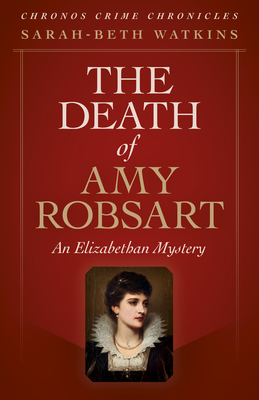 On September 8, 1560, a woman was found dead at the bottom of a flight of stairs inside Cumnor Place. The only visible marks on her body were two wounds on the side of her head, yet her neck was clearly broken. If she was an ordinary woman, her death would not have been remembered through the centuries, yet she was no ordinary woman. She was the wife of Robert Dudley, the man who was considered as one of Queen Elizabeth I’s favorite courtiers. Amy Robsart was a third wheel in the relationship between her husband and the queen, but does that mean that she was murdered? In her latest book, “Chronos Crime Chronicles- The Death of Amy Robsart: An Elizabethan Mystery”, Sarah-Beth Watkins plays detective to uncover the cause of death and the possible motive for those who wanted to see Amy dead.
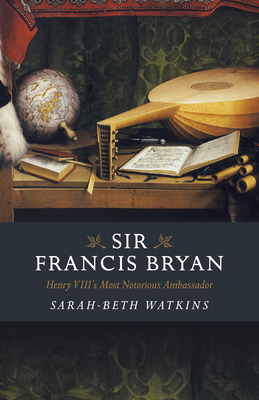 During Henry VIII’s reign, those who were most loyal and the closest to the king did not often last long to enjoy the rewards of his friendship. However, there was one man who stayed in relatively good favor with the king throughout his reign. He was a sailor, a soldier, a diplomat, and acted as an English ambassador mostly in France. He was a cousin to a few of Henry VIII’s wives, a lover of wine, and an infamous womanizer. The name of this rather extraordinary man was Sir Francis Bryan and the story of how he survived the tumultuous reign of Henry VIII is told in Sarah-Beth Watkins’ latest biography, “Sir Francis Bryan: Henry VIII’s Most Notorious Ambassador”.
 The children of Henry VIII have been the center of historical studies for centuries. Edward VI, Mary I, and Elizabeth I were all considered Henry’s “legitimate” children and were able to obtain the crown of England. Henry Fitzroy was the illegitimate son of the king, but he was still able to gain titles and a good marriage before he died. They all had something in common; they were all recognized by their father, Henry VIII. However, there was another child who many believed to have been the daughter of the king. The name of this intriguing lady was Lady Katherine Knollys and her story comes to life in Sarah-Beth Watkins’ book, “Lady Katherine Knollys- The Unacknowledged Daughter of King Henry VIII”.
 Love stories tend to be rare during the Tudor dynasty. They are often of royal women marrying men well below their station in life and then the ruling monarch throwing them in the Tower until they ended up divorcing or dying. Nothing really romantic about these stories. However, there is one story that breaks the mold of disastrous love. It is the story of Mary Tudor, the sister of King Henry VIII and the Dowager Queen of France, who married the charming knight and best friend of her brother, Charles Brandon. Their story is often told in historical fiction novels, but Sarah-Beth Watkins decided to dive deep into the lives of these two lovebirds, before and after they were married, in her book, “The Tudor Brandons: Mary and Charles- Henry VIII’s Nearest and Dearest”.
 When one thinks about Queens of Scotland during the time of the Tudors, many automatically think of Mary Queen of Scots and her tragic life. However, there was another queen who had a deep connection to the Tudors and was also a queen of Scotland. She tends to be pushed aside in favor of her more famous siblings; Arthur Tudor, Henry VIII, and Mary Tudor. Her story is full of turmoil and triumphs. Her only desire was to unite England and Scotland peacefully, but the choices that she made in her lifetime would prove foolish, leading to more troubles between the two nations. This is the story of Henry VIII’s oldest sister Margaret, which is brought to life in Sarah-Beth Watkins’ book, “Margaret Tudor Queen of Scots: The Life of King Henry VIII’s Sister”.
  Henry VIII, the king who was notorious for his six marriages. His first three marriages, to Catherine of Aragon, Anne Boleyn, and Jane Seymour, gave Henry VIII his only children that were considered eligible for succession. Catherine of Aragon was his first foreign bride, but he would divorce her to marry Anne Boleyn. Anne Boleyn would later be executed and Jane Seymour would die after giving birth to Henry’s son Edward. Henry wanted to marry again, so his most trusted advisors decided to try for a foreign alliance as well as a new bride for the king. They decided that Anne of Cleves from Germany would be the perfect bride, but it did not work out and Henry decided to divorce her and claim Anne as his “sister”. She is often viewed as Henry’s “lucky wife”, but who was she and what was her life like before and after she met her husband Henry VIII? That is exactly the question that Sarah-Beth Watkins wanted to explore in her latest book, “Anne of Cleves: Henry VIII’s Unwanted Wife”.
 Adventures of a Tudor Nerd