
 The Wars of the Roses was a time of great hardships and strong men and women who did everything they could in order to survive. One of these remarkable people was a woman who did everything she could to make sure her only son lived and prospered. She was the daughter of a man who, allegedly committed suicide, she had four different husbands and gave birth to her son at the age of thirteen. She helped organize rebellions and a marriage that helped her son win the throne of England. Her name was Margaret Beaufort, the mother of King Henry VII. Her remarkable story is told in Elizabeth Norton’s insightful book, “Margaret Beaufort: Mother of the Tudor Dynasty.”
This was a time of extraordinary men and women who knew both triumphs and tragedies. Margaret Beaufort was no exception as Fortune’s wheel gave her quite a ride, as Elizabeth Norton explains:
The idea of Fortune’s wheel, with its random changes from prosperity to disaster, was a popular one in medieval England, and Margaret Beaufort, with her long and turbulent life, saw herself, and was seen by others, as the living embodiment of the concept. Margaret was the mother of the Tudor dynasty in England, and it was through her that Henry VII was able to bid for the throne and gather enough strength to claim it. She knew times of great prosperity and power, but also times of deep despair. These were, to a large extent, products of the period in which Margaret lived, and her family, the Beauforts, had also suffered and prospered from Fortune’s random spin in the years before her birth. (Norton, 9).
Norton begins her book by explaining the origins of the Beaufort family, with the relationship between John of Gaunt and Katherine Swynford. It is through John of Gaunt that the Beauforts were able to go from illegitimate children to royal relations. This connection brought them a lot of favors, but it also brought a lot of heartaches. When the Beauforts fell, they fell hard, like Margaret’s father John Beaufort who allegedly committed suicide after a failed mission in France. His death meant that Margaret, his only child, was made a very wealthy heiress and a very eligible young lady on the marriage market. She was married to her first husband at the tender age of 10, but it did not last long. Her second marriage was to King Henry VI’s half-brother Edmund Tudor. He died before he could meet his son, leaving Margaret a mother and a widow before she turned 14. This might have been a dark moment in any young woman’s life, but Margaret grows from this experience, for herself and her only son Henry Tudor.
Margaret used her next two marriages, to Sir Henry Stafford and Lord Thomas Stanley, to her advantage to help her son’s cause. Henry was on the run with his uncle Jasper during this time since the Yorkist cause saw him as a potential heir to the throne. It was Margaret’s influence with the court and her financial support that helped her son and her brother-in-law survive during this time. It all paid off and after years apart, she was reunited with her son after the Battle of Bosworth Field. Henry was victorious and declared King Henry VII. The Tudor Dynasty was created, and Margaret Beaufort began her new role as the King’s Mother. She was a mother-in-law to Elizabeth of York, a grandmother to Henry and Elizabeth’s children, and a patroness for colleges and universities. Margaret was a devout woman who also had control of her own finances, even though she was married. Fortune’s wheel gave Margaret Beaufort quite a ride, but she endured it and helped create one of the greatest dynasties in English history, the Tudor dynasty.
Elizabeth Norton sheds light on Margaret Beaufort’s story. In recent years, Margaret Beaufort has been vilified but reading the letters written by Margaret and from people who knew her shows who she really was, a strong and devout woman who would do anything for her son. Norton is able to balance the facts that we know about Margaret’s life and times with letters and poems about her and Norton’s engaging writing style to give Margaret a biography she deserves. This biography is meticulously researched and a delight to read. If you want a fascinating biography about this remarkable woman, I highly recommend you read Elizabeth Norton’s “Margaret Beaufort: Mother of the Tudor Dynasty”.
 In recent years, the study of the English conflict known as the “Wars of the Roses” has become rather popular. The Lancasters and the Yorks fighting for the English throne. Only one can be the winner. When we do look at this time period, we tend to focus on the people involved in the battles and the political aspect of the conflict. The battles, how they were fought, and why the conflict started in the first place tend to be pushed to the sideline. That is not the case with this particular book. In Hugh Bicheno’s book, “Battle Royal- The Wars of the Roses: 1440-1462”, the political and military aspects combine with family histories for a comprehensive look into what made this time period so fascinating.
 England is on the brink of civil war. Families with royal blood in their veins are fighting amongst each other as King Henry VI has fallen ill. Mistrust runs rampant and sacrifices are made in order to gain the throne. This is the England of 1454 and the beginning of the period in English history that we know today as the Wars of the Roses. Families like the Nevilles, the Percys, and the houses of York, Lancaster, and Tudor would gain fame and infamy during this time. Conn Iggulden decided to explore this tumultuous time after the Jack Cade rebellion, which he explored in his first book “Stormbird”, in the second book of his “Wars of the Roses” series called “Trinity”.
 The Wars of the Roses is often remembered for the battles that were fought in England. Bosworth. Towton. Barnet. Tewkesbury. These battles and the names of the men and women like Richard III, Margaret of Anjou, Henry VI, Richard Duke of York, Edward IV and the Tudors are etched into the history of England. However, what started this conflict was not on the battlefield, it was inside the English Court. The decisions of a few men led to revolts that swept throughout England. So what was life like during this tumultuous time in English history? That is one of the questions that Conn Iggulden wanted to explore in his book series, “Wars of the Roses”. The first book in the series is called “Stormbird” and it explores the time after Henry VI marries Margaret of Anjou as well as Cade’s Rebellion, which wanted to tear England apart.
 The Wars of the Roses was a time full of fascinating people, both men, and women. They chose to live their lives to the best of their abilities. They had to decide who they were loyal to and, in some circumstances, they had to switch sides in order to survive. They had to chose to take destiny in their own hands, even if the decisions they had to make were controversial to others. This would perfectly describe the protagonist of Philippa Gregory’s book, “The Lady of the Rivers”. This is the story of Jacquetta Woodville, the mother of Elizabeth Woodville and a woman who took destiny into her own hands
 The houses of York, Lancaster, the Nevilles, the Howards, the Mowbrays, the Percys, and the Tudors are often recognized as the families involved in the Wars of the Roses. However, there was one more house that was just as important as the others; the Beauforts. The Beauforts were the sons and daughters of John of Gaunt, Duke of Lancaster and his mistress Katherine Swynford. They were considered bastards since they were born out of wedlock, yet they were connected to the house of Lancaster and rose to power by their own right. They would help change not only English history but the history of Europe forever. The Beauforts made a huge impact during the Hundred Years War and the Wars of the Roses, yet many people only recognize Margaret Beaufort and Edmund Beaufort 2nd Duke of Somerset. The Beauforts don’t get much attention. Nathen Amin, the founder of The Henry Tudor Society, wanted to tell the story of this remarkable family. It is in his book “The House of Beaufort: The Bastard Line that Captured the Crown”, that the Beauforts are given the attention that they rightfully deserve.
 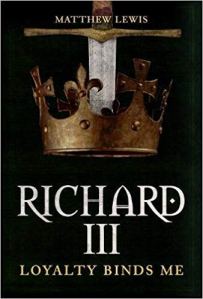 When we study history and look at certain people, we often have a tendency to treat them almost like fictional characters. They are either the hero, all good with no flaws, or villains, all bad where we only focus on their flaws. We don’t see the person as “human”, neither good nor bad, just someone who tried their lives to the best of their abilities. One such person who tends to get either the hero or the villain treatment is King Richard III of England. To some, he is “white knight”, a man who was wrongly accused and who was faultless. To others, he was a “black legend”, a dastardly villain who wanted power and did not care who he stepped on in order to achieve his goals. With these two different portrayals of Richard III, we often forget that he was just an ordinary man who became king. Matthew Lewis has decided to strip away both the white and black portrayals of Richard III and explore who Richard III the man was in his latest book, “Richard III: Loyalty Binds Me.”
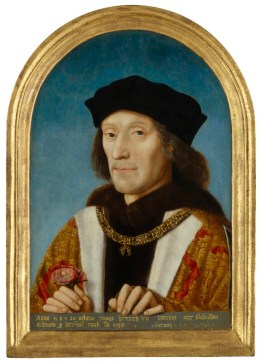 (Born January 28, 1457- Died April 21, 1509). Son of Margaret Beaufort and Edmund Tudor, 1st Earl of Richmond. Married to Elizabeth of York. Father of Arthur, Prince of Wales, Margaret, Queen of Scots, Henry VIII, King of England and Mary, Queen of France. Henry VII went from an exile to the founder of one of the most powerful dynasties in all of English history, the Tudor Dynasty.
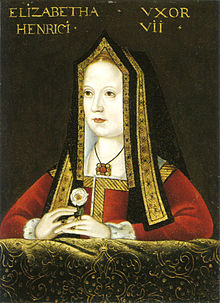 (Born February 11, 1466- Died February 11, 1503). Daughter of King Edward IV and Elizabeth Woodville. Married to King Henry VII. Mother of Arthur, Prince of Wales, Margaret, Queen of Scots, Henry VIII, King of England and Mary, Queen of France.
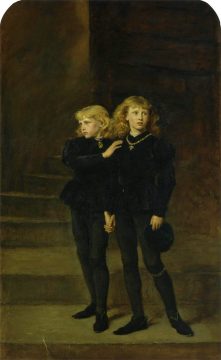 Edward V (Born November 2, 1470- Date of Death Unknown). Richard Duke of York (Born August 17, 1473- Date of Death Unknown). Sons of King Edward IV and Elizabeth Woodville. Richard was married to Anne Mowbray. Edward V and Richard Duke of York are known as “The Princes in the Tower”. They were placed in the Tower of London after their father’s death and were never seen again. Their disappearances and whether or not they were murdered has become one of the greatest mysteries in history.
 Adventures of a Tudor Nerd