
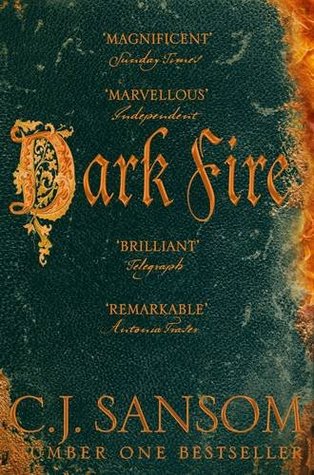
 The year 1540 during the reign of Henry VIII was a turbulent time. Henry’s new wife, Anne of Cleves, is not exactly the person who he imagined and his eye is starting to wander to a new woman, Katherine Howard. The reformers are starting to lose favor with the king as they and Catholics alike are being executed for treason. This is the London that Matthew Shardlake, our favorite hunchback lawyer turned detective, calls home. He thinks that he has retired from his detective work and serving Thomas Cromwell, but he is sadly mistaken. His next adventure has twice the number of cases and just as much danger that makes his trip to the monastery in “Dissolution” look easy. In the second book of the Shardlake series, “Dark Fire”, C.J. Sansom turns up the heat, the action, and the danger.
We join Matthew Shardlake during a busy season in his life as a lawyer. He is working on maintaining his legal practice, and his next case is a doozy. A young girl named Elizabeth is accused of murdering her cousin and it is up to Shardlake to defend her, even when everyone believes she is guilty of the crime. Just as he is adjusting to this new case, he gets a call from his favorite person who he thought he was done dealing with for a while, Henry’s chief minister, Thomas Cromwell. Cromwell has a new case for Shardlake, to recover the lost formula for the mysterious Greek Fire, also known as Dark Fire. Cromwell knew that Shardlake would need some help with this new case, so he sends a new partner, the daring and resourceful Jack Barak. The only clue they have is someone from the Court of Augmentations found the formula in a dissolved monastery’s library, but when the person who had it and his alchemist brother are found brutally murdered, things get extremely complicated. Two separate cases that share the same deadline and the same amount of danger if Shardlake and Barak should fail to solve them. Can they solve both cases in time?
When I read the description of this book, my first impression was that C.J. Sansom was trying to cover too much in a book. I thought that there was no way that Shardlake could solve both cases in the time frame that he was given and that Sansom would focus on one case over the other. I was proven wrong as this book was beautifully balanced between the two cases while keeping the reader’s attention throughout the entire book.
Sansom made the Tudor London world come to life in this brilliant sequel. I thought the way he showed the struggle for power between those who had it and those who wanted it was masterfully done. He included some of my favorite characters from “Dissolution” in this book, which made me extremely excited and I believe that Shardlake’s new partner Barak was a stroke of genius. Their interactions were some of my favorites in this entire book and I cannot wait to see how he develops Shardlake and Barak’s partnership throughout the rest of the series.
I enjoyed this book immensely. It kept me guessing with both cases until the bitter end. There were so many twists and turns, revelations, and intrigue. There were some places where I think the pacing was a bit slower than the first book, but it did not detract from my enjoyment of this remarkable sequel. I did not want it to end because it would mean that I would have to leave this dynamic world with intriguing characters, until the next book. It was a sheer joy to dive back into Shardlake’s Tudor world and I honestly cannot wait to jump back into another Shardlake mystery. The first book made me fall in love with Shardlake, but this one made me fall in love with his Tudor world and the people around him. If you have read “Dissolution”, “Dark Fire” by C.J. Sansom is a must-read.
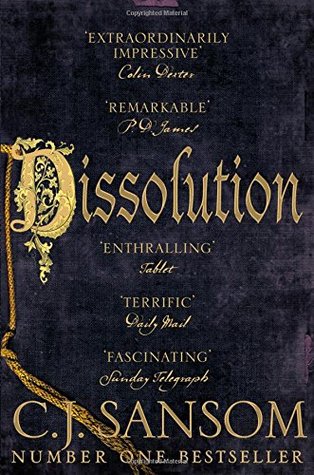 The Tudor dynasty marked tons of changes in society and religious norms. In 1537, the changes are in full force. Anne Boleyn was executed a year earlier and Henry’s third wife, Jane Seymour recently passed away after giving birth to Edward VI. Religious reformers are clashing with the Catholic Church after Henry VIII has declared himself the Supreme Head of the Church of England. Henry VIII’s reign marked the changing point in societal and religious norms, none more so than the dissolution of the monasteries. As monasteries and monks alike adjust to the new ways of life, the monastery at Scarnsea buzzes with activity and murder. Henry VIII’s right-hand man, Thomas Cromwell, sends an unlikely man to investigate the situation; the hunchback reformer lawyer, Matthew Shardlake. This is the world that C.J. Sansom has chosen to create in the first book of his Tudor mystery series, aptly named, “Dissolution”.
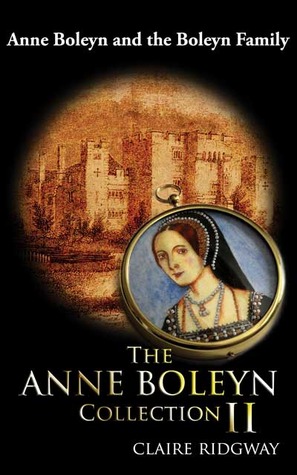 The Boleyn family have been viewed as social climbers, who only desired power and prestige, in history and novels for centuries; their fall from grace was due to their ambitions. But, is this true? Did Anne Boleyn’s family only care about getting to the top by any means necessary? Were they manipulative, cunning, and cruel like they have been portrayed in dramas and novels? Who were the Boleyns and why have they been so maligned in history? In her second book of this series, “The Anne Boleyn Collection II”, Claire Ridgway of The Anne Boleyn Files examines Anne Boleyn and the truth about her family.
 A foreign princess who travels to England to marry the king to establish a strong political alliance. To those who study history, this is a story that has been told numerous times, but what makes this particular story unique is the people involved. The bridegroom was the recently-widowed Henry VIII, the shadow of his former self and notorious throughout Europe for having his second wife Anne Boleyn executed. His new bride to be is the German princess Anna of Kleve. To say that they did not see eye to eye would be an understatement as the marriage did not last long. Her story is often swept under the rug. Anna is often viewed as the “lucky” wife of Henry VIII, but was she? What was Anna’s story and what was her marriage with Henry really like? Alison Weir has taken up the challenge to give her readers a taste of what Anna’s life might have been like in this novel, “Six Tudor Queens: Anna of Kleve, Queen of Secrets”.
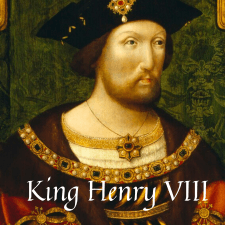 During a blustery 18 days in June 1520, an historic event took place in the Pale of Calais. Here, King Henry VIII of England and King Francis I of France met in an ostentatious display of power, wealth and status. Masterminded by Thomas Wolsey, the aim was to join the two kingdoms in a pact of solidarity and friendship, notably against the insurgen


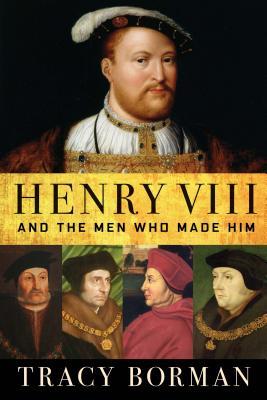 The story of the reign of King Henry VIII has been told mainly through his numerous marriages and through the lives of his children. Although his immediate family was a big part of his legacy, there is much more to his story than his tempestuous relationships. There were also his legal, religious, and military exploits. The ones who were with Henry when he made these decisions were the men who were loyal to him, his counselors and companions. Their tales are often told separately, until now. Tracy Borman has decided to masterfully combine their tales to explore the life of their infamous king in her latest biography, “Henry VIII and the Men Who Made Him”.
  There have been certain events in Tudor history that have become as famous as those involved. None more so than the divorce between Henry VIII and Katherine of Aragon so Henry could marry his second wife, Anne Boleyn, also known as “The Great Matter”. We often study this time through the perspectives of the many historians and authors who have written about this topic. But, what if Katherine, Henry, and Anne had a chance to speak for themselves about the events of “The Great Matter”. Thomas Crockett decided to have the main figures of this famous divorce tell their tales in his latest work, “The Great Matter Monologues: Katherine, Henry, Anne”.
 In history, we tend to focus on the stories of the men and women who shaped the era. This is obviously important, but the locations where the events of the past happened are equally as important. Sadly, many of the buildings that the men and women from the past knew no longer exist. However, there are a few, especially from the Tudor period, that we can still visit. Suzannah Lipscomb explored over 50 of these remarkable buildings and decided to tell their tales in her book, “A Journey Through Tudor England”.
 In English history, the story of the royal families tends to capture the imagination of those who study it. Full of dynamic tales of kings and queens, and numerous nobles, these are tales that make it into history books and history classes. We tend to focus on the same kings and queens, who have become the popular royals. But what about those who are left in the dust of those popular royals? Who were the royal women who lived in the shadow of the throne that time has forgotten? What were the lives of these women like? It is these women who are the focus of Erin Lawless’s latest book, “Forgotten Royal Women: The King and I”.
 Adventures of a Tudor Nerd