Book Review: “Henry VIII and Charles V: Rival Monarchs, Uneasy Allies” by Richard Heath

75418858._SX318_Two kings, two rivals from different countries defined the 16th century. One was the spare to his father’s crown, but when his eldest brother suddenly passed away, he became the next Tudor king. The other was the sole heir to his parent’s large kingdom and would become the Holy Roman Emperor. Wars, the Reformation, and family drama kept these two men, Henry VIII and Charles V, busy and at each other’s throats. They would sometimes join and fight for one another’s causes, showing the importance of international politics. With each new scenario, their relationship would shift, either for the best or the worst. Richard Heath has combined the stories of these two monarchs, these “frenemies,” into one joint biography, “Henry VIII and Charles V: Rival Monarchs, Uneasy Allies.”
Thank you, Pen and Sword Books and Net Galley, for sending me a copy of this book. I have read many books about Henry VIII, but Charles V was a side character in many of these books. When I saw this book, learning more about Charles V intrigued me.

Heath begins his book with Henry VIII, the second son of Henry VII and Elizabeth of York. He was never destined to become king, but when his eldest brother, Arthur, died unexpectantly, he became the next King of England. In contrast, Charles V was destined to become King of Spain as he was the only son of King Philip I, King of Castile, and Queen Juana of Castile and Aragon. Henry VIII had multiple wives and one legitimate son who would not live long as king. In contrast, Charles V had one wife, Isabella of Portugal, and numerous children, including the next King of Spain, Philip II.

Henry VIII and Charles V had similar ideals and were raised to be devout Christians, even if the way they fought for their faith was different. Charles V’s aunt, Catherine of Aragon, was Henry VIII’s first wife. The two monarchs and their respective countries, the Holy Roman Empire, Spain, and England, enjoyed close relationships. However, the 16th century was notorious for its ever-shifting political landscape, especially concerning the wars in France, and Italy, that involved King Francis I, the Pope, and Suleiman the Magnificient.

To untangle the messy political dilemma of the 16th century in a dual biography is quite a feat, which Heath does well. I wish he had included a chart to break down the different treaties and wars he chose to highlight in this book because I needed help figuring out which war was which and what each treaty agreed to do. Overall, I think if you want a decent introduction to the life of Charles V and how his relationship with Henry VIII changed over time, I would recommend you read “Henry VIII and Charles V: Rival Monarchs, Uneasy Allies” by Richard Heath.

Book Review: “Gloriana: Elizabeth I and the Art of Queenship” by Linda Collins and Siobhan Clarke

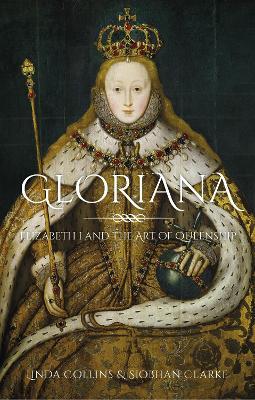
glorianaA queen locked in a struggle of being a single woman and the sole ruler of her kingdom must create the image that would help lead her divided country to a golden age. This image must comfort her people while showing strength and perseverance to her enemies who would try to take the throne from her. Elizabeth I worked hard with artists, poets, playwrights, and musicians to create the almost mythological image of “Gloriana,” the virgin goddess. Linda Collins and Siobhan Clarke explore how this image was created throughout Elizabeth’s reign in their latest book, “Gloriana: Elizabeth I and the Art of Queenship.”
When you first see the title of this book, you would assume that it will be yet another biography with art sprinkled in. You would be wrong. This book focuses solely on the different forms of artwork that built the Gloriana persona over the decades of Elizabeth I’s reign and how we perceive the pieces of art centuries later. Each section of this book discusses a particular aspect of Elizabeth’s reign while examining how art changed with a different artist or courtier highlighted, alongside portraits and miniatures thoroughly inspected for the symbolism hidden in plain sight.

I love examining Tudor-era artwork on my own to try and crack the code behind the symbols they chose to use, especially Elizabethan portraits, particularly The Rainbow Portrait. Collins and Clarke’s examination of the symbolism in each portrait and miniature, including dendrochronology to determine when paintings might have been painted, was captivating and enlightening. It reminded me of a history class I took in college about art history, which I have fond memories of learning about how art changed up to the Renaissance. I found it equally fascinating that they chose to highlight the life of Nicholas Hilliard, who does not get enough attention as a Tudor artist compared to Hans Holbein the Younger.

However, Collins and Clarke examine more than just the typical portraits, paintings, and miniatures. The myth of Gloriana would not have survived without poets, musicians, and playwrights, like Edmund Spenser, Thomas Tallis, William Byrd, and William Shakespeare. It was a multi-faceted effort to promote the Elizabethan propaganda that allowed Elizabeth not only to survive but for England to thrive.

“Gloriana: Elizabeth I and the Art of Queenship” by Linda Collins and Siobhan Clarke is a delightful book for any Tudor or art nerd in your life; informative, educational, and easy to read. Each page will give you a better understanding of Elizabeth I’s reign, her propaganda, and the myth of Gloriana.

Book Review: “The Forgotten Sister” by Nicola Cornick

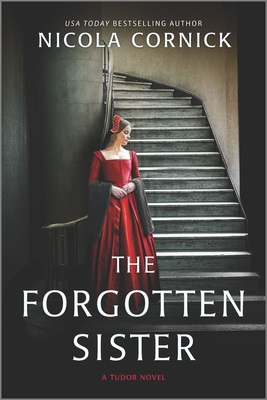
52024957The year is 1560, and a young woman hatches a way to escape her loveless marriage. Her name is Amy Robsart, and she is the wife of Robert Dudley, one of Queen Elizabeth I’s favorites at court. Unfortunately, things do not go as planned, and the consequences reverberate throughout the centuries. Lizzie Kingdom, a television star, struggles to find her way in life. When tragedy strikes when her friend Dudley’s wife is found dead at the bottom of a staircase, the scandal breaks, threatening to ruin Lizzie’s life and reputation. A deadly secret from the past and an encounter with a mysterious young man will forever transform the lives of these two women from different centuries. Will Lizzie Kingdom discover the truth before it is too late? This mystery is masterfully told in Nicola Cornick’s Tudor novel, “The Forgotten Sister.”
After browsing the shelves one day, I found this book in my local Barnes and Noble. This is my second Nicola Cornick novel; the first was “The Last Daughter of York,” I have enjoyed both equally.

Like “The Last Daughter of York,” “The Forgotten Sister” is a dual timeline book in which one story takes place in Tudor England and the other in modern England. We begin with the ghost of Amy Robsart, the wife of Robert Dudley, wandering Cumnor Hall, waiting for someone to release her from her curse. Flash forward to the modern day, where Lizzie Kingdom is attending the wedding of her best friend, Dudley Lester, and his wife, Amelia. There, Lizzie comes into contact with a glass orb that, with her psychometry, allows her to see the history of an object. The sphere gives Lizzie a somewhat unsettling vision, but it is not clear to her what the meaning behind the vision.

Ten years later, Dudley and Amelia are going through a rocky divorce when Amelia is found at the bottom of a staircase, dead, just like her ancestor Amy Robsart. Dudley is suspect number one, with Lizzie as his accessory after the fact, just like what happened in Tudor England, since Lizzie and Dudley are so close. Lizzie is concerned about restoring her reputation until he encounters Amelia’s brother Johnny and Amelia’s half-brother Arthur. Johnny has a psychic connection to Amelia and wants to solve the mystery surrounding her death and the death of their ancestor Amy Robsart.

I am not usually a big fan of books with supernatural elements, but this one grabbed my attention. It kept my attention to the very end because even though I knew the basis of the Amy Robsart case, I wasn’t sure how it would tie into the modern case of Amelia’s death. I think telling Amy Robsart’s story from her perspective is a unique twist, and she pairs rather nicely with the contemporary protagonist Lizzie Kingdom, based on Elizabeth I.

If you want an enthralling mystery that spans centuries and is a delight for modern readers and Tudor nerds alike, you should check out “The Forgotten Sister” by Nicola Cornick.

Book Review: “Elizabethan Rebellions: Conspiracy, Intrigue, and Treason” by Helene Harrison

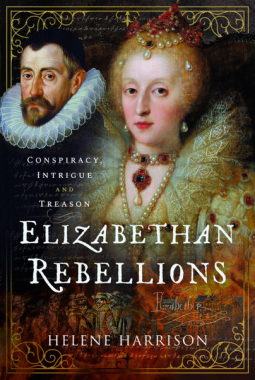
63193745 (1)The struggle to be a king or queen in any country during Europe’s medieval or early modern era was only the beginning. They are either the next in line to the throne and inherit the crown, or they sometimes fight to the death to wear it. After the king or queen settles into ruling their respective countries, the real challenge emerges as they have to deal with rebellions and those who commit treason against their monarch. Take, for example, what happened during the reign of Elizabeth I. We consider her reign the “Golden Age” in English history. Still, she had to deal with numerous rebellions and conspiracies surrounding her viewpoints on religion and how she dealt with her cousin, Mary Queen of Scots. In her first book, “Elizabethan Rebellions: Conspiracy, Intrigue, and Treason,” Helene Harrison takes an in-depth look at each rebellion and how they left a mark on Elizabeth I’s reign.

Thank you, Pen and Sword Books and Net Galley, for sending me a copy of this book. When I heard about this title online, I was intrigued since many of these rebellions have been covered in books about Mary Queen of Scots or biographies about Elizabeth I. Still, this is the first time I have seen a book about Elizabethan conspiracies.

Harrison begins by showing how early Tudor rebellions shaped the reigns of Elizabeth’s family and how the early uprisings affected her time as Queen of England. Beginning with her grandfather, King Henry VII, and the pretenders’ rebellions of Lambert Simnel and Perkins Warbeck, we see how important it was to take action against those who threatened to overthrow the Tudors before they even began their rule in earnest. Under Henry VIII, we see the Pilgrimage of Grace, protesting against Protestantism and for the return of Catholicism after the break from Rome. Elizabeth is considered one of the main actors behind the Wyatt Rebellion of 1554 under her sister Queen Mary I.

These previous events would help shape how Elizabeth I dealt with the five significant rebellions during her reign. These five rebellions were: the Northern Rising, Ridolfi Plot, Throckmorton Plot, Babington Plot, and the Essex Rebellion. Four of the five rebellions had something to do with Mary Queen of Scots and the battle between Protestantism versus Catholicism. In contrast, the Essex Rebellion, the final rebellion Elizabeth I dealt with, was more about a spoiled courtier not getting his way in life and blaming it on Elizabeth.

Harrison does not do a typical overview of each rebellion. Instead, she takes a deep dive into the timeline of each event, who was involved, and how they came crashing down. Each rebellion had a unique signature, from espionage and intrigue to acts of treason and secret codes. Every experience taught Elizabeth a different lesson about what it meant to be a ruler of England. I found this book informative and well-written. I learned new elements of each rebellion, which I thought I knew pretty well. For her first book, Helene Harrison does a great job sharing her points and showing how these rebellions shaped Elizabeth I’s reign. Suppose you want a book that explains the different power struggles Elizabeth I had to deal with during her reign. In that case, I recommend reading “Elizabethan Rebellions: Conspiracy, Intrigue, and Treason” by Helene Harrison.

Book Review: “House of Tudor: A Grisly History” by Mickey Mayhew

59607093._SY475_The glitzy, glamorous life of the Tudors portrayed in popular TV shows and novels mask the truth of this infamous dynasty. It is more bloody than what has been described. It is filled with grotesque executions, deadly diseases, bloody battles, and bloody battles. What happened to Richard III’s remains? What was Tudor torture like for those unfortunate victims? What were other devious tales at play in 16th-century Europe? Mickey Mayhew has worked hard to answer these questions by combining 45 of the most gruesome stories from this dynasty into one book, “The House of Tudor: A Grisly History.”
Thank you, Pen and Sword Books and Casemate Group, for sending me a copy of this book. I am always looking for a new book about the Tudors, so when I heard about this one, I decided that the perfect time to read it would be in October.

Mayhew begins the grotesque journey into the Tudor dynasty by exploring what happened to the previous king before Henry VII, Richard III, and his remains. We then jump into the reign of King Henry VIII with the tale of Catherine of Aragon and the head of King James IV of Scotland. It is then that Mayhew dives into the tumultuous reign of the big man, his unfortunate wives, and his ministers who got caught in the middle of all that tantalizing Tudor drama.

After the death of King Henry VIII, the political drama got more intense, as did the political and religious motivated executions. From the minute reign of Lady Jane Grey to the “bloody” albeit misnamed reign of Mary I to the colorful reign of Elizabeth I. Sprinkled in the chapters of these English queens were chapters dedicated to Mary Queen of Scots, Catherine de Medici, and the courts of Scotland and France, which were equally brutal as their English counterparts. We have plots plenty with the Babington, Ridolfi, and the smaller-scale Parry plot. Naturally, with schemes came rebellions and political assassinations that dominated 16-century Europe, especially in Tudor England, and numerous deadly diseases.

Mayhew categorized each chapter in chronological order with rather witty titles, which I appreciate in more academic writing. He does not shy away from the gory details, which adds another element to stories that are familiar to those who are Tudor fans. If you want something spooky to read in October or know more about the darker side of Tudor history, I recommend reading “House of Tudor: A Grisly History” by Mickey Mayhew.

Book Review: “Keeper of the Queen’s Jewels” by Adrienne Dillard

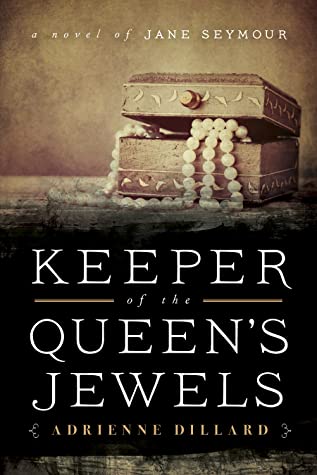
61419479._SY475_ (1)Two women who served Anne Boleyn must deal with the ramifications of staying on opposite sides of the queen’s downfall. One is the next bride of King Henry VIII, who must give the king the son he desires or suffer the consequences. The other is a lady in waiting who holds a dark secret and a relic of the past that could be dangerous to both women. Many of us know the story of Jane Seymour, but is there more to the queen who was able to give King Henry VIII the son he desired? What about the mysterious Margery Horsman? What role did she play in Anne Boleyn’s and Jane Seymour’s inner circles? In her third book, “Keeper of the Queen’s Jewels,” Adrienne Dillard tells the tale of these women bonded by fate to work together to survive such a tumultuous time.

Thank you, Adrienne Dillard and GreyLondon Press, for sending me a copy of this novel. I had read Dillard’s previous novels and adored them, so when I heard that she was writing a new story with Jane Seymour and Margery Horsman as the heroines, I knew it was a must-read for this year.

We begin with the immediate aftermath of the death of Anne Boleyn. Margery Horsman is still reeling with her words and how they might have led to the deaths of innocent people. On top of that, Anne Boleyn entrusted her with her most famous piece of jewelry, the B necklace, which she must keep hidden until the time is right to give to Anne’s beloved daughter, Elizabeth. Alone in a sea of faces, Margery must navigate the Tudor court to ensure her queen’s final wish is fulfilled, even if it means working with Anne Boleyn’s replacement, Jane Seymour. Along the way, she unexpectedly falls in love with a widower and finds happiness.

While we have Margery Horsman’s story, we also have Jane’s tale of how she became queen quickly after the death of the woman she once swore to serve. Following the advice of her brothers, Thomas and Edward Seymour, Jane learns what she must do to survive as queen, even when she is not pregnant with a potential Tudor heir. She may appear like this meek and mild mother in the making, but deep down, Jane wants to speak up against issues that matter to her, like the Pilgrimage of Grace and the dissolution of the monasteries. A wise woman who knew how to balance her opinions in such a matter to avoid falling into the deep end and following her predecessor to the scaffold.

Dillard weaves historical facts with elements of fiction to create believable versions of the Tudors. The amount of care taken to write the stories of Jane Seymour and Margery Horsman is extraordinary. In short, “Keeper of the Queen’s Jewels” is Adrienne Dillard’s latest Tudor masterpiece and is a must-read for Tudor fans.

Television Series Review: “The Six Wives of King Henry VIII”

81uwnQbeXvL._SY445_Many actors and actresses have portrayed the lives of Henry VIII and his six wives in modern films and dramas. When asking Tudor nerds which Henry VIII stood out the most, the most popular response is Keith Michell in the 1970s BBC series, “The Six Wives of King Henry VIII.” I had not heard about this series until I started “Adventures of a Tudor Nerd.” Many people have wanted me to watch the series solely for the performance of Keith Michell, so when a coworker allowed me to borrow her DVD copy of the series, I finally decided it was time to tackle this legendary series.

For those unfamiliar with the older Tudor dramas like this series, it should be noted that the focus is not on sex or bloody battles but on the relationships between Henry and his six wives. Therefore, the costumes and the scenery take a step back in quality that one would expect when compared with modern dramas. I think the English brides’ outfits are well done, but the native gowns for Katherine of Aragon and Anne of Cleves felt a bit off for me.

Keith Michell plays the titular king, but I will discuss his performance later. I want to look at the actresses who played Henry’s six wives. Each episode focuses on each wife’s story, how they became his wife, and how their story ended.

We begin with Katherine of Aragon, played by Annette Crosbie, who was the wife of Prince Arthur, but when he died, Katherine struggled to survive in a foreign land until it was decided that she would marry her former husband’s brother, Henry VIII. The couple seems to be in love until Katherine cannot deliver a son for the king, so he decides it’s time for a divorce, which we call The Great Matter. With Katherine out of royal favor, it is time for Henry’s second wife, Anne Boleyn, played by Dorothy Tutin, to make her appearance. When it comes to Anne Boleyn’s performances, I don’t know if I like Tutin’s portrayal; it just rubbed me the wrong way.

My favorite episode of this series was Jane Seymour, played by Anne Stallybrass, who shows a more complex side to Jane’s story. We see her interacting with the Seymour family and her desire to reunite Henry VIII and his daughter Mary. The way the episode was structured with Jane on her death bed and witnessing flashbacks to her time with Henry VIII, the issue of the Pilgrimage of Grace, and the birth of her beloved son Edward. With Jane’s death, we see the more human side of Henry as he is in deep mourning for his beloved queen.

It would be several years until he married again to Anne of Cleves to secure a German Protestant alliance. Anne of Cleves, played by Elvi Hale, is a young woman of average looks and very little money who wants to learn everything she can about England. I like how we are introduced to Hans Holbein in this episode and to see how Anne felt about her marriage and ultimate divorce from Henry VIII.

With the divorce of Anne of Cleves settled, Henry VIII turned his gaze on the young Catherine Howard, played by Angela Pleasence. Catherine is young, naive, and only concerned about being queen and having men fawn over her. It was interesting to see Catherine Howard as a nursemaid to the King and how angry he was with her uncle after her execution. Finally, we are introduced to Henry’s final wife, the devout reformer Catherine Parr, played by Rosalie Crutchley. We witness the end of the King’s reign and the rise of the Seymour family to help the young king Edward VI.

Of course, these stories could not be told without side characters like Thomas Wolsey, Thomas, and Edward Seymour, King Henry VII, Eustace Chapuys, Jane Boleyn, and Will Somers. I was a little surprised that they included torture scenes for Anne Askew and Mark Smeaton, especially since they did not show the execution scenes for Anne Boleyn and Catherine Howard. Several small Easter eggs for Tudor fans sprinkled in are quite delightful to discover.

Now, it’s time to discuss the big guy, King Henry VIII, played masterfully by Keith Michell. Before watching this drama, I was only familiar with Keith Michell from his performances in Murder She Wrote and the episodes I would watch with my mom. We begin with Henry as a young king enchanted with Katherine of Aragon. They are madly in love, and it is hard to believe they would ever separate, but they eventually do when Anne Boleyn catches his eye.

Throughout this entire series, we see Michell’s acting range through the rapid emotional change of the king. One minute he could be lovey-dovey, the next raging mad, and then bawling his eyes out. What impressed me the most about Michell’s performance was how we saw Henry VIII’s size and shape change in each episode. As Tudor fans, we have screamed at the TV when we see modern adaptations of Henry VIII that do not meet our standards for what older Henry should look like. Michell exceeds all expectations and gives his audience one of the most believable King Henry VIII performances in modern history.

Overall, I found this a decent show where the political and romantic drama of the reign of King Henry VIII shines through the screen. The queens and the counselors did take a back seat to the titular king, but I did not mind that. If you want to watch a legendary series about the reign of King Henry VIII that does not have the sex and scandals of a modern drama, I highly recommend you watch the BBC series, “The Six Wives of King Henry VIII,” starring Keith Michell.

Casting Source:

https://www.imdb.com/title/tt0066714/?ref_=tt_mv_close

Book Review: “The Woodville Women” by Sarah J. Hodder

61772589Three women in one family who shared the same first name saw England change over a tumultuous century. They saw the end of the Plantagenet dynasty and the rise of the Tudors while on the sidelines of great battles. Through heartaches and triumphs, the women of the Woodville family became princesses and queens that would transform the political landscape of England forever. These three women, Elizabeth Woodville, Elizabeth of York, and Elizabeth Grey, were incredible examples of what it meant to be medieval royal women. They are featured in Sarah J. Hodder’s latest book, “The Woodville Women.”

I want to thank Pen and Sword Books and NetGalley for sending me a copy of this book. I have read other books by Sarah J. Hodder about women from the Woodville family, so when I heard about this title, I wanted to see what new information she would share with her audience.

We begin our adventure into the Woodville family by exploring the matriarch of this rather extraordinary family, Jacquetta of Luxembourg, the future wife of Richard Woodville. For a woman of Jacquetta’s status to marry a man well below her rank was unheard of in medieval Europe, but their union would change history during the tumultuous time known as the Wars of the Roses. Their daughter, Elizabeth Woodville, would marry a Lancastrian soldier named Sir John Grey of Grosby, but when John died, she caught the eye of the young Yorkist king, Edward IV.

During King Edward IV’s reign, Elizabeth Woodville, now queen of England, showed her true strength. As a mother to a large family, including the infamous Princes of the Tower, and her eldest child Elizabeth of York, Elizabeth Woodville fought for her children’s rights, even after her beloved husband’s death. Elizabeth of York would follow in her mother’s footsteps and become Queen of England when she married the victor of the battle of Bosworth Field, Henry Tudor, the patriarch of the Tudor dynasty.

The woman who proved the most fascinating character in this particular book for me was Elizabeth Grey, the daughter of Thomas Grey and Cecily Bonville. Elizabeth Grey would marry Gerald Fitzgerald, 9th Earl of Kildare, who she met at the Field of Cloth of Gold. They would live in Ireland and have many children together, but things were not smooth sailing as Kildare’s rivalries would lead to rebellions in Ireland and land him in the Tower of London a few times. Although Kildare had a rocky relationship with King Henry VIII, Elizabeth Grey was cordial with her royal relation.

Hodder was able to tell the stories of these three women in an illuminating way that reminds readers of the tales of Elizabeth Woodville and Elizabeth of York while giving new insights into their lives and telling the story of Elizabeth Grey. This book was engaging and informative, just like Hodder’s previous books. If you want a book that tells the thrilling tales of Elizabeth Woodville, Elizabeth of York, and Elizabeth Grey, you should check out “The Woodville Women” by Sarah J. Hodder.

Television Series Review: “Becoming Elizabeth”

MV5BZjYxNWQxMzctZjA2MC00ZTkxLTg4MTQtMDE3M2E3YTE5MzFhXkEyXkFqcGdeQXVyMTM1MTE1NDMx._V1_FMjpg_UX1000_The year is 1547, and the infamous King Henry VIII is dead. The throne is left to his young son Edward VI while his half-sisters Mary and Elizabeth wait in the wing. Without their powerful father to look after their well-being, his children must navigate the tumultuous Tudor court with powerful men who desire to use them as mere pawns in their game to influence how England is ruled. Throw in some romantic drama and the ever-changing religious landscape with the clash between Protestants and Catholics. This is the premise of the latest Tudor drama on Starz, “Becoming Elizabeth,” which follows the titular Princess Elizabeth Tudor during the reign of the third Tudor king.

Before we begin, I want to provide a little context before I dive into this review. As many of you know, I am incredibly picky about Tudor dramas; shocker, I know. I will watch trailers for new dramas, but after Reign (which, after watching the show for five minutes, I had to turn it off because of the costume design), I have been highly wary about committing to sitting down each week to watch a new show about historical figures I know pretty well.

The story of Princess Elizabeth is what got me interested in studying history after reading The Royal Diaries book series, so when I heard about this series, I wanted to know more. When I first saw the trailer for “Becoming Elizabeth, ” I decided to take the plunge and watch the first episode, which turned into watching every episode every Sunday.

Now let’s get to my thoughts about the series “Becoming Elizabeth.” I will be discussing the plot points of this series, so if you have not watched this show before reading this review, I would highly recommend you do.

There are a few aspects that I want to touch on before we take a deeper dive into this series, which have to do with the settings, costumes, music, and other details that will delight Tudor nerds. The location of “Becoming Elizabeth” is spot on, immersing the audience in Tudor England, which includes using candles for lighting instead of torches (which was a thrilling addition). I congratulate the costume and make-up crew from this drama as they are the best replications of Tudor gowns and outfits I have ever seen in a Tudor drama. They used the Tudor portraits of the time to replicate specific dresses and jewelry used in the show (including the famous “B” necklace most associated with Anne Boleyn) was a lovely and thoughtful touch. The only exception was the lead women’s riding gowns in this series. I did not like that they rode astride and had pants under their skirts. Let them ride side saddle and wear the same dresses they do at court but in those brown and green tones.

The little touches like having servants sleeping in the rooms of the royalty/ nobility and the masques to show significant events were viewed at court were nice touches for Tudor nerds. I also appreciated the small nods in the dialogue to elements that those who know Tudor history would understand, like the Queen’s jewels and the foreshadowing of Edward VI’s dog. Finally, the music in this show was decent, but some soundtracks felt a tad too modern and took away from the whole escapism element you want in a historical drama.

Now, let’s get into the most critical points of this show: the acting, the actors, and the plot points.

becoming-elizabeth-tudors-1655065913770The cast of “Becoming Elizabeth” is a plethora of talented actors and actresses who remarkably bring the treacherous Tudor court to life. The titular role of Princess Elizabeth was played by Alicia von Rittberg, who portrays the young woman’s naivety and eventual strength in love and court politics. Oliver Zetterstrom is the young King Edward VI who struggles to find his identity as a reformer king while navigating the drama of his court and Lord Protectors. Finally, we have Romola Garai, who revolutionized how Princess Mary Tudor was portrayed on television. Garai gives the audience a more sympathetic and vibrant woman trying to hold her family together while defiantly standing up for her Catholic faith in a Protestant court.

A story like this would not be complete without a group of star-studded actors and actresses to help the trio of Tudor heirs shine. We have the vivacious Catherine Parr, played by Jessica Rayne, and her fourth husband, the sly Thomas Seymour, played by Tom Cullen, Thomas’ brother, and Edward VI’s first Lord Protector Edward Seymour, Duke of Somerset is played by John Heffernan. We also have the Grey family, led by Henry Grey, played by Leo Bill, and the shy and studious Lady Jane Grey, played by Bella Ramsey. Finally, we have the Dudley family with the ambitious John Dudley, played by Jamie Parker, and the youthful Robert Dudley, played by Jamie Blackley. Along with the prominent families, we have Kat Ashley, the loyal servant to Princess Elizabeth, played by Alexandra Gilbreath, and the Spanish soldier Pedro who helps guide Princess Mary, played by Ekow Quartey. The interactions between this cast are so believable and passionately performed that it feels like you have been transported into the 16th century in the reign of King Edward VI.

We begin this series with the death of King Henry VIII. Prince Edward is now King Edward VI, and he and his sisters must learn to live without their infamous father. Mary goes to her own home while Elizabeth joins the household of Catherine Parr and her new husband (the man she truly loves), Thomas Seymour. While Mary and Edward VI argue vehemently over the matters of religion, Catholics vs. Protestants, Elizabeth navigates the unusual attention that Thomas Seymour is giving the young princess as she wonders if this is true love or something more sinister.

In addition to Princess Elizabeth, Catherine Parr and Thomas Seymour welcome the daughter of Henry Grey, Lady Jane Grey, to their household. Elizabeth and Jane do not seem to get along very well, and it feels like the only ones that Elizabeth can turn to when times get rough are Kat Ashley and the caring Robert Dudley. Mary may seem alone, but Pedro, a man who was supposed to spy on the Catholic princess, becomes her friend and ally. Unfortunately for Edward, he is stuck between factions of Edward Seymour, Duke of Somerset, and John Dudley as they fight to influence the young king and the direction he wants to take his kingdom. It was a time of rebellions, betrayals, executions, and moments behind closed doors that would forever shape these three Tudor heirs, especially Elizabeth Tudor.

ELI1_060521_0739_a_1900x1500While most of the storylines are engaging, and I found them rather enjoyable, one got under my skin: the intimate relationship between Princess Elizabeth and Thomas Seymour. Now I know it was the central storyline for the first half of this show, but it made my skin crawl. I know that Tom Cullen has discussed this issue with fans, and I think his portrayal of Thomas is spectacular. My problem is with Princess Elizabeth and how she goes along with the relationship to the point of no return. I feel like Princess Elizabeth was much stronger than how she was portrayed during those moments in the show, and she would have turned Thomas down, knowing the false allegations against her mother, Anne Boleyn. I do not think she slept with Thomas Seymour, but I do believe there were elements of flirting between the two, which could have been seen as them having an intimate relationship.

The creator of “Becoming Elizabeth,” Anya Reiss, has done a magnificent job telling the Tudor dynasty’s tale after Henry VIII’s death. The cast and crew are spectacular, the gowns and costumes are gorgeous, and there are so many Easter eggs that Tudor nerds will geek over. There will be moments that will make you laugh, cry, want to throw a book at your TV or laptop, and breathe a sigh of relief. I may not have seen many Tudor dramas in the past, but this is far and away one of my favorite shows about the 16th century. I hope we will get a second season of “Becoming Elizabeth,”, especially with how they closed the finale.

What are your opinions about “Becoming Elizabeth,” and who is your favorite character from this Tudor drama?

Sources for Images and Cast Information:

https://www.glamour.com/story/becoming-elizabeth-on-starz-everything-we-know-about-the-british-period-drama

https://www.imdb.com/title/tt11444366/

Guest Post: “Mary Zouche: One of Anne Boleyn’s Maids of Honour” by Sylvia Barbara Soberton

out-now-on-amazonToday, I am pleased to welcome Sylvia Barbara Soberton to my blog to discuss one of the women featured in her latest book, “Ladies-in-Waiting: Women Who Served Anne Boleyn.”

In 1533, Anne Boleyn had seven maids of honour and one mother of maids, Mrs. Marshall, who supervised them on the Queen’s behalf. Apart from Mary Howard, Margery Horsman, and Jane Ashley, the maids who served Anne in 1532, there was Mary Zouche, Mary Shelton, Margaret Gamage, and Elizabeth Holland. Howard and Shelton were Anne Boleyn’s first cousins, and Holland was mistress of the Queen’s uncle, the Duke of Norfolk. Margaret Gamage was the first cousin of Jane Boleyn; only Mary Zouche was not related to Anne Boleyn.

Hans Holbein’s sketch inscribed “M Souch” depicts an exceptionally good-looking young woman dressed in highly flattering French fashions, revealing her blonde hair and décolletage. It is often suggested that the sitter may be Anne Gainsford, who married George Zouche in the 1530s, but Anne Gainsford rarely appears in the court records, whereas Mary Zouche is mentioned often. This “M Souch” was most likely Mary Zouche, daughter of John Zouche, eighth Baron Zouche of Harringworth, and his first wife Dorothy Capell. At some point during the late 1520s, she wrote a letter to her cousin, John Arundel, imploring him to help her and her sister to find employment at court as maids to either Katharine of Aragon or Princess Mary. She may have served one of them, but in 1533 she was Anne Boleyn’s maid, attending the Queen’s coronation.

After Anne’s execution in 1536, Mistress Zouche went on to serve as maid of honour to Jane Seymour. She became one of this Queen’s favourite ladies, receiving jewellery, including beads and girdles. Zouche was still unmarried in 1542 when she was granted an annuity of £10 “in consideration of her services to the King and the late Queen Jane.”

Boleyn Soberton coverDescription: 

The aspects of Anne Boleyn’s life and death are fiercely debated by historians, yet her ladies-in-waiting remain an understudied topic. Much emphasis is usually put on Anne’s relationships with the men in her life: her suitors, her royal husband, her father and brother, and her putative lovers, who were executed on 17 May 1536. By concentrating on a previously neglected area of Anne Boleyn’s female household, this book seeks to identify the women who served Anne and investigate what roles ladies-in-waiting played in this Queen’s household.

Amazon US Kindle Paperback Hardcover

Amazon UK Kindle Paperback Hardcover