Book Review: “The History of England Vol. II: Tudors” by Peter Ackroyd

TudorsThe royal dynasties of English history are some of the most popular in European history. We have the Normans, the Angevins, the Plantagenets, who occupied the throne for 300 years, the Scottish Stuarts who saw religious change and political upheaval, the haughty Hanovers, and the current Windsor dynasty. However, one dynasty that has captured the imagination of history nerds for centuries has been the tumultuous Tudors. In book two of Peter Ackroyd’s “The History of England: Tudors,” he explores the stories that made the Tudor dynasty so infamous.
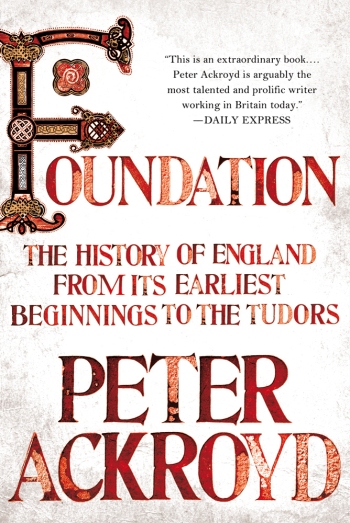
I saw this book at a used bookstore and picked it up. I just read the previous book in this series, “Foundation” and wanted to see how Ackroyd would tackle the tricky Tudors.

Ackroyd, unfortunately, does not start with the patriarch of the Tudor dynasty, Henry VII, instead, he starts with his infamous second son, Henry VIII, and his coronation. Ackroyd did include a bit of information about Henry VII’s reign in his previous volume, but I think it would have made much more sense to have included his story in this book to show the dynasty from beginning to end. When it comes to the reign of Henry VIII, his martial affairs take a backseat to the more religious and political aspects of his reign. The theme of religious changes goes throughout this book as Ackroyd explores the reigns of Edward VI, Mary I, and Elizabeth I, the children of Henry VIII.

While I did find some of the facts in this book informative, I did have issues with this book. When it comes to the characterization of the women in this book, especially Mary I, it felt like a repetition of some of the old tropes (like Bloody Mary). There were also stories and dialogue that Ackroyd had included that felt similar to historical fiction rather than historical facts, which was a bit distracting, especially for a chronicle.

Overall, I felt like this book was just okay, but quite a bit of the information presented in this book could be disproven with the latest research about the Tudors (of course this book is over 10 years old). I think this is a fine introductory book to the Tudor dynasty and the religious changes that happened during the 16th century in England. If this sounds intriguing to you or if you have read “Foundation,” “The History of England Vol. II: Tudors” by Peter Ackroyd might be something you would be interested in reading.

Book Review: “Foundation: The History of England From Its Earliest Beginnings to the Tudors” by Peter Ackroyd

FoundationEngland is a nation that is rich in history and conflicts galore. Through the centuries, England has seen so much change. Many of us know the stories of the medieval and the Tudor kings and queens of England, covered in numerous books, but Peter Ackroyd has taken this concept a step forward. Ackroyd embarked on an epic quest to chronicle the history of England from its prehistoric origins to the modern age. In “Foundation: The History of England From Its Earliest Beginnings to the Tudors,” Peter Ackroyd begins his epic journey into the past to explore the origins of English history.

This book is one that I have seen every time I go to a bookstore and look at the history nonfiction section. I have heard great things about Ackroyd and this series, however, I have yet to read any of his books. It was always an intriguing book to me, but it was one that I never read until now.

Ackroyd has decided to begin his book with one of the most ancient sites in all of England, Stonehenge, explaining that before the first stone was set in Stonehenge, the origins of England were centuries old. We travel through the Stone Age, the Bronze Age, the Iron Age, and into Roman Britain before we dive into the time of the Anglo-Saxons and the Viking invasions. There is a lot of history to cover in less than a hundred pages, but Ackroyd can get his point across about how much change England went through during that time and that it continued to grow throughout the following centuries.

We see the impact that the Norman Conquest and William the Conqueror’s reign. The fall of the Normans with the death of King Stephen led to the rise of the Plantagenets and the reign of King Henry II. It was the Plantagenets that Ackroyd focuses the bulk of this book on as the dynasty lasted over 300 years and witnessed much change. From the Crusades, the Hundred Years War, and the Wars of the Roses, to the Black Death, rebellions, and religious changes, the Plantagenets saw England through major highs and lows. It was not just the monarchs that Ackroyd highlights in this book, he also examines how normal life changed with each dynasty and through the centuries, which adds a bit of depth to his examination of the past. Ackroyd concludes with the fall of Richard III and the rise of Henry VII and the Tudor dynasty. I wish Ackroyd would have waited until his next book to discuss the reign of Henry VII, but it is a minor qualm in the long run.

Overall, I found this an enjoyable and informative read. This is not only a tale of warring kings but a story of the people of England and what makes England so unique. A story whose origins are centuries old, but are rich and vivid in details. I look forward to seeing how Ackroyd will chronicle the Tudors and the rest of England’s history. If you want a book that explores as much of the beginnings of England’s story through multiple dynasties and dramatic changes, I would suggest you read, “Foundation: The History of England From Its Earliest Beginnings to the Tudors” by Peter Ackroyd.

Book Review: “Uncrowned: Royal Heirs Who Didn’t Take the Throne” by Ashley Mantle

UncrownedA life of luxury from birth, destined to be crowned King or Queen of England. This is what we often think life must have been like for royal heirs who reached the ultimate destination of a crown and a throne. However, the stories of those who failed to reach the throne are mired in tragedy and heartache. The question of royal succession in England is a complex issue, especially when the heir to the throne dies unexpectedly, leaving doubts on whether a dynasty will survive through blood or dissolve in conflict. How did the deaths of these potential rulers radically transform the fabric of English history as a whole and what can their lives tell us about what kind of rulers they might have been? Ashley Mantle hopes to answer all of these questions and more in his latest book, “Uncrowned: Royal Heirs Who Didn’t Take the Throne.”

I would like to thank Amberley Publishing for sending me a copy of this book. The description of this book caught my attention. I wanted to see what heirs Mantle would feature in this book and if he would stay with well-known tales or venture into the realm of the relatively unknown heirs.

To begin his book, Mantle explains that he will be going through over a thousand years of royal succession history for England, which is a lot of history to include in one book. He also explains the difference between heir apparent and heir presumptive, which is key to understanding the complex nature of royal succession. While many of the stories included in this book focus on the male heirs, Mantle does include heiress to the throne like Empress Matilda, the Grey sisters (Lady Jane, Catherine, and Mary), Mary Queen of Scots, and Sophia Electress of Hanover, just to name a few.

Mantle’s deep dive into royal succession begins with Robert II Duke of Normandy, also known as Robert “Curthose”, the son of William the Conqueror and Matilda of Flanders; it concludes with Frederick Duke of York and Albany, the son of King George III and Charlotte of Mecklenburg-Strelitz. Each chapter focuses on one of the heirs, in chronological order, with miniature family trees at the beginning to help readers understand how close they were to the throne. This book is full of stories of betrayal, deaths, disappearances, family feuds, and heartache. Some of these heirs were relatively new stories for me, especially the ones more current than the Tudors, which was exciting to discover.

I must say that this task of combining over a thousand years of royal history into a comprehensive book is no easy task, but Mantle does a spectacular job. It was an informative and engaging read that would be perfect for any fan of royal history. If you want a fascinating book about those who were so close to the throne but never ruled, I highly suggest you read, “Uncrowned: Royal Heirs Who Didn’t Take the Throne” by Ashley Mantle.

Guest Post: “Spotlight for ‘How to Dress Like a Tudor’ by Judith Arnopp

How To Dress Like A Tudor Tour BannerI am pleased to welcome Judith Arnopp to my blog today to share a blurb for her latest book, “How to Dress Like a Tudor.” I would like to thank Pen and Sword Books, The Coffee Pot Book Club, and Judith Arnopp for allowing me to be part of this blog tour. 
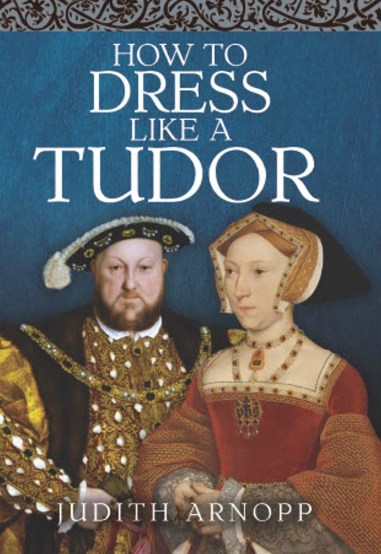
How To Dress Like A Tudor coverBlurb:

Have you ever hankered to dress like a Tudor lord or lady, or perhaps you prefer the status of goodwife, or costermonger, or even a bawd? 

For beginner historical reenactors, the path to authenticity can be bewildering and sometimes intimidating. Judith Arnopp uses her own experience, both as a historian and a medieval/Tudor lady, to make your own journey a little easier.

The author traces the transition of fashion from the relatively subtle styles popular at the court of Henry VII, through the carefully constructed royal grandeur of Henry VIII, Edward VI, and Mary I to the pinnacle of majesty and splendid iconography of Elizabeth I. 

In contrast to the magnificence of court come the ordinary folk who, subject to sumptuary laws and regulations, wore garments of a simpler cut and cloth – a strata of society that formed the back bone of Tudor England.

This brief history of 16th-century fashion examines clothing for both rich and poor, adult and child, and offers tips and tricks on how to begin to sew your first historically inspired garment, this book is aimed at helping the beginner learn How to Dress like a Tudor.

Buy Link:

Universal Buy Link: mybook.to/howtodress

Judith Arnopp at Pembroke CastleAuthor Bio:

Judith writes historical fiction set during the late medieval and Tudor periods. Her usual focus is on the women who lived close to the monarch, women like Margaret Beaufort, Elizabeth of York, and Mary Tudor but more recently has been writing from the perspective of Henry VIII himself. Her books are on Kindle, Audible, and Paperback.

You can find her fiction books here: http://author.to/juditharnoppbooks

She also writes non-fiction and her work is featured in many anthologies and online magazines. Her latest non-fiction, How to Dress like a Tudor published by Pen & Sword Books is available now. 

Judith is a founder member of a reenactment group The Fyne Company of Cambria, and began making Tudor costumes for herself, her husband, John, and other members of the group. It was this that inspired How to Dress Like a Tudor and she hopes to write more non-fiction Tudor history in the future.

Author Links:

Website: http://www.judithmarnopp.com

Twitter: https://twitter.com/JudithArnopp

Facebook: https://www.facebook.com/thetudorworldofjuditharnopp

LinkedIn: http://www.linkedin.com/in/judith-arnopp-ba999025

Instagram: https://www.instagram.com/tudor_juditharnopp/

Bluesky: https://bsky.app/profile/jarnopp.bsky.social 

Book Bub: https://www.bookbub.com/profile/judith-arnopp

Amazon Author Page: https://www.amazon.co.uk/Judith-Arnopp/e/B003CGLWLA/ 

Goodreads: https://www.goodreads.com/author/show/4088659.Judith_Arnopp

Book Review: “The Palace: From the Tudors to the Windsors, 500 Years of British History at Hampton Court” by Gareth Russell

The PalaceWhen we think of old homes, we often think of the phrase, “If walls could talk,” because the true treasure of any home is not the floorboards or the walls, but rather the stories of those who lived inside its walls. Take, for example, Hampton Court Palace in England. A home for over 500 years that has seen many architectural and artistic changes in its hallowed halls, but it is the stories of those who stayed for brief periods that truly make this palace spectacular. Stories full of salacious scandals, religious implications, and revelations that would shake England to its core through revolutions. Hampton Court Palace has been the center of English court drama for centuries and finally, these tantalizing tales are being told in a truly remarkable book, “The Palace: From the Tudors to the Windsors, 500 Years of British History at Hampton Court” by Gareth Russell.

I would like to thank Gareth Russell and Atria Books/Simon and Schuster, for sending me a copy of this book. I have enjoyed Russell’s previous biographies about The Queen Mother and Catherine Howard, so when I heard that he was writing a new book about Hampton Court Palace, I knew I wanted to read it.

Russell structures this book similarly to how he structured, “Do Let’s Have Another Drink” in that each chapter is a different tale from this palace’s half a century of history, which is a ton of historical fun to explore. He starts with a story of a ball attended by Elizabeth Windsor, soon to be Queen Elizabeth II, a few days before her coronation in 1953. Full of glitz and glamor, we soon transition to the origins of the land that Hampton Court Palace resides on and how the palace came to be after its humble beginnings as an estate for the Knights Hospitaller. It was not until the Wars of the Roses that the manor gained prominence under a favorite of Henry VII, Giles Daubeney, 1st Baron Daubeney.

By understanding how this phenomenal manor became a palatial palace, we can appreciate the stories that are the bulk of this book. Russell takes his readers through 500 years of English royal history, starting with the tumultuous Tudors, moving to the saucy Stuarts, the haughty Hanovers, the gossiping Georgians, and finishing with the worldly Windsors. Each chapter focuses on one character from each dynasty and one room of the palace.

While I was relatively well aware of the Tudor tales of Cardinal Wolsey, Catherine Howard’s run down the Haunted Gallery, and Mary I’s phantom pregnancies, it was the other dynasties that drew me into an engrossing book. The Stuarts especially shocked me with the colorful cast of characters who ranged from King James I with the King James Bible, Charles II and his many mistresses, and Oliver Cromwell. Russell shows the tragic moments, which included the death of several queens of England, the chaotic period known as the English Civil Wars, the creation of “The Tomb of the Unknown Warrior,” and the story of The Grand Duchess Xenia, the last living sister of Tsar Nicholas II. There are also stories full of art, scientific research, love, humor, and even chocolate and court life.

Russell’s narrative style of writing combined with his meticulous research has created another smash hit. I could not put this book down and I was very sad when I finished reading it, I did not want it to end. I don’t want to spoil much about this book, but it is my new favorite book by Gareth Russell. If you want a book full of fascinating history that you can binge-read, I highly suggest you read, “The Palace: From the Tudors to the Windsors, 500 Years of British History at Hampton Court” by Gareth Russell.

Book Review: “Heirs of Ambition: The Making of the Boleyns” by Claire Martin

Heirs of AmbitionThe story of the Boleyn family in the 16th century and their ultimate fall from grace has been told for centuries. However, there is a more intriguing tale hidden in the Boleyn family tree. The origins of the family and how they became such a dynamic family that revolutionized the 16th century. How did this family of peasants rise through the ranks to have one of their own become the Queen of England? It is a tale of struggle, survival, and triumph that is told in Claire Martin’s debut book, “Heirs of Ambition: The Making of the Boleyns.”
I would like to thank The History Press and Claire Martin for sending me a copy of this book. I have read many books about Anne Boleyn and her family in the 16th century, but I did not know much about the medieval origins of the family. When I heard about this book, I was captivated by the concept.

Martin begins with a brief explanation of the social hierarchy of the medieval world and how the Black Death radically changed society as a whole. The story of the Boleyns begins with Nicholas Boleyn of Salle, who was arrested for thief in 1318. His son, John Boleyn, was able to expand the amount of property the Boleyns possessed in the aftermath of the Black Death. John’s son Thomas was able to increase the land holdings of the Boleyns through investments, but it was the Geoffreys who were able to make a name for the Boleyns.

Thomas’s son Geoffrey the Elder married well to Alice Bacton. Their two sons, Geoffrey and Thomas, had the future of the Boleyns in their hands. It was Geoffrey the Younger who was able to expand the Boleyns’ outlooks for the future even further as he took on an apprenticeship as a hatter and became a citizen of London. As Geoffrey learned his trade and rose through the ranks to become the mayor of London, England was facing a crisis as the beginning of what would be known as the Wars of the Roses began to rumble.

During a tumultuous time Geoffrey, his wife Anne Hoo, and his young family were able to navigate complex political situations and continue to rise in prominence. Geoffrey’s son William Boleyn would marry Margaret Butler and would witness the rise of the Tudors. It was their son Thomas Boleyn who would marry Elizabeth Howard and be the father of George, Mary, and Anne Boleyn.

As a debut book, I think Martin does an admirable job of balancing her research into the origins of the Boleyn family and a writing style that is relatively easy for readers to follow. Martin weaves a story that is fresh and new for the average fan of the Boleyns and the Tudors, which is thrilling to think about that there is always something to learn from the past. It makes me view the fall of the Boleyns in a different light. I am looking forward to what Martin will write about next. If you want to learn more about this illustrious family and their rise to power, I highly recommend you read, “Heirs of Ambition: The Making of the Boleyns” by Claire Martin.

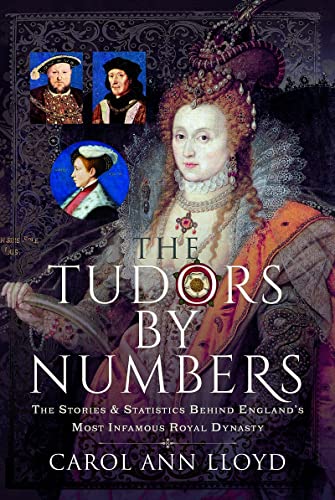
Book Review: “The Tudors by Numbers: The Stories and Statistics Behind England’s Most Infamous Royal Dynasty” by Carol Ann Lloyd

The Tudors by NumbersThe story of the Tudor dynasty has been told in numerous different ways. We know the major figures, the significant events, and the stories of their love lives. We understand how they changed the history of England and Europe forever, but these are just the basic facts. If we look at the numbers surrounding the dynasty, what type of story does it tell? This is the approach Carol Ann Lloyd has taken in her debut book, “The Tudors by Numbers: The Stories and Statistics Behind England’s Most Infamous Royal Dynasty.”
I want to thank Pen and Sword Books and Net Galley for sending me a copy of this book. When I heard about the concept for this book, I was intrigued to see how statistics and history could combine to make a fascinating read.

Lloyd begins her book by exploring how the Tudors came to the throne through the conflict known as the Wars of the Roses, typical for Tudor nonfiction books. However, unlike many nonfiction books about the Tudors, Lloyd has decided not to stick with the chronological order. Instead, she has chosen to highlight certain aspects of the Tudor dynasty to discuss in each chapter with a number corresponding to the topic, such as one rose, two crowned queens, etc.

I found this a refreshing take on telling the Tudor story. To see the stories of the monarchs of the Tudor dynasty, Henry VII, Henry VIII, Edward VI, Lady Jane Grey, Mary I, and Elizabeth I, told through numbers and statistics was unique. Lloyd also tied these statistics to other English dynasties, before and after the Tudors, to show how this dynasty differed from the rest.

However, I wish Lloyd included facts about the nobility and common people in this book. Of course, it is important to discuss the monarchs of the Tudor dynasty, but that is only part of the story of the Tudors. What about the statistics of religious victims of the Tudors? How about statistics that showed the difference between the common people and the nobility? If Lloyd writes another book similar to this one, it would be a fun twist to share statistics from every walk of life during the dynasty featured in the book.

Overall, this was a fascinating fresh look into the Tudor dynasty from the statistics surrounding the monarchs. Lloyd has a unique way of approaching her Tudor dynasty research, making this a great debut book. If you want a stellar introductory book for the Tudor dynasty, check out “The Tudors by Numbers: The Stories and Statistics Behind England’s Most Infamous Royal Dynasty” by Carol Ann Lloyd.

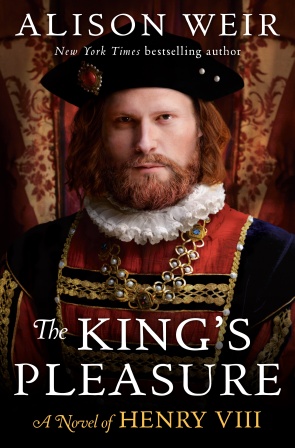
Book Review: “The King’s Pleasure: A Novel of Henry VIII” by Alison Weir

The King's PleasureWhen we think about the Tudor dynasty, we often focus on the women in King Henry VIII’s life and his children, at least when it comes to novels. Writing about this larger-than-life figure, this notorious king and controversial figure in English history, are usually considered ambitious. Few have attempted to write a book about the king’s entire reign, but Alison Weir has embarked on this endeavor in her latest novel, “The King’s Pleasure: A Novel of Henry VIII.”

I want to thank Ballantine Books and Net Galley for sending me a copy of this novel. I have not read many books about the reign of King Henry VIII, except for “The Autobiography of King Henry VIII” by Margaret George, so when I heard that Alison Weir was writing a novel about the titular king, I knew I had to read it.

Weir begins her novel with a moment that must have been difficult for young Prince Henry or Harry as he is referred to in this book. His brother died recently, and his beloved mother, Elizabeth of York, just died, leaving Henry as King Henry VII’s only heir. Henry does not have the best relationship with his father, but he now must fill the void as the heir apparent after Arthur died, leaving his young wife, Katherine of Aragon, a widow. When King Henry VII died, Henry became King Henry VIII and selected a woman he had fallen for to become his queen, Katherine of Aragon.

The bulk of this novel revolves around the relationships between Henry and his first two wives, Katherine of Aragon and Anne Boleyn. Weir is sympathetic toward Katherine of Aragon’s struggles, whereas her portrayal of Anne Boleyn may come across as a bit harsh. Jane Seymour is portrayed as a quiet and obedient queen, and Anna of Cleves’ focus is more on her looks and how Henry treated her more as a sister than a wife. Katherine Howard is someone Henry falls for hard and is devastated by her downfall, and Katherine Parr is the firebrand reformer who wants to heal Henry’s family at the end of his life.

Weir also touches on the complex political web that Henry was involved in, not just in England but European politics of the 16th century. We also see how Henry interacted with his children and how the emotional weight of all of his decisions weighed on him.

I think for how much of a challenge it is to write a novel about King Henry VIII, Alison Weir has done an admirable job in the king’s portrayal. I don’t necessarily agree with how some of the queens were portrayed, but I did enjoy this novel as a whole. I would suggest reading this novel before the Six Tudor Queens series to understand Henry’s perspective before his wives’ stories. If you have enjoyed the latest books about Henry VIII’s wives and his mother, Elizabeth of York, you should read “The King’s Pleasure: A Novel of Henry VIII” by Alison Weir.

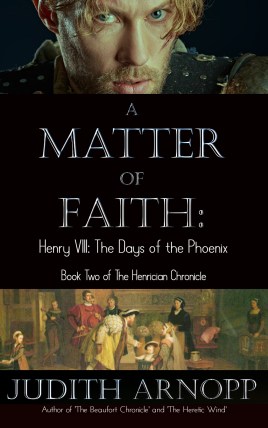
Guest Post: “Spotlight for ‘A Matter of Faith’ by Judith Arnopp

Today, I am pleased to welcome Judith Arnopp to my blog to share the blurb from her latest novel, “A Matter of Faith.” I would like to thank Judith Arnopp and The Coffee Pot Book Club for allowing me to be part of this tour. 
Blurb:

Finally free of Catherine of Aragon, Henry VIII is now married to Anne Boleyn and eagerly awaiting the birth of his son. In a court still reeling from the royal divorce and growing public resentment against church reform, Henry must negotiate widespread resentment toward Anne. He places all his hopes in a son to cement his Tudor bloodline, but his dreams are shattered when Anne is delivered of a daughter.

Burying his disappointment, Henry focuses on getting her with child again, but their marriage is volatile, and as Henry faces personal bereavement and discord at court, Anne’s enemies are gathering. When the queen miscarries a son, and Henry suffers a life-threatening accident, his need for an heir becomes critical. Waiting in the wings is Jane Seymour, a lady-in-waiting who offers the king comfort and respite from Anne’s fiery passions.

But, when Anne falls foul of her former ally, Thomas Cromwell, and the king is persuaded he has been made a cuckold, Henry strikes out, and the queen falls beneath the executioner’s sword, taking key players in Henry’s household with her. 

Jane Seymour, stepping up to replace the fallen queen, quickly becomes pregnant. Delighted with his dull but fertile wife, Henry’s spirits rise even further when the prince is born safely. At last, Henry has all he desires, but even as he celebrates, fate is preparing to deliver one more staggering blow. 

Henry, the once perfect Renaissance prince, is now a damaged middle-aged man, disappointed in those around him but most of all in himself. As the king’s optimism diminishes, his intractability increases and the wounded lion begins to roar.

Buy Links:

This title is available to read on #KindleUnlimited. 

Universal Link: http://mybook.to/amofaith 

Amazon UK: https://www.amazon.co.uk/dp/B0BWF2WL1Q 

Amazon US: https://www.amazon.com/dp/B0BWF2WL1Q 

Amazon CA: https://www.amazon.ca/dp/B0BWF2WL1Q 

Amazon AU: https://www.amazon.com.au/dp/B0BWF2WL1Q 

Author Bio: 

When Judith Arnopp began to write professionally, there was no question about which genre to choose. A lifelong history enthusiast and avid reader, Judith holds an honors degree in English and Creative writing and a Masters in Medieval Studies from the University of Wales, Lampeter. 

Judith writes both fiction and non-fiction, working full-time from her home overlooking Cardigan Bay in Wales, where she crafts novels based on the Medieval and Tudor periods. Her primary focus is on the perspective of historical women from all life roles, from prostitutes to queens, but she has recently turned her attention to Henry VIII himself.

Her novels include: 

A Matter of Conscience: Henry VIII, the Aragon Years. (Book one of The Henrician Chronicle)

A Matter of Faith: Henry VIII, the Years of the Phoenix (Book Two of The Henrician Chronicle)

The Beaufort Bride: (Book one of The Beaufort Chronicle)

The Beaufort Woman: (Book two of The Beaufort Chronicle)

The Kings Mother: (Book three of The Beaufort Chronicle)

The Heretic Wind: the life of Mary Tudor, Queen of England

A Song of Sixpence: The Story of Elizabeth of York

Intractable Heart: The Story of Katheryn Parr

The Kiss of the Concubine: A Story of Anne Boleyn

Sisters of Arden: on the Pilgrimage of Grace

The Winchester Goose: at the court of Henry VIII

The Song of Heledd: 

The Forest Dwellers

Peaceweaver

Her non-fiction articles feature in various historical anthologies and magazines, and an illustrated non-fiction book, How to Dress like a Tudor, will be published by Pen & Sword in 2023.

Social Media Links:

Website: https://www.judithmarnopp.com

Blog: http://juditharnoppnovelist.blogspot.co.uk/

Twitter: https://twitter.com/JudithArnopp

Facebook: https://www.facebook.com/thetudorworldofjuditharnopp

LinkedIn: https://www.linkedin.com/in/judith-arnopp-ba999025/

Instagram: https://www.instagram.com/tudor_juditharnopp/ 

Book Bub: https://www.bookbub.com/authors/judith-arnopp

Amazon Author Page: http://author.to/juditharnoppbooks 

Book Review: “Henry VIII’s Children: Legitimate and Illegitimate Sons and Daughters of the Tudor King” by Caroline Angus

Henry VIII childrenWhen we think about the title royal children, images of children who get whatever they want, being spoiled with gems and gowns, and ruling kingdoms, they are married to create alliances. In that sense, it would define a life of luxury. However, for the children of King Henry VIII, luxury was not always in their dictionary. What was life like for the legitimate and illegitimate children of Henry VIII? Caroline Angus explores this question in her latest book, “Henry VIII’s Children: Legitimate and Illegitimate Sons and Daughters of the Tudor King.”

I want to thank Pen and Sword Books and NetGalley for sending me a copy of this book. I have read quite a few books about the children of Henry VIII, so when I saw the title, I was interested to see what new information Angus would provide in her book.

To understand why Henry VIII desired a large family, especially male heirs, Angus explores Henry’s childhood as the second son of Henry VII and Elizabeth of York. We then transition to the marriage of Henry and Katherine of Aragon and her multiple miscarriages until her beloved daughter Mary was born. After Mary, Angus explores the relationships of Henry VIII with Bessie Blount, Anne Boleyn, and Jane Seymour and his other children that were recognized as his own, Henry Fitzroy, Elizabeth, and Edward, respectively.

What I enjoyed in this book is the amount of information that Angus provided about not only Henry’s legitimate children but his illegitimate children, primarily the information about Henry Fitzroy. For so long, Henry Fitzroy was a footnote in the Henry VIII story, but it is so fascinating how much he relied on his eldest son even though he was illegitimate. Then, you have Mary’s upbringing compared to Elizabeth’s, and you see how much of a struggle it was to be a daughter of Henry VIII instead of a treasured son.

Angus also included a section about children who many questioned if they were indeed illegitimate children of the king, including the children of Mary Boleyn. She also included some Tudors I had never heard about, which was interesting to read about how their life experiences differed from their royal counterparts. The king’s legitimate and illegitimate children dealt with so much pain and suffering because of who their dear old dad was, and they all craved a little bit of his love in return.

Angus has done an excellent job telling the tales of the rather sad upbringings of the children of Henry VIII. A crown and a king as a father did not mean your life was a fairy tale. By understanding their childhoods, we can understand why the Tudor children became strong-willed leaders. If you want an excellent book that gives you a glimpse into what it meant to be a child of a monarch during the Tudor period, check out, “Henry VIII’s Children: Legitimate and Illegitimate Sons and Daughters of the Tudor King” by Caroline Angus.