
 The Wars of the Roses was a time of great hardships and strong men and women who did everything they could in order to survive. One of these remarkable people was a woman who did everything she could to make sure her only son lived and prospered. She was the daughter of a man who, allegedly committed suicide, she had four different husbands and gave birth to her son at the age of thirteen. She helped organize rebellions and a marriage that helped her son win the throne of England. Her name was Margaret Beaufort, the mother of King Henry VII. Her remarkable story is told in Elizabeth Norton’s insightful book, “Margaret Beaufort: Mother of the Tudor Dynasty.”
This was a time of extraordinary men and women who knew both triumphs and tragedies. Margaret Beaufort was no exception as Fortune’s wheel gave her quite a ride, as Elizabeth Norton explains:
The idea of Fortune’s wheel, with its random changes from prosperity to disaster, was a popular one in medieval England, and Margaret Beaufort, with her long and turbulent life, saw herself, and was seen by others, as the living embodiment of the concept. Margaret was the mother of the Tudor dynasty in England, and it was through her that Henry VII was able to bid for the throne and gather enough strength to claim it. She knew times of great prosperity and power, but also times of deep despair. These were, to a large extent, products of the period in which Margaret lived, and her family, the Beauforts, had also suffered and prospered from Fortune’s random spin in the years before her birth. (Norton, 9).
Norton begins her book by explaining the origins of the Beaufort family, with the relationship between John of Gaunt and Katherine Swynford. It is through John of Gaunt that the Beauforts were able to go from illegitimate children to royal relations. This connection brought them a lot of favors, but it also brought a lot of heartaches. When the Beauforts fell, they fell hard, like Margaret’s father John Beaufort who allegedly committed suicide after a failed mission in France. His death meant that Margaret, his only child, was made a very wealthy heiress and a very eligible young lady on the marriage market. She was married to her first husband at the tender age of 10, but it did not last long. Her second marriage was to King Henry VI’s half-brother Edmund Tudor. He died before he could meet his son, leaving Margaret a mother and a widow before she turned 14. This might have been a dark moment in any young woman’s life, but Margaret grows from this experience, for herself and her only son Henry Tudor.
Margaret used her next two marriages, to Sir Henry Stafford and Lord Thomas Stanley, to her advantage to help her son’s cause. Henry was on the run with his uncle Jasper during this time since the Yorkist cause saw him as a potential heir to the throne. It was Margaret’s influence with the court and her financial support that helped her son and her brother-in-law survive during this time. It all paid off and after years apart, she was reunited with her son after the Battle of Bosworth Field. Henry was victorious and declared King Henry VII. The Tudor Dynasty was created, and Margaret Beaufort began her new role as the King’s Mother. She was a mother-in-law to Elizabeth of York, a grandmother to Henry and Elizabeth’s children, and a patroness for colleges and universities. Margaret was a devout woman who also had control of her own finances, even though she was married. Fortune’s wheel gave Margaret Beaufort quite a ride, but she endured it and helped create one of the greatest dynasties in English history, the Tudor dynasty.
Elizabeth Norton sheds light on Margaret Beaufort’s story. In recent years, Margaret Beaufort has been vilified but reading the letters written by Margaret and from people who knew her shows who she really was, a strong and devout woman who would do anything for her son. Norton is able to balance the facts that we know about Margaret’s life and times with letters and poems about her and Norton’s engaging writing style to give Margaret a biography she deserves. This biography is meticulously researched and a delight to read. If you want a fascinating biography about this remarkable woman, I highly recommend you read Elizabeth Norton’s “Margaret Beaufort: Mother of the Tudor Dynasty”.
 By the year 1470, England had been embroiled in a civil war between the houses of York and Lancaster for nearly 20 years. Edward IV was king until he was driven out of the country by his former best friend Warwick and Edward’s own brother, George Duke of Clarence. The House of Lancaster is back in charge with Henry VI, but Edward IV and his other brother Richard Duke of Gloucester are not giving up without a fight. However, there is another family who wants to fight for the throne, the Tudors. How will it come to an end? Who will become King of England when all the major battles come to an end? These questions are answered in Conn Iggulden’s thrilling conclusion to his Wars of the Roses series, “Ravenspur- Rise of the Tudors.”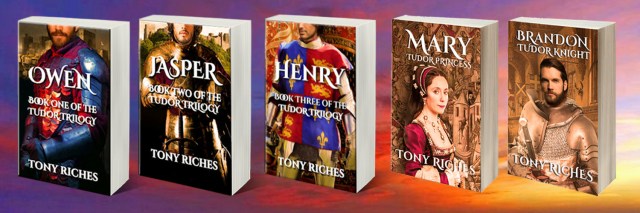

 Pembrokeshire, West Wales and is a specialist in the history of the Wars of the Roses and the lives of the early Tudors. For more information about Tony’s books please visit his website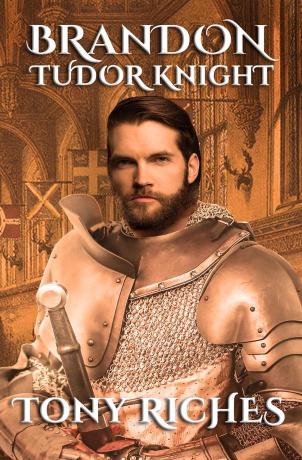
 The Boleyn family is one of the most notable families during the reign of the Tudors. When one thinks about this family, people like Anne Boleyn, Thomas Boleyn, and George Boleyn come to mind. However, another Boleyn and her family story have been emerging from the shadows of history in recent years. That is the story of Mary Boleyn, a mistress of King Henry VIII. Mary Boleyn had a daughter named Catherine Carey, who married Sir Francis Knollys and was the mother of 14 children, including Lettice Knollys. Since Catherine Carey was a direct relation to the Tudors, what might have her life have been like? Adrienne Dillard wanted to give readers a possible view of Catherine Carey’s life in her book, “Cor Rotto: A Novel of Catherine Carey”.
 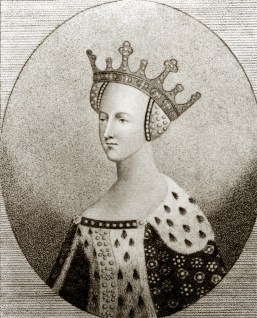 (Born October 27, 1401- Died January 3, 1437).
  Historical fiction has always been a genre that I have had a love/hate relationship with. I was a big fan of the genre for a while and I would read every book I could get my hands on about the Tudors, but then I realized that what the authors were writing was not always true to the historical facts. As I moved away from the fictional genre into the historically academic genre, I found myself looking at historical fiction with a more critical lens. Historical fiction became less entertaining for me the more I learned about the people behind the stories. I told myself that I was not going to read another historical fiction book because they were not historically accurate. That was until I read “ First of the Tudors” by Joanna Hickson.
  Adventures of a Tudor Nerd