
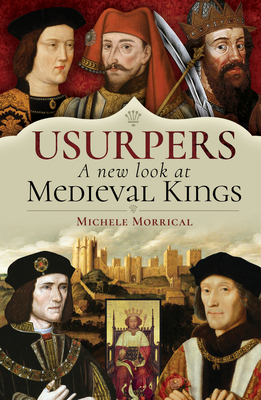
In medieval Europe, to be considered a strong king, you must keep a firm grasp on your crown, or those who see you as weak will take advantage. These men were known as usurpers throughout history who steal the throne through combat or by illegal means. Some of the most well-known kings in English history have been categorized as usurpers, but is this a fair assessment of their mark in history, or is it a case of propaganda changing their legacy? In her debut nonfiction book, “Usurpers, a New Look at Medieval Kings,” Michele Morrical explores the lives of six English kings who bear that title to see if it makes sense with the facts of how they came into power.
I would like to thank Net Galley and Pen and Sword Books for sending me a copy of this book. When I heard this book was published, I wanted to see how Morrical described a usurper and which king she considered usurpers. I have never heard of a book that focused solely on those who stole thrones in England, so I was excited to see how well it read.
Morrical breaks her book into six sections, with each part focusing on one specific king and his rise to power. She focuses on William the Conqueror, Stephen of Blois, Henry IV, Edward IV, Richard III, and Henry VII as examples of rulers in English history known to be usurpers. Morrical writes biography vignettes to give her readers an understanding of how they came to power and who they had to remove from the throne to become the next monarch. In some cases, it meant starting a new dynasty, and in others, it was just a continuation of the family’s lineage, but it was a different branch of the family tree. The biographies tend to get repetitive, especially with the sections dedicated to the Wars of the Roses. If you are new to these kings and the events of their lifetimes, the repetitive nature will help you understand how everything is connected.
I think Morrical can improve if she writes another nonfiction book by using quotes from primary sources and other historians to strengthen her arguments. I wish she had included discussions from chronicles or other primary sources from around the times that these men became rulers to see the consensus of the time towards the new king. It would have added an extra layer to the stories, and readers could see how our definition of a usurper king would have compared or contrasted to the views of the past. I would have also liked Morrical to have discussed whether being a usurper king had a positive or negative connotation. Many kings on this list were considered game-changers when ruling England and transformed how England was viewed in the grander scheme of European politics.
I think for her first book, Morrical does a decent job of presenting her viewpoints about certain kings and presenting the facts about their lives. One can tell that Morrical is passionate about usurpers and understanding why they took the English throne from their predecessors. Overall, I think it is not bad for a book that combines the lives of six kings of England into one text. If you want a good introductory book into the lives of usurper kings, you should give “Usurpers, a New Look at Medieval Kings” by Michele Morrical a try.
 In the middle of the night on November 25, 1120, screams could be heard from the English Channel. A ship known as The White Ship hit a rock and began to sink. Those on board were the glamorous English elite, including the legitimate son of King Henry I, William Aetheling. In an era where people feared the sea and could not swim, those on board sank to their watery death on that cold winter night that began with such frivolity. No one knew that night that this one disaster at sea would cause a dynastic struggle that would lead to the founding of the infamous Plantagenet dynasty. In his latest book, “The White Ship: Conquest, Anarchy and the Wrecking of Henry I’s Dream”, Charles Spencer takes his readers on a journey to fully understand the impact that this tragedy had on the English royal family.
 Numerous castles with remarkable stories dot the landscapes of many European countries, especially England. Few are in good condition whereas others are in a rather ruinous stage. In the village of Sheriff Hutton, there is a shell of a once illustrious castle that protected England and its monarchs for centuries, aptly named Sheriff Hutton Castle. For those who are familiar with the family York and the Nevilles of the Wars of the Roses, you might be familiar with the name of this castle, but do you know the entire story of the castle? Why was this castle so significant to the history of northern England and why did it fall into disarray? These questions and more are explored in Alexander Hill’s debut book, “A Princely Lodging: A History of Sheriff Hutton Castle”.
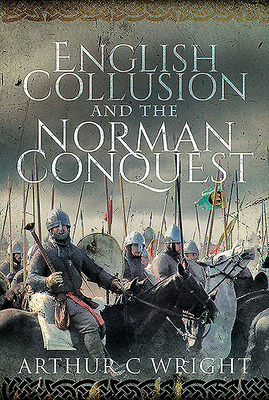 The Norman Conquest of 1066 was one of the most important dates in English and world history. It signaled the start of the Norman influence in England with Duke William, also known as William the Conqueror, becoming King of England. But does William I deserve the reputation that is attributed to him in history, or should we be careful with how we view him because his story is told by the avaricious Church? How much help did William and the Normans receive from their English counterparts? Can we call this event a “conquest”? Who was to blame for the “Harrowing of the North”? These questions and more are discussed in Arthur C. Wright’s latest book, “English Collusion and the Norman Conquest”.
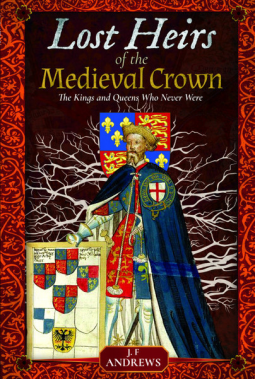 In history, we tend to focus on those who were crowned kings and queens of different nations. Their strengths and their weaknesses. Their accessions and the legacies that they left behind. With every story of someone who triumphed in gaining the throne, there are tales of those who were close to the throne but were never able to achieve the ultimate goal of ruling a nation. These “lost heirs” fall into two categories; either their names live on in infamy or they are thrown into the dust of the past. Who were these men and women and why did they lose their chances to sit on the throne? These questions are explored in J.F. Andrews’ book, “Lost Heirs of the Medieval Crown: The Kings and Queens Who Never Were”.
 The medieval era was one of the most turbulent times in all of English history, full of family feuds, gruesome wars, and so many twists and turns. We tend to focus on the big stories, but, it was not just about the royalty and the nobility, there were also lower classes whose lives went on in the background. What was everyday life like for both the rich and the poor? What ceremonies and recipes did they use? What were wills and court cases like? These questions and more are explored in Toni Mount’s delightful book, “A Year in the Life of Medieval England”.
 There are quite a few events that one can name that radically shaped the course of British history. None more so than the events of 1066, the year that saw Norman, Breton, Flemish, and French forces, led by the Duke of Normandy, William the Conqueror, invaded England in what we know today as the Norman Conquest. Most history books tend to focus on the men who lived before, during, and after the Norman Conquest: Aethelred the Unready, Edward the Confessor, Cnut, Harold II, Harald Hardrada, and of course William the Conqueror just to name a few. What the history books tend to gloss over is the strong women who stood by their husbands, brothers, and sons during this conflict. Who were these women? What were their stories? How did they help their families before, during and after 1066? These questions are answered in Sharon Bennett Connolly’s delightful book, “Silk and the Sword: The Women of the Norman Conquest”.
 Adventures of a Tudor Nerd