

I would like to thank The Coffee Pot Book Club and Judith Arnopp for sending me a copy of this novel. I have enjoyed her novels about Margaret Beaufort, so when I heard that she was writing a novel about Margaret of Anjou, I was intrigued to see what she could add to her story.
Arnopp begins with Marguerite on the verge of leaving her beloved France to become the new Queen of England. She is to be the bride of the son of King Henry V, King Henry VI. She imagines that her new husband will be similar to his father, a warrior, and that Marguerite will be able to stop the Hundred Years’ War between France and England. Instead, she is married to Henry VI, a man who is extremely devout to his faith, and lives in an England that hates Marguerite. It’s not the picture-perfect situation, but Marguerite tries to make the best of it, including falling in love not only with her husband but also with Somerset and Exeter, men loyal to her husband.
In time, Marguerite does indeed become a mother to Prince Edward, the Lancastrian heir, but it is then that her life truly begins to fall apart. A few months before, King Henry VI fell ill and remained that way for the rest of his life. Marguerite tried to become the Protector of the Realm, but the position went to Richard, Duke of York. Rivalries would turn deadly, and the Lancastrians would face the Yorkists on the battlefield. With the king incapacitated, Marguerite must be a mother, wife, queen, and general to make sure that the Lancastrian cause survives and her family can live to fight for the crown that is rightfully theirs.
This was a very good novel about a woman who was trying to keep her family and her country together while finding love. Arnopp does a great job exploring what life must have been like for Marguerite in a turbulent time. If you want a novel that explores what life was like for the Lancastrian queen during the Wars of the Roses, I recommend you read “Marguerite: Hell Hath No Fury” by Judith Arnopp.
 Blurb:
Marguerite: Queen of England
From the moment Henry VI’s new queen, Marguerite of Anjou, sets foot on English soil, she is despised by the English as a foreigner and blamed for the failures of the Hundred Years’ War in France.
Her enemies impede her role as the king’s consort, and when Henry sinks into apparent madness, her bid to become regent is rejected. Marguerite must fight, not only for her position but to maintain Henry’s possession of the crown.
The ambitious Duke, Richard of York, seizes control of the country, thrusting Marguerite aside and inflating the mutual hatred between the houses of York and Lancaster. But the queen refuses to relinquish power and fights determinedly for the rights of her son, Edward of Lancaster.
The long and bitter civil conflict, which come to be known as the War of the Roses, commences.
Buy Link:
Universal Buy Link: https://mybook.to/mhhnf
This title is available to read on #KindleUnlimited.
 Author Bio:
A lifelong history enthusiast and avid reader, Judith holds a BA in English / Creative Writing and a Master’s in Medieval Studies. She lives on the coast of West Wales, where she writes both fiction and non-fiction. She is best known for her novels set in the Medieval and Tudor period, focusing on the perspective of historical women, but recently she has written a trilogy from the perspective of Henry VIII himself.
Judith is also a founder member of a re-enactment group called The Fyne Companye of Cambria, which is where and why she began to experiment with sewing historical garments. She now makes clothes and accessories both for the group and others. She is not a professionally trained sewer but, through trial, error, and determination, has learned how to make authentic-looking, if not strictly historically accurate, clothing. A non-fiction book about Tudor clothing, How to Dress like a Tudor, was published in 2023 by Pen and Sword.
She runs a small seaside holiday let in Aberporth and when she has time for fun, likes to garden and restore antique doll’s houses. You can find her on most social media platforms.
Her novels include:
A Song of Sixpence: The Story of Elizabeth of York
The Beaufort Chronicle: the life of Lady Margaret Beaufort (three-book series)
The Henrician Chronicle: comprising:
A Matter of Conscience: Henry VIII, the Aragon Years (Book One of The Henrician Chronicle)
A Matter of Faith: Henry VIII, the Days of the Phoenix (Book Two of The Henrician Chronicle)
A Matter of Time: Henry VIII, the Dying of the Light (Book Three of The Henrician Chronicle)
The Kiss of the Concubine: A Story of Anne Boleyn
The Winchester Goose: at the court of Henry VIII
Intractable Heart: The Story of Katheryn Parr
Sisters of Arden: on the Pilgrimage of Grace
The Heretic Wind: The Life of Mary Tudor, Queen of England
Peaceweaver
The Forest Dwellers
The Song of Heledd
The Book of Thornhold
A Daughter of Warwick: The Story of Anne Neville, Queen of Richard III
Marguerite: Hell Hath no Fury!
Author Links:
Website: http://www.judithmarnopp.com/
Blog: http://www.juditharnoppnovelist.blogspot.co.uk/
Twitter / X: https://twitter.com/JudithArnopp
Facebook: https://www.facebook.com/thetudorworldofjuditharnopp
Instagram: https://www.instagram.com/tudor_juditharnopp/
Threads: https://www.threads.net/@tudor_juditharnopp
Bluesky: https://bsky.app/profile/jarnopp.bsky.social
Pinterest: https://www.pinterest.co.uk/jarnopp/
Book Bub: https://www.bookbub.com/profile/judith-arnopp
Amazon Author Page: http://author.to/juditharnoppbooks
Goodreads: https://www.goodreads.com/author/show/4088659.Judith_Arnopp
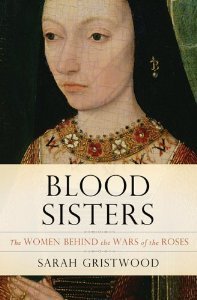 When it comes to studying wars from the past, we often focus on the men who fought during the battles the strategies that were implemented to win and the plans that backfired spectacularly. So frequently in the study of wars, we forget about the women left behind, but in fact, they had bigger roles to play than sitting on the sidelines. For example, the royal women who lived in England during the conflict known as the Wars of the Roses played an essential role in how the wars concluded. These women are slowly coming into the spotlight in biographies and historical fiction novels, but it is rare to read a book about the Wars of the Roses where the central figures are the women, until now. Sarah Gristwood has taken seven women from this age and weaved their stories into her book, “Blood Sisters: The Women Behind the Wars of the Roses.”
 The Tudor dynasty was a time of significant political change, but it was also a time of tremendous religious change. Each Tudor monarch had a different view on the divide between Catholics and Protestants. Although we have an idea of what it might have been like during the reign of Mary I, the way Elizabeth I tackled the issue of religion during her reign. One story of how Catholics were treated in the so-called “Golden Age” of Elizabethan England is the story of Margaret Clitherow. She helped hide a couple of Catholic priests and ended up suffering for her actions by being crushed to death. Tony Morgan tells her story and how she became a Catholic martyr in his book, “Power, Treason, and Plot in Tudor England: Margaret Clitherow, an Elizabethan Saint.”
 When one says “the Princes in the Tower,” a few images pop into our mind. Two young boys were killed in the Tower by their evil uncle, who would become King Richard III. At least, that is the image that the Tudors wanted the world to see, and for centuries, that story has often been told. However, as research has expanded into who Richard III was, the tale of these two boys and their ultimate fate has become even murkier with new suspects and the question of whether the boys were murdered. Elizabeth St. John decided to take on the mystery of the Princes of the Tower with her twist to the tale in her latest novel, “The Godmother’s Secret.”
 One woman is torn between the loyalty to her birth family and the loyalty to her family by marriage. Now, this may sound like the story of Elizabeth of York, but alas, it is not. This story does take place in the fifteenth century, but it is the story of Elizabeth of York’s grandmother, “The Rose of Raby,” Cecily Neville. Born to the proud Neville family, who were proud Lancastrians, Cecily’s father, Ralph Neville, the Earl of Westmorland, arranged a marriage for his daughter to the young and ambitious Richard, Duke of York. She is now one of the most powerful women in England, but with power comes risks of ruin as Cecily has a secret that could be disastrous. War looms between the Red Roses of Lancaster and the White Roses of York, one that will transform English history forever, with Cecily caught in the middle. Her story is told in Joanna Hickson’s novel, “Red Rose, White Rose.”
 During medieval wars, one’s fate is often determined by the spin of the Wheel of Fortune, even for those who did not fight a single battle. One could be living a life of luxury, stability reigning supreme, and is destined to marry a foreign king or prince, but when the wheel begins to spin, all seems lost, and the things that once were as good as guaranteed fall by the wayside. This description could fit any number of stories from the past. Still, the one highlighted in this particular novel is the story of the eldest daughter of King Edward IV and Elizabeth Woodville and the first Tudor queen. In the first book of her latest book series, “The Last White Rose: A Novel of Elizabeth of York,” Alison Weir shows how one woman was able to ride the highs and lows of life to secure her family’s legacy and transform English history forever.
 In 1483, King Edward IV’s family received a devastating announcement; the king in the prime of his life died, leaving the throne to his young son Edward V. However, neither Edward V nor his younger brother Richard of York would ever see the throne. Instead, they were taken to the Tower of London by their protector, Richard of Gloucester, for protection, never to be seen again. For over five hundred years, many theories have emerged about what happened to the princes in the tower and who might have possibly killed the boys. In MJ Trow’s latest book, “The Killer of the Princes in the Tower: A New Suspect Revealed”, he works hard to uncover the truth of what might have happened to the sons of King Edward IV.
 A series of wars that engulfed England for over thirty years finally comes to its conclusion. The Plantagenet dynasty is no more and the once outlaw is now the first king of the brand new dynasty, the Tudors. Margaret Beaufort is reunited with her beloved son, Henry Tudor as he is crowned King Henry VII. As Henry faces the numerous challenges of being a father and a king, his mother is right by his side to guide and protect him and his family. In the epic conclusion to her Beaufort Chronicle series, Judith Arnopp explores the transition for Margaret Beaufort in the early years of the Tudor dynasty in, “The King’s Mother”.
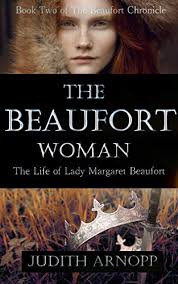 A young woman separated from her only son as a war divides the nation that she dearly loves. The struggle between York and Lancaster, the Wars of the Roses, grows in intensity and the only hope for the Lancastrians is the son of Margaret Beaufort, Henry Tudor. To keep him safe, Margaret must allow him to go into hiding as she adapts to the court of Edward IV and his wife Elizabeth Woodville. Margaret’s journey through love, death, and court intrigue continues in Judith Arnopp’s second book in her Beaufort Chronicle, “The Beaufort Woman”.
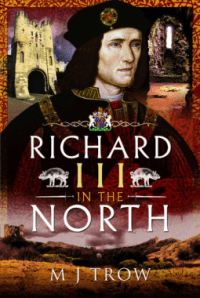 If you have studied the Wars of the Roses, you are obviously very familiar with the infamous last Plantagenet King of England, Richard III. He is known for many things, but the most notorious thing that he is associated with is the murder of the Princes in the Tower, his nephews. However, we cannot be certain that he committed this crime or if a crime was committed in the first place. These rumors swirled around London and Southern England where Richard III was not popular. It was a different story in Northern England, where he was much beloved. In M.J. Trow’s latest book, “Richard III in the North”, he tries to uncover the true story of Richard III by looking at his life while he was living in the North. Was he really the monster that literature has portrayed him as or do we have a case of misunderstanding a historical figure?
 Adventures of a Tudor Nerd