
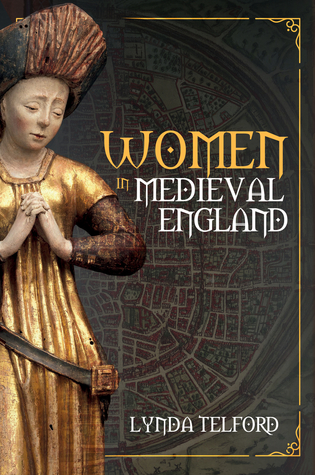
 As students of history, we understand that aspects of society change all of the time, and sometimes the change is rapid, and other times it is positively glacial. One of those aspects of culture that we have seen slow and gradual change pertains to women’s rights. Today, women have more rights than they did in the past, and they can have careers, but is this a novel concept? What were the lives of women like in other periods of history, like the medieval period? In Lynda Telford’s book, “Women in Medieval England,” she explores women’s lives from the Anglo-Saxons to the Tudors to give us a picture of what rights and responsibilities women had during this period.
I want to thank Amberley Publishing for sending me a copy of this book. The title of this book is what drew me to it as I have read many books about individual women in medieval England, but never a comprehensive study. I wanted to learn more about women from every echelon of medieval society and how their lives differed from our own.
Telford begins her book by exploring the women who lived during the rule of the Anglo-Saxons. Reading about their experiences and the laws that dictated their lives is a critical aspect of Telford’s argument that medieval women did not have much more freedom than their counterparts from other eras. It may seem strange that as time moved on from the Anglo-Saxons to the medieval dynasties, the Plantagenets and the Tudors, women had less freedom to choose how they lived their lives. During the plague, women were called to work more to make up for men who died, but even that did not last long. Women were told how to live their lives from the men in their own families and even the church.
Telford has researched the topic of medieval women rigorously, and it shows. She has a passion for this subject, and it is demonstrated throughout this book with everything from letters to court cases. Every aspect of a woman’s life is taken into account to give her reader a better understanding of medieval society.
My problem with this book is that Telford focuses so heavily on the negative aspects of a woman’s life, like prostitution and domestic violence, that it is difficult to find the good parts of the life of a medieval woman. It was a bit too dark and depressing for my liking. I have read other books about strong and independent medieval women, but I do not see it here in this book. Telford is so focused on presenting her argument that Anglo-Saxon women had more freedom than medieval women that it obscures the facts that she does present. In short, she needed to show both the good elements and the harmful elements of the lives of medieval women to present a more balanced argument.
Overall, I think it was a decent book. This book is well researched, and it did present a side of medieval life that I was not expecting. I think it was a bit dark but informative. If you want a comprehensive study of women’s rights and lives during the medieval period, I recommend reading “Women in Medieval England” by Lynda Telford.

 The Wars of the Roses was a time filled with dynamic figures who fought for the right to restore order to England. We often think about the strong warrior men who marched into battle, facing their inevitable doom just for the chance to wear the crown and rule the land. The women who stood by their husbands’ and sons’ sides were just as strong as their male counterparts, even if they did not wear armor. They were on the sidelines, ensuring that they could create alliances that would prove helpful in future conflicts. The most famous examples of strong women during the Wars of the Roses are Margaret of Anjou, Margaret Beaufort, and Elizabeth Woodville. Yet, there was another woman who stood firmly on the side of the Yorkist cause. She was known as the Rose of Raby and the wife of Richard, Duke of York. Her name was Cecily Neville, and she is the protagonist of Annie Garthwaite’s brilliant debut novel, “Cecily.”
 A man hidden from the world languishes for decades in a prison cell. He is not allowed to speak to anyone, or he will face severe consequences. Often in literature, his head is covered in a mask made of iron. His identity and why he angered King Louis XIV so much have remained a mystery for centuries. The prisoner was known as the man in the iron mask throughout history, but who was this enigmatic figure? In her latest book, “The Man in the Iron Mask: The True Story of Europe’s Most Famous Prisoner,” Josephine Wilkinson dives deep into the archives to construct his story and the stories of the men behind the mystery.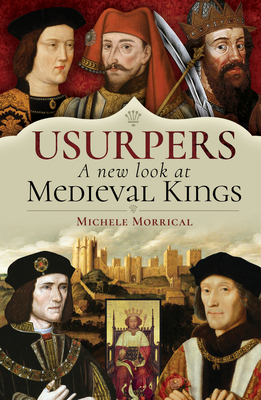
 Today, I am pleased to welcome Clare Marchant to my blog to discuss her latest novel, “The Queen’s Spy,” and her use of dual timelines. I would like to thank The Coffee Pot Book Club and Clare Marchant for stopping by on this tour.
  (Blurb)
 Author Bio:
 A banner decorated with three suns flaps in the wind on the field of battle. The young man behind this emblem is Edward, Earl of March, whose father Richard Duke of York and brother Edmund Earl of Rutland were tragically slain at the Battle of Wakefield. His younger brothers, George Duke of Clarence and Richard Duke of Gloucester, will help Edward carry their father’s cause for the family of York to rule England. When loyalty is questioned even among family members, only one man would truly stand behind Edward until the bitter end. That man would be Richard Duke of Gloucester, or as we know him today, the much-maligned King Richard III. He is often viewed as a treacherous child-killer who coveted the throne after Edward IV’s death, but is that accurately portraying the last Plantagenet king? Who was the real King Richard III? In her magnum opus, “The Sunne in Splendour,” Sharon Kay Penman presents her case for Richard III as a man betrayed, both in life and after his death.
 If you go to Fontevrault Abbey in France, you will find two rather extraordinary tombs. These tombs belong to King Henry II and Queen Eleanor of Aquitaine, the first King, Queen of the Plantagenet Dynasty, and the Angevin Empire. Their effigies tell us a lot about the couple that was buried side by side. The husband was restless; his model shows him ready to take action at any moment, with his crown upon his head and a scepter in his hand. His queen lays beside him, reading an unknown book. They seem to be prepared to watch over their kingdom and their family even beyond the grave. Those who know English history recognize their names and understand the family drama behind the scenes. We think we know the truth about Henry and Eleanor, but is there more to their story and their feuding family? In Matthew Lewis’s latest dual biography, “Henry II and Eleanor of Aquitaine: Founding an Empire,” he explores the relationship between this dynamic king and queen and how it shaped European and English history forever.
 The year is 1558, and Queen Mary I is dying. England is engaged in a war between the Reformation and Catholicism. Caught in the middle is an older man named Robin Lewis, who is being taken to London to face his death as a heretic. Fearful that his story may never be told, Robin Lewis tells his captor his tale through the reigns of three Tudor rulers, Henry VIII, Edward VI, and Mary I. Can his story save his life from certain destruction, or is Robin doomed for all eternity? This is the premise of Karen Heenan’s second book in The Tudor Court series, “A Wider World.”
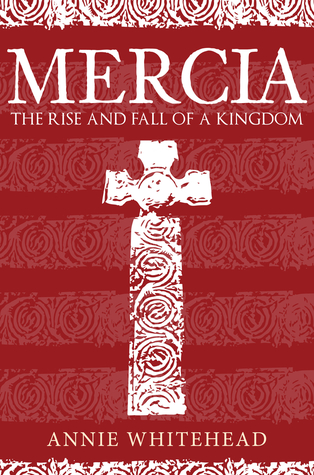 England’s history is full of daring moves and colorful characters, but it is also very ancient compared to other countries. We often considered the “start” of English history in school as the Norman Conquest in 1066. Nevertheless, this was just a stage in the massive story of the island. We have to consider those who called England their home; those who knew England, not as a unified country, but seven kingdoms known as the heptarchy. The most famous of these seven kingdoms was Wessex, the last kingdom, but their mortal enemy had a rich history of their own. Mercia was a thriving kingdom for hundreds of years, with colorful characters that many people are not familiar with. Annie Whitehead has taken the tales of this forgotten kingdom to the forefront with her book, “Mercia: The Rise and Fall of a Kingdom.”
  Adventures of a Tudor Nerd