Book Review: “Katharine Parr: The Sixth Wife” by Alison Weir

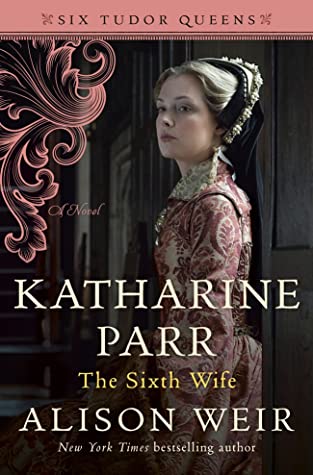
34020934._SY475_A woman twice widowed with no children of her own has the opportunity to choose who she will marry next. Will she marry the man of her dreams or marry the man who has been married numerous times and has killed two of his wives already? It seems like a no-brainer who she should choose, but the man she married for her third marriage was the man who was married numerous times before simply because he is the notorious King Henry VIII and you do not disobey the king. However, his last wife, Katharine Parr, is willing to fight for the religious reforms and her stepchildren that she loves dearly. In the last book of the Six Tudor Queens series, “Katharine Parr: The Sixth Wife”, Alison Weir takes her readers on an extraordinary journey to explore who this brave woman was and why she is the one who survived Henry’s last days.

I would like to thank NetGalley and Random House/ Ballantine Books for sending me a copy of this novel. I have enjoyed the Six Tudor Queens series so far and I was looking forward to reading the last book. Like many people, I know what happened with Katharine during her marriage to Henry VIII and her fourth marriage to Thomas Seymour, but I am not well informed when it comes to her first two marriages. Katharine Parr has been my favorite wife of King Henry VIII for a while now and I wanted to read a novel about her life, to see what Weir’s interpretation of her life story would be like.

Katharine Parr’s story begins with her childhood and her connection with her family. It was unique to see how her childhood helped shaped what type of queen she would become as her mother pushed hard for her daughters to be well educated. Katharine’s first husband, Sir Edward Burgh, was just a boy who followed whatever his father, Sir Thomas Burgh, asked him to do. I think Weir has a unique spin on Katharine’s life with Edward Burgh and their marriage, but it did not last long as Edward Burgh would die in 1533.

Katharine’s second husband, John Neville 3rd Baron Latimer, was her longest marriage. Although they had no children of their own, like Katharine’s marriage to Edward Burgh, it was a happy relationship. They may have differed when it came to their views on religion, but they did seem to love each other. Their happy household was thrown asunder when the Pilgrimage of Grace and Robert Aske knocked on their door and asked for help. There was a real sense of danger during this episode and the bravery that Katharine showed was nothing short of astounding.

When John died, Katharine was left with a choice of who her third husband would be; either the ailing Henry VIII or the suave and debonair Thomas Seymour who deeply loved Katharine. Katharine’s choice was Henry VIII who she hoped she could sway to accept the religious reforms that she believed in strongly. She developed a friendship with the king and his children, but she was still in love with Thomas Seymour. She wrote books during this time that gave her comfort during the difficult times when the court tried to attack her for what she believed and wanted to pit her against Henry. In the end, love triumphed over sorrow and Katharine survived to live with her beloved until the end of her days.

I found this book an absolute treat to read. As someone who loves Katharine Parr and her story, this novel just made me love her even more. The one problem that I had was actually with the spelling of her name as Weir spelled it a bit differently than what I am used to, but it was really a minor detail. I am a bit sad that this is the last book in this wonderful series, but this book was worth the wait.

This novel was a delight to read. It was full of action and intrigue, intense love, and immense sorrow. Katharine was one remarkable woman, just like every wife of Henry VIII Weir has written about in this marvelous series. “Katharine Parr: The Sixth Wife” by Alison Weir is a masterpiece in historical fiction and the perfect conclusion to the Six Tudor Queens series that will leave readers satisfied.

Guest Post: “Forsaking All Other” Excerpt by Catherine Meyrick

Forsaking All Other. Tour BannerpngToday, it is my pleasure to welcome Catherine Meyrick to my blog to share an excerpt from her novel, “Forsaking All Other”. I would like to thank Catherine Meyrick and The Coffee Pot Book Club for allowing me to take part in this blog tour. 

Excerpt

Wyard studied Lucy Torrington. Was this the manner of woman his mother thought would suit him best? She was well-dowered and, no doubt, malleable. But she was not to his taste, insipid was probably the best way to describe her. It had been a mistake to allow Eloise to talk him into coming here, he should have gone straight to Bucklings Hall.

He glanced at Bess Stoughton. Of all the women present she was the most appealing. Despite his initial misgivings, she seemed honest and sensible. She was not predatory or flirtatious, nothing like that bold piece who had tried to get him to dance last night. Perhaps Bess Stoughton’s relationship with that serving man was some sort of protection—life could be difficult for a widow. And she looked at him with neither pity nor revulsion.

‘You know Mistress Torrington well?’

‘As well as any. Lucy is a good and gentle girl who deserves to be treated with kindness and respect.’

‘Who does not?’

Her eyelashes fluttered as if surprised at his comment. ‘Lucy would bloom best married to someone who loved her.’

‘Few have that blessing. Kindness and respect are the best that most of us can hope for.’

She bit her lip, frowning. ‘Are you considering marrying Lucy?’

Wyard shrugged, ‘She is one of a number of young women my mother thinks would make a suitable bride.’ He gave a wry smile. ‘It may be more accurate to say would make a suitable good-daughter.’

‘Do you have a list of requirements—number of hands high, girth, teeth, temperament? A list such as you would take to a horse market.’

It sounded ridiculous the way she described it. He gave a sudden bark of laughter. ‘In truth, I have no list.’

‘Do you always do as your mother wishes?’

‘Rarely, but it is probably time I married and she fears that, left to my own devices, I will either never marry or choose someone highly unsuitable.’

‘Who would be unsuitable?’

‘From my mother’s position, someone without money or connections.’

‘And from your own?’

‘I have not thought so far.’ If you could not marry the best, the most loving woman you had ever met, it really did not matter.

‘Well you should. Can you imagine what it is like for a woman married to a man who is forcing himself to his duty, who does not like her company or her person, who married her simply because his mother or his father told him to?’

He had never thought of it from a woman’s point of view. ‘Was your own marriage like that?’

‘You lack courtesy, Master Wyard.’

‘But you sound as if you speak from experience.’

‘That is none of your business,’ she snapped, colour flooding her cheeks. ‘If I were a man, if I had your freedom, I would do exactly as I pleased. I would never accept a bride who had been bundled up for me by my mother.’ She glared at him, ‘Now, if you will excuse me.’ She swept away towards the group of singers, her back straight and her head held high.

Wyard wanted to stop her, to explain it was never so easy. He watched her go, wondering why he had never imagined he could truly do as he wished.

Forsaking All Other by Catherine Meyrick(Blurb)

England, 1585.

Bess Stoughton, waiting woman to the well-connected Lady Allingbourne, has discovered that her father is arranging for her to marry an elderly neighbour. Normally obedient Bess rebels and wrests from her father a year’s grace to find a husband more to her liking.

Edmund Wyard, a taciturn and scarred veteran of England’s campaign in Ireland, is attempting to ignore the pressure from his family to find a suitable wife as he prepares to join the Earl of Leicester’s army in the Netherlands.

Although Bess and Edmund are drawn to each other, they are aware that they can have nothing more than friendship. Bess knows that Edmund’s wealth and family connections place him beyond her reach. And Edmund, with his well-honed sense of duty, has never considered that he could follow his own wishes.

With England on the brink of war and fear of Catholic plots extending even into Lady Allingbourne’s household, time is running out for both of them.

Love is no game for women. The price is far too high.


Buy Links:

Amazon UKAmazon USAmazon CAAmazon AUBarnes and NobleKoboApple 

Books

Catherine MeyrickAuthor Bio:

Catherine Meyrick

Catherine Meyrick is a writer of historical fiction with a particular love of Elizabethan England. Her stories weave fictional characters into the gaps within the historical record – tales of ordinary people who are very much men and women of their time, yet in so many ways are like us today. These are people with the same hopes and longings as we have to find both love and their own place in a troubled world.

Catherine grew up in regional Victoria, but has lived all her adult life in Melbourne, Australia. Until recently she worked as a customer service librarian at her local library. She has a Master of Arts in history and is also an obsessive genealogist. When not writing, reading and researching, Catherine enjoys gardening, the cinema and music of all sorts from early music and classical to folk and country and western and, not least of all, taking photos of the family cat to post on Instagram.

Social Media Links:

WebsiteTwitterInstagramFacebookPinterest

Book Review: “How to Behave Badly in Elizabethan England” by Ruth Goodman

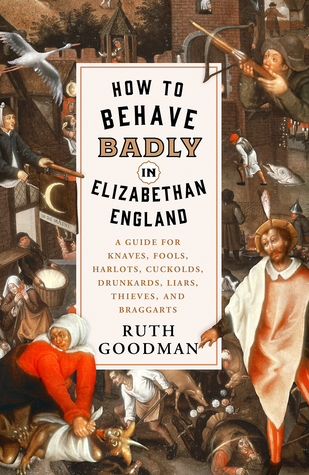
38212150._SY475_In many books about the different mannerisms and routines of different dynasties, we tend to see how the average person lived in the most prim and proper manner. How they avoided trouble at all costs to provide the best life that they could for their families. Yet, we know that there were those who did not adhere to the rules. They chose to rebel against the natural way of life. Every social echelon had their own rule-breakers, but what were these rules that they chose to break? How are these troublemakers of the past similar and different from our modern-day rebels? Famed experimental archeologist and historian Ruth Goodman takes her readers on a journey through the Elizabethan and the early Stuart eras to show how the drunkards, thieves, and knaves made a name for themselves. The name of this rather imaginative book is “How to Behave Badly in Elizabethan England: A Guide for Knaves, Fools, Harlots, Cuckolds, Drunkards, Liars, Thieves, and Braggarts”.

I have enjoyed Ruth Goodman’s books in the past and her knowledge about how those from different periods of history lived. When I saw this particular title on the shelf at my local bookstore, I knew I wanted to read it. The title was so compelling to me as it seems to break the mold of what normal “How to Live in (certain time period)” books are supposed to be like.

Goodman’s structure for this book is very unique. She takes a look at different aspects which made a person a lawbreaker in the Elizabethan and Stuart eras. Things like insulting language, gestures that could be taken out of context, the way someone mimicked their betters in society, drinking too much or too little, and their cleanliness. To understand why certain behaviors were considered bad during these times, Goodman examines what was deemed acceptable in every level of society. Some of the rules and regulations seem rather self-explanatory, while others will be a bit foreign for modern readers.

What makes this book truly special is Goodman’s experiences with the different mannerisms. As an experimental archeologist, Goodman has practiced as much as she could to give the readers a bit more depth to what they are studying. It is one thing to study the actions of those who lived the past, but to act out those actions gives you a new appreciation of the time period you are studying. I actually took my time to copy the different bows and walks that Goodman outlined, which felt a bit awkward at first, but it gave me a different level of respect for the past.

The one problem that I had with this book is with the US title of this book. It is a bit misleading since it is not solely about Elizabethan England. It does dive into the complex nature of the Stuart dynasty, including the English Civil War between the Roundheads (the Parliamentarians) and the Cavaliers (the Royalists). As someone who mainly stays with medieval and Tudor England, I did have to take my time when Goodman mentioned the Stuarts to make sure I understood fully the transition from the Elizabethans in the way of mannerisms.

I found this book quirky, educational, and just pure fun to read. It’s one of those books that you can tell Goodman has wanted to write for a very long time. Goodman captures her audience’s attention with such an engaging writing style and vivid details. It is a wonderfully imaginative read for academics and novices alike. If you want to know what could get you into trouble in the past, check out Ruth Goodman’s latest nonfiction triumph, “How to Behave Badly in Elizabethan England”.

Book Review: “Revelations” by Mary Sharratt

53968576._SY475_Margery Kempe, the only daughter of the mayor of Bishop’s Lynn, England has made a tough decision in 1413. She has decided to leave her home, her husband, and her fourteen children to go on a pilgrimage to the holy city of Jerusalem as a way to honor her late father’s dying wishes. As she begins her journey, she meets the famous anchoress Julian of Norwich, who entrusts Margery with an important mission. She gives Margery her book Revelations of Divine Love and tells her to spread her message throughout the world in secret. Margery’s pilgrimage, her connection to Julian of Norwich, and the aftermath of her journey are intricately woven together in Mary Sharratt’s stunning novel, “Revelations”.

I would like to thank Houghton Mifflin Harcourt and Net Galley for sending me a copy of this book. When I read the description of this novel, I was intrigued. I have heard the names Margery Kempe and Julian of Norwich floating around in recent years, but I sadly knew nothing about their life stories. I hoped that this novel would shed some light on both women and why they are remembered in such high regard today.

Sharratt’s novel is based on the research of historians, such as Dr. Janina Ramirez, who have argued that Margery Kempe knew Julian of Norwich and that Julian gave Margery her precious book Revelations of Divine Love. Margery is no ordinary woman as she has visions that will guide her to the path in which she believes God has chosen for her.

We begin with Margery as a young maiden, who has no desire to marry the man that her family has told her to marry. Reluctantly, she does marry John Kempe and they have fourteen children together. It is during the birth of her fourteenth child, Margery almost dies and so she decided to make a vow of celibacy, which her husband reluctantly agrees to. It was not until her father’s death that Margery chooses to fulfill his dream for her, to go on pilgrimage to Jerusalem. Since John chose not to go on pilgrimage with his wife, she decides to don the clothes of a bride of Christ, which means to dress all in white as a virgin.

Many believe that Margery’s visions, her sudden bursts of tears, and her choice to leave her family make her an evil woman. Except for Julian of Norwich, the famed anchoress, and someone who understood Margery’s struggles. Since Julian could not walk away from her duty as an anchoress to explore the world, she gave Margery the treacherous task of carrying her book throughout the world, giving it only those scholars who could be trusted with the knowledge of this scandalous text.

Margery’s journey to discover who she was meant to be is deep and riveting. It showed how even in the early 1400s, there was a struggle between different views of Christianity. From women accused of preaching in the streets to those accused of Lollardy, there was a real sense of danger and death for those who did not follow the status quo. Sharratt shows the dangers that a woman faced when she traveled on pilgrimage alone, but she also showed how deep Margery’s faith was and how willing she was to make sure that her message was heard. If I did have a small concern, it would be that I wish Sharratt delved into the writing of Margery Kempe’s autobiography, The Book of Margery Kempe.

As someone who has never read anything about Julian of Norwich or Margery Kempe, I found this novel enchanting. This was the first novel that I have read by Mary Sharratt and I thoroughly enjoyed it. It was a delightful escape into the past and the life of a friendship and a pilgrimage that would change the life of Margery Kempe forever. If this sounds intriguing to you, check out “Revelations” by Mary Sharratt.

Guest Post: “Life at the Tudor Court” by Karen Heenan

I am pleased to welcome Karen Heenan to my blog today to discuss life at the Tudor Court. This is part of the book tour to promote Karen Heenan’s book, “Songbird (The Tudor Court, book 1). Thank you The Coffee Pot Book Club and Karen Heenan for allowing me to participate in this tour. 

“Bess!”

The voice, close to my ear, startled me awake. I’m alone in the bed, and the small attic room shared by the female members of the music is empty but for Flora and one other girl. They are nearly dressed—I’m late. Bolting out of bed, I asked Flora, “Why didn’t you wake me?”

She shrugged. “The rest of us get up when Mistress Edith calls.” Relenting, she said, “Here, I’ll help you.”

I pulled my nightdress over my head and washed quickly at the basin. Flora handed me my shift, then helped lace my kirtle. My hair was braided for sleeping, so I pinned it into a hasty knot and settled a white linen coif over it, hoping I wouldn’t run into Nick Hawkins when I looked so untidy.

Breakfast was served in the great hall, which was filled with trestle tables and benches. Servants brought out great bowls of steaming pottage and pitchers of ale, and there were loaves of bread set along the length of the table, for us to cut with our knives.

When the trenchers have been cleared, and the remaining food was taken away for manners—to feed the beggars at the gate—we make out way to the chapel. I let my mind drift during mass until the choir begins to sing. It is impossible not to pay attention to every sound, every note—my dream, when I first arrived, had been to sing in the choir, but girls were not permitted to offer their voices to God. No one had still given me a good explanation as to why.

If we were at Greenwich—where we would travel in the morning, the king had decided to move from Westminster in London—we could also attend the local church, St. Nicholas. Their choir was inferior, but it was pleasing to get outside the palace. The king had less need of us at Greenwich than Westminster, where we were held constantly within call.

Once mass was done, I was free to do what I liked until dinner. Flora had gone off with friends, so I went up to the practice rooms. Someone might be willing to play for me, but if not, I would sing along. If I was fortunate, Tom would be there. He was my dearest friend, and a talented lutenist and composer, though he would blush and deny that his songs are any good.

Someday it would be known, and his songs would be sung all over the court, and perhaps all over England.

He was there, supervising the packing of the many musical instruments which would be transported to Greenwich, along with all the nobles and a good number of the court servants, and all their varied possessions.

 “Do you want me to play for you?” he asked, swaddling a lute in soft wrappings like a babe. His own instrument, I knew, would travel in his grasp; Tom would not trust it to the rough men who loaded the carts and barges for the trip between palaces.

“I can wait.” I leaned against the window, watching the flurry of activity below. In addition to the carts which would start this day so that things might be in place when King Henry stepped off his barge on the morrow, there were the usual clusters of men and horses, servants scurrying across the courtyard on some errand or another, and, to my delight, a certain gentleman atop a shining black horse. 

I let my eyes rest on him. A man such as Nick Hawkins would never pay any mind to a minstrel girl, no matter how lovely my voice. The fact that he had spoken to me on occasion proved nothing. He was handsome—beautiful, really—and powerful, a friend of the king. A man who could have any woman in the kingdom, save the queen. 

He would never look at me.

I turned to Tom, smiling. He would always look at me, always see me for who I was. But it wasn’t the same, and though I loved him as a friend and a brother, I did not think of him as I drifted off to sleep.

“What will you have me play?” Tom settled on a stool with his instrument on his lap, the light from the narrow window falling on his fair hair. “Bess?”

“Sorry.” I shook away my fancies. “We are to perform this evening for the French ambassador and his party.” 

“At least we will have time to eat.” He tuned the lute carefully. “And we will be in the gallery, so you can watch the gathering to your heart’s content.”

I ignored his words, knowing he was teasing. I did like singing from the gallery so I could watch the crowd, and not just because of Nick. It was more impressive, somehow, from above. Crowded in the narrow gallery with the other minstrels, with the horns and drums and shawms, and Tom’s lute singing a sure line beneath for me to follow, I was at peace and could watch the dancers and pretend I was one of them.

A gathering for the French ambassador was sure to run late; I should go back to the girls’ chamber and pack my things for the morning so that when we were done, I could just fall into bed. “Are you happy about going to Greenwich?”

“What does it matter?” he asked. Seeing my expression, he said, “I am if you must know. The stables are closer to the palace.”

Tom loved horses, and though our indoor lives gave us little contact with the beasts, when we were at Greenwich or visiting the cardinal at Hampton Court, he always found his way to the stables. I was glad he was happy, but prolonged time in the stables made me sneeze, and I preferred to walk in the gardens if I was to take my scant free time outdoors.

Other minstrels came in and we went over our evening’s program until the bells chimed eleven; then we all streamed downstairs to dinner. I stayed with Tom; even if the others left us after the meal, we would probably sing and play together until it was time to get ready for the evening’s entertainment. Despite my dreams of greater things, singing with him was when I was happiest, and when I knew that my father had done the right thing. 

I belonged in this place.

 Several hours later, changed into a green gown and clean coif, with my few things packed into a small chest for the morning, I reassembled with other members of the Music in the gallery overlooking the presence-chamber. The vast room was hung on all sides with vivid tapestries depicting scenes both secular and religious, interspersed with gold and silver plate that reflected the hundreds of candles lighting the space.

The king was all aglitter himself, clad head-to-toe in cloth of gold studded with diamonds and pearls. His queen, Katherine, was dressed more soberly, though her fabrics were equally rich. They sat on their thrones under the gold cloth of state, speaking quietly, until the music started. Then the king stopped, mid-sentence, his ear cocked toward the gallery. How fortunate that Tom had instructed the others to begin with one of Henry’s own songs. 

He leaned over to the French ambassador, who stood near the throne, and gestured toward us. I imagined he was telling the Frenchman that he’d written the song—though he praised us lavishly, it was much more likely that he was taking credit for the song.

I sang while the people below mingled and preened, showing off their finery for the king and each other. When the dancing started, I would step back; my voice did not lend itself to the stately pavanes which began the dancing each evening. Those were for the musicians—Tom, Harry, and Gilbert would play their instruments and the courtiers would parade slowly down the length of the room, bowing and circling, flirting with their eyes and their hands, the only parts of their bodies which touched during the dance.

King Henry began the dancing, leading Queen Katherine down from the dais and onto the floor. The jeweled crowd stepped back to give them room, and they traversed the floor alone, the focus of all eyes before the king raised his hand and called for everyone to join him. Then the courtiers paired off, men swiftly bowing before ladies and taking their chosen partner to join the king. 

Nick was there, I noticed almost immediately. He danced with the prettiest women, and once arrived before a woman at the same time as King Henry, bowing deeply and giving way to his monarch, who would dance until dawn if allowed. The queen would retire early, taking her women, though some of them crept back after Her Majesty had been settled for the night.

It was after midnight when the chamber finally began to empty. I sipped from the ale which had been set aside for us; my throat was dry from singing for hours in the stuffy gallery. Tom was yawning behind his hand, and several of the other looked as though they were asleep on their feet. I was still wide awake, but perhaps it was excitement: it was spring, and tomorrow we would journey to Greenwich, where I had begun my life with the Tudor court.

[Illustration #1 – Palace of Westminster, Wikipedia]

[Illustration #2 – Minstrels, Nikki Piggott, photographer, used w/permission]

[Illustration #3 – Greenwich Palace, Wikipedia]

Blurb

She has the voice of an angel…

But one false note could send her back to her old life of poverty.

After her father sells her to Henry VIII, ten-year-old Bess builds a new life as a royal minstrel, and earns the nickname “the king’s songbird.” 

She comes of age in the dangerous Tudor court, where the stakes are always high, and where politics, heartbreak, and disease threaten everyone from the king to the lowliest musician.

Her world has only one constant: Tom, her first and dearest friend. But when Bess intrigues with Anne Boleyn and strains against the restrictions of life at court, will she discover that the biggest risk of all is listening to her own stubborn heart?

Buy Links:

Amazon UKAmazon USAmazon CABarnes and NobleKobo

Audio Buy Links:

Narrated by Jennifer Summerfield

AudibleAuthors DirectNookHooplaApple BooksKoboScribdGoogle PlayAmazon

Author Bio

Karen Heenan

Karen Heenan was born and raised in Philadelphia, PA. She fell in love with books and stories before she could read, and has wanted to write for nearly as long. After far too many years in a cubicle, she set herself free to follow her dreams—which include gardening, sewing, traveling, and, of course, lots of writing.

She lives in Lansdowne, PA, not far from Philadelphia, with two cats and a very patient husband, and is always hard at work on her next book.

Connect with Karen:

WebsiteTwitterFacebookInstagramPinterestBook BubAmazonGoodreads

Guest Post: “A Matter of Conscience: Henry VIII, The Aragon Years” Excerpt by Judith Arnopp

I am pleased to welcome Judith Arnopp to my blog today to share an excerpt from her latest novel, “A Matter of Conscience: Henry VIII, The Aragon Years”. Thank you, The Coffee Pot Book Club and Judith Arnopp for allowing me to host a spot on this blog tour. 

Excerpt

1505 – Henry is informed by his father that he must withdraw from his betrothal to Catherine of Aragon

Most of my companions, the older ones at least, have tasted the pleasures of women but I have no desire to dally with whores. Instead, when the curtains are drawn about my bed at night, I think of Catalina and the delights we will one day enjoy. Since there are no tutors to instruct me on such matters, I listen to the tales my friends tell of their conquests. The prospect of bedding my future wife fills me with a mix of excitement and terror. 

And then, on the eve of my fourteenth birthday, the king informs me that I must make a formal protest against the union with Spain.

“Why?” I exclaim. “I have no wish to protest against it!”

Father rubs his nose, dabs it with his kerchief, rolls it into a ball, and glares at me.

“Your wishes are of no moment. This is politics. You will do as you are told.”

I am furious but I know better than to argue. It would do me no good. I can feel my ears growing red with resentment. I clench my teeth until I hear my jaw crack. Oblivious to my feelings, Father shuffles through the papers on his desk, picks one up, and reads aloud the instruction he has written there.

“You must declare, before witnesses, that the agreement was made when you were a minor and now you reach puberty you will not ratify the contract but denounce it as null and void. Your words will be set in writing and then signed and witnessed by six men.

Protestations tumble in my mind but I cannot voice them. When he dismisses me with a flick of his fingers, I bow perfunctorily, turn on my heel, and quit the room. I find Brandon on the tennis court, loudly protesting the score while his opponent, Guildford, stands with his hands on his hips.

“You are wrong, Brandon, the point is mine. Isn’t that so?” 

He turns to the others, who are lounging nearby. Having only been half attending, they shrug and shake their heads noncommittally.

“My Lord Prince,” Brandon, noticing my arrival, turns for my support. “You witnessed it, did you not? The point was mine. Back me up, Sir.”

I pick up a racket, idly test it in my hand, and emitting a string of curses, hurl it across the court. Silence falls upon the company.

“What ails you, Sir?”

Brandon is the only one brave enough to come forward. He reaches out, his hand heavy on my shoulder. There are few men I allow to touch me. At the back of my mind, I am aware that Brandon is merely proving to others how high he stands in my regard. 

I should shrug him off, but I don’t.

“Walk with me,” I mutter between my teeth and then turn away, almost falling over Beau who dogs my every footstep.

“Out of my way!” I scream and he cowers from me, tail between his legs.

Tossing his racket to Thomas Kyvet, Brandon follows me.

“Henry, wait,” he calls, and I slow my step until he has caught up.

“What has happened?”

“My accursed father.” 

I am so angry, I can hardly speak; my lips feel tight against my teeth, my head pounds with repressed fury. “He demands that I denounce my union with Catalina.”

I stop, rub my hands across my face, the blood thundering in my ears. 

“I don’t know if I am angry because I have lost her, or because I am so sick of being told what I must do. What will Catalina think? What will happen to her?”

He shrugs. “In all probability, she will be sent home to Spain.”

I think of her leaving, imagine her sad little figure boarding ship for the perilous journey to her homeland. For four years she has lived at the mercy of my father’s generosity which, as we all know, is greatly lacking, and now is to be sent home like a misdirected package.

“Sometimes I feel this … this limbo will never end, and I will spend my whole life under my father’s jurisdiction.”

He flings a brotherly arm about me and I am suddenly grateful to have a friend. He speaks quietly, with feeling and I struggle not to weep like a woman.

“We are all told what to do by our fathers, Henry, and we are much alike you and me. I am also the second son. Had my brother not died, I’d like as not be languishing in the country, wed too young to some red-cheeked matron yet here I am, your honoured servant. One day, you will be king, and I will still be at your side. The future will soon be ours, and the time for following orders will be done with.”

Blurb

‘A king must have sons: strong, healthy sons to rule after him.’

On the unexpected death of Arthur Tudor, Prince of Wales, his brother, Henry, becomes heir to the throne of England. The intensive education that follows offers Henry a model for future excellence; a model that he is doomed to fail.

On his accession, he chooses his brother’s widow, Catalina of Aragon, to be his queen. Together they plan to reinstate the glory of days of old and fill the royal nursery with boys. 

But when their first-born son dies at just a few months old, and subsequent babies are born dead or perish in the womb, the king’s golden dreams are tarnished.

Christendom mocks the virile prince. Catalina’s fertile years are ending yet all he has is one useless living daughter and a baseborn son.

He needs a solution but stubborn to the end, Catalina refuses to step aside.

As their relationship founders, his eye is caught by a woman newly arrived from the French court. Her name is Anne Boleyn.

A Matter of Conscience: the Aragon Years offers a unique first-person account of the ‘monster’ we love to hate and reveals a man on the edge; an amiable man-made dangerous by his own impossible expectation.

Buy Links:

Amazon UK: https://www.amazon.co.uk/gp/product/B08W48QQ9C

Amazon US: https://www.amazon.com/Matter-Conscience-Henry-Aragon-Years-ebook/dp/B08W48QQ9C

Author Bio:

Judith Arnopp

A lifelong history enthusiast and avid reader, Judith holds a BA in English/Creative writing and an MA in Medieval Studies.

She lives on the coast of West Wales where she writes both fiction and non-fiction based in the Medieval and Tudor period. Her main focus is on the perspective of historical women but more recently is writing from the perspective of Henry VIII himself.

Her novels include:

A Matter of Conscience: Henry VIII, the Aragon Years 

The Heretic Wind: the life of Mary Tudor, Queen of England

Sisters of Arden: on the Pilgrimage of Grace

The Beaufort Bride: Book one of The Beaufort Chronicle

The Beaufort Woman: Book two of The Beaufort Chronicle

The King’s Mother: Book Three of The Beaufort Chronicle

The Winchester Goose: at the Court of Henry VIII

A Song of Sixpence: the story of Elizabeth of York

Intractable Heart: the story of Katheryn Parr

The Kiss of the Concubine: a story of Anne Boleyn

The Song of Heledd

The Forest Dwellers

Peaceweaver

Judith is also a founder member of a re-enactment group called The Fyne Companye of Cambria and makes historical garments both for the group and others. She is not professionally trained but through trial, error and determination has learned how to make authentic-looking, if not strictly HA, clothing. You can find her group Tudor Handmaid on Facebook. You can also find her on Twitter and Instagram.

Social Media Links:

WebsiteBlogTwitterInstagramAmazon

Book Review: “The Time Traveler’s Guide to Elizabethan England” by Ian Mortimer

Have you ever read a history book and wondered what life was really like for those who lived in the past? To understand a time period and the motives of the people of the past, we have to understand the structure of their society. How they understood things like class, sex, violence, government, and religion is essential for us to understand what separates us from our ancestors. What they ate, what they wore, and where they slept also give a unique insight into the time period. It can be a difficult undertaking to figure out all of the different aspects of the past connect and to present it cohesively, yet acclaimed historian Ian Mortimer has embraced this challenge head-on to tackle one of the most complex periods of the past; the Elizabethan era. His love letter to the Elizabethan age entitled, “The Time Traveler’s Guide to Elizabethan England” is a delightfully imaginative guide to the past.

There have been numerous books about the lifestyles of past eras, but what separates those books from the one that Ian Mortimer has written is his writing style and the imaginative descriptions that he included. Many writers give you the facts without the fluff. Mortimer has written this book as if you have stepped back in time and you are seeing the Elizabethan age with your own eyes. It is a treat for all of the senses. To engage the reader in such a way is not an easy feat, but Mortimer does it seamlessly.

I think we all have a vague idea of what the reign of Elizabeth I might have been like. After all, it was known as the “Golden Age”, so it must have been a time of opportunity and great providence for the people, no matter their social standing. Or maybe not. As Mortimer explains, this “Golden Age” was a varnish for a reign that was filled with its own set of trials and tribulations, very similar to what we experience today. Sure, the problems are different, but we can relate to the people of the past because they are human problems. We all deal with things like diseases, where we live, what we eat, what to wear, religion, entertainment, and education. Yet what makes each era unique is how we address these issues.

To see the Elizabethan era, which was on the precipice of the early modern age, in the midst of great progress was a joy. Obviously, this would not have been a time that modern readers would like to have stayed for an extended visit, but it was simply a fantastic guide for those who dream of the past.

I don’t usually share quotes from books in my reviews, but there was something that Mortimer said at the very end of this book that was too poignant not to share.

“History is not really about the past; it is about understanding mankind over time. Within that simple, linear story of change and survival, there are a thousand contrasts, and within each of those contrasts there is a range of experiences, and if we put our minds to it, we can relate to each one. “(pg. 325)

I picked up this particular book on a whim and I am truly glad I did. It gave me a deeper understanding of the Elizabethan age and what it meant to be Elizabethan. Although we are separated from these people by centuries, their experiences and ours are similar. We are all humans trying to get by each day the best we can. If you have ever wanted to know what the past was really like for those in the Elizabethan era, either for your own personal enjoyment or for research, I highly recommend you add, “The Time Traveler’s Guide to Elizabethan England” by Ian Mortimer to your own personal collection.

Book Review: “The Killer of the Princes in the Tower: A New Suspect Revealed” by MJ Trow

56549199 (1)In 1483, King Edward IV’s family received a devastating announcement; the king in the prime of his life died, leaving the throne to his young son Edward V. However, neither Edward V nor his younger brother Richard of York would ever see the throne. Instead, they were taken to the Tower of London by their protector, Richard of Gloucester, for protection, never to be seen again. For over five hundred years, many theories have emerged about what happened to the princes in the tower and who might have possibly killed the boys. In MJ Trow’s latest book, “The Killer of the Princes in the Tower: A New Suspect Revealed”, he works hard to uncover the truth of what might have happened to the sons of King Edward IV.

I would like to thank Net Galley and Pen and Sword Books for sending me a copy of this book. When I first heard about this particular title, I was curious yet skeptical. There are so many books and theories about the princes in the tower. I questioned how this one would differ from those who are experts in this field. So, of course, I decided that I wanted to read this book to find out.

Trow’s approach to this case is to treat it like an investigation that modern police would do. First, we must examine the bodies or the lack of bodies in this case. Trow does mention the bodies that were found in the Tower in the 1600s and the examination of the bones in the 1900s. As it is hard to accurately determine if these are indeed the princes without further DNA analysis of the bones, Trow goes into what we know about the case, the actual facts from sources that he claims are dubious. He tends to use the works of Shakespeare and Thomas More quite a lot although he is hypercritical of both sources.

It is here where Trow actually presents his main discussion of the book; who was the killer of the princes in the tower. He starts with the usual suspects (Richard III, Henry VII, Margaret Beaufort, and the Duke of Buckingham), which he quickly dismisses. Then, Trow dives into the more obscure suspects. I actually found some of the people who he suggested ridiculous suspects because of who they were and their connections to the princes. I had never heard some of the theories he suggested in this section and I considered them a bit of a stretch. The person that Trow actually believes could have been the murderer is an intriguing character and he does make a compelling case for him committing the heinous act.

For me, it was Trow’s research and how he presented his case that was extremely poor when I was reading this book. I wanted Trow to move away from the more ridiculous suspects to focus on his main suspect and develop his theory. When he discusses his theory, he uses modern examples of similar cases to prove his point. I think he would have made a stronger case if he showed examples closer to the date of when the princes were killed.
In general, I found this book rather different than other books that are about the princes in the tower. There were some compelling theories and the suspect that Trow believes did the deed was not someone that I remotely considered. I think this book will definitely have people talking about this new suspect. If you want to know MJ Trow’s opinion about who he thinks killed the princes, consider reading “The Killer of the Princes in the Tower: A New Suspect Revealed.”

Book Review: “Murder in the Cloister” by Tania Bayard

55421664The year is 1399 in Paris and the royal family is concerned about the Priory in Poissy. Something has happened behind the cloistered walls and only one person who is extremely loyal to the king and queen can figure out what is amiss, Christine de Pizan the famous medieval writer. Christine goes to Poissy to act as a copyist for the prioress, but she soon finds herself in the middle of a sinister murder case. A nun has been found dead and it is up to Christine and her allies, plus one frenemy, to figure out who killed the nun while protecting the king’s youngest daughter who calls the priory home. Can Christine figure out who murdered the young nun and make it out of the priory alive? This is the premise of Tania Bayard’s latest installment of her Christine de Pizan murder mystery series, “Murder in the Cloister”.

I would like to thank Net Galley and Severn House Publishers for sending me a copy of this novel. When I was browsing, the cover is what drew my attention. I had not heard of this series or of Tania Bayard before reading this novel. I did not know that this book was part of a series until I started reading it. I have heard about Christine de Pizan and her writing legacy, but I sadly knew nothing about her family life and her connection to King Charles V, King Charles VI, and Queen Isabeau of Bavaria, which would have been useful information to know before reading.

We begin this novel with Christine surrounded by her family and her mother. We find out that Christine is a single mother now as her husband has recently passed away and she is trying to earn money through her writing. As the daughter of Thomas de Pizan, the famous astrologer to King Charles V, she has earned the trust of the royal family. King Charles VI, who is suffering from some sort of mental malady, and his wife Queen Isabeau of Bavaria have asked Christine to go to the Priory in Poissy to copy a manuscript for the prioress and to visit her daughter Marie. She is allowed to bring her son Thomas, but the queen insists on Henri le Picart, a man who Christine despises, to come along and protect her. I found Henri’s character annoying with how he belittles women and their abilities, but he did have some redeeming qualities as the story went along.

I found the actual murder investigation a bit slow for my taste. Bayard tends to focus on the subplot of sorcery a bit too long. I wanted an action-packed adventure full of danger and intrigue, like a novel by CJ Sansom or Toni Mount, but the action fell flat for me. I think Bayard was able to describe the priory and the inner workings very well and the characters were all well written and dynamic. As someone who jumped into this series rather late, it took me a while to figure out the relationship between the characters and what happened in previous cases, which is imperative in solving this particular case.

Overall, I found this medieval murder mystery rather enjoyable. I have not read many medieval novels set in France and I have not read anything about Christine de Pizan, so it was different yet intriguing at the same time. If you want to read this series, I would suggest starting at the very beginning. If you are however familiar with the life of Christine de Pizan and this series, I think you will find, “Murder in the Cloister” by Tania Bayard rather enjoyable and a great medieval escape from reality.

Book Review: “The Colour of Evil (Sebastian Foxley Book #9) by Toni Mount

57299292._SY475_ (1)Money problems litter the streets of London like debris. Those who have money have power. Yet, there are those who try to beat the system by making their own counterfeit currency to beat the system. When this counterfeit currency leaves to murder, only Seb Foxley and his merry band of friends and family members can bring justice to those who were killed. When unexpected complications arise, like Seb’s wayward brother Jude coming home with an Italian child bride and a commission from King Edward IV himself, can Seb solve the case before anyone else becomes the next victim in this vicious cycle of greed and exploitation? Toni Mount takes her readers on another thrilling adventure in, “The Colour of Evil”, the ninth installment of the Sebastian Foxley Medieval Murder Mystery series.

I would like to thank Toni Mount for sending me a copy of her latest mystery novel. When I was introduced to the colorful characters of Seb Foxley and his friends in the last novel, “The Colour of Shadows”, I became attached to them and I wanted to see what new adventures Toni Mount had for them.

We are reunited with Seb and his household two months after the conclusion of “The Colour of Shadows” as they adjust to a new normal. Life moves on and Seb receives a very tempting offer from King Edward IV to craft a luxurious book for an Italian nobleman. As he begins this arduous task, his friend Bailiff Thaddeus Turner needs his help to uncover the truth about a murder that has some very grisly circumstances along with coins that are found out to be fake. To top it all off, Seb is visited by not one but two people from his past. One is a former apprentice of his master who bullied Seb and now seeks his help. The other is his older brother Jude who has traveled around Europe. With all of these distractions, it is a wonder Seb and his household were able to get any work done during this novel.

Mount has created yet another vivid mystery for Seb to solve, full of dangers and intellectual puzzles. She has lovingly crafted each and every character to make their circumstances believable that you forget that they are fictional. The relationships are truly the backbone of this novel, especially the tempestuous relationship between Seb and Jude and the cautiously romantic relationship between Seb and Rose. Of course, we cannot forget that the series of murders must be solved and the way that Mount crafted the solution to this case was brilliant. You will be on the edge of your seat until the end, trying to figure out who committed the heinous deed and whether your favorite characters will succeed.

I have found myself totally immersed in the world of 15th century England and Seb’s continuous adventures. This is a true page-turner with so many secrets and scenes that can rival those crafted by C.J. Sansom. Mount again succeeds to transport her readers to another time in this delightful novel. If you have never read a Sebastian Foxley Medieval Murder Mystery, you really need to as they are a sheer delight for fans of historical fiction. “The Colour of Evil” is yet another brilliantly written and extremely well-researched novel by the talented Toni Mount. This is a must-read for anyone who is a fan of the Seb Foxley series or for anyone who wants to escape the modern-day for a little bit to explore the inner workings of 15th century England, full of greed and secrets.