
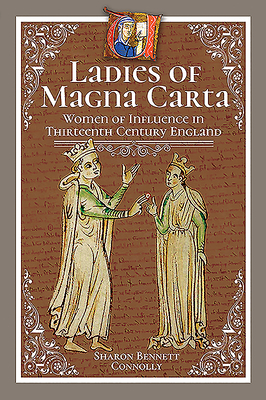
 The year of 1215 marked a turning point in English history with the sealing of a rather unique document; the Charter of Liberties, or as we know it today, the Magna Carta. It was a charter from the people to a king demanding the rights that they believed that they deserved. Those who sealed it were rebel barons who were tired of the way King John was running the country, yet instead of asking for his removal, they wanted reform. The clauses mostly concerned the problems of the men who made the charter, however, three clauses dealt with women specifically. In her latest book, “Ladies of Magna Carta: Women of Influence in Thirteenth Century England”, Sharon Bennett Connolly explores the lives of the women who were directly impacted by this document.
I would like to thank Pen and Sword for sending me a copy of this book. I enjoyed the last book that I read by Sharon Bennett Connolly and so when I heard that this book was going to be released, I knew I wanted to read it. I did not know much about thirteenth-century English history and the Magna Carta, so I was excited to start this new adventure.
To understand why the Magna Carta was considered an essential document for the time that it was forged, Connolly dives into the life of King John. His life and legacy will touch every woman in this book so it is vital to understand how John ran England while he was king. Although Connolly tends to be slightly repetitive with information about John, it is imperative that we as readers understand the significance of this reign and why it led to the Magna Carta, which radically changed English history forever.
Now, when one thinks about women who lived during thirteenth-century England, we tend to think about women whose marriages and bloodlines would interlace the numerous noble families of the time. Though some of the tales follow this pattern, there were some women and families who went against the norm. Women like Matilda de Braose, whose horrific imprisonment and starvation that led to her death, paved the way for clause 39 of the Magna Carta. There were also extremely strong women, like Nicholaa de la Haye, who was England’s first female sheriff and gained power and prestige by her own merits. These women acted as peacemakers by marrying foreign princes, or they were married to rebels against John. And of course, some women knew John well, like his wife Isabella of Angouleme, who had a very negative reputation because of John.
What I enjoyed about this book is how Connolly shared stories from women of many different walks of life. They were all so different and so unique. Connolly’s meticulous research and her true passion for this time paired with her easy to understand writing style make this book an engaging and insightful read. I found this a delightful read. If you want a fantastic book that introduces you to the world of the Magna Carta and the women who directly affected by this charter, I highly recommend you read, “Ladies of Magna Carta: Women of Influence in Thirteenth Century England” by Sharon Bennett Connolly.
 When one thinks about a royal Progress, we often think about the glitz and glam of the royal family traversing the entire country at a leisurely rate to inspire awe for their subjects. However, the Progress of 1541, when Henry VIII and his fifth wife Catherine Howard traveled to the hostile northern part of England, was anything but a casual visit. It was very political as Henry was trying to make the North submit to him after the Pilgrimage of Grace while at the same time he was waiting for a meeting with King James V of Scotland. It is the city of York and during this important Progress that C.J. Sansom shapes his latest adventure with his hunchback lawyer and part-time detective, Matthew Shardlake, in book three of the delightful Shardlake series, “Sovereign”.
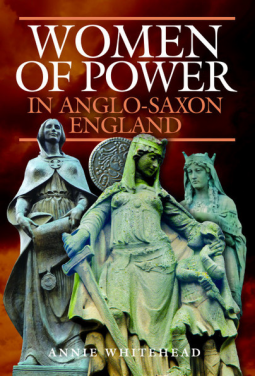 When one studies English history, many people tend to focus on the year 1066 with William the Conqueror and the Norman Conquest as a starting point. However, just like any great civilization, others formed the foundation of English history; they were known as the Anglo-Saxons. What we know about the Anglo-Saxons come from the records of the kings of the different kingdoms of England, which paints a picture of harsh and tumultuous times with power-struggles. However, every strong king and gentleman of the time knew that to succeed, they needed a woman that was equally strong with a bloodline that would make them untouchable. The stories of these women who helped define this era of Anglo-Saxon rulers in England have long been hidden, until now. In her latest book, “Women of Power in Anglo-Saxon England”, Annie Whitehead dives deep into the archives to shed some light on the stories of the formidable women who defined an era.
 The year 1540 during the reign of Henry VIII was a turbulent time. Henry’s new wife, Anne of Cleves, is not exactly the person who he imagined and his eye is starting to wander to a new woman, Katherine Howard. The reformers are starting to lose favor with the king as they and Catholics alike are being executed for treason. This is the London that Matthew Shardlake, our favorite hunchback lawyer turned detective, calls home. He thinks that he has retired from his detective work and serving Thomas Cromwell, but he is sadly mistaken. His next adventure has twice the number of cases and just as much danger that makes his trip to the monastery in “Dissolution” look easy. In the second book of the Shardlake series, “Dark Fire”, C.J. Sansom turns up the heat, the action, and the danger.
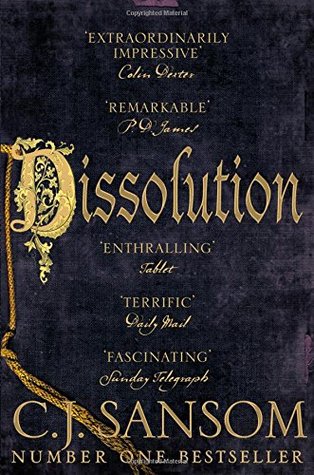 The Tudor dynasty marked tons of changes in society and religious norms. In 1537, the changes are in full force. Anne Boleyn was executed a year earlier and Henry’s third wife, Jane Seymour recently passed away after giving birth to Edward VI. Religious reformers are clashing with the Catholic Church after Henry VIII has declared himself the Supreme Head of the Church of England. Henry VIII’s reign marked the changing point in societal and religious norms, none more so than the dissolution of the monasteries. As monasteries and monks alike adjust to the new ways of life, the monastery at Scarnsea buzzes with activity and murder. Henry VIII’s right-hand man, Thomas Cromwell, sends an unlikely man to investigate the situation; the hunchback reformer lawyer, Matthew Shardlake. This is the world that C.J. Sansom has chosen to create in the first book of his Tudor mystery series, aptly named, “Dissolution”.
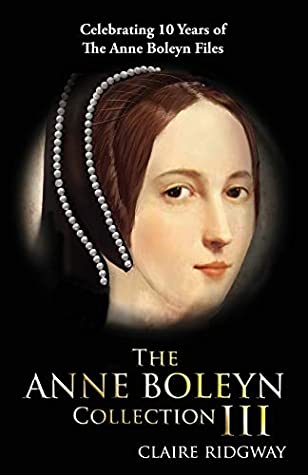 The story and myths of Henry VIII’s second wife, Anne Boleyn, have been debated and dissected for centuries. Was she a cruel and calculating figure who got what she deserved or was she an innocent victim of an evil tyrant of a husband? The funny thing about history is that the truth is never clear cut. Historical figures are human beings, no matter how many centuries separate their lives from our own. They were not all good or all bad, which is the perspective that Claire Ridgway tries to show when she is writing about her favorite figure, Anne Boleyn, either in her books or on her blog, The Anne Boleyn Files. To celebrate the 10th anniversary of the Anne Boleyn Files, Claire Ridgway returns with the latest collection of articles, “The Anne Boleyn Collection III”.
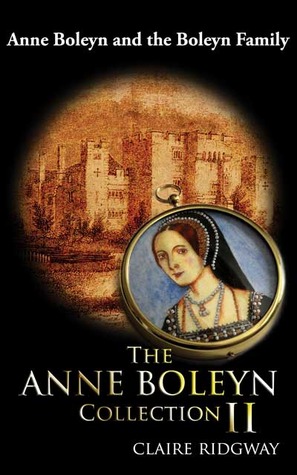 The Boleyn family have been viewed as social climbers, who only desired power and prestige, in history and novels for centuries; their fall from grace was due to their ambitions. But, is this true? Did Anne Boleyn’s family only care about getting to the top by any means necessary? Were they manipulative, cunning, and cruel like they have been portrayed in dramas and novels? Who were the Boleyns and why have they been so maligned in history? In her second book of this series, “The Anne Boleyn Collection II”, Claire Ridgway of The Anne Boleyn Files examines Anne Boleyn and the truth about her family.
 Have you ever watched a historical drama/ movie or read a historical fiction novel and started to wonder if the “facts” they a portraying are true? You start researching the history of these people and the times that they lived in and it soon becomes a passion. You have your favorite figures to study and you want to defend them when those online decide to criticize them in discussion boards. For some of us, that is as far as it goes, but some choose to make blogs to explore these topics even further. This scenario is similar to what happened with Claire Ridgway, the creator of the popular blog The Anne Boleyn Files; however, her inspiration came from a dream. To share her passion for all things Anne Boleyn, Ridgway has decided to compile some of the most popular articles from her blog into her debut book, “The Anne Boleyn Collection”.
 A weak king caught in the middle of court drama, each side fighting for the control of the crown and the right to have their opinions heard. England is on the brink of civil war with a young heiress struggling to find where she belongs and to survive. The young heiress is Margaret Beaufort, the mother of Henry Tudor (the future of Henry VII) and a survivor of the Wars of the Roses. Her story has been told in many different ways, but the story of her early years has rarely been told, until now. Judith Arnopp has decided to tell Margaret’s story from her perspective in her novel, “The Beaufort Bride: Book One of The Beaufort Chronicle”.
 Adventures of a Tudor Nerd