
 When one thinks about the Wars of the Roses, we often think about the adults who fought against each other. However, there were also children who were stuck in the middle of the conflict. Two of the most famous children of this time were Edward V and Richard of Shrewsbury, Duke of York, the sons of Edward IV and Elizabeth Woodville. Today, we refer to these brothers as “the Princes in the Tower”. The disappearance of these two boys has sparked so much debate over the past five centuries as to who killed them or if they did indeed escape the tower, yet we have no way to know what happened to them. What we do have is the physical locations that were part of the young princes’ lives. Instead of diving into the quagmire that is the mystery of the princes’ lives, Andrew Beattie takes a different approach in his book, “Following in the Footsteps of the Princes in the Tower.”
I would like to thank Pen and Sword Books for sending me a copy of this book. The Princes in the Tower has been a topic that has fascinated me for a few years now.
In his introduction, Andrew Beattie lays out his intentions for this book, which is rather unique when it comes to this particular field of study:
A survey and discussion of how novelists and playwrights have depicted the lives of the two princes, and have told the story of their imagined fates, is one aim of this book. Moreover, though, this book seeks to look at the princes’ story in a way that has not been considered before: through the places associated with them during their lives. They were the sons of a reigning monarch and one of them became a monarch himself. Not surprisingly they grew up in castles and palaces and their lives are commemorated in a number of churches…. Whilst this book does not seek to shed any new or radical light on the princes’ fate, it is hoped that through accounts of the places associated with them- from London and Kent to Shropshire, the English Midlands, and modern-day Belgium- a greater understanding of their lives and legacy can be gleaned. (Beattie, x).
Since Beattie has decided to break his book into two elements, I will be breaking his book down in a similar way. First, I will be focusing on the main part of Beattie’s book, the places associated with the princes, and then I will be looking at the discussion of how the princes were portrayed in historical fiction and plays.
I think Beattie did a great job exploring the places associated with the princes, from their birth to the Tower and beyond. By explaining the history behind the places before and after the princes stayed, the reader can see the kind of footprint they left behind. It reads like a historical travel guide with pictures of the places to give the reader an idea of the locations as they are now. I also enjoyed how Beattie explores the scientific evidence and the stories of different sets of bones and graves associated with the princes. It is a unique way to view history, one that helps balance out the facts of a history book with physical locations.
The big problem I had with Beattie’s book was with his inclusion of how the princes have been portrayed in historical fiction, plays, and movies. Honestly, I feel like it took away from the whole book. It was distracting for me to read these parts. I think that if Beattie had separated the fictional portrayals from the information about the places, I might have liked the book a bit better, but this is just my opinion.
Overall, I thought “Following in the Footsteps of the Princes in the Tower” by Andrew Beattie was a decent read. Beattie does have an easy to understand writing style, but as he stated before, his book does not contain ground-breaking research. If you are interested in exploring the places associated with the Princes in the Tower, this book is a great place to start.
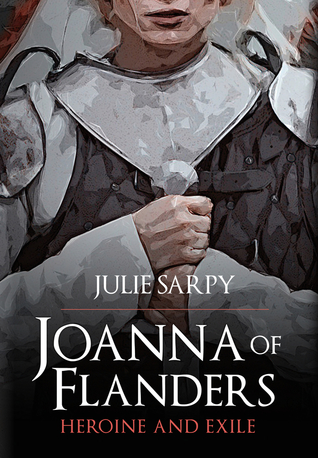 Strong medieval women who helped lead armies were unusual phenomena. Women like Eleanor of Aquitaine, Isabella of France, and Margaret of Anjou, have been seen as “she-wolves” and their stories have lived on for centuries. They were all queens, but strong women from the past could be of any rank, even though their stories are not celebrated as much. Take, for example, the story of Joanna of Flanders, Countess of Montfort and Richmond, Duchess of Brittany. She was a wife and mother who protected Hennebont Castle in Brittany from the French in 1342 while her husband was held captive. She then leaves her beloved Brittany for the court of Edward III of England and all but disappears from the historical record until her death in 1374. What happened to this extraordinary woman and why did she disappear from the historical records? Julie Sarpy answers these questions and more in her book, “Joanna of Flanders: Heroine and Exile”.
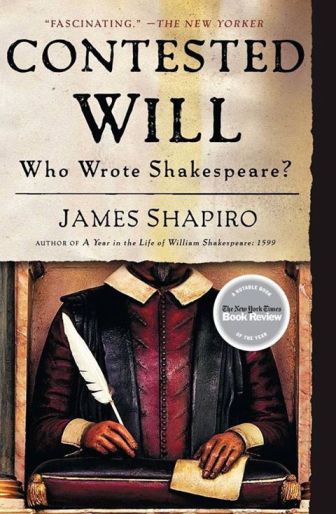 First of all, great Shakespeare questioned? How unthinkable, controversial, bizarre…
 Historically, royal marriages have been viewed with such interest. A king and a queen who can come from either similar or different backgrounds in order to make their country better, or in some cases, worse. During the Wars of the Roses, there were some legendary relationships that shaped the war between the Yorks and the Lancasters. Edward IV and Elizabeth Woodville. George Duke of Clarence and Isabel Neville. Richard III and Anne Neville. Henry Tudor and Elizabeth of York. However, these relationships fail in comparison to the impact that the marriage of Henry VI and Margaret of Anjou had on England during this time. Henry VI was seen as a weak, pious ruler; Margaret was seen as too strong for a woman. They have been viewed separately for a long time, never as a couple. That is until Amy Licence wrote her latest biography, “Henry VI and Margaret of Anjou: A Marriage of Unequals”.
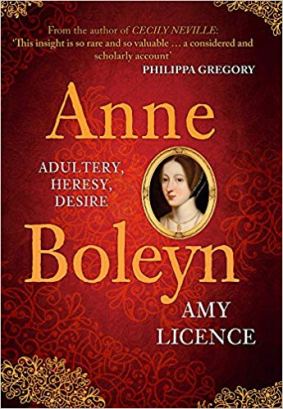 Anne Boleyn, the second wife of Henry VIII and the mother of the future Queen Elizabeth I, is one of the unique characters of the Tudor era. She was the sister of one of the king’s mistresses, Mary Boleyn, which she could have been, but Henry wanted Anne as his queen. Unfortunately, he was married to his first wife, Catherine of Aragon. It is Henry’s divorce to Catherine and his relationship with Anne, the rise and fall, is what many people look at, but there is more to Anne’s story than just her life with Henry. What was Anne’s life really like and what really caused her fall? These are just a few questions that Amy Licence tackles in her latest biography, “Anne Boleyn: Adultery, Heresy, Desire.”
 Today, I am delighted to welcome author and historian Toni Mount to my blog as part of her book tour for her latest book, “The Colours of Lies”, the seventh book in her Sebastian Foxley Medieval Murder Mystery Series.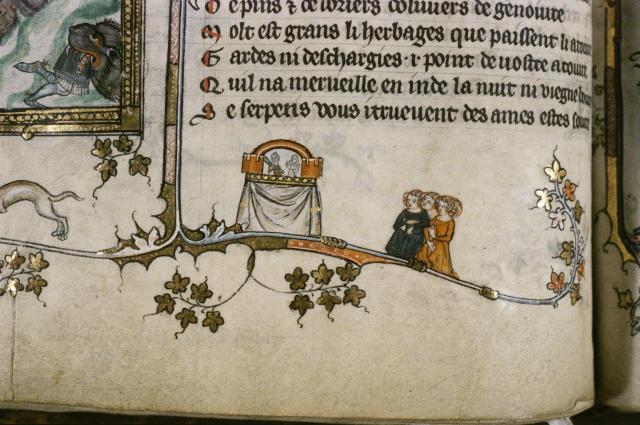

 About the Author:
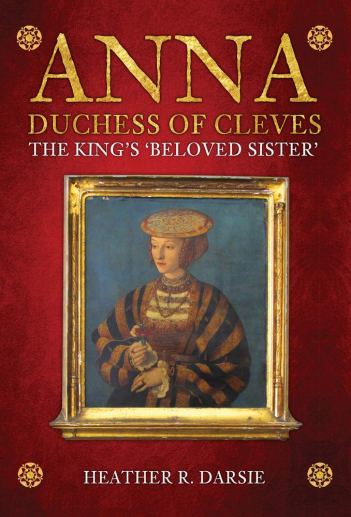 The wives of Henry VIII are some of the most hotly-discussed women of the Tudor Dynasty. They all had unique lives and origins before and after they met the man that connects them all. Two of his brides, Catherine of Aragon and Anna, Duchess of Cleves, were foreign princesses and their marriages were used to create alliances with Spain and Germany respectfully. While Catherine of Aragon and the rest of the wives of Henry VIII get a ton of attention, Anna Duchess of Cleves tends to be brushed aside. She is often seen as the wife that Henry did not approve of because of her looks. However, Heather R. Darsie decided to change how we view Anna with her groundbreaking debut biography, “Anna, Duchess of Cleves: The King’s ‘Beloved Sister’”.
  Every family has their own stories. Stories of how they became a family, how they fought hard to get where they are today. Stories filled with love, drama, and endurance. When it comes to royal families, their stories tend to be broadcast to the masses, and none more so than the Tudors, who have captured the imagination of history lovers for generations. The Tudor’s story is often told in parts, focusing on individual people like Henry VIII or Elizabeth I. The Tudor story is fascinating told in parts, but as a whole, one sees how hard they worked to become a dynasty that will be remembered for centuries after their deaths. It is time for the story of this extraordinary family to be told as a whole and Leanda de Lisle does so in her book, “Tudor”.
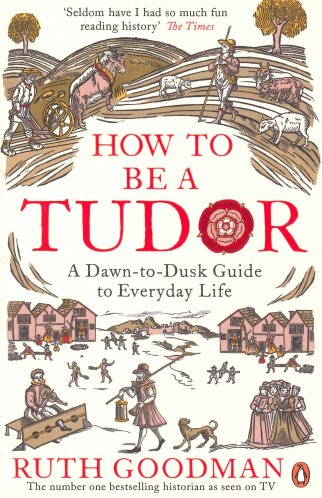 The Tudor era has enchanted generations of history lovers with its interesting monarchs and scandals. The beautiful outfits, the political drama of the age, the legendary marriages of King Henry VIII, the children of Henry VIII, and how England grew into a dominant force in European politics. These are the things that people tend to focus on when studying the Tudors, yet this is a very narrow view of the time period. We tend to focus on the inner workings of the court system, but we don’t focus on the common people who lived in England during this time. What was it like to live in Tudor England for the common people? This is the question that Ruth Goodman explores in her book, “How To Be a Tudor: A Dawn-to-Dusk Guide to Everyday Life”.
  The Wars of the Roses was a time of great hardships and strong men and women who did everything they could in order to survive. One of these remarkable people was a woman who did everything she could to make sure her only son lived and prospered. She was the daughter of a man who, allegedly committed suicide, she had four different husbands and gave birth to her son at the age of thirteen. She helped organize rebellions and a marriage that helped her son win the throne of England. Her name was Margaret Beaufort, the mother of King Henry VII. Her remarkable story is told in Elizabeth Norton’s insightful book, “Margaret Beaufort: Mother of the Tudor Dynasty.”
 Adventures of a Tudor Nerd