Attending a play at Shakespeare’s Globe was a fascinating experience quite different from going to a theater today.
 Globe Theater from the Outside
The first time London opened a theater where patrons could come to see a production, as opposed to traveling players going to the audience in noble homes or private parties, was when James Burbage constructed The Theater in London when William Shakespeare was just 12 years old. 16th century England was experiencing this new form of entertainment for the first time, with people like William Shakespeare creating a theater going event for the very first time. Here is an overview of what it would have been like if you were a Tudor going to see a play in Shakespeare’s Globe.
 Steve Collis from Melbourne, Australia
No One Dimmed the Lights
No dark theater aisles here. Despite not having electricity, the Elizabethan playwrights were especially good at using the one source of light they had available to them: The sun.
William Shakespeare himself was quite innovative at using sunlight, improving on the design of Burbage’s The Theater with The Globe, which was designed specifically to utilize the sunlight in particular. With its open ceiling and round circle shape, the theater allowed the sunlight to stream in during the afternoon when plays were most often performed, and shine on the stage itself to illuminate the actors as they played.
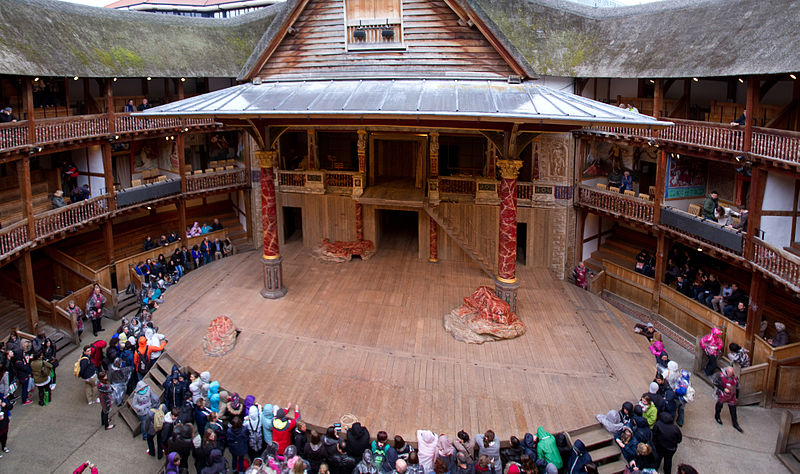 Tony Hisgett from Birmingham, UK
Standing Room Only
In what would most likely be called an “orchestra pit” today, the Globe theater was designed so that the bulk of the audience stood in an open area just beyond the stage called the yard. The stage itself was an Apron stage, designed to jut out into the audience so that when actors were performing on stage they were literally staring at the audience members as they performed. In fact, specific theater conventions like the aside, where actors ask the audience for advice or have a conversation that only the audience (and not the other characters on stage) know about, worked extremely well in this environment precisely because the audience was involved in the play itself.
It wasn’t all standing room only, however. Along the outside of the yard stood three levels of higher priced seats where you could sit in the Gallery and observe the play from a seat which was often covered from the elements like rain or snow which groundlings were not protected from in the yard. Theatergoers were allowed to pay extra to have a cushion in the gallery seats, but for most patrons, it was simply a wooden bench.
Despite the humble comforts, a wooden bench seems to modern theatergoers used to plus velvet seats in neatly arranged rows, these wooden seated gallery tickets were high priced because they tailored to the nobility. It was only the rich and high-class citizens who were allowed to sit in the gallery.
An example of an Apron Stage jutting out into the audience at The Globe, Melbourne.
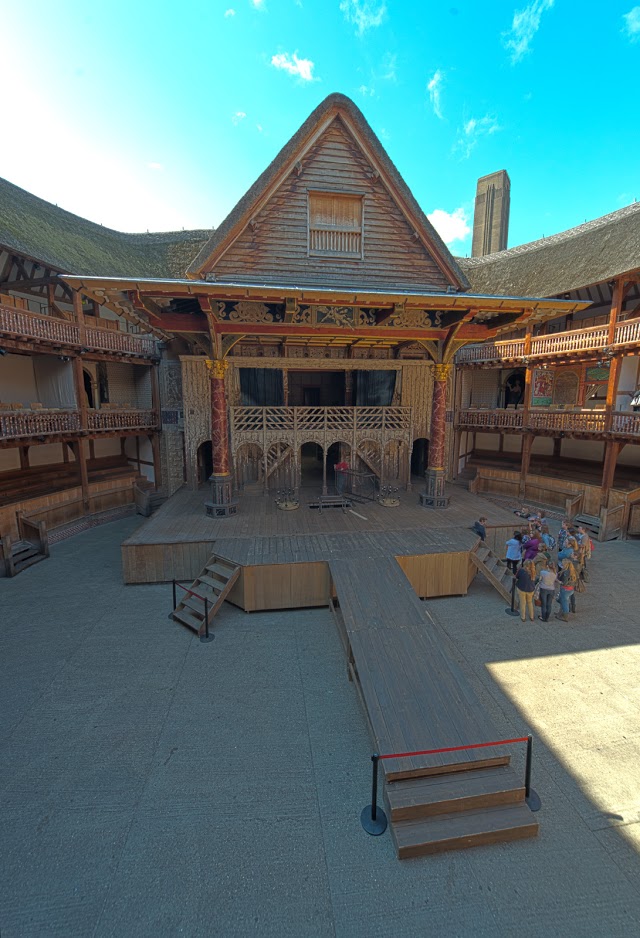
An example of an Apron Stage jutting out into the audience at The Globe, Melbourne. Steve Collis from Melbourne, Australia
The Audience was Smelly
In Elizabethan England, bathing was not an activity people did every single day like proper 21st-century hygiene would suggest. In fact, hygienic in general were of the sparse variety for the poor and lower class citizens who frequented The Globe theater which meant when you walked in, you smelled a cornucopia of rank odors. From the mud on people’s shoes to the urine, feces, animal dung, sweat, beer, and food, the atmosphere inside the theater was anything but refined and in actually was quite pungent.

With so many people crowded into the yard, the sound was significant, and the crowd often became quite rowdy. From the book “Shakspere to Sheridan; a book about the theatre of yesterday and to-day”
No One Whispers
Despite the modern reputations of theaters as a place similar to libraries where people are supposed to speak in hushed tones, if they speak at all, inside The Globe theater the sounds were loud and rancorous. Particularly in the yard where the poor and groundlings gathered to watch the plays, they had a reputation for being obnoxious, heckling the actors, yelling at performances they did not approve of, and even throwing things if they were disgusted at the portrayals before them.
Disapproval from the audience took multiple forms in that audience members would express displeasure at the actions of the character, disapproving for example, of how one king handled the historical situation. However, the audience’s displeasure with the actors themselves, including the ability to find the actor believable in a particular role, was a crucial aspect of acting on stage in Elizabethan England. If the audience did not like the actor themselves or felt the performance was done poorly, that actor would not be kept on in the company.

They Ate Hazelnuts like Popcorn
Attending a play at the Globe had, in some ways, more similarity with going to a movie theater than to a stage performance. Members of the audience would often bring in snacks, food, and drinks to consume while watching a production in the same way people in the United States often buy popcorn when going to see a movie.
In addition to the spectators bringing in food to eat while watching a show, there were often vendors in and around the theater selling ale, beer, and hazelnuts for the patrons to eat at the show. In excavations of Elizabethan theaters, archaeologists have uncovered spoons, bottles, shells of oysters and hazelnuts, as well as the remnants of various fruits and nuts.

The Tiring House is the part inside this little triangle shaped section over the roof of the apron stage. It was used to house props, as an entrance point for spirits who needed to descend from heaven, as well as musicians to sit when playing for the accompaniment of the action on stage. Jeff Hitchcock
There was Music
We are so used to the idea of a soundtrack today that it may come as a surprise to you that music played a pivotal role in Shakespeare’s performances. Whether it was a musician sitting in the Tiring House above the stage playing flourishes at the entrance or exit of a character, or it was musicians being included in the actions of the play through play-within-a-play or a character singing a song, the music was an integral part of what was happening on the stage.
Characters interacted with music on stage much more in Shakespeare’s day than they did now. For example, today’s audience is used to a soundtrack playing the background, or a tense trill of music increasing in pace as we watch a crime show to indicate the bad guy is about to appear.
However, for William Shakespeare’s cast of characters, the character (as opposed to just the actor playing the character) would have been aware of and interacting with the music which was included in the plot of the story. Unlike modern theaters which have an orchestra pit, Shakespeare’s musicians would have had a place in the cast, seats off to the side of the stage, or would have sat above the stage itself in the Tiring House to play on their cue.

What you can see on the stage now is similar to the kind of background all of Shakespeare’s plays performed at The Globe would have used in production.
There was Limited Background Scenery
Large-scale scenery paintings to stand behind the actors as they perform a scene on stage was a theater convention invented after Shakespeare. For William Shakespeare, his actors did have some special effects like thunder, stage blood, and even descent of heavenly spirits from the skies, were all available to Shakespeare as well as used creatively and profusely. However, when it came to the set design, background scenery was kept to a minimum.
Instead, actors on stage brought essential props with them, like swords, crowns, or even a throne, grave, or other items which would indicate their location. Largely, when it came to describing where a character was at, or what he was doing, instead of relying on set design, Shakespeare’s plays relied on the dialogue of the characters themselves, which is one reason Shakespeare’s plays contain so many long speeches. The characters are describing for you what they want you to understand where they are and what’s happening.
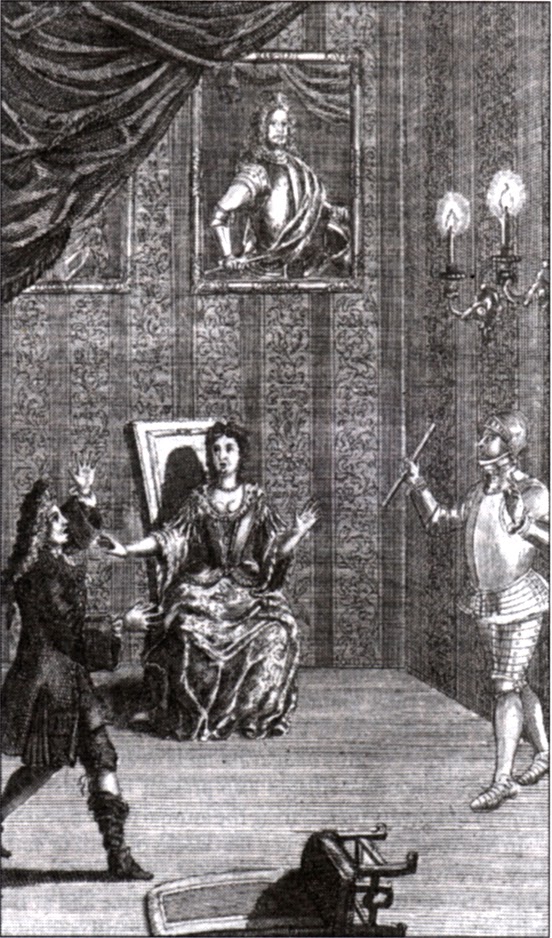
17th century English actor Thomas Betterton in a scene from William Shakespeare’s Hamlet, in which the Ghost of Hamlet’s Father confronts him in his mother’s chamber. From Nicholas Rowe’s edition of Shakespeare’s works (1709). Here, Betterton’s wife Mary scandalously played Hamlet’s mother in a time when women on stage were considered notoriously indecent.
There Were No Women on Stage
In Shakespeare’s day, it was illegal for a woman to appear on stage. It was considered indecorous at best, and outright immoral at worst. Therefore, Shakespeare’s playing companies were completely male casts with young boys playing the parts of women. With their higher voices, smooth skin, and excellent costumes, they could pass for women on stage.
It wasn’t purely a young man’s higher voice and costume that allowed them to appear as a woman on stage, however, makeup played a key role in this illusion as well. For Shakespeare’s acting company, anyone appearing on stage white-faced, covered with a lime-based makeup paint which made the skin appear white, was automatically known to be a woman because only women wore this makeup. Famously, Queen Elizabeth was quite fond of this makeup.
The Plays Were Not at Night
The elegant time to attend a theater production these days is the evening show of 7:30pm. However, for Elizabethans, they did not have electricity, so their day started and ended with the sun. Therefore, the work day for most Elizabethans wrapped up in the afternoon, and they were home by 5 for dinner. That’s why most productions at The Globe happened around 2:00pm, because it’s after work, before dinner, and while there was still enough daylight to be able to see inside the theater.
Times and theater going may have changed significantly since Shakespeare was staging productions at The Globe (God Bless You, Indoor Plumbing), but one thing remains the same: the power and triumph of Shakespeare performances carry right through to the 21st century, ready on any stage to bring a great story to life.
. . .
Would you like a printable diagram of The Globe theater? Sign up to Cassidy’s That Shakespeare Girl weekly newsletter and you will be able to instantly download a brochure about our upcoming Trip to see The Globe in London, as well a hand illustrated guide of The Globe (normally $12 from Cassidy’s shop). Download your free right here: https://www.cassidycash.com/download-a-diagram-of-the-globe-theater/
Travel with me: Tour the Life of Shakespeare
Travel with me and British History Tours. Spend 5 Days/4 Nights seeing every iconic site related to William Shakespeare we could possibly cram into one trip. You don’t want to miss it! More details and sign up here. www.cassidycash.com/travelshakespeare
 Cassidy Cash, is the host of That Shakespeare Life, the podcast that takes listeners behind the curtain and into the real life of William Shakespeare. Cassidy believes that in order to understand and perform Shakespeare’s plays, understanding the history of the man who wrote them is essential. She uses art, animated short films, and a podcast to help you learn something new about the bard. When she is not researching Shakespeare, she homeschools two boys, enjoys cooking new recipes, and drinking too much coffee. Cassidy lives in Birmingham, AL with her husband, Tim, a mountain of books, more pets than what’s reasonable. Connect with Cassidy on Twitter @thatshakespeare, or at http://www.cassidycash.com

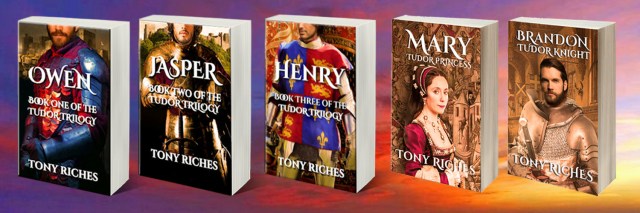

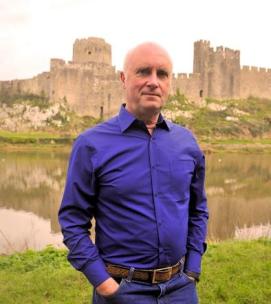 Pembrokeshire, West Wales and is a specialist in the history of the Wars of the Roses and the lives of the early Tudors. For more information about Tony’s books please visit his website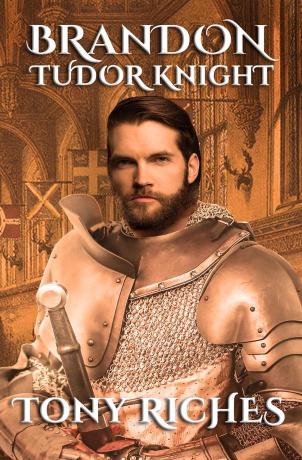
 Henry VIII’s wives were some of the most fascinating women of the Tudor Dynasty. Katherine of Aragon, Henry’s first wife, the mother of Mary I, and the first wife Henry divorced. Anne Boleyn, the mother of Elizabeth I and the first English queen to be executed. Anne of Cleves, the wife Henry did not like and divorced. Katherine Howard, the second wife Henry executed, and Katherine Parr, the wife who outlived Henry. All of these women were unique, however, there was only one who gave Henry the son that he so desperately desired. Her name was Jane Seymour. Her death was well documented since she died shortly after giving birth to Edward, yet we really don’t know who she was or what her life was like. Alison Weir decides to explore Jane’s life in her third book of the Six Tudor Queens series, “Jane Seymour: The Haunted Queen”.
  A knight rescuing a princess and they lived happily ever after. This tends to be a cliché in every romantic fairy tale, but what if it actually happened? Though we do not have many romantic stories in the time of the Tudors because marrying for love was not the norm, one stands out. It is the story of Charles Brandon and Mary Tudor. Mary was the sister of Henry VIII and the Dowager Queen of France. Charles Brandon was one of Henry VIII’s knights and a champion jouster. They would fall in love and eventually marry, much to the chagrin of Mary’s brother, who wanted her to marry to ensure an alliance with another country for England. Charles Brandon, the knight who stole the heart of a former queen, is the focus of Tony Riches’ latest book, “Brandon Tudor Knight”.
 The rise and fall of the Boleyns have been something that has fascinated those who study the Tudor dynasty for centuries. We often view these series of events from the immediate Boleyn family, but what might it have been like for someone who was married to a Boleyn, like Jane Parker Boleyn, the wife of George Boleyn? Jane is often portrayed in literature as a woman who had a tumultuous marriage who sold out her husband when she was interrogated, someone who helped Katherine Howard with her secret liaisons behind Henry VIII’s back, and a woman who suffered from mental illness while in prison. If you take a look at Jane Boleyn’s life from this lens, she sounds like a troubled woman, but what if there was a different side to her? What if she was a good person who loved her husband and his family? That is the Jane Boleyn that Adrienne Dillard wanted to portray in her latest book, “The Raven’s Widow: A Novel of Jane Boleyn”.
  The age of the Tudors has fascinated historians for centuries. As of recently, there has been a shift in how we view historical figures. Historians have been stripping away the more controversial elements that have been ingrained in how we view historical figures to look for the truth. Historical figures like Anne and Mary Boleyn have been placed under the microscope and have been given a closer look in recent years. But what about the men of Boleyn family, Thomas, and George? What were their lives really like? Did they truly desire power and titles so much that they were willing to do anything to get it? Those are the questions that Lauren Mackay decided to explore in her latest book, “Among the Wolves of Court: The Untold Story of Thomas and George Boleyn.”
 The Wars of the Roses is often remembered for the battles that were fought in England. Bosworth. Towton. Barnet. Tewkesbury. These battles and the names of the men and women like Richard III, Margaret of Anjou, Henry VI, Richard Duke of York, Edward IV and the Tudors are etched into the history of England. However, what started this conflict was not on the battlefield, it was inside the English Court. The decisions of a few men led to revolts that swept throughout England. So what was life like during this tumultuous time in English history? That is one of the questions that Conn Iggulden wanted to explore in his book series, “Wars of the Roses”. The first book in the series is called “Stormbird” and it explores the time after Henry VI marries Margaret of Anjou as well as Cade’s Rebellion, which wanted to tear England apart.
 The Wars of the Roses was a time full of fascinating people, both men, and women. They chose to live their lives to the best of their abilities. They had to decide who they were loyal to and, in some circumstances, they had to switch sides in order to survive. They had to chose to take destiny in their own hands, even if the decisions they had to make were controversial to others. This would perfectly describe the protagonist of Philippa Gregory’s book, “The Lady of the Rivers”. This is the story of Jacquetta Woodville, the mother of Elizabeth Woodville and a woman who took destiny into her own hands
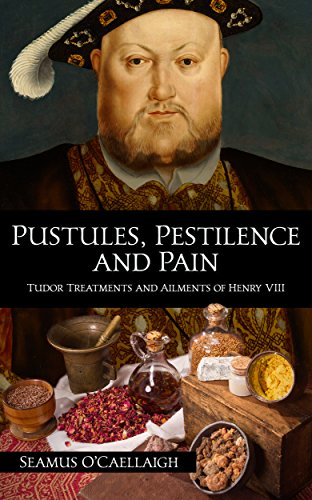 The everyday life of those who lived in the past has been an area of fascination for those who study any period in history. We often wonder what it was like to dress like a person in the court of Henry VIII or Elizabeth I, what their diets were like, and how they interacted with one another, either in the royal court or as commoners working everyday to make a living. One of the areas that is always mentioned is the health of a monarch. In the case of the Tudors, when we speak of health, many look to Henry VIII as he had a lot of different medical conditions and accidents that affected his life. What was 16th century medical practices like? How did doctors treat their patients in the time of the Tudors? This has been an area of Tudor life that has not received much attention. That is until now. Seamus O’ Caellaigh gives us an in-depth look at the treatments fit for King Henry VIII from the doctors who actually treated the king in his book, “Pustules, Pestilence and Pain: Tudor Treatments and Ailments of Henry VIII”.
  Adventures of a Tudor Nerd