Biography: Henry Stafford, 2nd Duke of Buckingham

Henry_Stafford(Born September 4, 1454- Died November 2, 1483). Son of Humphrey, Earl of Stafford and Margaret Beaufort, daughter of Edmund Beaufort 2nd Duke of Somerset. Married to Catherine Woodville, the sister of Queen Elizabeth Woodville. Father of Edward Stafford, 3rd Duke of Buckingham, Elizabeth Stafford, Henry Stafford, 1st Earl of Wiltshire and Anne Stafford. Henry Stafford, Duke of Buckingham would become one of Richard III’s most trusted advisors, but he would switch sides and side with Henry Tudor, leading to his ultimate execution.

Henry Stafford was born on September 4, 1454 to Humphrey Earl of Stafford and Margaret Beaufort, the daughter of Edmund Beaufort, 2nd Duke of Somerset. Henry’s father, Humphrey Stafford, was killed at the first battle of St. Albans in 1455. His grandfather Humphrey the 1st Duke of Buckingham was killed at Northampton in 1460. Both men were fighting for the Lancastrian cause. His grandfather, the 1st Duke of Buckingham, gained his title from his mother and was the son of Edmund, 5th Earl of Stafford, and of Anne, daughter of Thomas, Duke of Gloucester, youngest son of Edward III. His mother was Margaret Beaufort (not to be confused with Margaret Beaufort mother of Henry Tudor), daughter of Edmund Beaufort, 2nd Duke of Somerset, grandson of John of Gaunt. When his grandfather passed away, the title of Duke of Buckingham passed onto Henry at the tender age of 4. With the royal blood on both sides of his family plus his title and inheritance, Henry’s future was very important to Edward IV.

In 1466, Henry Stafford married Catherine Woodville, the sister of Queen Elizabeth Woodville, and became the brother-in-law to the king Edward IV. Henry and Catherine had four children; Edward Stafford, 3rd Duke of Buckingham, Elizabeth Stafford, Henry Stafford, 1st Earl of Wiltshire and Anne Stafford. In 1474, Henry was made a Knight of the Garter and in 1478, he was a high steward at the trial of George, 1st Duke of Clarence. After Edward IV’s death on April 9, 1483, Henry decided to join forces with Richard Duke of Gloucester.
It was Buckingham who helped Richard obtain possession of the young King Edward V. For helping Richard, he was rewarded with the offices of Justiciar and Chamberlain of North and South Wales, and Constable of all the royal castles in the principality and Welsh Marches. According to Sir Thomas More, it was Buckingham who gave a speech at Guildhall on June 24, 1483 to the people to make Richard Duke of Gloucester king.

Richard Duke of Gloucester became King Richard III and Buckingham served as chamberlain and later Constable of England. Richard III thought that he could trust Buckingham as one of his right hand men, but he was sadly mistaken. In early August, Buckingham withdrew from court to Brecon, a town in Wales. Some say that he withdrew because he believed that he deserved more for his services to Richard III, others believe that he became disgusted with Richard III, or that he had his own desire for the crown since he did have royal blood in his veins. What we do know is that he began talking with a man name John Morton, who was a prisoner in the custody of Buckingham. Morton told him about a young Henry Tudor and Buckingham decided to support Henry Tudor and his mother Margaret Beaufort to have Henry Tudor replace Richard III as king of England.

A widespread plot was soon formed, but Richard had early warning, and on October 15, 1483, he issued a proclamation against Buckingham. Buckingham, as arranged, prepared to enter England with a large force of Welshmen. Buckingham’s troops were stopped by a massive flood on the Severn and he himself took refuge with a follower, Ralph Bannister, at Lacon Hall. Bannister betrayed him for a large reward, and on the November 1, 1483, Buckingham was brought to the king at Salisbury. Buckingham never saw Richard III and right after his trial on November 2, 1483, a Sunday, he was beheaded in the courtyard between the Blue Boar Inn and the Sarcen’s Head Inn near the marketplace at Salisbury. He died at the age of 29 and his titles and honors were forfeited.
Biography: Cecily Neville, Duchess of York

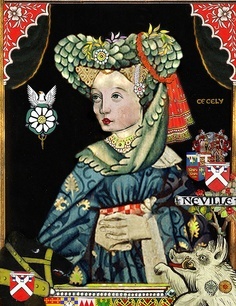
cecily_neville_originalAlso known as “the Rose of Raby” and “Proud Cis”. (Born May 3, 1415-Died May 31, 1495). Daughter of Ralph Neville, 1st Earl of Westmorland and Joan Beaufort. Married to Richard Plantagenet 3rd Duke of York. Mother of Anne, Duchess of Exeter, Edward IV, King of England, Edmund, Earl of Rutland, Elizabeth, Duchess of Suffolk, Margaret, Duchess of Burgundy, George, 1st Duke of Clarence and Richard III, King of England.
Cecily Neville was the mother of two kings of England, Edward IV and Richard III. She was known for her piety and her pride.

Cecily Neville was the daughter of Ralph Neville, 1st Earl of Westmorland and Joan Beaufort. Her paternal grandparents were John Neville, 3rd Baron Neville de Raby, and Maud Percy, daughter of Henry de Percy, 2nd Baron Percy. Her maternal grandparents were John of Gaunt, 1st Duke of Lancaster, and his third wife Katherine Swynford, thus making her a great granddaughter of King Edward III on her mother’s side of the family. She was born on May 3, 1415 at Raby Castle in Durham thus gaining the nickname “the Rose of Raby”. Her father Ralph Neville was granted the wardship of a young Richard Plantagenet, 3rd Duke of York and in 1424, she was betrothed to Richard. When Ralph Neville died in 1425, his widow Joan Beaufort was able to maintain the wardship of Richard Plantagenet. In October 1429, Richard and Cecily were married; their first child Anne was not born until August 1439.

Richard was made king’s lieutenant and governor general of France in 1441; Cecily and Anne moved to Rouen to be with him. They had a son Henry but he would die soon after he was born. On April 28, 1442, their son the future Edward IV was born in Rouen. He was baptized shortly afterward, which caused both his cousin Richard Neville, Earl of Warwick and his own brother George Duke of Clarence to question if he was actually the son of Richard Plantagenet. These claims were dismissed as attempts to remove Edward from the throne. Richard Plantagenet always acknowledged Edward as his own son. In total, Cecily and Richard would have 13 children including Edward IV, George Duke of Clarence and Richard III.

Richard had an enemy at court and that was Edmund Beaufort, 2nd Duke of Somerset, a cousin of Cecily Neville. Richard did not like how close Somerset was to the king and to Margaret of Anjou. In 1454, Henry VI had a mental breakdown and it was Richard, not Somerset, who was made Lord Protector and Richard threw Somerset in prison. Richard was removed from the post in 1455, all of his reforms were changed and Somerset was released from prison. This infuriated Richard and so he decided to march against Somerset at the First Battle of St. Albans where Somerset was killed. During this time, Cecily and her children were living in Ludlow Castle, even when Richard fled to Ireland and the European continent. In November 1459, Cecily travelled to London to plead for her husband’s cause to Parliament. Richard lost all of his titles but Cecily was able to get a grant of 600 pounds for her efforts in order to provide for her children.

1460 was a year of change for the York family. When the Yorkist army won at the Battle of Northampton in July 1460, Cecily moved her family to London where they stayed with the lawyer John Paston. Richard and his heirs were declared Henry VI’s successors in the Act of Accord, which made Cecily a queen-in-waiting. This pushed Edward of Westminster, Prince of Wales, out of the line of succession, which angered his mother Margaret of Anjou. Margaret led the Lancastrian army against the Yorkist army at the battle of Wakefield on December 30, 1460, where Richard Duke of York and his son Edmund Earl of Rutland were killed. Cecily sent her young sons George and Richard to the court of Philip II duke of Burgundy for their protection, making Philip an ally of the Yorkist cause.

Cecily’s son Edward took up the Yorkist cause with the help of Richard Neville, Earl of Warwick. Edward was able to defeat the Lancastrians and become king, making Cecily mother of the king. In 1461, Cecily included the royal arms of England on her own coat of arms, which hinted that her husband was the rightful king of England. When Edward married Elizabeth Woodville in 1464, he built a new queen’s quarter for Elizabeth and let Cecily stay in the old queen’s quarters. When Warwick and Cecily’s son George rebelled in 1469 against Edward, Cecily worked hard to get both sides to reconcile, which briefly happened. Warwick and George went to France and joined the Lancastrian cause. In 1470, the Lancastrian cause under Warwick overthrew Edward and placed Henry VI back on the throne. It only lasted for six months and on April 14, 1471, Edward came back to the throne and Warwick was killed.

Edward never really trusted George again and on February 18, 1478, George was executed for treason at the Tower of London. This must have been a difficult moment for Cecily as one son had another executed for treason. Edward IV would die suddenly on April 9, 1483, leaving his young son Edward V as the next king of England. He was 13 and his younger brother Richard was 10 years old. Richard, Cecily’s youngest son and the boys’ uncle, became their Lord Protector. He had the boys placed in the Tower and they were never seen again. There was an enquiry into Edward’s marriage to Elizabeth Woodville and they found that it was invalid and an Act of Parliament called the Titulus Regius declared that the Princes in the Tower were illegitimate and that paved the way for Richard to become Richard III on July 6, 1483. Cecily got along rather well with Richard’s wife Anne Neville and would often discuss religious matters with her, until Anne died.

On August 22, 1485, Richard III was killed at the Battle of Bosworth Field and Henry Tudor became Henry Tudor. Cecily’s husband and all four of her sons were dead by 1485, Edward IV was the only one by natural causes. On January 18, 1486, Cecily’s granddaughter Elizabeth of York married Henry VII and help bring forth the Tudor Dynasty. At this time, Cecily devoted her life to religious duties and she gain a reputation for her piety. Cecily Neville never married again and on May 31,1495, she died. She was buried in the tomb with her husband Richard and their son Edmund at the Church of St Mary and All Saints, Fotheringhay, Northamptonshire.

Biography: George Plantagenet 1st Duke of Clarence

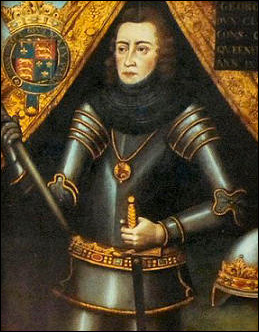
georgeclarence(Born October 21, 1449- Died February 18, 1478). Son of Richard Plantagenet, 3rd Duke of York and Cecily Neville, Duchess of York. Married to Isabel Neville, Duchess of Clarence.
Father of Anne of York, Lady Margaret Pole, Countess of Salisbury, Edward Plantagenet, 17th Earl of Warwick, Richard of York. George was a young man who believed that he would be a better king than his brother Edward IV. He revolted a few times and it led to his death by an unusual means.

George Plantagenet was born on October 21, 1449 to Richard Plantagenet, 3rd Duke of York and Cecily Neville, Duchess of York. His father died at the battle of Wakefield on December 30, 1460 and in March 1461, his brother became King Edward IV. George was created the 1st Duke of Clarence and a Knight of the Garter by his brother and the following year, he received the Honour of Richmond and was created lord-lieutenant of Ireland.

When George was named as a possible suitor for Mary, the daughter of Charles the Bold, later the Duke of Burgundy, he would enter into the influence of Richard Neville, 16th Earl of Warwick. Warwick, also known as “the kingmaker”, helped Edward IV become king but when Edward married Elizabeth Woodville instead of Bona of Savoy, which would have established an alliance with France, Warwick and Edward were not as close as they once were. Warwick decided to get back at Edward and in July 1469, George married Warwick’s daughter Isabel (or Isabella), which was a marriage that Edward did not support at all.

Warwick then started a series of uprisings in northern England; Edward was a popular king but his marriage with Elizabeth Woodville sullied his image a little while Warwick was seen as a national hero. Edward did employ an army, but when he saw that he was outnumbered, he dispersed his army and allowed himself to be captured by Warwick. Warwick had Edward imprisoned in the Tower, but when his reputation began to suffer, he released Edward in October 1469. Warwick and George both decided to reconciled with Edward but Edward never truly trusted either of them ever again.

George was loyal to his brother, but when Warwick deserted Edward and fled to France, George went with his father in law. On the way to France, Isabel gave birth to their first child, a girl, on 16 April 1470, in a ship off Calais. The child would not survive. Warwick joined forces with Margaret of Anjou and Louis XI of France to restore Henry VI to the throne. In September 1470, Warwick and his rebellion made its way to England. Warwick removed Henry VI from the Tower and restored him to the throne.

Henry VI rewarded George by making him next in line to the throne after his own son, removing Edward IV from the line of succession completely. Warwick had his younger daughter, Anne Neville, George’s sister-in-law, marry Henry VI’s son in December 1470. This obviously infuriated George since this meant that Warwick had no desire of making George the next king and so George secretly reconciled with his brother.

Warwick made a mistake and decided to take Louis XI’s advice and declare war on Burgundy. This forced the duke of Burgundy, who had stayed on the sidelines this entire time, to help Edward IV raise an army. Edward returned to England on March 11, 1471. His army defeated Warwick’s army at the Battle of Barnet in April 1471, where Warwick was killed. After Warwick’s death in April 1471 Clarence appears to have seized a vast sum of the estates Warwick owned. George did not gain all of Warwick’s properties as his younger brother Richard Duke of Gloucester married the widow Anne Neville. In March 1472 was created by right of his wife Earl of Warwick and Salisbury. A quarrel between George and Richard ensued, and in 1474 the king interfered to settle the dispute, dividing the Warwick estates between his brothers.

In 1475 George ‘s wife Isabel gave birth to a son, Edward, later Earl of Warwick. Isabel died on December 22, 1476, two months after giving birth to a short-lived son named Richard. Though it is believed that Isabel died of either consumption or childbed fever , George was convinced she had been poisoned by one of her ladies-in-waiting, Ankarette Twynyho, whom, as a consequence, he had judicially murdered in April 1477 right after her trial. The same year, George was eligible for Mary Duchess of Burgundy’s hand, but when Edward refused the marriage suit, George left court.

Edward was convinced that George was aiming at his throne after three of George’s men were tried for treason and were executed. George was thrown into prison, and in January 1478 the king unfolded the charges against his brother to the parliament. He had slandered the king; had received oaths of allegiance to himself and his heirs and had prepared for a new rebellion. Both Houses of Parliament passed the bill of attainder, and the sentence of death was announced. It is said that Edward gave his brother a choice on how he would die and George said that he would like to be drowned in a butt of Malmsey wine. What we do know is that George Duke of Clarence was executed in private either on February 17th or 18th 1478. Two of his children would outlive him: Edward earl of Warwick, who was executed in 1499, and Margaret Pole Countess of Salisbury.

Biography: Richard Neville,16th Earl of Warwick

62624506_129166816586Also known as “the Kingmaker”. (Born November 22, 1428- Died April 14, 1471). Son of Richard Neville, 5th Earl of Salisbury and Alice Montacute, 5th Countess of Salisbury. Married to Anne Beauchamp, 16th Countess of Warwick. Father of Isabel, Duchess of Clarence and Anne, Queen of England. Warwick “the Kingmaker” was the man who helped put Edward IV on the throne, but it was his greed for power and a broken alliance with Edward IV that would lead to his downfall.

Richard Neville was born on November 22, 1428 to Richard Neville, 5th Earl of Salisbury and Alice Montacute, 5th Countess of Salisbury. His father had gained his title of Earl of Salisbury through his marriage to Alice Montacute. We don’t know much about Richard’s childhood except that he was betrothed to Anne Beauchamp at the age of six. She was the daughter of daughter of Richard de Beauchamp, 13th Earl of Warwick, and of his wife Isabel Despenser, making Richard not only the heir to the earldom of Salisbury, but heir to a large part of the Montague, Beauchamp, and Despenser inheritance. With the death of Beauchamp’s son Henry, who was married to Richard’s sister Cecily in 1446 and the death of Henry’s daughter Anne in 1449, Richard found himself the new Earl of Warwick. This was disputed by Edmund Beaufort, 2nd Duke of Somerset, who married another one of Beauchamp’s daughters from Beauchamp’s first marriage, not because of the titles since the daughters were barred from the line of succession, but because of the land. Richard Neville was now the 16th Earl of Warwick.

Warwick became a knight probably at the coronation of Margaret of Anjou on April 22, 1445. He and his father helped to calm the unrest in the north. They may have helped in the war against Scotland in 1448-1449. When Richard, Duke of York, rose against the king in 1452, Warwick and his father sided with Henry VI and York’s revolt ultimately failed.

In June 1453, Somerset was granted custody of the lordship of Glamorgan, which was part of the Despenser inheritance. This made Warwick upset and a conflict started between the two men. Unfortunately, Somerset was an ally of Margaret of Anjou and was a favorite in the court of Henry VI so Warwick had no choice but  to align himself with York. When York became the Lord Protector when Henry VI fell ill, Warwick and his father decided to fully support York. York’s first protectorate would not last long and Somerset fell back into favor, which angered York and Warwick. Warwick rallied an army with York and Warwick’s father and met Somerset at the First Battle of St. Albans, where Somerset was killed. This battle was the start of the Wars of the Roses.

After the First Battle of St. Albans, Henry VI fell ill again and York became Lord Protector for a second time. It didn’t last long, but after York was removed from his position of Protector, Warwick was granted  the title of Constable of Calais, which would become a valuable position during the conflict of the Wars of the Roses. He was able to gain military experience, as well as gain important allies Charles VII of France and Philip the Good of Burgundy. In  September 1459, Warwick was able to help lead a Yorkist army to victory against the Lancastrians at the Battle of Blore Heath. In 1459, at the battle of Ludlow, the Lancastrians won and sent the Yorkists into hiding. York fled to Ireland with his son Edmund Earl of Rutland, while Warwick took Edward Earl of March with him to Calais. The Yorkists came back with a vengeance at the battle of Northampton, where Henry VI was taken captive.

In 1460 York officially declared his claim to the throne. After much discussion, it was agreed that after the king died, York and his sons would be the heirs to the throne, removing Edward of Westminster from the line of succession. Henry VI seemed to have been okay with this arrangement, but Margaret was beyond upset. She led the Lancastrian forces to face off against York at the battle of Wakefield on December 30, 1460. York and his son Edmund, Earl of Rutland, were killed in the battle. Edward was 18 at the time of his father’s death.

Edward was now in charge of the Yorkist faction and with the help of Warwick, he was able to defeat the Lancastrian army at both the battle of Mortimer’s Cross and the Second Battle of St. Albans in February 1461. On March 4, 1461, Edward declared himself king of England, a move that his father never attempted to make. Three weeks later at the Battle of Towton on March 29, 1461, the bloodiest battle on English soil, Edward  and Warwick were able to decisively beat Henry VI’s forces and secure Edward’s claim to the throne. Henry VI and Margaret of Anjou fled to Scotland to seek the aid of James III.

Edward was declared Edward IV and  was welcomed to the throne. Edward owed a lot to his cousin Warwick, also known from that point on as  “the Kingmaker”, and he rewarded him greatly. He was made the Chamberlain of England , High Admiral of England and Steward of the Duchy of Lancaster, along with several other offices. Warwick was considered the second most powerful man in England. Warwick’s  brothers also benefited: John Neville, Lord Montagu, was made Warden of the East March in 1463, and the next year created Earl of Northumberland. George Neville, Bishop of Exeter, was confirmed in his post as chancellor by King Edward, and in 1465 was promoted to the archbishopric of York. In the summer of 1462, Warwick was able to negotiate a truce with  both Scotland and France, which allowed Warwick to be granted Lancastrian properties.

Warwick and Edward were considered close. However that would change very quickly. Warwick knew that Edward would have to marry well and so under his own initiative, he set to secure an alliance with the French King Louis XI by marrying Edward IV to the French king’s daughter Bona of Savoy. Edward wasn’t really thrilled about an alliance with France; he had actually prefered an alliance with Burgundy. Edward decided to take the issue of  his marriage into his own hands. In May 1464, he secretly married Elizabeth Woodville, the daughter of the 1st Lord of Rivers and Jacquetta Rivers, and the widow of Sir John Grey. They were able to keep the marriage a secret for over four months and when it was announced, there was an uproar. Her family was always supporters of the Lancastrian cause and there was a rumor, that we cannot confirm or deny as of right now, that Edward entered into a similar marriage contract with Lady Eleanor Butler a year or two before he married Elizabeth.

Warwick was obviously the most upset about this marriage because he had spent so much time setting up an alliance  with France to be thwarted. With the rise of the Woodvilles, Warwick feared that they would overthrow his title of the second most powerful man in England. Edward thwarted Warwick’s plans to marry his family with the king’s and the final straw for Warwick was when Edward married his sister Margaret to Charles duke of Burgundy, cementing an alliance between England and Burgundy, which was not what Warwick wanted. Warwick realized that the gap between him and Edward was too large.

Warwick decided to side with Edward’s power hungry younger brother George Duke of Clarence, and Louis XI of France, who promised Warwick land in France if he overthrew Edward. Warwick’s plan was to depose Edward and  place George on the throne. In July 1469, Warwick successfully married George to his daughter Isabel, which was something that Edward did not approve of. Warwick then started a series of uprisings in northern England; Edward was a popular king but his marriage with Elizabeth Woodville sullied his image a little while Warwick was seen as a national hero. Edward did employ an army, but when he saw that he was outnumbered, he dispersed his army and allowed himself to be captured by Warwick. Warwick had Edward imprisoned in the Tower, but when his reputation began to suffer, he released Edward in October 1469. Warwick and George both  decided to reconciled with Edward but Edward never truly trusted either of them ever again.

Warwick knew that if he was going to restore his power, he had to discuss matters with Louis XI and Margaret of Anjou, which meant that he had to defect to the Lancastrian cause, which he did. In September 1470, Warwick and his rebellion made its way to England. John Neville switched sides, which left Edward unprepared and it forced him to leave England on October 2 and seek aid from his brother in law the duke of Burgundy. Warwick removed Henry VI from the Tower and restored him to the throne. Warwick made a mistake and decided to take Louis XI’s advice and declare war on Burgundy. This forced the duke of Burgundy, who had stayed on the sidelines this entire time, to help Edward IV raise an army. Edward returned to England on March 11, 1471. His army defeated Warwick’s army at the Battle of Barnet, where Warwick and John Neville were killed.

Book Review:“Elizabeth of York: A Tudor Queen and Her World” by Alison Weir

91FsSB3hb9LThe Wars of the Roses was a dynastic battle between the houses of York and Lancaster for the throne of England that lasted for 30 years. There were plenty of people who lived during this time that continue to fascinate us even to this day. Men like Richard III, Henry VI, Edward IV, Henry VII,  and Richard Neville duke of Warwick to just name a few. There were also women who worked hard on the sidelines to make sure that their sides would win the wars. Women like Margaret of Anjou, Elizabeth Woodville, Cecily Neville, and Margaret Beaufort. However, one of the most important person during this conflict tends to get left behind when discussing the most influential people of this conflict; Elizabeth of York, the wife of Henry VII. She was the mother of the Tudor dynasty, yet she does not get the attention that she rightfully deserves. In Alison Weir’s book “Elizabeth of York: A Tudor Queen and Her World”, Weir explores the life of this influential woman and her impact on the world around her.
Weir begins her book by explaining her role in history:

Elizabeth of York’s role in history was crucial, although in a less chauvinistic age it would, by right, have been more so. In the wake of legislation to give women the same rights in the order of succession as male heirs; it is interesting to reflect that England’s Elizabeth I would not have been celebrated Virgin Queen but Elizabeth of York. But in the fifteenth century, it would have been unthinkable for a woman to succeed to the throne. Elizabeth lived in a world in which females were regarded as inferior to men physically, intellectually, and morally. It was seen as against the laws of God and Nature for a woman to wield dominion over men: it was an affront to the perceived order of the world. Even so, Elizabeth of York was important. She was the daughter, sister, niece, wife, mother and grandmother of monarchs: daughter  to Edward IV, sister to Edward V, niece to Richard III, wife to Henry VII, mother to Henry VIII, and grandmother to Edward VI, Mary I, and Elizabeth I; and she was the mother of two queen consorts. She was also the ancestress of every English monarch since 1509, every Scots monarch since 1513, and every British monarch since 1603, including the present queen, Elizabeth II. (Weir, xviii).

Elizabeth of York obviously had a significant impact on English history from the end of the Wars of the Roses on to the present day, but what is more impressive is when you realize how much Elizabeth went through in her lifetime in order to achieve these accomplishments. Elizabeth of York was the eldest daughter of Edward IV and Elizabeth Woodville.  She was going to be married to the Dauphin of France, until the French decided to pull out of the marriage agreement. When her father fled as Warwick marched against him for the Lancastrians, Elizabeth Woodville took her children into sanctuary, where she gave birth to the future Edward V. Her father was a strong man, but he tragically died at the age of 40. Her young brother Edward V was to be the next king, but Edward was taken into the custody of her uncle, the future Richard III. Elizabeth Woodville took her children back into sanctuary where Richard told Elizabeth to give up her younger son. She did comply. The young king and his brother were taken to the Tower, Elizabeth’s brothers were never seen again, and Richard III became king.

Elizabeth’s mother never liked Richard so she arranged a marriage between Elizabeth of York and Henry Tudor, the son of Margaret Beaufort. When Richard III’s wife Anne Neville died there were rumors circulating that Richard would marry his niece, but Weir explains thoroughly the relationship between Elizabeth and her uncle. After Richard was defeated at the Battle of Bosworth Field, Henry VII waited to marry Elizabeth of York and have her crowned queen, which angered many Yorkist supporters, but Elizabeth loved Henry and kept her cool. Elizabeth took her role as wife and mother very seriously. When there were those who tried to take Henry’s throne by pretending to be Elizabeth’s brothers, she stood by Henry and by his claim to the throne. Elizabeth was the mother of Arthur Tudor, Margaret Tudor, Mary Tudor and the future Henry VIII. When Arthur died, Elizabeth consoled her husband in his sorrow and helped him realize that they did have another heir in Henry. She would die on February 11, 1503. Her husband Henry VII would never marry again and mourned her greatly.

Alison Weir brought Elizabeth of York’s life and her world to life in this book. As many of you know, I love the Wars of the Roses and one of the reasons I do is because of the life of Elizabeth of York. There is just something about her story that completely fascinates me. I have read a few fiction books about the life of Elizabeth of York,  but this was the first biography that I have read about Elizabeth of York. Like any Alison Weir book, Weir is able to balance her unique writing style with amazing details to create a vivid description of the person’s life, in this case the life of Elizabeth of York. This is a beautiful book about the life of a pious queen who united the houses of York and Lancaster to create the Tudor Dynasty through her marriage with Henry Tudor. I highly recommend “Elizabeth of York: A Tudor Queen and Her World” by Alison Weir for anyone who is interested in the Wars of the Roses or the love story of Elizabeth of York and Henry VII. An amazing woman who lived in an extraordinary time.

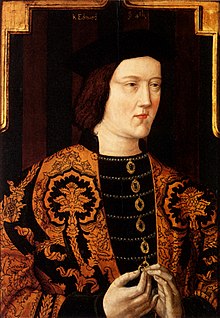
Biography: King Edward IV

220px-Edward_IV_Plantagenet(Born April 28, 1442- Died April 9, 1483). Son of Richard, 3rd  Duke of York and Cecily Neville. Married to Elizabeth Woodville. Father of Elizabeth of York, Mary of York, Cecily of York, Edward V of England, Margaret of York, Richard of Shrewsbury, 1st Duke of York, Anne of York, George Plantagenet, 1st Duke of Bedford, Catherine of York, and Bridget of York. Edward IV was the first king from the house of York, but he was still a Plantagenet. He helped bring the country together, especially financially, but his one flaw was his private life, where he was unwise and naive. 

Edward IV was born on April 28, 1442 to Richard, 3rd Duke of York and Cecily Neville, and was given the title of the Earl of March. Richard Duke of York, Edward’s father, was the Lord Protector when Henry VI had his bouts of mental illness, but once the king got well, York was removed from the position and his reforms were reversed. One of his biggest rivals was  Edmund Beaufort, Duke of Somerset. In 1455, York had enough of Somerset and marched against him at the First Battle of St. Albans, where Somerset was killed. It was then that Margaret of Anjou took up her husband’s cause. She encouraged the new duke of Somerset Henry Beaufort to fight against York. The battlelines were being drawn. The Yorkists were led by Richard duke of York, Richard Neville earl of Salisbury and his son Richard Neville earl of Warwick. The Lancastrians were under Henry VI, but led by Margaret of Anjou, Somerset, and Henry Percy, third earl of Northumberland. In 1459, at the battle of Ludlow, the Lancastrians won and sent the Yorkists into hiding; however the Yorkists came back with a vengeance at the battle of Northampton.

In 1460 York officially declared his claim to the throne. After much discussion, it was agreed that after the king died, York and his sons would be the heirs to the throne, removing Edward of Westminster from the line of succession. Henry VI seemed to have been okay with this arrangement, but Margaret was beyond upset. She led the Lancastrian forces to face off against York at the battle of Wakefield on December 30, 1460. York and his son Edmund, Earl of Rutland, were killed in the battle. Edward was 18 at the time of his father’s death.

Edward was now in charge of the Yorkist faction and with the help of Richard Neville, the earl of Warwick, he was able to defeat the Lancastrian army at both the battle of Mortimer’s Cross and the Second Battle of St. Albans in February 1461. On March 4, 1461, Edward declared himself king of England, a move that his father never attempted to make. Three weeks later at the Battle of Towton on March 29, 1461, the bloodiest battle on English soil, Edward was able to decisively beat Henry VI’s forces and secure his claim to the throne. Henry VI and Margaret of Anjou fled to Scotland to seek the aid of James III.

Edward was declared Edward IV. He was welcomed to the throne. His focus was to rule wisely and gain the support of the nobles by limiting the policy of court favorites and placed the control of Crown lands under court officials. He wanted to make sure that his court was politically and financially sound. Edward owed a lot to his cousin Richard Neville, Duke of Warwick, also known as “the Kingmaker”, and he rewarded him greatly. He was made the Chamberlain of England and he was considered the second most powerful man in England. Warwick’s son John Neville was made earl of Northumberland after the battle of Hexham in May 1464, a hereditary title that belonged to the Percy family.  

Warwick and Edward were considered close. However that would change very quickly. Warwick knew that Edward would have to marry well and so under his own initiative, he set to secure an alliance with the French King Louis XI by marrying Edward IV to the French king’s daughter Bona of Savoy. Edward wasn’t really thrilled about an alliance with France; he had actually prefered an alliance with Burgundy. Edward decided to take the issue of  his marriage into his own hands. In May 1464, he secretly married Elizabeth Woodville, the daughter of the 1st Lord of Rivers and Jacquetta Rivers, and the widow of Sir John Grey. They were able to keep the marriage a secret for over four months and when it was announced, there was an uproar. Her family was always supporters of the Lancastrian cause and there was a rumor, that we cannot confirm or deny as of right now, that Edward entered into a similar marriage contract with Lady Eleanor Butler a year or two before he married Elizabeth.

Warwick was obviously the most upset about this marriage because he had spent so much time setting up an alliance  with France to be thwarted. With the rise of the Woodvilles, Warwick feared that they would overthrow his title of the second most powerful man in England. Edward thwarted Warwick’s plans to marry his family with the king’s and the final straw for Warwick was when Edward married his sister Margaret to Charles duke of Burgundy, cementing an alliance between England and Burgundy, which was not what Warwick wanted. Warwick realized that the gap between him and Edward was too large.

Warwick decided to side with Edward’s power hungry younger brother George Duke of Clarence, and Louis XI of France, who promised Warwick land in France if he overthrew Edward. Warwick’s plan was to depose Edward and  place George on the throne. In July 1469, Warwick successfully married George to his daughter Isabel, which was something that Edward did not approve of. Warwick then started a series of uprisings in northern England; Edward was a popular king but his marriage with Elizabeth Woodville sullied his image a little while Warwick was seen as a national hero. Edward did employ an army, but when he saw that he was outnumbered, he dispersed his army and allowed himself to be captured by Warwick. Warwick had Edward imprisoned in the Tower, but when his reputation began to suffer, he released Edward in October 1469. Warwick and George both  decided to reconciled with Edward but Edward never truly trusted either of them ever again.

Warwick knew that if he was going to restore his power, he had to discuss matters with Louis XI and Margaret of Anjou, which meant that he had to defect to the Lancastrian cause, which he did. In September 1470, Warwick and his rebellion made its way to England. John Neville switched sides, which left Edward unprepared and it forced him to leave England on October 2 and seek aid from his brother in law the duke of Burgundy. Warwick removed Henry VI from the Tower and restored him to the throne. Warwick made a mistake and decided to take Louis XI’s advice and declare war on Burgundy. This forced the duke of Burgundy, who had stayed on the sidelines this entire time, to help Edward IV raise an army. Edward returned to England on March 11, 1471. His army defeated Warwick’s army at the Battle of Barnet, where Warwick and John Neville were killed. On May 4, 1471, Edward faced off against the Lancastrian army at the Battle of Tewkesbury, where the Lancastrians were finally defeated and Edward of Westminster was killed. Margaret of Anjou was arrested and shortly afterward, King Henry VI died, possibly murdered under the orders of Edward IV.

Edward IV’s purpose on the second part of his reign was to work on establishing strong alliances, which he did with the dukes of Brittany and Burgundy, and the king of Aragon. In July 1475, Edward decided that he was going to try to recapture the English lands in France. His brothers George and Richard supported this idea, however this ended in disaster and Edward was forced to sign a peace treaty with Louis. George viewed this as a horrible defeat and so he plotted to remove his brother from the throne yet again. This was the last straw for Edward and he had George arrested and tried for treason. George was found guilty and was executed in February 1478; if the story about his execution is correct, he drowned in a butt of Malmsey wine.

Edward was a great supporter of the arts and was the primary patron of printing. He encouraged William Caxton to pursue his goal of printing the first book in England in November 1477. Edward also financed  major building jobs at Windsor Castle and Eltham Palace in Kent. Towards the end of his life, Edward fell ill, and on April 9, 1483, he died from either pneumonia or typhoid. He was just 40 years old and he left the throne to his son Edward V.

Biography: Richard Duke of York

richarddukeofyork-243x300Also known as Richard Plantagenet. (Born September 21, 1411- Died December 30, 1460). Son of Richard Earl of Cambridge and Anne Mortimer. Married to Cecily Neville. Father of Anne, Duchess of Exeter, Edward IV, King of England, Edmund, Earl of Rutland, Elizabeth, Duchess of Suffolk, Margaret, Duchess of Burgundy, George, Duke of Clarence, and Richard III, King of England. Richard Duke of York was the one who became Lord Protector to Henry VI, but when he didn’t get the respect he thought he deserved, challenged the king and claimed that he should be king, and started the Wars of the Roses.

Richard of York was born on 21 September 1411. He was the son of Richard, 3rd Earl of Cambridge, by his wife Anne de Mortimer, the daughter of Roger Mortimer, 4th Earl of March. Anne Mortimer was the great-granddaughter of Lionel, Duke of Clarence, the second surviving son of King Edward III. After the death in 1425 of Anne’s brother Edmund, the 5th Earl of March, this supplied Richard, of the House of York, with a claim to the English throne that was, under English law, arguably superior to that of the reigning House of Lancaster, descended from John of Gaunt, the third son of King Edward III. On his father’s side, Richard had a claim to the throne in a direct male line of descent from his grandfather Edmund, 1st Duke of York, fourth surviving son of King Edward III and founder of the House of York. Richard’s claim through his mother made him more eligible to be king than Henry VI, thus he adopted the last name “Plantagenet” in 1448 to mark his claim to the throne.

Richard’s mother is said to have died giving birth to him and his father was executed  in 1415 for his part in the Southampton plot that tried to remove Henry V from the throne and replace him with Edmund Mortimer. His father’s titles were forfeited, but not attainted, which meant that Richard at 4 years old, became his father’s heir. A few months later, Richard’s uncle Edward of Norwich, 2nd Duke of York, was slain at the Battle of Agincourt on October 25, 1415. Henry V decided to give the lands of the Duchy of York to Richard.

Richard was an orphan and he was considered property of the crown. His wardship was a very valued gift of the crown and it was granted to Ralph Neville, 1st Earl of Westmorland. Ralph Neville had a large family, 20 children who survived infancy,  with many daughters who needed husbands, so in 1424, Neville betrothed Richard to his daughter Cecily Neville. On February 2, 1425, Richard was created Duke of York, after his uncle Edmund Mortimer died. In October 1425, Ralph Neville died and his widow Joan Beaufort was given the wardship of Richard, which was even more valuable since Richard was now the Duke of York. On May 19, 1426 he was knighted at St Mary de Castro in Leicester by John, Duke of Bedford, the younger brother of King Henry V. In October 1429 or earlier, Richard and Cecily were married. York was there for Henry VI’s coronation on November 6, 1430 and he was also at Henry VI’s coronation in France when he became king of France on December 16, 1431. Finally, on May 12, 1432, York was finally given full control over his estates.

York was loyal to Henry VI and the Lancasters in the beginning. He worked with John Duke of Bedford, who was the English regent in France. Bedford died in 1435 and York took on the responsibility of being governor of France and Normandy from 1436 to 1437 and 1440 to 1445. At this time, York  was neutral in politics, but he seemed to have sided with Humphrey Duke of Gloucester in the idea of continuing the war with France. York wanted to apart of Henry VI’s council, but he was not allowed. On his return to England in 1450 York was seen as the opponent of the Duke of Somerset. He was as popular as Somerset was not and York had powerful allies in the Nevilles. In 1451, there was a claim in Parliament that York should be the next heir to the throne because the king did not have a son. This claim was not taken seriously and the one who proposed this was imprisoned.  

In 1452, York declared that he wanted to be the next heir to the throne so he summoned an army to march on London. It didn’t go well and York was placed on house arrest for two weeks and then he was forced to give an oath of allegiance to the king and promised that if he did want to pursue his claim, he would do it in a legal manner.

In the summer of 1453, York had lost all hope of becoming king and changing the government for the better as Margaret of Anjou became pregnant and the king’s half brother Edmund Tudor married Margaret Beaufort. Then in August of 1453, Henry VI had his first bout with mental illness reared its ugly head. He heard about the Battle of Castillon in Gascony, which ended the English hopes of winning the Hundred Years’ War, sending him into an unresponsive state. The Council decided to elect York as Lord Protector and one of the first things he did was to have Somerset arrested and placed in the Tower. In October of the same year, the son of Henry VI and Margaret of Anjou, Edward of Westminster Prince of Wales, was born dashing York’s chances of becoming the heir by peaceful means. York remained Lord Protector until 1455 when Henry VI recovered. Henry VI released Somerset and basically reversed every decision that York had made while he was Protector. This was the last straw for York.

York and his Neville allies, including Richard Neville, Duke of Warwick, marched to St. Albans where they faced off against Somerset and the Lancastrian forces that supported the king. Somerset was killed during the  First Battle of St Albans on May 22, 1455, and shortly after, the king had another bout of mental illness. York was declared Lord Protector yet again, but was removed from his post when the king recovered in 1456, but the king had accepted York and the Nevilles as an important part of the government. This reconciliation would not last long.

It was then that Margaret of Anjou took up her husband’s cause. She encouraged the new duke of Somerset Henry Beaufort to fight against York. The battlelines were being drawn. The Yorkists were led by Richard duke of York, Richard Neville earl of Salisbury and his son Richard Neville earl of Warwick. The Lancastrians were under Henry VI, but led by Margaret of Anjou, Somerset, and Henry Percy, third earl of Northumberland. In 1459, at the battle of Ludlow, the Lancastrians won and sent the Yorkists into hiding; however the Yorkists came back with a vengeance at the battle of Northampton.

In 1460 York officially declared his claim to the throne. After much discussion, it was agreed that after the king died, York and his sons would be the heirs to the throne, removing Edward of Westminster from the line of succession. Henry VI seemed to have been okay with this arrangement, but Margaret was beyond upset. She led the Lancastrian forces to face off against York at the battle of Wakefield on December 30, 1460. York and his son Edmund, Earl of Rutland, were killed in the battle. York was beheaded, his head was put on a spike wearing a paper crown and was displayed over Micklegate Bar at York.

Biography: Margaret of Anjou

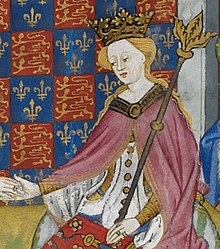
(Born March 23, 1430- Died August 25, 1482). Daughter of Rene, King of Naples and 220px-MargaretAnjouIsabella, Duchess of Lorraine. Married to King Henry VI of England. Mother of Edward of Westminster, Prince of Wales. Margaret of Anjou was the strong wife of the weak King Henry VI. She is the one who kept the Lancastrian cause going for the first half of the Wars of the Roses.

Margaret of Anjou was born on March 23, 1430 to her parents Rene King of Naples and Isabella Duchess of Lorraine. Her father was known to be a king with many crowns and yet he did not have the kingdoms. In order to help bring about the end of the Hundred Years’ War, her father arranged her marriage to the son of Henry V, Henry VI. The couple was married on April 23, 1445. Henry VI was technically also declared the King of France and because of this, Charles VII of France only agreed to this marriage if Henry gave France the areas of Maine and Anjou. Henry agreed but he kept this a secret from his people. Margaret was crowned Queen of England on May 30, 1445.  

Henry VI was a weak ruler who had really no desire to be king or an interest in politics. He often left the control of the government in the hands of men who really cared only about their titles than the well being of the kingdom. After the John Cade rebellion of 1450, Henry VI appointed Edmund Beaufort, the duke of Somerset, as his closest advisor. Somerset was a failure when it came to battles in France, but he was an ally of Margaret of Anjou. Somerset’s enemy was Richard Duke of York, who returned to England in August 1450, after being banished after the John Cade rebellion, and demanded that he should have a place on the Council. The council agreed, but Somerset’s  and York’s rivalry continued.

In August 1453, Henry VI had his first bout of mental illness. He had what some describe as a mental breakdown and was unresponsive for many months. During this time, Margaret was very pregnant and on October 13, 1453, she gave birth to the couple’s only child Edward of Westminster, Prince of Wales. However, even though Edward was the king’s son, Henry VI did not acknowledge him and said that the boy was the son of the Holy Ghost. Margaret thought that the perfect  Lord Protector for the king during this time would be her ally Somerset, however the person that became the Lord Protector was Richard Duke of York. York quickly arrested Somerset, but when the king recovered in 1454, Somerset was released and York was dismissed. This was the last straw for York.

During this time, Margaret had retired to Greenwich with her son, but she saw how powerful York had become and how weak her husband was, and she began to take an interest in politics. At the First Battle of St. Albans, on May 22, 1455, Edmund Beaufort, duke of Somerset was killed and the king was captured by the Yorkists, led by Richard duke of York. Henry wanted to reconcile with York, but then Henry had another bout of mental illness and York was made Lord Protector again in November 1455; he was dismissed in February 1456. Margaret decided that she had to defend her husband’s cause and so she raised an army to face off against York and she encouraged Henry Beaufort, the new duke of Somerset to fight with her. The Yorkists were led by Richard duke of York, Richard Neville earl of Salisbury and his son Richard Neville earl of Warwick. The Lancastrians were under Henry VI, but led by Margaret of Anjou, Somerset, and Henry Percy, third earl of Northumberland.

At the battle of Northampton, Warwick had captured the King and York came back to England.  In September 1460, Richard duke of York officially placed his claim to the throne to Parliament. In order to avoid more conflict, York was declared the heir to the throne, in place of Prince Edward. Margaret was not about to let this stand so she led her army to attack York at the battle of Wakefield on December 30, 1460. The Duke, Salisbury and York’s second son, the seventeen year old Edmund, Earl of Rutland, were killed, their cries for mercy were ignored.  The Queen had their heads impaled on spikes on the city walls of York. Margaret then faced against Warwick’s army at the Second Battle of St. Albans in 1461 and her army was able to defeat him, which forced Warwick to flee.

Warwick was not done. He raised an army with the son of Richard duke of York, Edward earl of March. They faced off against the Lancastrians at the battle of Towton, the bloodiest battle during the Wars of the Roses, where the Lancastrians were defeated; Margaret and her son Edward fled into Scotland, Edward earl of March became Edward IV, and Henry VI was taken prisoner. However, things would quickly sour between Edward and Warwick when  Edward IV married Elizabeth Woodville, not exactly the person that Warwick wanted the king to marry. Warwick was soon joined by the king’s brother George Duke of Clarence, who was Warwick’s son in law as he married Warwick’s daughter Isabel, in their rebellion against the king. Edward IV defeated Warwick and Clarence and so the two men fled to France. Meanwhile, Margaret made her way back to France where she seeked the aid of her cousin King Louis XI, also known as “the Spider”, of France.  

Louis XI had an idea that Margaret and Warwick should reconcile and join forces against Edward IV. This wasn’t an easy task as they hated each other, but they did agree to join forces. In order to show Warwick’s good will towards his new ally, Warwick’s daughter Anne Neville was betrothed to Edward of Westminster Prince of Wales. Warwick invaded England in 1470 in the name of King Henry VI, which forced Edward IV to flee and Henry VI was reinstated as king. Edward IV would come back and kill Warwick at the Battle of Barnet on April 14, 1471, the same day that Margaret and Edward of Westminster returned to England. Margaret wanted to return to France, but her son Edward of Westminster wanted to stay. Margaret reluctantly agreed and with her army, faced off against Edward IV one last time at Tewkesbury on May 4, 1471. Her 17 year old son Edward of Westminster was killed. This broke Margaret’s spirit and she was taken captive by William Stanley under the orders of Edward IV. She was first sent to Wallingford Castle and then she was imprisoned in the Tower of London.

Her husband Henry VI was also in the Tower where he died on May 21, 1471, the cause of death is unknown but it is suspected to have been a regicide. In 1472, a broken Margaret was placed in the custody of her former lady-in-waiting Alice Chaucer, Duchess of Suffolk. She remained in the custody of the Duchess of Suffolk until she was ransomed by Louis XI in 1475 through Treaty of Picquigny. Margaret returned to France where she was hosted by Francis de Vignolles and died in his castle of Dampierre-sur-Loire. She died on August 25, 1482 at the age of 52.

Biography: King Henry VI

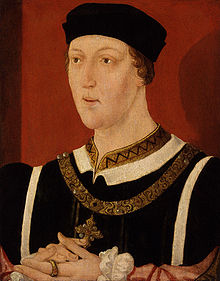
220px-King_Henry_VI_from_NPG_(2)(Born December 6, 1421- Died May 21, 1471). Son of Henry V and Catherine of Valois. Married to Margaret of Anjou. He had one son Edward of Westminster. Henry VI was a weak ruler who, combined with his bouts of mental illness and no desire to rule, led England to lose its lands in France and brought England into a 30 year civil war known as the Wars of the Roses.

Henry VI was the only child of Henry V and his wife Catherine of Valois. He was born on December 6, 1421 and became king of England at the tender age of nine months when his father died on August 31, 1422. Six weeks later, he became king of France after his grandfather Charles VI died, which was agreed upon with the Treaty of Troyes. A regency council was called and Henry’s uncle John, duke of Bedford, became his first regent, and was charged with taking care of the French, led by the king that the French declared, Charles VI’s son Charles VII. Both Charles VII and John duke of Bedford kept the Hundred Years’ War dragging on. The English captured Orleans in 1427, but in May 1429, a young Joan of Arc led a siege on Orleans, which the French was able to reconquer. This led to French nationalism which allowed the French to drive the English out of the Loire Valley and Charles VII was officially crowned king of France in June 1429.

This made Bedford nervous so he quickly had Henry VI crowned king of England in November 1429 and crowned king of France in 1431.  He was the first English king who was also the king of France, but it did not last long. With the newly founded French nationalism, the English were losing their French lands that Henry V had conquered left and right. This made Philip the Good, duke of Burgundy, an ally of the English, nervous, and so he signed the Treaty of Arras with Charles VII in 1435, which recognized Charles VII as the King of France. The Hundred Years’ War would continue for another 18 years until John Talbot, the earl of Shrewsbury was defeated at Castillon in 1453. The English lost all of their French territories, except for Calais.

John, duke of Bedford, was regent until his death in 1435. After Bedford died, Humphrey, duke of Gloucester became the protector, but he did not have the same control of the government that Bedford did. In 1437, Henry declared himself of age before his 16th birthday. Henry was a weak ruler who was not interested in ruling at all, so he allowed some of the least scrupulous people to control the government. One of these men was William de la Pole, earl of Suffolk, who became the king’s steward in 1435. William was a peacemaker at heart, which led to the loss of France; his opponent at court was Humphrey of Gloucester, who wanted the war with France to continue. Suffolk was able to negotiate the marriage between Henry VI and Margaret of Anjou in 1444, in exchange for Henry surrendering Maine to the French.  The couple was married on April 23, 1445. This was not a popular decision and Henry’s life was threatened so Margaret, Suffolk and Henry left London. Margaret and Suffolk convinced the king that Gloucester was plotting an uprising so Henry had him arrested and confined at Bury St. Edmunds in February 1447, where he would die a week later. The people were not satisfied with this and Suffolk decided to switch from peacemaker to warmonger and invaded Brittany in 1449. This brought Normandy into the middle of the Hundred Years’ War and Brittany was conquered by the French in 1450. This was the last mistake by Suffolk, who was arrested and banished, but his ship was intercepted at Dover and Suffolk was killed.

Suffolk’s allies were scapegoats for everything that was going wrong in France, which led to the revolution led by John Cade in May 1450. It was similar to the Peasants’ Revolt, however Henry VI was no Richard II and the revolt lasted for two months, until John Cade’s death. The purpose of this revolt was to purge the government, but the king did not live up to their expectations. Instead he polarized the government even further when he appointed Edmund Beaufort, the Duke of Somerset as his closest adviser. Somerset was a failure in France and he gained some notable enemies at court, especially Richard, duke of York, who was banished  to Ireland in 1447 for supporting Gloucester, but returned to England and to court in August 1450, demanding his place in the Council.

Somerset’s and York’s  rivalry simmered for several years, until  August 1453, when Henry VI had his first bout with mental illness. We are not sure what he suffered from but for weeks, he was unresponsive to everything. Some believe it was triggered by the loss of France. It affected him so much that he did not even acknowledge his only son Edward, believing that his son was born of the Holy Ghost. During this time, Richard Duke of York was made Lord Protector  in 1454 and had Somerset arrested. When Henry recovered, he restored Somerset and had York dismissed. This was the last straw for York. York and Somerset met on the battlefield at St. Albans on May 22, 1455, where Somerset was killed. This should have been the end of the conflict, however it was only just the beginning.

Henry was going to reconcile with York but another bout of mental illness hit Henry in November 1455 and York was made Lord Protector again; he was dismissed in February 1456. It was then that Margaret of Anjou took up her husband’s cause. She encouraged the new duke of Somerset Henry Beaufort to fight against York. The battlelines were being drawn. The Yorkists were led by Richard duke of York, Richard Neville earl of Salisbury and his son Richard Neville earl of Warwick. The Lancastrians were under Henry VI, but led by Margaret of Anjou, Somerset, and Henry Percy, third earl of Northumberland. In 1459, at the battle of Ludlow, the Lancastrians won and sent the Yorkists into hiding; however the Yorkists came back with a vengeance at the battle of Northampton. In September 1460, Richard duke of York officially placed his claim to the throne to Parliament. In order to avoid more conflict, York was declared the heir to the throne, in place of Prince Edward.

Henry VI seemed to be okay with this arrangement, but Margaret was not about to let this insult stand. On December 30, 1460 at the battle of Wakefield, York was killed. Margaret continued her march to London when in 1461, she met with Warwick and defeated him at the second battle of St. Albans. Warwick fled and raised another army with York’s son Edward and marched into London on March 1461. Then, in the bloodiest battle of the Wars of the Roses, Towton, the Lancastrian forces were defeated and Edward became Edward IV. Henry and Margaret fled to Scotland to seek aid from King James III. In exchange for the aid, Henry gave the Scots Berwick. After a few years, Henry was seen as an embarrassment to the Scots and so they returned him to northern England, where he was captured and imprisoned in the Tower of London by English forces in July 1465.

It looked like Henry’s days were numbered, but then on October 3, 1470, he was removed from the Tower and made king yet again. What had happened was that the earl of Warwick switched sides and fought for Henry VI and Margaret of Anjou. Warwick even had his daughter married to Henry’s son Edward to show his allegiance. However, Edward IV came back in April 1471 and killed Warwick and recaptured Henry VI. On May 4, 1471, Margaret’s forces faced off against Edward IV at the battle of Tewkesbury. It was a devastating loss for the Lancastrians as Prince Edward was killed and Margaret was imprisoned in the Tower. On May 21, 1471, King Henry VI was murdered. It is unknown who killed him, but many suspect that it was under the orders of  King Edward IV.

Biography: Margaret Beaufort

(Born May 31, 1443- Died June 29, 1509). Daughter of John Beaufort, 1st Duke of Somersetdownload (2) and Margaret Beauchamp of Bletsoe. Married to John de la Pole 2nd Duke of Suffolk, Edmund Tudor 1st Earl of Richmond, Sir Henry Stafford, and Thomas Stanley 1st Earl of Derby. Mother of Henry Tudor, later known as Henry VII. Margaret was the mother of the Tudor Dynasty. She never gave up on her son Henry Tudor.

Margaret Beaufort was born on May 31, 1443 to John Beaufort, 1st Duke of Somerset and Margaret Beauchamp of Bletsoe. She had seven half-siblings from her mother’s first marriage to Sir Oliver St John. Her father was the  second son of John Beaufort, 1st Earl of Somerset, the first son of John of Gaunt and Katherine Swynford. Margaret’s father went to France to fight for King Henry VI, but it went badly, and he either died from illness or committed suicide on May 27, 1444, leaving Margaret his sole heiress.

Under a deal that her father made with Henry VI, the king took wardship of Margaret, but the king broke that deal and passed on the wardship to William de la Pole 1st Duke of Suffolk. At this time, Margaret remained in her mother’s house to receive her education. On January 28, 1450, William de la Pole, who was not popular at all with Parliament, was ordered to be arrested. Between January 28 and February 7, 1450, Margaret and John de la Pole, the eldest son of William de la Pole, were married, yet they never lived together. With this marriage, William de la Pole was seen as reaching too far since Margaret was a potential heir for the throne and was charged with treason. William de la Pole was murdered on May 2, 1450. Margaret never recognized this marriage as she was under twelve when she was married.

In 1453, Margaret and her mother were called to court when Henry VI granted the wardship of Margaret to his half brothers Edmund and Jasper Tudor. With her first marriage annulled, it paved the way for the marriage between Margaret and Edmund. Margaret was 12 and Edmund was 24 at the time of the wedding on November 1, 1455. The marriage was consummated and soon Margaret was pregnant. Unfortunately, Edmund would never meet his son as he died on November 1, 1456 of the plague. Margaret gave birth to her only son Henry Tudor on January 28, 1457 at the age of 13. It was a difficult birth and Margaret was never to have another child after Henry.

Being a single mother and a young widow, Margaret knew that she had to marry again to make sure that she could financially survive. She arranged her own marriage and after the required one year of mourning was over, Margaret married Sir Henry Stafford on January 3, 1458. From what we can tell, it sounds like a happy marriage between Margaret and Sir Henry Stafford. When Henry was two years old, his uncle Jasper was granted wardship over him and so Margaret and Henry were seperated. After the Battle of Towton, Jasper fled to Scotland to help Margaret of Anjou, Edward Duke of York became Edward IV, and Henry Tudor was stripped of his lands and put in the custody of William Herbert. At this time, Margaret was able to keep in contact with her son.

In 1469, the House of Lancaster came back into power, but only for a short amount of time as the House of York came back into power. At the Battle of Barnet on April 14, 1471, Sir Henry Stafford was injured  fighting for the Yorkists and he would die from his wounds on October 4, 1471. Margaret was a widow again at the age of 28. Henry and Jasper fled the country for their own protection, leaving Margaret alone and in need of another husband and protector.

In June 1472, Margaret married her fourth and final husband Thomas, Lord Stanley. This was a marriage of convenience as Margaret was able to enter the court of Edward IV and Elizabeth Woodville in order to gain favor and secure her son’s return to England. Before this could happen, Edward IV died on April 9, 1483. The crown passed on to the king’s eldest son Edward V, but Edward and his brother Richard went to the tower for their own protection, never to be seen again. Their uncle Richard III became king, and even though Margaret carried the train at Queen Anne’s coronation, Richard stripped Margaret of all of her titles and land. During this time Margaret was plotting with Elizabeth Woodville to arrange a marriage between Henry Tudor and Elizabeth of York.

In 1483, Henry and Jasper failed to invade England. Richard found out that Margaret was part of this plot and she was charged with high treason, but instead of being executed, she was placed under house arrest. Margaret’s life changed for the better when her son was able to defeat Richard at the Battle of Bosworth Field on August 22, 1485, with the help of Margaret’s husband Thomas, Lord Stanley, and became King Henry VII.  Thomas, Lord Stanley was made Earl of Derby and Margaret was made Countess of Richmond and Derby. Margaret was able to see her son once again after 14 years apart. Margaret became the King Mother and was the second most important woman at court, next to Queen Elizabeth of York, who married Henry VII on January 18, 1486. Margaret was there to help with the births of her grandchildren, and the deaths of a few including Arthur Prince of Wales, who died on April 2, 1502.

Elizabeth of York would die on February 11, 1503, leaving Margaret’s son a widower. Thomas, Lord Stanley would die in 1504, and although she spent most of her son’s reign styling herself as a widow in order to have control over her own properties and finances, it still must have been a hard loss for Margaret. Margaret’s beloved son Henry VII died on April 21, 1509, and she took his death the hardest. Margaret Beaufort was able to see her grandson Henry VIII’s coronation on June 23, 1509, but then she died only six days later on June 29, 1509.