
 The story and myths of Henry VIII’s second wife, Anne Boleyn, have been debated and dissected for centuries. Was she a cruel and calculating figure who got what she deserved or was she an innocent victim of an evil tyrant of a husband? The funny thing about history is that the truth is never clear cut. Historical figures are human beings, no matter how many centuries separate their lives from our own. They were not all good or all bad, which is the perspective that Claire Ridgway tries to show when she is writing about her favorite figure, Anne Boleyn, either in her books or on her blog, The Anne Boleyn Files. To celebrate the 10th anniversary of the Anne Boleyn Files, Claire Ridgway returns with the latest collection of articles, “The Anne Boleyn Collection III”.
Like the other two volumes of this series, Ridgway has taken some of the most popular articles from her blog, the Anne Boleyn Files. There are some recurring themes that Ridgway has highlighted in her previous two books, but there are some news topics that she discusses in length. Was Mary I or Lady Jane Grey the usurper? Did Anne Boleyn love Henry Norris? How did Henry VIII go from a Renaissance prince to an infamous tyrant? Who were the men who died with Anne Boleyn?
Ridgway’s passion for the Tudors, especially when it comes to Anne Boleyn, is extremely apparent when reading her books. That does not change at all in this book. Her writing style remains the same as in her previous books. It is like having a conversation with a friend about Tudor hot topics. What Ridgway added to this book was the use of poetry written about the historical figures that she discusses at length. I found the poetry refreshing and intriguing to delve deep into the meaning of the poet’s words.
I think this book is okay, but I did have a few problems when I was reading it. I did feel like this book was slightly redundant as it repeats some of the same points that she made in previous books. Now, this might be because they are articles from her blog and she wanted to focus heavily on certain topics, but I felt like there were other topics that she might have focused on. I wanted to learn new information about Anne Boleyn and her times.
Another issue that I had with this particular book was with the sources. Ridgway tends to favor certain authors and historians when it comes to her research, which is fine. However, I think there have been new biographies that were written before the publication of this book that would have helped Ridgway make her points even stronger. As a blogger, there are sources that we enjoy using, but one should be aware that there are other historians who are doing great research out there and they should be at least acknowledged. We should be open to new ideas, new sources, and new theories about historical figures, even if we don’t necessarily agree with them. It is how we grow as history lovers and how we can better understand the past.
Overall, I think this was a good book, but I was expecting a tad more, especially after how much I enjoyed book two of the collection. Ridgway’s feelings and passion for her subject were ever-present in this volume, but I think that she could have expanded her research a tad to include more recent biographies and books to get her point across to a new batch of readers. I think if you enjoyed her two previous books in this series, I would recommend you read Claire Ridgway’s latest book, “The Anne Boleyn Collection III”.
 The Boleyn family have been viewed as social climbers, who only desired power and prestige, in history and novels for centuries; their fall from grace was due to their ambitions. But, is this true? Did Anne Boleyn’s family only care about getting to the top by any means necessary? Were they manipulative, cunning, and cruel like they have been portrayed in dramas and novels? Who were the Boleyns and why have they been so maligned in history? In her second book of this series, “The Anne Boleyn Collection II”, Claire Ridgway of The Anne Boleyn Files examines Anne Boleyn and the truth about her family.
 Have you ever watched a historical drama/ movie or read a historical fiction novel and started to wonder if the “facts” they a portraying are true? You start researching the history of these people and the times that they lived in and it soon becomes a passion. You have your favorite figures to study and you want to defend them when those online decide to criticize them in discussion boards. For some of us, that is as far as it goes, but some choose to make blogs to explore these topics even further. This scenario is similar to what happened with Claire Ridgway, the creator of the popular blog The Anne Boleyn Files; however, her inspiration came from a dream. To share her passion for all things Anne Boleyn, Ridgway has decided to compile some of the most popular articles from her blog into her debut book, “The Anne Boleyn Collection”.
 A weak king caught in the middle of court drama, each side fighting for the control of the crown and the right to have their opinions heard. England is on the brink of civil war with a young heiress struggling to find where she belongs and to survive. The young heiress is Margaret Beaufort, the mother of Henry Tudor (the future of Henry VII) and a survivor of the Wars of the Roses. Her story has been told in many different ways, but the story of her early years has rarely been told, until now. Judith Arnopp has decided to tell Margaret’s story from her perspective in her novel, “The Beaufort Bride: Book One of The Beaufort Chronicle”.
 A foreign princess who travels to England to marry the king to establish a strong political alliance. To those who study history, this is a story that has been told numerous times, but what makes this particular story unique is the people involved. The bridegroom was the recently-widowed Henry VIII, the shadow of his former self and notorious throughout Europe for having his second wife Anne Boleyn executed. His new bride to be is the German princess Anna of Kleve. To say that they did not see eye to eye would be an understatement as the marriage did not last long. Her story is often swept under the rug. Anna is often viewed as the “lucky” wife of Henry VIII, but was she? What was Anna’s story and what was her marriage with Henry really like? Alison Weir has taken up the challenge to give her readers a taste of what Anna’s life might have been like in this novel, “Six Tudor Queens: Anna of Kleve, Queen of Secrets”.
 The stories of the men behind the English crown can be as compelling as the men who wore the crown themselves. They were ruthless, cunning, power-hungry, and for many of them, did not last long. However, there were a select few who proved loyal to the crown and lived long and eventful lives. They are not as well known as their infamous counterparts, yet their stories are just as important to tell. One such man was the grandfather of two of Henry VIII’s wives and the great-grandfather of Elizabeth I. He lived through the reign of six kings and led his men to victory at the Battle of Flodden against King James IV of Scotland towards the end of his life. Thomas Howard, 2nd Duke of Norfolk had his fair shares of highs and lows, including imprisonment, but his story is rarely told. That is until now. Kirsten Claiden-Yardley has taken up the challenge to explore the life of this rather extraordinary man in her book, “The Man Behind the Tudors: Thomas Howards, 2nd Duke of Norfolk”.
 The stories of the women of the Wars of the Roses have become very popular in recent years. Tales of Jacquetta Woodville, Elizabeth Woodville, Margaret of Anjou, and Elizabeth of York tend to be favorites of those who read historical fiction. However, there was one woman whose life story is so much better than fiction. She was married 3 or 4 times (depending on if you count her first marriage), had only one beloved son who she helped rise to become King of England, and was considered one of the most powerful women of her time. In the modern era of historical dramas, Margaret Beaufort has been portrayed as malicious and cunning, someone who plotted against the Yorkist cause. With all of these conflicting reports about this one woman, can we ever find out the truth about her life? What kind of person was Margaret Beaufort? Nicola Tallis has taken up the challenge to answer these questions to find the truth about this remarkable woman in her latest biography, “Uncrowned Queen: The Fateful Life of Margaret Beaufort Tudor Matriarch”.
 Medieval kings are often painted as strong, colorful figures in history. They were warriors who fought to protect their families and countries. Often, we tend to think of men like King Henry V and King Edward IV when it comes to the late medieval kings of England. However, there was a man who was sandwiched between these two pillars of strength. He was the son of Henry V, the king who came before Edward IV, and the man who started the conflict known as the Wars of the Roses. Unlike these two men, Henry VI was a pious peacemaker and is often viewed as a mere man in the background who never measured up to the standards his famous father left behind. His story is often incorporated into other biographies of people of his time; Henry VI has not had a solid biography about his life in a long time. That is until now. Lauren Johnson has taken up the challenge of exploring the life of this often-overlooked monarch in her latest biography, “Shadow King: The Life and Death of Henry VI”.
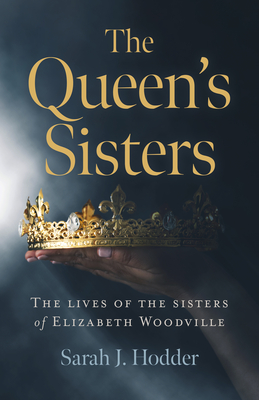 The story of the Woodville family has fascinated those who study the Wars of the Roses for centuries. Their mother Jacquetta of Luxembourg married Richard Woodville because she loved him, even though he was the chamberlain of her late husband. Jacquetta and Richard had numerous children, notably Elizabeth Woodville, who would marry the first Yorkist king, Edward IV. Elizabeth and her brothers are often talked about when discussing the Woodville children, however, Elizabeth had several sisters who married relatively powerful men. The stories of the sisters are rarely told, until now. Sarah J. Hodder has decided to take on the task of exploring the lives of these hidden figures in her debut book, “The Queen’s Sisters: The Lives of the Sisters of Elizabeth Woodville”.
 Adventures of a Tudor Nerd