
 The Tudor dynasty and the enigmatic figures who made this time period so fascinating have been hotly discussed for centuries. Henry Tudor, who became King Henry VII after defeating King Richard III at the Battle of Bosworth Field in 1485. King Henry VIII, the second son whose numerous wives and his split from the Catholic Church made his name infamous in history. King Edward VI, Henry VIII’s beloved son who died before he really could accomplish the reformation that he had planned for England. Queen Mary I, who was the first Queen of England to rule in her own right and wanted to restore the Catholic Church. Finally, Queen Elizabeth I, who never married and led England to a “Golden Age”. Many historians have viewed the Tudor dynasty as a time of great change and England was in a good place. However, G.J. Meyer paints a darker picture of the era in his book, “The Tudors: The Complete Story of England’s Most Notorious Dynasty”.
Unlike many of the books on my blog, I did read this book before when I was in college. It was the only Tudor book that I read as an assigned book and I do have fond memories reading it, so I decided that I would go back and reread it years later.
I will say that the title “Complete Story” is a little bit misleading. Meyer tends to focus on Henry VIII (over 300 pages on Henry VIII and the Great Matter) and his children, but he briefly mentions Henry VII and Lady Jane Grey. I feel like if Meyer wanted to have a “complete story” about the Tudors, it should have included these two figures a bit more. I did want more about Jane Seymour, Anne of Cleves, Catherine Howard, and Catherine Parr. They were wives of Henry VIII, but they felt like afterthoughts in Meyer’s book. I also wanted more about Elizabeth I’s reign, since she did reign for a long time and without a husband, but her section in this book felt rushed.
When Meyer does talk about Henry VIII and the other Tudors, he seems to use the same negative stereotypes that have been used in the past, (Henry VII was a miser, Henry VIII was a monster, Edward was a sick child, Mary as “Bloody Mary”, and Elizabeth was concerned about keeping her youth and her ruthlessness). Of course, this book was written in 2011 and many of these myths have been proven untrue by more modern books about the Tudors.
This book does not revolve around the popular history tales of the Tudors. Instead, Meyer tends to focus on the political and ecclesiastical issues that dominated the time period, in England and throughout Europe. This is where Meyer shines as he goes into details about these issues, both in regular chapters and in background chapters that help bring this time period to life. Meyer does have a good writing style that helps novices of Tudor history understand the complex time period.
Overall, I think this was a pretty good book. It was a bit darker than other Tudor books that I have read previously, but the Tudor time period was not all sunshine and roses. There were dark times and really good times that happened during the rule of this rather remarkable dynasty. If you want a decent book that will give you an introduction to this family drama, I recommend you read, “The Tudors: The Complete Story of England’s Most Notorious Dynasty” by G.J. Meyer.
 When one thinks about women reformers during the time of the Tudors, certain women like Catherine Parr and Anne Aske come to mind. However, there was one who really should get more attention and her name is Katherine Willoughby. She was the last wife of Charles Brandon. Her mother was Maria de Salinas, a lady in waiting to Catherine of Aragon and a devout Catholic. Katherine knew all six of Henry VIII’s wives on a personal level and knew all of his children. She has often been seen as an afterthought; someone you associate with other people, but never a stand out herself. That is until now. Katherine Willoughby finally gets her time to shine in Tony Riches’ latest historical fiction novel and his conclusion to his Tudor trilogy, “Katherine-Tudor Duchess”.
 Attractive, wealthy and influential, Katherine Willoughby is one of the most unusual ladies of the Tudor court. A favourite of King Henry VIII, Katherine knows all his six wives, his daughters Mary and Elizabeth, and his son Edward.
 Author Bio
 Queen Elizabeth I, “the Virgin Queen”, was the daughter of King Henry VIII and his second wife Anne Boleyn. She was the step sister to Edward VI and Mary I. Her story is full of so many twists and turns, starting from the very beginning, that it is almost a miracle that she lived and became queen. So what type of trials and tribulations did Elizabeth go through to become one of the most successful rulers in English history? What was her life like? Anne Somerset decides to explore these questions, and more, in her book, “Elizabeth I”.
  (Born October 8, 1515- Died March 7, 1578)
 There were some men who tried to court Elizabeth, including Robert Dudley, but none could ever get her to the altar. That was when she was queen, however, there was one man who was very close to marrying her when she was just Elizabeth Tudor. The man was Thomas Seymour, the brother of Edward and Jane Seymour and the husband of Catherine Parr. In Elizabeth Norton’s book, “The Temptation of Elizabeth Tudor: Elizabeth I, Thomas Seymour, and the Making of a Virgin Queen”, she explores the relationship between Thomas and Elizabeth and why he was her temptation.
 Elizabeth I
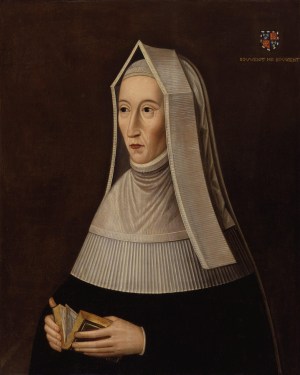 essential. It was a world controlled by men and Margaret played their game well. She was first married to Henry Tudor’s father Edmund when she was around 12 or 13 years old and had Henry when she was either 13 or 14. With the amount of trauma that she endured giving birth to Henry, he was her only child. Only a few months before Henry was born, Edmund died, leaving Margaret a widow and she had to give her son over to an enemy of the Beauforts. As the Wars of the Roses progressed, Henry soon became the last hope for the Lancastrian cause. His life hung in the balance as he and his uncle Jasper was forced into exile. It was through Margaret’s two other marriages that she was able to secure land for her son and was able to help create an army for her son so that he could claim the throne. Most of this she planned while her husband, Lord Stanley, was a strong supporter for the Yorkist cause. This was such a gamble, but the biggest gamble that Margaret made was when she convinced Elizabeth Woodville, the wife of Edward IV, to allow her daughter Elizabeth of York to marry Henry after he defeated Richard III at the Battle of Bosworth Field. All of her hard work paid off after Bosworth and her son Henry Tudor became Henry VII. Margaret had to be very strong in order to survive through all of this turmoil in order to see her only son succeed.
 between their children would help mend the rift in the country. With the marriage between Elizabeth and Henry Tudor, the York and Lancaster houses were united under the red rose of Tudor. I have always wondered what it must have been like for Elizabeth to know that she had to marry Henry who fought on the opposite side of her entire family. At first, it must have been rough but it did develop into love between the two. And then Henry had to deal with men who claimed to be her brothers who were led to the Tower of London and supposedly never heard of again. It must have been hard for Elizabeth to hear about these pretenders who claimed to be her long-lost brothers. At the same time she was building a family with Henry with her sons and daughters. Just when everything was going well for the family, Elizabeth and Henry’s eldest son Arthur died right after he had married Catherine of Aragon, the daughter of Isabella and Ferdinand of Spain. The blow must have rocked their marriage to the core, but luckily they had each other and their other son Henry VIII. It was the love that they had for one another that helped get Elizabeth of York and Henry VII through the rocky patches and helped establish the Tudor dynasty.
 her marriage, to Henry VIII, was arranged all while living in poverty. She could have thrown in the towel and asked to go back home but she stayed and married King Henry VIII, becoming Queen of England. Everything was going fine in their marriage until the miscarriages happened and the fact that she could only give birth to one child, a girl named Mary. This must have felt so horrible for Catherine since Henry only wanted a male heir and she could not give him what he wanted. Henry wanted a divorce and decided to use the fact that she was married to his brother as an excuse to divorce. Since Catherine said she was still a virgin after Arthur died, the Catholic church did not see a reason to hand out the divorce and took a long time to decide so Henry decided to break away from the church and divorced Catherine that way. She was then dismissed to never see him or her daughter Mary again, although she would argue that she was his one true and faithful wife until her dying breath. The amount of courage it must have taken to get through all the Henry through her way is very admirable and inspiring.
 Catherine was a scholar and had written two books, a first for a Queen of England. She acted as a king step mother to Henry’s three children; Edward, Elizabeth and Mary, but she had the best relationship with Elizabeth. After Henry died, Catherine married her sweetheart Thomas Seymour and had Elizabeth live with them. It is rumoured that Thomas Seymour had an inappropriate relationship with Elizabeth. It must have been hard for Catherine to accept this fact and in some cases, it is said that she even assisted Thomas with these incidents. Catherine had to make the hard decision to ask Elizabeth to leave her household, even though she loved her very much. Catherine died giving birth to a daughter. Catherine had to act as a nurse, scholar, wife, and step mother in a time when it was hard to even do one of these jobs properly.
 Adventures of a Tudor Nerd