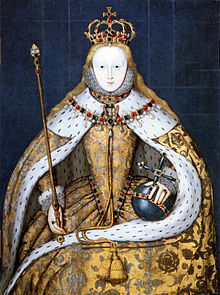
Biography: Queen Elizabeth I

220px-Elizabeth_I_in_coronation_robes(Born September 7, 1533- Died March 24, 1603)
Daughter of King Henry VIII and Anne Boleyn.
Sister to King Edward VI and Queen Mary I
Elizabeth was known as the “Virgin Queen” because she never married and she never had a child. Elizabeth was one of the greatest rulers in English history.

Elizabeth I was born on September 7, 1533 to Henry VIII and his second wife Anne Boleyn at Greenwich Palace. At birth, Elizabeth was declared heir presumptive to the throne of England. Her older half-sister, Mary, had lost her position as a legitimate heir when Henry annulled his marriage to Mary’s mother, Catherine of Aragon, to marry Anne, with the intent to sire a male heir and ensure the Tudor succession. However, things didn’t go as planned. Anne never was able to give birth to the desired son that Henry wanted. Anne would later be accused of adultery and treason. On May 19, 1536, Anne Boleyn was executed; Elizabeth was two years old at the time and she was declared illegitimate, just like her step-sister Mary.

Henry VIII married Jane Seymour shortly after Anne Boleyn’s execution. Jane gave birth to Elizabeth’s step-brother Edward, but died shortly afterward. Elizabeth’s father would marry three more times; Anne of Cleves who was divorced; Katherine Howard who was beheaded; and finally Katherine Parr. During this time, Elizabeth met Catherine “Kat” Ashley who was appointed Elizabeth’s governess in 1537 and remained with Elizabeth until her death in 1565. William Grindal became her tutor in 1544 and after his death in 1548, Roger Ascham became Elizabeth’s tutor. Elizabeth received a very good education and she loved to learn. Elizabeth’s life was somewhat normal at this point, but life was about to change drastically.

Henry VIII died on January 28, 1547, when Elizabeth was 13, leaving the throne to his nine year old son Edward VI. Before Henry VIII died, he reinstated his daughters to the line of succession so after Edward VI, Mary would become queen and then Elizabeth. Shortly after Henry VIII’s death, his last wife Katherine Parr married Thomas Seymour, the brother of Jane Seymour and Edward Seymour, Edward VI’s Lord Protector. Elizabeth moved in with Katherine Parr and Thomas Seymour at their home in Chelsea where, it is alleged, Thomas Seymour would act inappropriately towards Elizabeth, including bursting into her bedroom while she was barely dress, slap her on the bottom, and one time, shred Elizabeth’s dress. In May 1548, Elizabeth was dismissed from Katherine’s household; Katherine Parr died from childbirth on September 5, 1548 which allowed Thomas to pursue Elizabeth as his wife, but it failed. Thomas was accused of trying to kidnap Edward VI, charged with treason and executed on March 20, 1549. Elizabeth was interrogated during the investigation into Thomas, but she never admitted anything about the nature of their relationship.

Edward VI would die on July 6, 1553, at the age of 15. Under Henry VIII’s Act of Succession, the crown should have passed onto Mary, however Edward did not like that she was Catholic, so before he died, he issued an act that named his heir as Lady Jane Grey. Lady Jane Grey would only be queen for nine days since Mary brought an army to place her on the throne. On August 3, 1553, Mary rode into London with Elizabeth by her side. On the outside, it looked like Mary and Elizabeth had reconciled, however they were pulling farther apart.

Mary and Elizabeth kept butting heads over religion, Mary being Catholic and Elizabeth being Protestant. Mary’s popularity began to wan with her people when she announced in 1554 that she wanted to marry Philip II of Spain, a devout Catholic. That same year in January and February, a man by the name of Thomas Wyatt staged a rebellion to put Elizabeth on the throne instead of Mary, which failed. Wyatt was beheaded and Elizabeth was interrogated. She was imprisoned in the Tower of London on March 18th; she would later be transferred to Woodstock on May 22nd where she spent a year under house arrest in the custody of Sir Henry Bedingfield.

Elizabeth returned to court on April 17, 1555 to help Mary with the final stages of her pregnancy. However, months passed and it turned out that it was a false pregnancy. As Mary fell ill, Philip II started to consult with Elizabeth on how to run the country, and in October 1558, Elizabeth began to formulate her own court. On November 6, Mary recognized Elizabeth as her heir and on November 17, 1558, Mary I died and Elizabeth I succeeded to the throne.

Elizabeth I became Queen of England at the age of 25. She was crowned in an elaborate ceremony on January 15, 1559, which was cold winter day; Elizabeth would get sick shortly after her coronation, but once she recovered, she made William Cecil, later Baron Burghley, her Chief Minister. Elizabeth had two pressing matters to solve when she first became queen, resolving the matters of religious division in England and who she would marry. With the religious division, she sought to strike a balance, so that even though Protestantism became the national religion, those who wanted to hear the Roman Catholic mass were able to do so in private. Elizabeth became the Supreme Governor of the Church of England.

The other issue that plagued Elizabeth during her reign was who she was going to marry. There were many candidates, foreign and English suitors, but Elizabeth would not commit herself to one man, instead she decided to remain single and considered herself the mother of the English people. The man who probably had the best chance of marrying Elizabeth was Robert Dudley. Dudley was the brother of Guilford Dudley, the husband of Lady Jane Grey. He was married to Amy Robsart, but she died of a fall in 1560 and Dudley was accused of her murder. He was created the Earl of Leicester in 1564. Dudley remarried in 1578 to one of Elizabeth’s Maid of the Privy Chamber, Lettice Knollys. This made Elizabeth angry and she banished Lettice from court. Dudley would die in 1588, shortly after the defeat of the Spanish Armada. Robert Dudley tried for over 20 years to convince Elizabeth to marry him and it resulted in a close friendship, but nothing more.

The other serious contender for the Queen’s hand was Francis, Duke of Anjou, who Elizabeth called her “frog”, heir to the French throne. But again, political considerations made the match ultimately impossible. Other suitors included King Philip II of Spain, King Eric XIV of Sweden, Archduke Charles of Austria, and Henry Duke of Anjou (the duke before Francis). Elizabeth had numerous favorites at her court including Sir Christopher Hatton, Robert Devereux earl of Essex, and Walter Raleigh, just to name a few. The problem was that Elizabeth decided not to marry nor would she declare a successor, even when she contracted smallpox in October 1562 and she thought she might die.

Elizabeth’s refusal to marry or name a successor led to one of the most defining conflicts of Elizabeth’s reign. Catholics viewed Elizabeth as illegitimate and had no right to the throne. To them, Mary Queen of Scots, Elizabeth’s cousin, had a better claim to the throne. Mary was the granddaughter of Henry VIII’s sister Margaret. Elizabeth was persuaded to send a force into Scotland to aid the Protestant rebels, and though the campaign was inept, the resulting Treaty of Edinburgh of July 1560 removed the French threat in the north.When Mary returned to Scotland in 1561 a to take up the reins of power, the country had an established Protestant church and was run by a council of Protestant nobles supported by Elizabeth. Mary refused to ratify the treaty which denied Mary the right to succeed to the English throne.

In 1563 Elizabeth proposed her own suitor, Robert Dudley, as a husband for Mary, without asking either of the two people concerned. Both proved unenthusiastic, and in 1565 Mary married Henry Stuart, Lord Darnley, who carried his own claim to the English throne. The marriage was the first of a series of errors of judgement by Mary that handed the victory to the Scottish Protestants and to Elizabeth. Darnley quickly became unpopular and was murdered in February 1567 by conspirators almost certainly led by James Hepburn, 4th Earl of Bothwell. On May 15, 1567, Mary married Bothwell, arousing suspicions that she had been in on the murder of Lord Darnley. This lead to Mary’s fall from grace and she was held captive starting in July 1567.

Forced to flee her own country, having abdicated her throne in favour of her infant son, James, Mary landed in England in May 1568, seeking Elizabeth’s help in restoring her to her kingdom. Because the matter of Darnley’s death was unresolved, Elizabeth placed Mary in prison for around 20 years. Of course, this angered the Catholics who saw Mary as the figurehead of their cause, so there were plots and plans to get Mary out of prison and place her on the throne instead of Mary. The largest plot was the Babington Plot of the summer of 1586, which laid out plans for Elizabeth’s execution and Spain’s invasion of England. Since Mary knew of the plans, she was tried and found guilty of treason. Elizabeth was very reluctant to sign the death warrant, but eventually she did. Mary Queen of Scots was executed on February 8, 1587 at Fotheringhay Castle; her son James VI was declared Elizabeth’s heir to the throne.

Another huge challenge for Elizabeth was her relationship with Spain and her former brother-in-law, Philip II. With the discovery of the new world and the age of exploration in full force, piracy was becoming more popular. In 1572, Sir Francis Drake decided to plunder Spanish ships in Central and South America. In 1577, Drake was introduced to Elizabeth and she unofficially encouraged his activities against the Spanish. In December 1577, Drake travelled around the world plundering Spanish ships; he returned to England in September 1580 as a national hero and in April 1581, he was knighted.

By 1588, Elizabeth and Philip were considered enemies. Philip had spoken of invading England and dethroning Elizabeth for years, but the execution of the Queen of Scots gave him an added incentive. In July 1587, Philip received a treaty from the pope that gave his approval on the conquest of England. Now he could claim the English throne for himself and dethrone Elizabeth to restore England to Catholicism. In 1587, Drake was able to lead a successful raid against Cadiz, which delayed the Spanish Armada from invading by a year. In the summer of 1588 he sent his mighty Armada fleet against England. But by superior tactics, ship design, and sheer good fortune, the English defeated them. This was one of Elizabeth’s biggest achievements and made Elizabeth extremely popular in England.

In Ireland, there was a revolt against the English, led by Hugh O’Neill, Earl of Tyrone. In spring 1599, Elizabeth sent Robert Devereux, 2nd Earl of Essex, to put the revolt down. To her frustration,he made little progress, even though he begged to go there, and returned to England in defiance of her orders. He was replaced by Charles Blount, Lord Mountjoy, who took three years to defeat the rebels. Essex thought that when he returned to England, he would be treated like a hero, but he was treated with contempt. This made Essex upset and in February 1601, the earl tried to raise a rebellion in London. He intended to seize the queen but few rallied to his support, and he was beheaded on February 25, 1601.

After Essex’s death, Elizabeth’s health began to deteriorate. She would die at the age on 69 on March 24, 1603 at Richmond Palace. Elizabeth was interred in Westminster Abbey, in a tomb shared with her half-sister, Mary I.

Sources:
https://en.wikipedia.org/wiki/Elizabeth_I_of_England#Mary,_Queen_of_Scots
http://www.elizabethi.org/contents/biography/
https://www.biography.com/people/queen-elizabeth-i-9286133
Ashley, Michael. A Brief History of British Kings & Queens. Philadelphia, PA: Running Press, 2008.

Elizabeth I and the Elizabethans

As many of you know, I have chosen to make September a month where we look at Queen Elizabeth I and the Elizabethans, men and women who helped create this era into a “Golden Age”. Now I know what you are thinking, why jump to Elizabeth and the Elizabethans right after a month about the Wars of the Roses. Wouldn’t it make a lot more sense to focus on Henry VIII and his court next, if you are going in chronological order? You would be correct, however this year I have been thinking a lot about Elizabeth I and the Elizabethans.

A few days ago, I asked who your historical role model was and why. Many of you answered that it was the Virgin Queen herself Elizabeth I. For me, Elizabeth I has been my historical role model because it was her story and her courage that helped me get through some of the toughest times in my life. When I was younger, my family and I were always moving from one shelter to another. It was a hard time, but I decided to focus on something positive instead of on the negative, and that was reading and studying. I have always been an avid reader and one day, I picked up a “Royal Diaries” book on Elizabeth I. There was something about Elizabeth’s story that really inspired me. I decided that I was going to read any book that I could on or about her life, including encyclopedias. Yes, I was one of “those kids”.

It was through studying Elizabeth I and her story that my passion for studying history was born. I wanted to be able to tell the stories of those remarkable men and women from the past. I remember staying up late at night, well passed curfew, studying. I didn’t know what career path I wanted to take, but all I knew was that I wanted to study history in college. Long story short, I was able to fulfill my dream that started after reading about Elizabeth I and her story.

I think that’s the amazing part about studying history. The more you read the life stories from those who came before us, the more you are able to appreciate them. It was Elizabeth I and the Elizabethans who helped me when I was younger. It is my hope that the stories of these remarkable men and women will also help you and will inspire you. These are stories of strength, of courage, of heartache and of grief. These are stories of adventurers, playwrights, ladies in waiting, councilors, royal favorites , and one remarkable queen.

Book Review: “The First Elizabeth” by Carolly Erickson

78c6ce34a9b7447cedba2378b607f3d4The story of Elizabeth I is full of twists and turns. From the moment she was born, she had to fight to survive. Through all that she went through, Elizabeth found the strength and courage to become the legendary queen to help England to enter into a golden age of peace and prosperity. This, however, is just one side of Elizabeth. The other side of Elizabeth’s personality, her anger and her interactions with her councilors, is explored thoroughly in Carolly Erickson’s book “The First Elizabeth”.

Carolly Erickson explains this other side of Elizabeth a bit further:

But if Elizabeth’s political and intellectual skills served her well, though hardly infallibly, in dealing with her councilors she relied on her volatile, imperious temperament and on her inbred capacity for duplicity and deceit to keep them at bay. She was dangerously unpredictable in her moods. She blustered one minute and beguiled the next. Now coaxing and cajoling, now spitting out ringing oaths and insults, she kept her advisers off balance and perpetually astonished them by the range and mutability of her passions. Beyond this, they came to know that, with Elizabeth, nothing was ever what it seemed. Beneath her surface emotions were layer upon calculating layer of secondary reactions, ploys and schemes. She took pleasure in laying traps for her unwary ministers and ensnaring them later with their own words. Even the wittiest of them were sometimes left tongue-tied and flat footed in her presence, while all of them, however fleetingly, were on occasion dazzled by her youthful, radiant femininity and sexual magnetism.(Erickson, 173).

Erickson begins her book with the birth of Elizabeth and her relationship with her father Henry VIII. With the death of the king, Elizabeth had to adapt to the rules of her step brother and sister, Edward VI and Mary. It’s really Mary’s reign where Erickson focuses her attention for the first part of the book. To her, Elizabeth is more timid and scared whereas Mary comes off strong. It’s a different look at these two sisters and their relationship.

With Mary’s death, the twenty-five year old Elizabeth is declared Queen of England. The people of England were relatively hesitant about  this newcomer since they did not know much about her. Elizabeth worked hard to create an image of a good and benevolent queen for her people while hiding her temper that she was notorious for. Those who were closest to Elizabeth would often feel her anger first hand. Erickson also shows how even though there was a facade of peace in England during Elizabeth’s reign, there were those who wanted Elizabeth dead. Elizabeth fought both internal and external enemies in order to survive. It was her strength and her determination that made her a legend.

Erickson’s book may be a biography but it reads like a historical fiction novel. There were times when Erickson would mention famous passages or rumors and I was wishing that she had included the actual text in the book. Another thing that Erickson did that I bothered me a bit was that she made Elizabeth a bit darker than she is normally portrayed. When it came to the death of Mary Queen of Scots, Erickson really did not mention how much of a struggle it was for Elizabeth to sign the death warrant against Mary.

Overall, I think that “The First Elizabeth” by Carolly Erickson was an interesting read. There were some facts and rumors in this book that I was not aware of and her portrayal of Elizabeth was memorable. Elizabeth was prone to angry tirades but ultimately she had her people’s best interest in mind. I am glad that I read Carolly Erickson’s book because it did show a different side of this remarkable queen. I would recommend this book for anyone who is looking for a different perspective on Elizabeth I.

Book Review: “The Life of Elizabeth I” by Alison Weir

111222Elizabeth I was perhaps the most influential monarch in English history. There are episodes in her life that became legendary. From her tumultuous childhood to her reign where everyone either wanted her to marry or put someone else on the throne, Elizabeth’s life was hardly easy. Even though much is known about her public life as queen, we really do not know a lot about her private life. In Alison Weir’s book, “The Life of Elizabeth I”, the gap between the public Elizabeth and the private Elizabeth is bridged in order to give a more complete biography of this fascinating English queen.

Alison Weir explains what Elizabeth had gone through in her early life and how it shaped her as a queen:

When she came to the throne her subjects knew relatively little about her. Nurtured in a hard school, having suffered adversity and uncertainty from her infancy, and having gone in danger of her life on at least two occasions, she had learned to keep her own counsel, hide her feelings and live by her wits. Already, she was a mistress of the arts of deception, dissimulation, prevarication and circumvention, all admired attributes of a true Renaissance ruler. At twenty-five years old, she was at last in control of her destiny, and having lived in one kind of constraint or another for the whole of her existence so far, she was determined to preserve her independence and autonomy. She had learned from her sister’s mistakes and resolved never to repeat them. She would identify herself with her people and worked for their common interests. She would bring peace and stability to her troubled kingdom. She would nurture it, as a loving mother nurtures a child. For this, she believed, God had preserved her life. (Weir, 9-10)

Weir begins her book with the coronation of Elizabeth, touching briefly on Elizabeth’s childhood and how she got to the throne. She explains the England that Elizabeth knew and how right after she was crowned, her people desired for the queen to have a husband and to know what religion she would adopt for her own and for her country. Although Elizabeth liked to have quite a few favorites, including Robert Dudley and Francis Duke of Anjou, she never gave her heart solely to one man. Instead she chose to be the mother of her country and to be married to the job of protecting her people. Elizabeth not only had to keep her people happy but she had to deal with threats from other countries, including King Philip II of Spain and his Armada, the  St. Bartholomew’s Day massacre of the Huguenots in France, and the religious feuds in the Netherlands. One of her biggest external threats was her cousin Mary Queen of Scots, who claimed that she should be Queen of England. Elizabeth eventually had to make the decision to execute another queen, very similar to the decision her father had to make when he had Elizabeth’s mother executed a few decades before.

Elizabeth also had to deal with internal threats such as favorites, especially  Robert Devereux, the 2nd Earl of Essex, becoming jealous of others in court and throwing fits. There were those who would dare to marry without the Queen’s permission and had their own children. In these instances, Elizabeth’s anger would come out in full force. She didn’t trust many people and tended to keep her feelings to herself. To the outside world, she was “Gloriana” or “The Virgin Queen”, but to those who truly knew her, she was just Elizabeth, a woman who became queen and who was just trying to survive for herself and her country.

Elizabeth I has always been my favorite Tudor monarch. Her story was the one that really got me interested in the Tudors and this book made me fascinated with her all over again. Alison Weir was able to yet again combine her engaging writing style with amazing details to tell the full story of the reign of Elizabeth I, from her coronation at age of 25 to her death at the age of 69, and how she changed England for the better. I loved reading this book. There was so much information about Elizabeth that I didn’t know about in this book, it was like discovering a whole new side to a person I thought I knew very well. If you want to learn more about Elizabeth I, the woman behind the legend, and her impact on England and the 16th century world, I highly recommend you read this book, “The Life of Elizabeth I” by Alison Weir. An absolutely fascinating read on one of England’s most remarkable rulers.  

Book Review: “The Lady in the Tower: The Fall of Anne Boleyn” by Alison Weir

6282683Anne Boleyn, the  second wife of Henry VIII and the mother of Elizabeth I. Most of us know her story of how she fell in love with Henry VIII and how their relationship changed England forever as Henry broke off with Rome in order to get a divorce from his first wife Katherine of Aragon so that he could marry Anne. Unfortunately, when Anne couldn’t give Henry the son he so desired, their love began to fade. Anne Boleyn’s story ends in tragedy as she was accused of having multiple affairs, plotting the death of Henry VIII, and witchcraft, Anne was found guilty and was killed. Her fall happened in May 1536, a month that changed everything, but how much of these charges are true? Did she indeed have these affairs? Did she plot to kill her husband? What is the truth behind her fall? These are the questions that Alison Weir try to answer in her book “The Lady in the Tower: The Fall of Anne Boleyn.”

Alison Weir states that:

In assessing Anne’s character and impact on history, we should ask ourselves how she would be viewed today if she had not perished on the scaffold. Her end was one of the most dramatic and shocking episodes in English history, her last days the best documented period of her life, vividly described in the sources, while the powerful image of her on the scaffold, courageously facing a horrible death, has overlaid all previous conceptions of her. (Weir, 337-338).

Weir begins her book with the May Day joust of 1536, when Henry VIII abruptly left Anne all alone. A few months before, Anne had her last miscarriage, unable to provide Henry the son that he so desired. Henry’s attention began to wander towards Jane Seymour, even though, at this time, he still had feelings for Anne. After Katherine of Aragon’s death, a few weeks before the miscarriage,  Anne’s enemies began to make their moves. Anne had many enemies in court and the entire country was against her in her role in the divorce of Henry and Katherine of Aragon, who was extremely popular.Cromwell, who despised Anne, planned a way to get Anne off the throne with the help of Chapuys, the Imperial ambassador to England for Charles V.

Cromwell had enlisted the help of Anne’s servants, including her sister-in-law Anne Boleyn, to make a tale of scandal. The story goes that Anne had affairs with five men: Sir Henry Norris, Sir Francis Weston, Sir William Brereton, Mark Smeaton, and her brother George Boleyn. Alison Weir explores the validity of the claims of the affairs as well as the details of the trials. Of course, the trials did not go in a way that was what we would now today consider “fair” and the sentence of death was passed on all of the accused. Anne Boleyn and the men accused with her are executed. The only legacy Anne left behind was her daughter, who would become Queen Elizabeth I.

I have been a fan of Alison Weir’s for years. I love the amount of details that she puts into her books and how both her fiction and non-fiction books are so easy to read. “The Lady in the Tower: The Fall of Anne Boleyn” follows this trend. For me, Anne Boleyn has been one of those people in the Tudor time  that really has not interested me. That was until I read this book. The story of her fall is so dramatic and quick that it leaves a lot of intriguing questions about if Anne and the men who fell with her were indeed innocent. “The Lady in the Tower: The Fall of Anne Boleyn” by Alison Weir is such a fascinating read for anyone who is interested in Anne Boleyn and her fall from grace.

Book Review: “The Temptation of Elizabeth Tudor” by Elizabeth Norton

Queen Elizabeth I is often known as “the Virgin Queen” because she never married. 25673950There were some men who tried to court Elizabeth, including Robert Dudley, but none could ever get her to the altar. That was when she was queen, however, there was one man who was very close to marrying her when she was just  Elizabeth Tudor. The man was Thomas Seymour, the brother of Edward and Jane Seymour and the husband of Catherine Parr. In Elizabeth Norton’s book, “The Temptation of Elizabeth Tudor: Elizabeth I, Thomas Seymour, and the Making of a Virgin Queen”, she explores the relationship between Thomas and Elizabeth and why he was her temptation.

Elizabeth Norton explains who Thomas Seymour was:

Thomas Seymour once said that the memory of brave men lived forever and that ‘a good name is the embalming of the virtuous to an eternity of love and gratitude among posterity.’ To future generations, his good name was lost; but those who had known him still remember him fondly. He was a turbulent, troublesome individual, but also a likable one, and – at the start of 1549- the man who would come closest to marrying the future Queen Elizabeth. As far as is recorded, no other man ever climbed into bed with England’s virgin queen, or trimmed her clothes and intimately appraised her body. As Elizabeth looked at Thomas’s portrait in the gallery at Somerset Place, she would have been able to reflect upon the man who had so nearly seduced her. He was the temptation of Elizabeth Tudor. (Norton, 280).

So how did Elizabeth meet Thomas Seymour and why did Elizabeth chose to become “the Virgin Queen”? These are the questions that Elizabeth Norton wants to answer in her book.

Norton begins her book with the birth of Edward VI, the death of Jane Seymour, and the relationship between Catherine Parr and Henry VIII. Catherine Parr had been married a few times before Henry and she tried to be the best step mother to Henry’s three children as she could be, but when Henry died, things changed. Since Edward VI was still a minor, he was granted a Lord Protector, his uncle Edward Seymour, 1st Duke of Somerset. His brother, Thomas Seymour, wanted to marry either princess Mary or princess Elizabeth, but after he was rejected by both, he would marry Catherine Parr shortly after the death of Henry VIII, sending shock waves throughout the court. Catherine would allow Elizabeth Tudor and Lady Jane Grey to be raised in her household, thinking that it would be beneficial for the young girls. While it was great for their education, Elizabeth was constantly under the wandering gaze of Thomas Seymour.

Thomas is reported to come into Elizabeth’s bedroom early in the morning when she was barely dressed to hug her and tickle her. Elizabeth’s governess Kate Ashley would often try to persuade Thomas to leave her alone, but he did not give up. There was one incident where Thomas took a knife to one of Elizabeth’s gowns while she was walking in a garden and tore it to shreds. It is even rumored that Elizabeth gave birth to Thomas’s child and that the child was thrown into a fire, but  Norton explains why this story is not related to Elizabeth. Catherine Parr was aware of what was happening, but because she promised to love and obey her husband, she never confronted Thomas about the relationship, although she did dismiss Elizabeth from her household. Catherine would eventually become pregnant and give birth to a baby girl. While she was on her deathbed, she did not want to see Thomas; Catherine would die on September 5, 1548, which meant that Thomas was a bachelor yet again.

With the death of Catherine, Thomas turned his eyes towards politics. He wanted what his brother Edward Seymour had, control of the king. He joined forces with William Sharington, a member of parliament and a known embezzler, to build an army to overthrow the government. During this time, he wrote a letter to Elizabeth to ask her to marry him. Kate Ashley thought it was a good idea and she told Elizabeth to send her reply through Thomas Parry that she desired to marry him. Unfortunately, Thomas Seymour would be caught by his brother Edward Seymour when it was reported that Thomas tried to either kidnap or kill the king. Thomas’s scheme with Sharington would be found out, as well as his relationship with Elizabeth; Thomas Parry and Kate Ashley were sent to the Tower for interrogations. Thomas Seymour would quickly be found guilty and was executed for treason. It was with Thomas’s death that Elizabeth’s desire to marry died as well.

Elizabeth Norton in her book “The Temptation of Elizabeth Tudor” paints a picture of the young Elizabeth Tudor in which love was her desire and Thomas Seymour was indeed her temptation. Norton shows Thomas Seymour in such a way that makes him intriguing. I found myself wanting to learn more about Thomas Seymour and his relationship with Elizabeth. This book was so well written and fascinating. If you are interested in Elizabeth’s childhood, Thomas Seymour and his fall, and the reason why Elizabeth chose to be known as “the Virgin Queen”,  this is the book for you.

Book Review: “The Sisters Who Would Be Queen” by Leanda de Lisle

3980321When we think of the Grey family, we often come up with certain stereotypes. Lady Jane Grey was a passive, obedient girl who did whatever her family and her husband’s family wanted her to do. Frances Grey was a cruel mother. Katherine and Mary lived very uneventful lives. These could not be further from the truth. Leanda de Lisle in her book, “The Sisters Who Would Be Queen” attempts to paint a more realistic of the Grey sisters; Jane, Katherine and Mary.

Leanda de Lisle explains the importance of the Grey sisters:

Dynastic politics, religious propaganda, and sexual prejudice have since buried the stories of the three Grey sisters in legend and obscurity. The eldest, Lady Jane Grey, is mythologized, even fetishized, as an icon of helpless innocence, destroyed by the ambitions of others. The people and events in her life are all distorted to fit this image, but Jane was much more than the victim she is portrayed as being, and the efforts of courtiers and religious factions to seize control of the succession did not end with her death. Jane’s sisters would have to tread carefully to survive: Lady Katherine Grey as the forgotten rival Queen Elizabeth feared most, and Lady Mary Grey as the last of the sisters who were heirs to the throne. (de Lisle, xxx).

These three sisters were the daughters of Henry and Frances Grey. Frances is often viewed as a power hungry mother who didn’t care about Jane, but de Lisle explains why this is merely a stereotype. The Grey’s gave their daughters the best education imaginable for those who were in line for the throne. Jane, Katherine and Mary were raised to be educated and opinionated young ladies, which really defined who Jane was, even when she became queen for a fortnight, not the nine days of the myth. Jane was in fact one of the leaders of the new Protestant movement and she stuck to her beliefs, even when she was facing execution.

It was the memory of Jane that was always in the back of Katherine and Mary’s minds. After Jane’s death, neither girl truly pursued the crown of England. Instead, they wanted to be happy and marry who they wanted for love, no matter what. It started with Katherine, who was going to be next in line to the throne after Elizabeth became queen since Elizabeth never married. Katherine wanted a simple life so she married Edward Seymour, 1st Earl of Hertford without Elizabeth’s knowledge. Elizabeth sent both Katherine and Edward to the Tower where they had two children, Thomas and Edward Lord Beauchamp. Katherine would die sick, impoverished and under house arrest, separated from her husband and her children.

Mary did not fare much better. Mary married Thomas Keyes, a sergeant porter to Elizabeth I, in secret. Unlike Katherine, Mary and Thomas’s marriage ended badly after Thomas was sent to a cramp and dark prison cell. Mary never married again, but she was able to return to court.

This is the story of the Grey family without all the frills. The stories of Jane, Katherine and Mary are stories of heartache and pain. They were too close to the throne to have a normal life that they wanted. When I started reading this book, I will admit that it shocked me. I thought I knew the story of the Grey family, but I was wrong. Leanda de Lisle has opened my eyes to the truth about the Greys with her book “The Sisters Who Would Be Queen”. This book is very well written and so easy to understand. If you are interested in the Grey family and the story of Jane, Katherine and Mary, this is the book for you.

Top 5 “Tudor” Men to Study

Hello everyone! So a few weeks ago, I made a list of my top 5 Tudor women to study. This time around, I decided to focus on the men of this era. The reason that I have the word Tudor in quotations is that one of the men on this list is technically not a Tudor nor did he serve in the Tudor court. As always, this list is in no particular order and it might change after I do more research on the era. These men at the moment fascinate me and I look forward to learning more about them as I continue my exploration of the Tudor age.

1.) Jasper Tudor

The man in the sidelines who helped make the Tudor dynasty happen.80aa362b8647d5844194e415a130c3fd

Brother of Edmund Tudor, half- brother to Henry VI, and uncle to Henry Tudor. A man of many titles, but also a man who spent most of his adult life on the run. Jasper is one of those people who has an epic story, but he really doesn’t get a whole lot of attention and to me, that’s a little sad. I can’t even imagine what was going through his head when he found out that his brother died and that his widow Margaret Beaufort had a son. And that was just in a span of a few months. Now let’s throw in the fact that the time that Jasper was living in was the Wars of the Roses where they basically played musical chairs with the crown of England so one minute his half brother was king of England and the next he was a prisoner. Pretty stressful is putting it mildly. To add insult to injury, Jasper’s nephew Henry, was placed into York households to be raised and to watch over the young boy.

Jasper was always on the run, trying to keep himself and Henry safe. Whether in Wales or in France, where both Jasper and Henry were held as prisoners for very powerful people, Jasper worked hard to keep them alive. You would think that these two would lay low the rest of their lives. You would be wrong. Margaret Beaufort, Henry’s mother, had bigger plans for her son. With Henry VI dead and the Yorks on the throne with Edward IV and then Richard III, Margaret believed that her son was the next rightful king of England. So while Jasper and Henry were overseas in France, Margaret and Jasper orchestrated a coup d’etat. They were able to muster a force for Henry so that he could march against Richard III and on August 22, 1485, their plan worked. Henry was declared king and Jasper went back to his natural place, working for Henry’s good as his right hand man.

As the step brother of a king, I have often wondered why Jasper didn’t seize the crown for himself. This man was full of such intense loyalty for his family and had such an interesting life and yet he chose a life on the sidelines. I want to read biographies on him. Such a dynamic figure in Tudor history.

2.) Henry Tudor (later on Henry VII)

download (1)The man who would become king of England and the patriarch of the Tudor dynasty.  
As stated above, Henry’s life started off rough. Always on the run, he never knew his father and he never really got a chance to know his mother that well until after he became king. That all changed  at Bosworth Field when Richard III was killed and Henry became king. From rags to riches real quick. But if Henry wanted to end the constant calamity that the Wars of the Roses was causing, he needed to marry the right woman. His mother and Elizabeth Woodville arranged a marriage between Henry and Elizabeth of York, joining the houses of York and Lancaster. It was a brilliant move and helped put an end to the fighting. Henry and Elizabeth would have a large family including two sons, Arthur and Henry, thus starting the Tudor dynasty.

Henry is often thought of as being a mizer and a usurper or being a hero, but who was the true Henry? The more I study him, the more I realize how complicated this man was. He was not just a man who took the throne or a hero who started a brand new dynasty, but a family man and someone who knew heartache and love. There is something about Henry that is intriguing. His descendants might get all the attention for all their drama, but Henry Tudor was a man who built a dynasty out of practically nothing. He had to fight for all that he had against numerous pretenders who believed that he was not the rightful king. Overall, he was a survivor who became king.

3.) Richard III

The “black legend”.

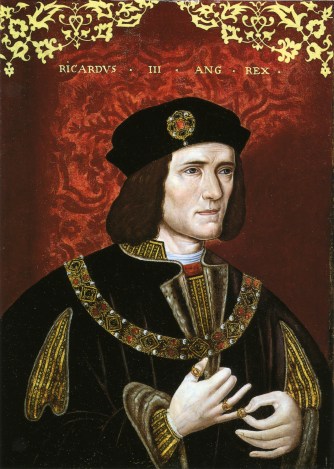
Now I know what you are thinking, Richard III is not a Tudor king or someone who King_Richard_III.jpgserved a Tudor king so why is he on this list? To me, Richard has just as much influence in creating the Tudor dynasty as the Tudors themselves. If you think about it, if he didn’t take the throne, then Henry wouldn’t have marched against him at the Battle of Bosworth Field. It was his death that helped start the Tudor dynasty.

I do tend to berate Richard quite a bit since I believe he did kill his nephews, but there is something about this man that keeps me wanting to learn more about him. I may think that he is a murderer but as a king, I am learning that he was pretty decent. Just like Henry Tudor was just a man who survived, so was Richard. The more I study these two, the more I am realizing how similar they were. Even though Richard only ruled for two years, there is still a lot that we do not know about him. Maybe he was a family man just like Henry. His childhood might have shaped the way he ruled England and how he handled his enemies.

Even though there has been quite a bit of research about Richard III in the last 500 years, he is still a mysterious legend and I look forward to learning more about him and his times.

4.) Henry VIII

henry-viii-of-england-1The man. The myth. The legend.

When you hear his name, instantly you think about his multiple marriages and his break from the Roman Catholic Church. But who was Henry VIII the man behind this legend? Henry was second in line to the throne behind his brother Arthur, but when Arthur died shortly after he was married to Katherine of Aragon, the throne passed on to Henry. To say Henry was not prepared for this, nor were his parents, would be the understatement of the year. But he had to carry on in his father’s place when he passed away. The boy who was once a scholar now had to become a king.  It was a tall order to fill and it looked like from the very beginning he was doing a pretty good job.

And then things changed rapidly when his attention moved from his first wife to his second, and so on and so forth. Henry’s major flaws were his wandering eyes and his anger. We think we know everything there is to know about Henry, but do we really? This legendary man seems almost too fanciful to be a real human being. But he was. He was flawed like everyone else. Though he was a king, he was still human.

That is what keeps me fascinated about Henry VIII and his life. How did the king figure compare and contrast to the man who was Henry VIII? Who was Henry VIII really? No matter how much I read about him and his reign, its his human aspects and how he dealt with his wives and children that keep me coming back for more. I believe that there is more to Henry VIII than most people realize.

5.) Robert Dudley

The man who almost married the “Virgin Queen”220px-Robert_Dudley

If you have studied Elizabeth I, you know Robert Dudley. He was the man who stayed by Elizabeth’s side through the good times and the bad, even when he was married not once but twice. His first wife Amy, died when she fell down a flight of stairs, but many believed that Robert had her poisoned so that he could marry the queen. Robert was always close to Elizabeth and some in the court believed that he was too close. But maybe Elizabeth knew this when she suggested that Robert should marry Mary Queen of Scots. This deal, however, fell through when Mary married Lord Darnley.

As Elizabeth grew older, Robert kept trying to propose marriage, but he was become restless. He had affairs with some of Elizabeth’s ladies and would later marry Lettice Knollys, a kinswoman of the Queen. Elizabeth was livid and banished both Robert and Lettice from court. Robert would come back into her good graces; Lettice would not.

Robert loved Elizabeth deeply and many suspect that she loved him back. It is said that after he died, she kept his last letter to her in a chest that she kept close to her. Robert was a man who loved the queen, but he could never have her as his wife.

I have often wondered what Robert felt towards his two wives Amy and Lettice. Did he actually love them or did he use them to get closer to Elizabeth? If he did marry the queen, what would England look like? These are only a few questions that come to my mind when I think of Robert Dudley.


These are my top 5 “Tudor” men to study. Who are your top 5?

“Whitewashing” History: Good Idea or Something to be Avoided?

Herodotus, the father of the study of history, once said that the study of history was used “to preserve the memory of the past by putting on record the astonishing achievements both of our own and of other peoples.”(Herodotus, 41). As we study the past, we tend to make our own opinions about what we study and the people who made these “achievements” possible. Unfortunately, there is a trend within the study of history of making historical figures look either perfect (whitewashing) or pure evil (what I will refer to as blackening). So since these are trends in history, are they good or bad?


There are those in Tudor history who have been either whitewashed or blackened throughout time; Henry VII, Henry VIII, Mary I, Elizabeth I, and  the most famous example of this is Richard III. We will use Richard III as an example on how “white washing” and “blackening” works.


A lot of people nowadays, specifically the Richard III Society, believe that Richard III had his name tarnished by men like Thomas More and Edward Hall. Thomas More is labeled as the man who ruined Richard’s reputation by stating that Richard was “malicious, wrathful, envious, and from afore his birth, ever forward”( Sylvester, 8). However, More was not the only one who blackened Richard’s name as we see with a quote from Hall:

Behold yonder Richard, tyrant worse than Nero, for he has not only murdered his nephew, bastardized his noble brothers and defamed the womb of his virtuous mother, but also employed all the means he could invent to carnally know his own niece under the pretence of a cloaked matrimony….(Dockray, 139).


If you read both of these accounts, you can see where the Richard III Society is coming from, yet they argue for a more whitewashed version of Richard III, that he was a victim of propaganda against him. They acknowledge the virtues and ignore the faults; the Tudor historians, it can be argued, do the exact opposite. So where’s the truth? I believe that a contemporary of Horace Walpole named William Hutton, an English poet and historian puts this discussion of Richard’s character into perspective:


Richard the Third, of all the English monarchs, bears the greatest contrariety of character….Some few have conferred on him almost angelic excellence, have clouded his errors and blazoned every virtue that could adorn a man. Others, as if only extremes could prevail, present him in the blackest dye; his thoughts were evil, and that continually, and his actions diabolical; the most degraded mind inhabited the most deformed body… (Dockray, 149).


Hutton is pointing out that Richard is either all good or all bad, according historians. This seems to be a common theme with historians about any historical figure. Henry VII is either described by Polydore Vergil in his book “Angelica Historia” as “shrewd and prudent”(Ellis, 226) or as Jack Lander writes, “an inexperienced political adventurer; an almost pathetic, rootless exile, in whom the powerful and rich could repose little, if any, confidence.”(Dockray, 176).


And it’s not just these two figures in Tudor history that  are seen as being either “white washed” or “blackened”. Henry VIII is viewed as the king who had six wives and the king who split from the Catholic Church, but we don’t see his intellectual side. Mary I is known as “Bloody Mary” for burning Protestants, but we never really understand why she was so strong in her faith. We think of Elizabeth I as a glorious  virgin ruler but we forget about how cruel she could be towards those who were around her. Thomas “The Admiral” Seymour is viewed as a villain who only wanted power, but is there more to his story?


These were complex people and yet we see them through either a “white washed” or “blackened” lense. This is the danger of this movement. We don’t see these people as “human” but rather almost like fictional heroes or villains. That’s just the thing. We have to realize that these people were humans and that they were flawed. They have elements of both good and evil inside of them. No one is perfect, yet we tend to think of historical figures at perfect.


As historians, amateur or professional, we have a responsibility to show both sides of a historical figure, the good and the bad. Sure we all have our favorite people to study in history and we want to think the best about them but we also have to tell the truth about them. What’s the point about studying the past if we only report about one side of the story? We read about our favorite people from multiple historians and multiple sources to find out what they were really like.


We don’t want others to label us so why do we label historical figures? We are humans, just like the kings and queens of the past, so why can’t we see their vices and virtues? Why do we “whitewash” or “blacken” human beings who lived hundreds of years ago?


If we “whitewash” or “blacken” a historical figure, we don’t get to see what made them who they are. We don’t see both the mistakes and the triumphs; we only see one or the other. “Whitewashing” and “blackening” history are ideas that should be avoided because we don’t see the full story of the people who came before us. If we let these ideas continue, we lose part of history. We have to tell both sides, the good and the bad because that is what makes us human. We are not perfect and neither were those who came before us.


Sources


Dockray, Keith. William Shakespeare, the Wars of the Roses and the Historians.      Charleston, SC: Tempus Publishing INC, 2002.

Ellis, Sir Henry. Three Books of Polydre Vergil’s English History, Compromising the Reigns of Henry VI, Edward IV and Richard III. London: Camden Society, 1844.

Herodotus. Herodotus: The Histories. New York: Penguin, 1954.

Sylvester, Richard S. St. Thomas More: The History of King Richard III and Selections from the English and Latin Poems. London: Yale University Press, 1976.


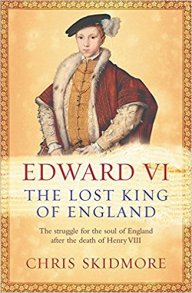
Book Review: “Edward VI: The Lost King of England” by Chris Skidmore

51uPYqC767L._SX324_BO1,204,203,200_When we think of the Tudor rulers, we think of Henry VII, Henry VIII, Mary I and Elizabeth I. However, there was another king who ruled for only five years and was Henry VIII’s only legitimate male heir, Edward VI. Most people think that Edward was a mere pawn of his government officials but is that accurate? Chris Skidmore tackles that question of who was the real Edward VI in his book “Edward VI: The Lost King of England”.

We all know the story of how Henry VIII wanted a male heir and how Henry dealt with his wives, Katherine of Aragon and Anne Boleyn, when they couldn’t produce male heirs. It was Jane Seymour who was able to give birth to Henry’s heir Edward on October 12, 1537, although she died shortly after. From the beginning of his young life, Edward was coddled and his education was carefully considered. Edward was living a comfortable life of a prince, but that all changed when on January 28, 1547, Henry VIII died and at the tender age of nine. Chris Skidmore put this young king’s life into perspective:

The legacy of Edward’s reign is one of the most exciting political histories of the Tudor age, from which few appeared unscathed. His untimely death cut short a life that, forged in the remarkable political circumstance of his childhood, would have left us with a very different Tudor England than that fashioned under the female monarchies of Mary and Elizabeth (page 9)

Some of the few men who were in charge of Edward’s well-being while he was making the transition from boy to king were Edward Seymour Duke of Somerset, Edward’s maternal uncle, John Dudley Duke of Northumberland, and John Cheke, Edward’s tutor.  Edward Seymour was the Lord Protector and the older brother of the somewhat infamous Thomas Seymour. Edward Seymour and John Dudley would later come to hate each other and most of Edward’s short reign consisted of the two men fighting each other for the right to help Edward run the kingdom, as well as fight rebellions that would spring up to try and throw the country into chaos.

John Cheke, as Edward’s tutor, taught the young king about the Protestant faith that was mw00459making a foothold in England. Most people think that Henry VIII was the one who helped bring the Protestant faith to England when he broke away from Rome. Henry VIII might of helped get the reform started, but Edward VI was the one who took the Protestant movement and was willing to make it known throughout England, even if it meant facing against his most formidable foe, his half-sister Mary who was a devout Catholic.

This was the world that King Edward VI lived in until he died on July 6, 1553 at the age of fifteen. Even after he died, he threw chaos into the succession that his father planned out by placing his cousin Lady Jane Grey on the throne instead of Mary. It did not last long but the six day reign of Lady Jane Grey was Edward’s choice and his alone. By the end of his life, Edward was becoming his own man and no one would stand in his way.

In “Edward VI: The Lost King of England”, Chris Skidmore brings the reader into this complex world of this young king both inside his court and what the laws he enacted did to the common people. Skidmore illuminates this once forgotten king whose life was cut short by tuberculosis and shows us how much of a reformer king he truly was. Edward may have been young but he was an intellectual who made up his mind just like his father. This book gives us a different view of religion and politics during this time. Edward VI will never be lost or forgotten after this book.