Book Review: “A Tapestry of Treason” by Anne O’Brien

The medieval world could be a treacherous place to live in, especially when it comes to life in the medieval court. There was so much backstabbing and men reaching for titles and crowns that were not given to them. Take, for example, the House of York. Now, we will assume that their desire for the throne truly came to fruition during the period known as the Wars of the Roses in the 15th century. However, the sons and the daughter of Edmund of Langley and Isabella of Castile were fiercely loyal to those they served and were ruthless to those who they deemed as their enemies. This is the world that Constance of York, Lady Despenser, is raised in, but when her world is turned upside down, will she choose to stay on the sideline, or will she scheme with her family and fight for what they believe is right? Constance’s story is woven together in Anne O’Brien’s novel, “A Tapestry of Treason.”

I did have Anne on my blog with a guest post for her novel, “The Queen’s Rival,” and read it, which was a lot of fun, so I decided that I wanted to read more of her novels. I didn’t know a lot about Constance of York before this book, so I was excited to see she would tell Constance’s story.

We begin our tale in 1399 when Richard II sits on the throne, and the House of York is riding high. Constance of York is married to Thomas Lord Despenser, and her family, led by her father Edmund Langley, are sitting in good favor of their cousin, the king. However, things do not stay the same for long as Henry Bolingbroke comes back from exile to take back his Lancastrian titles and lands, but he ends up taking the throne as Henry IV and imprisoning Richard II. Well, Constance and her family simply cannot have an usurper take the throne from their cousin. So, a plan is hatched with Constance’s husband, Thomas, at the center to try and free Richard II from his captivity. To say this failed massively would be an understatement, as it led to the execution of Thomas Lord Despenser. 

As a widow, Constance hopes to live a normal life, especially after she falls in love with Edmund Holland, Earl of Kent. He wishes to marry Constance, but her family gets in the way of this love match. Constance is asked to help with a scheme to put one of the Mortimer boys on the throne and overthrow King Henry IV, but to do so, Constance must free the boys from their captivity. Constance agreed, and I wanted to scream at her. She throws away her chance at happiness for a plot that was easily foiled, and Constance ends up imprisoned herself. She loses the one real chance at marrying the man she truly loves as he marries another, and to top it all off, she ends up pregnant with his child. 

While Constance of York was not a main character that I particularly enjoyed, O’Brien’s writing style is engaging, and it shows how tumultuous this period was for those closest to the throne. Overall, I enjoyed this novel and I am looking forward to reading more novels by Anne O’Brien. If you are like me and want to read a novel about a time in medieval England that’s not discussed much, I would suggest you read, “A Tapestry of Treason,” by Anne O’Brien.

Guest Post: “The Percies and the Battle of Shrewsbury” by Mercedes Rochelle

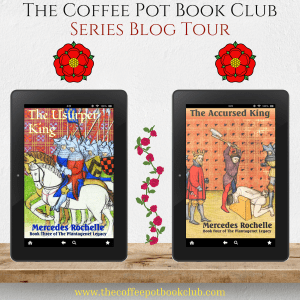
I am pleased to welcome Mercedes Rochelle back to my blog to share an article about the Percy family and the Battle of Shrewsbury as part of the blog tour for her novels The Usurper King and The Accursed King. I want to thank Mercedes Rochelle and The Coffee Pot Book Club for allowing me to be part of this blog tour.

The Percies were such a powerful force in the North they practically acted like rulers in their own kingdom. For much of Richard II’s reign and the beginning of Henry IV’s, Earl Henry Percy and his son, Sir Henry (nicknamed Hotspur) alternated between the wardenships of the East Marches and the West Marches toward Scotland. They were experienced in dealing with the tempestuous Scots, and their retainers were fiercely loyal. When Henry IV returned from exile and began his campaign that led to the throne, the Percies were his staunchest supporters; they provided a large portion of his army. Henry Percy was directly responsible for persuading King Richard to turn himself over to Henry Bolingbroke—the beginning of the end of Richard’s fall. 

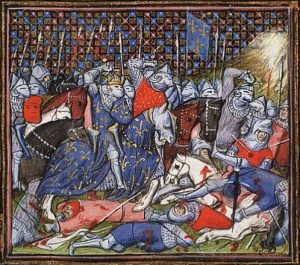
Caption: Froissart Chronicles by Virgil Master, Source: Wikimedia 

Naturally, this was not done out of sheer kindness. Henry Percy expected to be amply rewarded for his services, and at the beginning he was. But the king was uncomfortable about the potential threat of this overweening earl. He soon began to promote his brother-in-law, Ralph Neville the Earl of Westmorland as a counterbalance, chipping away at Percy’s holdings and jurisdictions. Additionally, the Percies felt that they were not being reimbursed properly for their expenses; by 1403 they claimed that the king owed them £20,000—over £12,000,000 in today’s money. But even with all this going on, it’s likely that the earl may have contained his discontent, except for the belligerence of his impetuous son.  

One possible catalyst was Hotspur’s refusal to turn over his hostages taken at the Battle of Homildon Hill. This battle was a huge win for the Percies in 1402, where so many leaders were taken—including the Earl of Douglas—that it left a political vacuum in Scotland for many years to come. Once he learned of this windfall, King Henry insisted that the Percies turn over their hostages to the crown. It was his right as king—even if it was against the code of chivalry— though his highhanded demand was probably not the wisest choice, considering the circumstances. There were many possible reasons he did so. He was desperately short of funds—as usual. It’s possible he may have wanted to retain the prisoners as a means of ensuring Scottish submission. Earl Henry agreed to turn over his hostages, but Hotspur absolutely refused to surrender Archibald Douglas, letting his father take the king’s abuse. One can only imagine that all was not well in the Percy household, either. 

There was more at stake. The king had just returned from a humiliating fiasco in Wales, where he had campaigned in response to the English defeat at Pilleth, where Edmund Mortimer was captured by the Welsh. Mortimer was the uncle of the eleven-year-old Earl of March, considered by many the heir-presumptive to the throne (and in Henry’s custody). Edmund was also the brother of Hotspur’s wife. By the time Henry demanded the Scottish hostages, it was commonly believed that the king had no intention of ransoming Mortimer; after all, he was safely out of the way and couldn’t champion his nephew’s cause. This rankled with Hotspur, and it is possible that he thought to use Douglas’s ransom money to pay for Mortimer’s release himself. 

Hotspur finally rode to London in response to the king’s demands, but he went without Douglas. Needless to say, this immediately provoked an argument. When Hotspur insisted that he should be able to ransom his brother-in-law, Henry refused, saying he did not want money going out of the country to help his enemies. Hotspur rebutted with, “Shall a man expose himself to danger for your sake and you refuse to help him in his captivity?” Henry replied that Mortimer was a traitor and willingly yielded himself to the Welsh. “And you are a traitor!” the king retorted, apparently in reference to an earlier occasion when Hotspur chose to negotiate with Owain Glyndwr rather than arrest him. Allegedly the king struck Percy on the cheek and drew his dagger. Of course, attacking the king was treason and Hotspur withdrew, shouting “Not here, but in the field!” All of this may be apocryphal, but it is certainly powerful stuff. 

The whole question of Mortimer’s ransom became moot when he decided to marry the daughter of Glyndwr and openly declare his change of loyalties on 13 December 1402. No one knows whether Hotspur’s tempestuous interview with King Henry happened before or after this event; regardless, a bare minimum of eight months passed before Shrewsbury. Were they planning a revolt all this time? It is likely that early in 1403 one or both of the Percies were in communication with the Welsh. Owain Glyndwr was approaching the apex of his power, and a possible alliance between him, Mortimer, and the Percies could well have been brewing. It would come to fruition later on as the infamous Tripartite Indenture (splitting England’s rule between them), but by then Hotspur was long dead. 

Caption: BnF MS Franc 81 fol. 283R Henry IV and Thomas Percy at Shrewsbury from Jean de Wavrin- Creative commons license 

No one has been able to satisfactorily explain just why the Percies revolted against Henry IV. Most of the evidence points to their self-aggrandizement. And looking at the three years following his coronation, it became evident that King Henry was not willing to serve as their puppet, nor was he willing to enhance their power at the expense of the crown. The Percies’ ambitions were thwarted by the king’s perceived ingratitude, and the consensus of modern historians is that they hoped to replace him with someone more easily manipulated. 

There was one more Percy involved in all this: Thomas, younger brother of Earl Henry and uncle to Hotspur. He was probably the most able—if the least flamboyant—member of the Percy clan in this period. From soldier to commander, Admiral of England to Ambassador, Captain of Calais, Justiciary of South Wales, he made it all the way to Steward of the Royal Household. And that wasn’t all. He was also Earl of Worcester, which almost made him an equal to his brother, the great Earl of Northumberland.  

His involvement in the Shrewsbury uprising was puzzling. He had much to lose and nothing to gain. Shakespeare notwithstanding, I don’t really think Thomas was the motivating force behind the rebellion that led to the Battle of Shrewsbury. It’s true that his fortunes were waning; the king had recently replaced him as Lieutenant of Wales with the sixteen-year-old Prince Henry. Whether the Percies won or lost the battle, there’s a better-than-even chance that he would rise and fall along with them, whether he participated in the rebellion or not. Was that enough to push him over the edge? I suspect that his affection for Hotspur had a lot to do with it, and in the end, it’s likely he couldn’t conceive of fighting against his own kin. Poor Thomas lost his head the day after the battle, paying a high price for his loyalty. 

THE USURPER KING by Mercedes Rochelle 

Book 4 of The Plantagenet Legacy 

Blurb: 

From Outlaw to Usurper, Henry Bolingbroke fought one rebellion after another. First, he led his own uprising. Then he captured a forsaken king. Henry had no intention of taking the crown for himself; it was given to him by popular acclaim. Alas, it didn’t take long to realize that having the kingship was much less rewarding than striving for it. Only three months after his coronation, Henry IV had to face a rebellion led by Richard’s disgruntled favorites. Repressive measures led to more discontent. His own supporters turned against him, demanding more than he could give. The haughty Percies precipitated the Battle of Shrewsbury which nearly cost him the throne—and his life. 

To make matters worse, even after Richard II’s funeral, the deposed monarch was rumored to be in Scotland, planning his return. The king just wouldn’t stay down and malcontents wanted him back. 

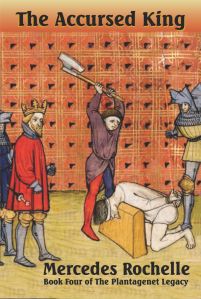
THE ACCURSED KING by Mercedes Rochelle 

Blurb: 

What happens when a king loses his prowess? 

The day Henry IV could finally declare he had vanquished his enemies, he threw it all away with an infamous deed. No English king had executed an archbishop before. And divine judgment was quick to follow. Many thought he was struck with leprosy—God’s greatest punishment for sinners. From that point on, Henry’s health was cursed and he fought doggedly on as his body continued to betray him—reducing this once great warrior to an invalid. 

Fortunately for England, his heir was ready and eager to take over. But Henry wasn’t willing to relinquish what he had worked so hard to preserve. No one was going to take away his royal prerogative—not even Prince Hal. But Henry didn’t count on Hal’s dauntless nature, which threatened to tear the royal family apart.

Buy Links: 

Universal Buy Links: 

The Usurper King: https://books2read.com/u/3nkRJ9  

The Accursed King: https://books2read.com/u/b5KpnG  

The Plantagenet Legacy Series Links: 

Amazon US Series Link 

Amazon UK Series Link 

All titles in the series are available to read on #KindleUnlimited. 

Author Bio

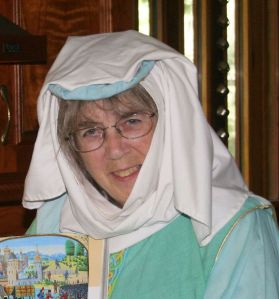
Mercedes Rochelle is an ardent lover of medieval history and has channeled this interest into fiction writing. She believes that good Historical Fiction, or Faction as it’s coming to be known, is an excellent way to introduce the subject to curious readers. 

Her first four books cover eleventh-century Britain and events surrounding the Norman Conquest of England. Her new project is called “The Plantagenet Legacy” taking us through the reigns of the last true Plantagenet King, Richard II, and his successors, Henry IV, Henry V, and Henry VI. She also writes a blog: HistoricalBritainBlog.com to explore the history behind the story.  

Born in St. Louis, MO, she received by BA in Literature at the University of Missouri St.Louis in 1979 then moved to New York in 1982 while in her mid-20s to “see the world”. The search hasn’t ended! 

Today she lives in Sergeantsville, NJ with her husband in a log home they had built themselves. 

Author Links

Website: https://mercedesrochelle.com/   

Twitter: https://x.com/authorrochelle  

Facebook: https://www.facebook.com/mercedesrochelle.net  

Book Bub:  https://www.bookbub.com/authors/mercedes-rochelle  

Amazon Author Page:  https://www.amazon.com/stores/Mercedes-Rochelle/author/B001KMG5P6  

Goodreads: https://www.goodreads.com/author/show/1696491.Mercedes_Rochelle

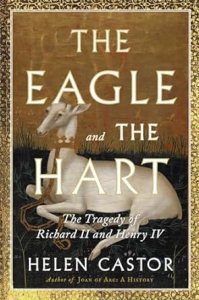
Book Review: “The Eagle and the Hart: The Tragedy of Richard II and Henry IV” by Helen Castor

The story of the Plantagenets is filled with high triumphs and devastating tragedies. It is a story of families torn apart for a crown and the desire to either rule with an iron fist for the glory of England or live a life of luxury at the expense of their citizens. The story explored in this particular book is the tale of two cousins born months apart, Richard of Bordeaux and Henry Bolingbroke. Richard and Henry were not born to become King of England, but Fortune’s Wheel had a different plan for the cousins. So how did these cousins become kings and how did their tale turn to tragedy not only for their relationship but for all of England? Helen Castor tells the tale of these two Plantagenet kings in her latest book, “The Eagle and the Hart: The Tragedy of Richard II and Henry IV.”

I want to thank Avid Reader Press and Net Galley for sending me a copy of this book. I have seen this book on social media and ever since it was announced, I knew I wanted to read it. I have enjoyed Castor’s posts online as well as her documentary on the She-Wolves, based on her book of the same name, so when I heard about this one, it was an intriguing premise and so I jumped at the chance to read it. 

The fact that Richard of Bordeaux and Henry Bolingbroke became King Richard II and King Henry IV respectively is quite the story. Richard was the son of Edward The Black Prince and Henry was the son of John of Gaunt; both of their fathers were sons of Edward III and so the idea was that one of his sons would inherit the throne. However, Edward III had different plans after the death of Edward The Black Prince. It was announced that the young Richard of Bordeaux would be crowned King of England. This should have been the first red flag for England because it means that a Regency council must be formed. There are fights for power and fights over finances that culminate in the Peasants’ Revolt. Richard II doesn’t have much desire to fight for his country on the battlefield against the French or the Scottish, but he does care about favoring his favorites, even if it means turning the government against him. One such group, the Appellant Lords, will prove an extremely dangerous challenge for Richard II, and it will include his cousin Henry Bolingbroke. While many of the Appellant Lords will end up dead, Henry Bolingbroke is merely exiled, which in the long run, was not the best decision for Richard II. 

In 1400, John of Gaunt died and the title as well as the lands of the Duke of Lancaster were turned over to Richard II while Henry Bolingbroke was in exile in France. This marks the turning point for Henry as he decides to invade England while Richard is away dealing with problems in Ireland. It will end with Richard’s abdication and the coronation of Henry Bolingbroke as King Henry IV. However, things are not all sunshine and rainbows for Henry IV, the 1st Lancastrian King of England, as he finds out that it is not easy being a king. 

I must applaud Castor for writing a dual biography that is both balanced and utterly brilliant. It did take me a while to read this book because I was taking so many notes while I was reading and it gave me a better understanding of this tumultuous time. I would suggest that if you do read this book, take your time so that you can understand the complex nature of the conflict between these two cousins. If you are a fan of the Plantagenet dynasty, I highly recommend you read, “The Eagle and the Hart: The Tragedy of Richard II and Henry IV” by Helen Castor.

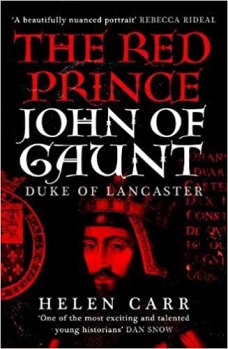
Book Review: “The Red Prince: The Life of John of Gaunt, the Duke of Lancaster” by Helen Carr

55710502When one studies the history of the English monarchy, we tend to consider those who ruled and those who advised the ruler as significant characters. We rarely study the family members of the monarch who did not win the right to rule the kingdom. Yet, they are often either extremely loyal or they desire the crown with such ferocity that they rebel against their own family. It seems like a rather cruel world, but that was the life of a medieval monarch. True loyalty for one’s family was a rare feat. One man showed the depth of his loyalty to his family, even when the people despised him. He was the son of King Edward III, the brother of the famous Black Prince, the uncle of King Richard II, and the father of Henry Bolingbroke who would become King Henry IV. Gaunt’s reputation and legacy have been marred by his wealth and the role that he played with the Peasants’ Revolt, but was he such a bad person? In Helen Carr’s brilliant debut biography, “The Red Prince: The Life of John of Gaunt, the Duke of Lancaster”, she looks to uncover the truth about the man behind the throne and why he never desired the crown for himself.

Carr has chosen to call John of Gaunt “The Red Prince”, which makes a lot of sense for someone who understands the significance of his legacy in history. His son by his first wife Blanche of Lancaster, King Henry IV, was the first Lancastrian King of England. Obviously, they were represented by the red rose in the rather poetic sounding Wars of the Roses in the 15th century and their half-siblings, the Beauforts (who were descended from the children of John’s third wife and former mistress Katherine Swynford) would continue the legacy in their own way. There would be no Lancastrian Kings of England or Wars of the Roses or Tudor dynasty without John of Gaunt.

I am getting a little ahead of myself. After all, during John of Gaunt’s lifetime, none of this happened. He was just the son of Edward III and the brother of the Black Prince when he earned the title of the first Duke of Lancaster. He earned his reputation as a loyal soldier fighting alongside his brother and father in the conflict with France that would be known in history as the Hundred Years’ War. His loyalty to his brother and father and his bravery as a knight was legendary. He gained vast amounts of wealth from his marriages to Blanche of Lancaster and Constance of Castile. He was a patron of the arts, especially to Geoffrey Chaucer, and championed those who wanted to challenge the way religion was understood during the 14th century.

He had everything he could ever want until his world came crashing down around him. The Black Prince died of illness and his father King Edward III would soon follow, leaving the throne to his nephew King Richard II. To say things got off to a rocky start would be an understatement as John of Gaunt and other government officials were accused of raising taxes so high that it triggered what we know as the Peasants’ Revolt. On top of all of the problems in England, John of Gaunt decided to become King of Castile with his wife Constance. John of Gaunt led a life full of adventure, risks, and above all, loyalty to his family.

Carr does a magnificent job of bringing Gaunt’s life into focus. So much of his reputation has been tainted over time, but Carr did not shy away from the challenge. This is one of the best biographies that I have read this year so far. John of Gaunt deserved to have his story retold and Helen Carr was the perfect historian to tell his story for a newer generation. Carr’s writing style is engaging with meticulous attention to detail. This is a gorgeous debut biography and I cannot wait to see what Helen Carr will write next. If you want to read a biography about the founder of the Lancastrian dynasty, “The Red Prince: The Life of John of Gaunt, the Duke of Lancaster” by Helen Carr is a must-read.

Book Review: “Crusaders: The Epic History of the Wars for the Holy Lands” by Dan Jones

43899574The story of the Crusades has been told in many different ways from numerous directions. The epic conflict between Christianity and Islam for the Holy Lands that went on for centuries that has lived in infamy. Many questions have arisen as historians try to separate facts from the myths surrounding this topic. How and why did it start? Why did it continue to go on for so long? Was there really a winner in this conflict? Who were the people who defined this conflict? Dan Jones has taken on the challenge of writing a comprehensive history of this conflict and the people who fought during this time in his latest book, “Crusaders: The Epic History of the Wars for the Holy Lands”.

I wanted to read this book since the day that it was announced. I did not know a whole lot about the Crusades and what I did know about this time was from quick overviews from history classes that I took while in school. I wanted a book that told the story of the Crusades from all sides to fully understand this struggle as a whole. This book delivered everything that I wanted and more.

Like the title suggests, Jones’s focus is more on the people, the crusaders, and how their decisions led to the numerous crusades from 1099 until 1492 when the Reconquista ended. But what separates this book from other books about the Crusades is that he doesn’t focus on one group of people, his focus is on multiple stories to paint a complex story of the time. Jones includes the tales of the dynamic and colorful people we think of when we study the crusades; Alexios I Komnenos, Anna Komnene, Pope Urban II, Eleanor of Aquitaine, Richard the Lionheart, Simon de Montfort, Saladin, Henry Bolingbroke, and many others. However, the story of the crusades was not limited to royalty, generals and popes. Jones includes the tales of the lowly monks who preached for fellow Christians to defend the Holy Lands, scholars and poets who told the tales of those who fought, servants and peasants who fought for their homes and their religions.

This particular subject may feel like a daunting challenge to tackle, but this book is so easy to understand. With a more human-centric approach, Jones is able to present the history of the Crusades in a rather enlightening way. It was not just a series of wars about religion, Christianity versus Islam or, in some cases, against pagan groups. In fact, it was a lot more complicated. They were wars about politics, monetary gains, and to regain lands from other groups of people.

I was blown away with how truly remarkable this book was to read. Jones’s combination of a plethora of facts with an engaging and comprehensive writing style brought the Crusades back to life. There were so many people who I was introduced to by reading this book that I really want to study more in the future. “Crusaders: The Epic History of the Wars for the Holy Lands” by Dan Jones was an absolute delight to read. If you want an excellent book that gives you a comprehensive look at the Crusades and the Crusaders, no matter if you are a novice or someone who has studied this period before, I highly recommend you read this book.

Guest Post: Was Henry IV A Usurper? By Michele Morrical

170px-king_henry_iv_from_npg_(2)Some medieval English kings have unfairly gotten a bad rap. Others are deservedly vilified (Richard III, I’m talking to you).

Our modern-day perception of English kings is largely constructed from only a few sources. Of course, we have the writings of Shakespeare which were generally based on the real events of English monarchs but had lots of extra drama added in to spice things up. We also have the writings of chroniclers who actually lived in the middle ages, but they aren’t always reliable. Just imagine if you were hired by Henry VIII to write the history of his reign. You would definitely write it in a way that reflected very well on the king. And we have modern-day historians who try to bring the past to life with new interpretations of English monarchs and their new explanations of their controversial actions.

One of the English kings who has received very little attention over the years is Henry IV, also known as Henry of Bolingbroke and Henry of Derby. The common perception is that Henry was a usurper, but was he really? Did he seize the throne from Richard II illegally or was he the rightful heir?

What was Henry IV’s claim to the throne?

To answer this question, we must go back a couple of reigns to Henry’s grandfather, King Edward III, a Plantagenet king that ruled England from 1327 to 1377. King Edward was also the nephew of King Charles IV of France through his mother Isabella. When Charles IV died childless, Edward asserted his right to the French crown as Charles’ nearest male relative. The French overruled him citing Salic Law which said inheritance could not be passed through a female line. So the throne went instead to Philip of Valois, Charles’ cousin through a completely male line. As if losing his claim to the kingdom of France wasn’t enough of a blow to Edward, Philip also confiscated Edward’s land in France. Edward was not one to take things lying down so he took military action against France and initiated the Hundred Years War.

One of King Edward’s best military commanders was his eldest son, Edward of Woodstock, also known as the Black Prince. The king’s son was raised and educated in preparation to be the next king and he was perfectly suited to follow in his father’s footsteps. However, there was a major problem. His repeated military expeditions around Europe caused him to become quite ill, including a raging case of dysentery. He died in 1376 at the age of 45. He had not outlived his father, therefore he never got the chance to fulfill his destiny as King of England.

After the death of the Black Prince, King Edward wrote his will and “Act of Entail” in which he named his heir. Rather than naming his eldest living son (John of Gaunt) to be the next king, he did something unusual. He instead named his grandson, Richard of Bordeaux, eldest living son of the Black Prince, to be next in the order of succession using a device called “Right of Substitution”. Essentially since the Black Prince died prematurely, his son Richard was accepted as a substitute.

After Richard, he named the next in line for succession to be John of Gaunt and the male heirs of his body, followed by his other living sons, Edmund, Duke of York, and Thomas, Duke of Gloucester. Interestingly enough, the “Act of Entail” document was kept secret from the public. The only people who knew about it were those named in the entail and the king’s closest confidants. It was never introduced to Parliament to put into law. Many rulers were hesitant to publicly name their heir because that gave any discontented subjects someone to rally around and overthrow the king.

If King Edward had followed traditional Salic Law rules, his eldest living son, John of Gaunt, would have been named his heir followed by Gaunt’s son, Henry of Bolingbroke, which would have left Richard completely out of the succession. Imagine how different the course of English history would have been if Edward had not made this decision to use the uncommon right of substitution. The inheritance would have been strictly through the house of Lancaster, cutting out the house of York. The Wars of the Roses may have never even happened.

Henry of Bolingbroke would have known about King Edward III’s act of entail and that he had been named third in line for the throne (after Richard and John of Gaunt) rather than second in line after Gaunt. Even so, being third in line to the throne wasn’t so bad for Henry. He lived a relatively comfortable life as a royal heir and spent his youth preparing to be a successful ruler like his grandfather. Henry became one of the most respected knights in Europe, he traveled abroad on crusades, and he learned it was better to work with the nobles and forge alliances rather than trying to control them. There was only one problem…Richard absolutely hated Henry. Richard was none of the things that Henry was. Richard was not strong and athletic, he did not joust, and he was not an experienced military leader. He was basically the antithesis of Edward III. Richard was terribly jealous of Henry and felt threatened that Henry or his father might one day try to wrestle the crown from his head.

Richard’s Revenge

For the first 10 years of Richard’s reign, it was assumed that Edward’s entail would be upheld by Richard but in the Parliament of 1386, Richard did something shocking. He threw out his grandfather’s entail and instead declared that his heir would be the twelve-year-old earl of March, Roger Mortimer, great-grandson of King Edward III. Roger’s mother Phillipa was the daughter and only child of King Edward’s second-born (yet deceased) son Lionel of Antwerp. Even though Lionel was deceased, Richard used the right of substitution in selecting Roger, just as Edward III had done in selecting Richard as the Black Prince’s substitute. However, it was highly unusual to name an heir through a female line, especially when there were plenty of other male heirs to choose from. Richard selected the Mortimers so that John of Gaunt, Henry of Bolingbroke, and the entire Lancastrian line would be excluded from the succession. He was putting them on notice that they better work for him instead of against him.

Richard’s declaration was met with great resistance from the lords of his realm who were already disgruntled from enduring years of his tyrannical treatment. They had been terribly unhappy about Richard’s style of kingship, lack of military experience, misguided attempts to negotiate with France, reckless financial spending, attempts to degrade the power of Parliament, and general misrule resulting from Richard’s circle of favorites. Threatening civil war and deposition, the Lords were successful in pressing Richard to exclude the minor Roger Mortimer from succession and to reinstate King Edward III’s entail naming John of Gaunt and his son Henry as the next in line to the throne.

Richard was a very spiteful and vengeful man. He would agree to a deal when he was face-to-face with the nobles, but behind their backs, he would plot to punish them for any sign of disloyalty. Over the next 10 years, he continually threatened the lords and nobles with arrest, confiscation of lands, titles, goods, and even exile if they didn’t bend to his every whim. Richard again changed the order of succession, throwing out John of Gaunt, Henry, and the Mortimers. He decided that the person who would be the least threatening to his reign would be Edward III’s fourth son, Edmund of Langley, Duke of York, who was an arthritic invalid.

Henry of Bolingbroke was always at the top of Richard’s hit list but since he was such a close royal relative, Richard couldn’t afford to take him out. His reputation would have been destroyed if he used force to get the likable, respected knight out of the picture. So instead of using force, he used a 1397 civil dispute between Henry and Thomas Mowbray, Duke of Norfolk, as the mechanism to remove him. Richard ruled both men guilty and sentenced them both to exile: Henry for 10 years and Norfolk for life.

As if exile wasn’t punishment enough, just one year later when John of Gaunt died, Richard delivered the knock-out punch. Despite his promise to Gaunt, Richard revoked Henry’s entire Lancastrian inheritance and confiscated all of his lands and assets. Furthermore, Henry was to be considered a traitor to England. Henry of Bolingbroke had nothing left. To fall so far from being the heir to the throne down to a penniless vagabond was untenable for Henry. And there was only one person at fault: his cousin, King Richard II.

Henry’s Return to England

As Henry lived in exile, he thought about his situation and strategies for getting back what was rightly his. There weren’t many options. There was certainly no chance now at reconciliation with Richard, things had simply gone too far. The only way he would be allowed to return to England and be restored to his rightful inheritance would be if Richard was no longer the king of England.

Removing King Richard II from the throne is not something Henry could do by himself. Luckily, he had friends in high places who had also been unfairly treated by Richard. Together with several dukes and earls, Henry planned an uprising against Richard to protest his tyrannical rule. Henry landed in England on July 4, 1399, at Ravenspur in Yorkshire with only 300 men. As he traveled towards the safety of the Lancastrian stronghold, Pontefract Castle, his army grew into the thousands. Henry had become the leader of the revolution. He swore to his followers that his only intent was to defend England from Richard’s tyranny and to reclaim his Lancastrian inheritance. He promised that he would not take the throne for himself by force.

King Richard was with the royal army in Ireland at the time of Henry’s invasion. The Keeper of the Realm during his absence was his 58-year-old heir, Edmund of Langley, Duke of York. Edmund knew that his nephew was a cruel despotic ruler and he instead threw in his lot with Henry. Edmund agreed to support his uprising and would not take measures to suppress his army. Edmund also believed that Henry had been treated unfairly and was perfectly within his rights to reclaim his inheritance.

So Henry’s army moved across the country unchallenged until he came to Conway Castle where King Richard was hiding. Rather than fighting, they negotiated. Henry demanded that he be allowed to return to England and that his lands be restored to him. Richard agreed but then shortly thereafter declared he had no intent to keep his promise. In fact, he was more determined than ever to see Henry dead. Henry’s army arrested Richard and took him into their possession.

While Richard was kept under lock and key in a variety of royal castles, Henry was working with English lawyers to legally reinstate his claim to the Lancastrian inheritance. They determined that the best course of action would be for Richard to sign a written resignation which would then be ratified by Parliament. After much resistance, the king finally relented and signed the document. In doing so, he stepped down from the throne and agreed to Henry’s accession, just as King Edward III’s act of entail had outlined nearly twenty-five years earlier.

The Rule of Succession in England

Was Henry right to overthrow Richard II in an attempt to restore justice to the kingdom of England? Or did he take advantage of the circumstances by claiming the throne for himself?

It all comes down to this. Were any laws broken when Edward named his grandson Richard as his heir instead of his eldest living son John of Gaunt? Likewise, did Richard break any laws when he bypassed Edward’s entail and named Edward of Langley as his heir? Did Henry break any laws when he accepted the crown for himself and deposed his cousin Richard? Should kings have to uphold entails from their predecessors or was it legal for them to change it to their own personal liking?

We cannot judge these decisions as morally right or wrong, rather we can only judge them in terms of the law or the absence of law. In England during the Middle Ages, there was no law that strictly defined the order of succession. Other European kingdoms, such as France, observed Salic Law which prohibited women from being crowned as well as their sons. Germanic kingdoms followed the semi-Salic rule which allowed a woman to inherit but only if all the men in the royal bloodline were dead.

England was a kingdom heavily influenced by their different European neighbors so England’s laws and customs were a mish-mash of the various customs immigrants had brought with them to England. Since England had never put the order of succession into a legal act, it was basically up to the current ruler to choose the next heir to the throne.

Is it any wonder England had so many disputes over control of the kingdom during the Middle Ages? With no legal rules governing the order of succession, it became open to interpretation and that’s when the royal heirs and nobility used it to their advantage. It made it much more possible to maneuver their own royal relatives into positions where they might someday have a shot at the throne themselves.

Was Henry IV a Usurper?

It is my judgment that Henry IV was not a usurper. To be a usurper, one has to either seize authority illegally or by force.

Although Henry did amass a sizable army, they did not resort to violence to solve the conflict. The army was merely a show of force so that Richard would take them seriously and understand the gravity of the situation.

Henry was careful to use lawyers to find a legal way to depose King Richard II and thus overturn his previous statute naming Edmund of Langley as his heir. With Richard deposed and all of his previous acts of Parliament voided, the order of succession had to revert back to the previous king. That would make King Edward III’s act of entail valid again and Henry of Bolingbroke next in line to the throne.

 About the Author

Michele Morrical is a writer, blogger, and amateur historian on all things Tudor and Wars of the Roses. She lives in Indianapolis, Indiana with her husband, son, daughter, and many pets. You can find her writings at michelemorrical.com.

My journey into Tudor history began about 10 years ago with the TV show “The Tudors” from Showtime. As I watched the show, I wondered how much of it was really true because the storylines were more dramatic and shocking than any soap opera I had ever seen. I picked up Margaret George’s autobiography of Henry VIII and I was hooked. I’ve since read over 100 books on the Tudor period and I’m currently writing my own book about the Wars of the Roses

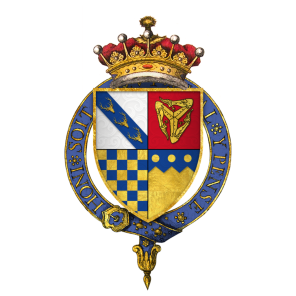
Biography: Thomas Stanley, 1st Earl of Derby

Quartered_arms_of_Sir_Thomas_Stanley,_1st_Earl_of_Derby,_KG(Born 1435- Died July 29, 1504). Son of Thomas Stanley, 1st Baron Stanley and Joan Goushill. Married to Lady Eleanor Neville and Lady Margaret Beaufort. Father of George Stanley, 9th Baron Strange, Sir Edward Stanley, James Stanley, Bishop of Ely.  Thomas Stanley was a wealthy landowner who was able to find favor with successive kings during the Wars of the Roses, until his death in 1504.

Thomas Stanley was born around 1435 and he was the eldest son of Thomas Stanley, 1st Baron Stanley and his wife Joan Goushill. The Stanleys supported Henry Bolingbroke and the Lancastrian cause until the reign of Henry VI. Stanley was a squire for King Henry VI in 1454, but then the king fell mentally ill. In 1455, the Wars of the Roses broke out between the Duke of York and the Duke of Somerset. Somerset was killed at the first battle of St. Albans, which should have ended the conflict, but it only embroiled it. In the late 1450’s, Stanley decided to marry Eleanor Neville, the sister of Richard Neville Earl of Warwick, aligning himself with the Yorkist cause. In 1459, after a lull in the fighting, Margaret of Anjou marched against the Yorkist army, which included Warwick, Stanley’s brother in law. At the Battle of Blore Heath in August 1459, Margaret of Anjou ordered Stanley to raise an army to stop Warwick, but Stanley refused to fight; Stanley’s brother William was firmly on the Yorkist side and he was attainted.

In 1460, Stanley saw that the Yorkist cause was coming into power and so he decided to side with York and his cause. Stanley fought alongside his brother in law Warwick against the Lancastrian army. Edward placed Stanley in charge of maintaining the peace in north-west England, which he did. After the death of his father in 1459, Stanley inherited his father’s titles, including those of Baron Stanley and “King of Mann” as well as his extensive lands and offices in Cheshire and Lancashire. Stanley was the last person to call himself “King of Mann” as his successors would style themselves as “Lord of Mann”.

When Warwick decided to revolt against the king between 1469 and 1471, Stanley was torn on who to support, his king or his brother in law. In 1470, when Warwick fled to France to join the Lancastrian cause, Stanley made his choice and decided to go to Manchester to seek aid and support. When Warwick made his way back to England, Stanley joined forces with him to restore Henry VI to the throne. Edward came back in 1471 and Warwick was killed. Stanley was forgiven for his disloyalty and right after Edward was restored to the throne, Stanley was appointed steward of the king’s household and thereafter became a regular member of the royal council. Stanley’s wife Eleanor Neville died around this time, cutting his ties with the Warwicks and the Nevilles.

Stanley was looking for another wife and in 1472, he married Lady Margaret Beaufort, dowager Countess of Richmond and the mother of Henry Tudor. In 1475, Stanley led an expedition to France and in 1482, he helped Richard Duke of Gloucester in Scotland, playing a large role in capturing Berwick upon Tweed.

On April 9, 1483, Edward IV died, leaving his son Edward V king, Stanley was among those who sought to maintain a balance of power between the young king’s uncle, Richard, Duke of Gloucester, who was now Lord Protector, and his maternal family, the Woodvilles. When the Duke of Gloucester attacked this group at a council meeting in June 1483, Stanley was wounded and imprisoned but was not executed like Hastings. That month, Parliament declared Edward V and his younger brother Richard, Duke of York illegitimate on the grounds that their father Edward IV’s marriage to Elizabeth Woodville was invalid , by way of a prior pre-contract of marriage with Eleanor Butler. The Duke of Gloucester was therefore declared king Richard III and it was confirmed through the act of Parliament called Titulus Regius.

Richard III decided not to isolate Stanley so he let Stanley to keep his position at court and allowed Margaret Beaufort to carry Queen Anne’s train at her coronation. Shortly afterward, Margaret’s properties and titles were given to Stanley and she was placed under house arrest instead of being executed for treason for aiding her son to overthrow Richard III. After the failed Buckingham rebellion in 1483, Stanley was given more forfeited properties and he was made Lord High Constable of England. Margaret was one of the conspirators in this plot and the one who arranged the marriage between her son Henry Tudor and Elizabeth of York. Stanley, in 1485, asked to leave court to go to his estates in Lancashire. Richard III , being very suspicious, agreed that he could if Stanley would allow his son George Stanley Lord Strange to stay at court. In reality, Lord Strange was a hostage.

The Stanleys were in constant communication with Henry Tudor and they were helping him with his landing in Wales and his invasion into England. Richard, hearing about this plan, ordered Stanley to raise an army and join him without delay. Stanley decided to fake an illness. Richard knew that Stanley had switched sides and the morning of the Battle of Bosworth Field, Richard said that he would kill Lord Strange if Stanley didn’t side with him. Stanley and his brother William decided to sit on the sidelines. Stanley did not fight, but it was his brother William who decided to intervene on Henry Tudor’s behalf, which helped Henry win the crown. Even though Stanley did not participate in the fighting, it is said that he is the one who placed the crown on Henry’s head after the battle was won. Henry VII was grateful to Thomas Stanley and made him the 1st Earl of Derby. William Stanley would foolishly side with Perkin Warbeck and would be executed for treason in 1495.

Stanley died at Lathom, Lancashire on July 29, 1504, and was buried in the family chapel in Burscough Priory, near Ormskirk in Lancashire. His son Lord Strange would die shortly afterward so the earldom of Derby was passed onto Stanley’s grandson Thomas Stanley, 2nd Earl of Derby.

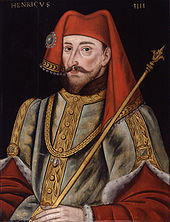
Biography: King Henry IV (aka Henry Bolingbroke)

(Born April 3, 1367- Died March 20, 1413). Son of John of Gaunt and Blanche of mw03072Lancaster. Married to Mary de Bohun and Joan of Navarre. He had 7 children with Mary, including the future Henry V. He was the 1st king from the house of Lancaster.

Henry was the son of John of Gaunt and Blanche of Lancaster and was born at Bolingbroke Castle on April 3, 1367. Early in his life, he became one of the Lords Appellant who were opposed to the rule of Richard II. He stepped down from this role in 1389 and in 1390, went on his first adventure, journeying with the Teutonic Knights to Lithuania. Two years later, he went on a pilgrimage to Jerusalem. During this time, he visited numerous courts in Europe and was held in high regards. He was a handsome young man, but it was early in life where Henry’s ill health that plagued him during his reign started to appear.

Henry was a good person to help the king, however the only one who failed to realize this was Richard II. He banished Henry in 1398 for ten years, but when John of Gaunt died the following year and Henry became the next Duke of Lancaster, Richard II took all of his lands and banished him forever. This was the last straw for Henry. While Richard was occupied with unrest in Ireland, Henry took his chance and invaded England, forcing Richard to abdicate. The next one in line to the throne was Edmund Mortimer, earl of March, but he was only eight years old, so Parliament agreed that Henry would be a better choice to be king. His reign as Henry IV began on September 30, 1399.

However, not everyone was happy with Henry as king. Henry IV’s first rebellion that he had to deal with was by the earls of Kent, Salisbury and Huntingdon, just a month after he became king. Henry took care of this rebellion quickly and violently. It is also believed that this was around the same time that Henry ordered the death of Richard II. A few months after the first rebellion, Henry IV had to deal with a second rebellion in Wales, where Owain Glyn Dwr was declared Prince of Wales in September 1400. This revolt was quickly put down, but Owain evaded capture for several years, leading to guerrilla style warfare.

Owain’s supporters grew not only amongst Welsh barons, but English ones as well, including the Mortimers who were upset that Henry was king and not Edmund, who was Owain’s son in law after he married Owain’s daughter. Another supporter was Henry “Hotspur” Percy, the son of the earl of Northumberland who believed that he did not get the recognition that he deserved after he fought against the Scots. These forces came together and fought against Henry at the battle of Shrewsbury on July 21, 1403, where Henry defeated Hotspur easily and killed him. Henry was not going to let the rebel army get away and by 1408, they were all but eliminated.

Two years before this, in 1406, Henry IV took James I of Scotland hostage and his young heir was sent to France. James was in the English court for 17 years as a hostage and for that time, the relationships between England, Scotland and France were good. Things were looking up for Henry IV, except for his health. Starting in 1406, his health was in decline and there was a serious concern for his life. He tried to govern, but he became more reliant on his Parliament. In 1409, Henry’s son Prince Henry was made chancellor over Thomas Arundel, archbishop of Canterbury. Arundel returned in 1411 when Henry and his council were debating if he should step down in favor of Prince Henry, which Henry refused to do. Henry died in 1413 from some sort of wasting disease at the age of 45. His son Prince Henry would succeed him as Henry V.

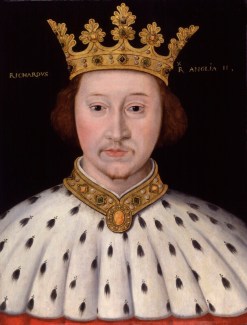
Biography: King Richard II

mw05302(Born January 6, 1367- Died on or about February 14, 1400). Son of Edward the Black Prince and Joan 4th Countess of Kent. Married to Anne of Bohemia and Isabella of Valois. He had no children.
Richard II was the second son of Edward the Black Prince, but when his older brother Edward died when Richard was three, Richard became second in line to the throne after his father. When Edward the Black Prince and Edward III died, Richard II became king at the tender age of 10. There was no formal regent that could help guide Richard II, but his uncle John of Gaunt did the best that he could, taking a more active political role.

Richard II and his government decided to start taxing the people with poll taxes to pay for the wars in France and the campaigns in Scotland. At first, they were tolerated, but then the people got mad. In June 1381, a man named Wat Tyler had enough and killed a tax collector and raised a force of around 100,000 to march against the king. When the two forces finally met, Wat Tyler was killed by the Lord Mayor of London William Walworth. Richard at the age of 14 stopped the Peasants’ Revolt by promising the people reforms that he, in the end,  did not fulfill the reforms.

He was the champion of England, but inside his court, things were more divisive. Richard II had two very close advisors, Robert de Vere earl of Oxford and Michael de la Pole. He granted favors upon the two men, causing anger in the court. Richard also sought military glory in Scotland, which ended up being a disaster. To top it all off in 1386, Richard made Robert de Vere duke of Ireland and Michael de la Pole was made a chancellor, without consulting Parliament first. This was the last straw for those who opposed Richard II. They decided to act. Five of his strongest opponents; Thomas duke of Gloucester,  the earl of Arundel, Thomas Beauchamp, the earl of Warwick, Thomas Mowbray, and Henry Bolingbroke the son of John of Gaunt, became known as the Lords Appellant. They took over the country and they tried to convince Richard to give up his courtiers.

He did comply for a little while, until he became of age. His first wife Anne of Bohemia died in 1394 from the plague, leaving Richard heartbroken. He married his second wife Isabella of Valois as part of a peace treaty with France, strengthening his position in his own country. He went after the Lords Appellant. Most of them were killed, except for Mowbray and Henry Bolingbroke. Mowbray was exiled for life while Henry was exiled for ten years. During his reign “The Canterbury Tales” by Geoffrey Chaucer was published and literature was on the rise.

In 1399, John of Gaunt died and instead of pardoning his son Henry Bolingbroke, Richard banished him for life. Richard left later that same year to quell the unrest in Ireland and Henry Bolingbroke took his chance to invade. Richard’s support dwindled and on August 19, 1399, Richard II forfeited to Henry and he was imprisoned in the Tower of London. The next in line for the throne, since Richard II had no children, was Edmund Mortimer earl of March, who was only 8 years old at the time. Parliament did not want a similar situation than the one that they were in, so they forced Richard II to abdicate and on September 29, 1399, Henry Bolingbroke became Henry IV. Richard II was moved to Pontefract Castle and on or around February 14, 1400, he died. Some believe that he starved to death as there was no evidence of a physical murder.

With Richard II’s abdication and Henry IV’s accession came the rise of the House of Lancaster.


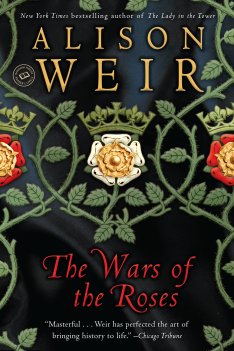
Book Review: “The Wars of the Roses” by Alison Weir

911GmwfEpdLThe Wars of the Roses was a series of wars from 1455 until 1487 for the throne of England. It is traditionally taught that it was between the houses of York and Lancaster, yet there were a lot more players involved than these two families. In fact the conflict started much earlier with the children of Edward III and Philippa of Hainault. The Lancasters were the descendants of John of Gaunt and his wife Blanche of Lancaster while the Yorks were descendants of Edmund of Langley Duke of York. This was a series over the question of who had the strongest claim to the throne. This question and the series of wars that would try to answer it is explored in depth in Alison Weir’s book “The Wars of the Roses”.

Alison Weir explains the struggle of studying this time period and what she is trying to accomplish in her book:

Sources for this period are meagre and often ambiguous, yet much research has been done over the last hundred years to illuminate a little for us what is often described as the twilight world of the fifteenth century. Many misconceptions have been swept away, yet even so the dynastic conflict still confuses many. My aim has been throughout to eliminate that confusion and try to present the story in chronological sequence, clarifying the problems of the royal succession in an age in which no certain rules of inheritance applied. I have also tried to bring the world of the fifteenth century to life by introducing as much contemporary detail as space permits, in order to make the subject relevant to any read, academic or otherwise. Chiefly, however, I have tried to re-tell an astonishing and often grim story of power struggles in high places that involved some of the most charismatic figures in English history. (Weir, xix).

Weir begins her book by explaining  what England in the fifteenth century was like before diving into the history of Edward III and the Plantagenets in the late 1300s. This may seem a little complex since there were many sons of Edward III, but the throne first went to Richard II, but when he was forced to abdicate, the throne went to Henry of Bolingbroke, who became Henry IV. He was the son of John of Gaunt and Blanche of Lancaster. John of Gaunt and his third wife Katherine Swynford had children who would become known as the Beauforts. They would become important later on.

Henry IV’s son would become Henry V who was married to Katherine of Valois. When Henry V died, their son Henry VI became king; he was a baby. His mother would remarry a Welsh man named Owen Tudor and they would have a few children, including Edmund and Jasper Tudor. Henry VI would marry Margaret of Anjou. Richard Earl of Cambridge, the son of Edmund of Langley, would have a son with his wife Anne Mortimer named Richard Plantagenet Duke of York. He would marry the “Rose of Raby” Cecily Neville and they would be the parents of Edward IV, George Duke of Clarence and Richard Duke of Gloucester, later Richard III.

This all may seem a bit complex, but it is important to understand how all of the players in the Wars of the Roses were connected. Henry VI was a weak king who was known for his madness and so someone had to lead the government. Richard Duke of York believed that he should have been Lord Protector, however Margaret of Anjou and her party at court had other ideas. The beginning of this conflict was a battle between court factions, but eventually it escalated rather quickly into a full on rebellion by Richard Duke of York. This was now a battle between the Yorks and the Lancasters. When Richard Duke of York died at the Battle of Wakefield on December 30, 1460, his son Edward took on the Yorkist cause and would become king after the battle of Towton on March 29, 1461, the bloodiest battle on English soil. After Towton, it was a battle between Edward IV and those who supported Henry VI, until 1471 when Edward IV ultimately won, thus ending the conflict between the Yorks and the Lancasters.

Weir chooses to end her book here at 1471 even though the Wars of the Roses will pick back up with the death of Edward IV in 1483 when his brother Richard becomes Richard III. Weir truly brought this time period to life. I have been studying the Wars of the Roses for a few years now and I have to say this book really simplified this complex family struggle in a way that makes sense. I love this book and I have read it several times. If you really want a great book that explains the causes of the Wars of the Roses, I highly recommend this book, “The Wars of the Roses” by Alison Weir. It is a fantastic introduction to this tumultuous time period.