
 Historical fiction has always been a genre that I have had a love/hate relationship with. I was a big fan of the genre for a while and I would read every book I could get my hands on about the Tudors, but then I realized that what the authors were writing was not always true to the historical facts. As I moved away from the fictional genre into the historically academic genre, I found myself looking at historical fiction with a more critical lens. Historical fiction became less entertaining for me the more I learned about the people behind the stories. I told myself that I was not going to read another historical fiction book because they were not historically accurate. That was until I read “ First of the Tudors” by Joanna Hickson.
Now when I read the title of this book, my first thought was that it was either going to be about Owen Tudor and how he met Catherine of Valois or Henry Tudor and about how he came to the throne. While both were mentioned in this book, the true hero of “The First of the Tudors” is Jasper Tudor, the son of Owen Tudor and the uncle of Henry Tudor. To me, Jasper Tudor was always the unsung hero of the Tudor dynasty. I mean he kept Henry safe for all those years in exile while his mother Margaret Beaufort was working on a political solution to keep her son safe. He was an outlaw and in a sense a kingmaker.
However, Joanna Hickson decided to add her own twist to the story. In records of the nursery of Henry VIII, Margaret Beaufort brought in a woman named Jane Hywel to take care of the royal children. It would seem very odd that Margaret Beaufort would bring a woman of unknown origins into her son’s household to take care of his children, so how did Margaret know about Jane? In this book, Hickson puts out the idea that Jane was a cousin of Jasper and that he was the one who brought Jane into Margaret’s household to help with the birth of Henry Tudor and to help raise him. Of course being historical fiction, there is an element of romance between Jasper and Jane that stretches throughout the entire first half of the Wars of the Roses (1455-1470).
Even though Jasper Tudor did marry Catherine Woodville in 1485, I found that the idea of Jasper having a wife or at least a mistress before this marriage a possibility. The idea of Jane adds a different level of intrigue to Jasper’s life, one that many might not expect; that while he was in exile and was fighting for his king and his nephew that he fell in love.
Hickson does an excellent job to navigate the intriguing details of Jasper’s life, both real and fictional. I found myself not caring about the historical facts as much with this book. I couldn’t put this book down. Hickson literally transported me into the world of Jasper and Jane with how she wrote this book. There was a lot of drama and romance mixed with historical facts that kept me wanting more. This was a page turner for sure. It made me re-evaluate reading more historical fiction in the future. If you want a good historical fiction book about Jasper Tudor and his role in the Wars of the Roses, I highly recommend “ First of the Tudors” by Joanna Hickson.
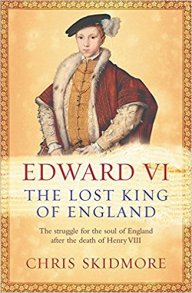 When we think of the Tudor rulers, we think of Henry VII, Henry VIII, Mary I and Elizabeth I. However, there was another king who ruled for only five years and was Henry VIII’s only legitimate male heir, Edward VI. Most people think that Edward was a mere pawn of his government officials but is that accurate? Chris Skidmore tackles that question of who was the real Edward VI in his book “Edward VI: The Lost King of England”.
 making a foothold in England. Most people think that Henry VIII was the one who helped bring the Protestant faith to England when he broke away from Rome. Henry VIII might of helped get the reform started, but Edward VI was the one who took the Protestant movement and was willing to make it known throughout England, even if it meant facing against his most formidable foe, his half-sister Mary who was a devout Catholic.
 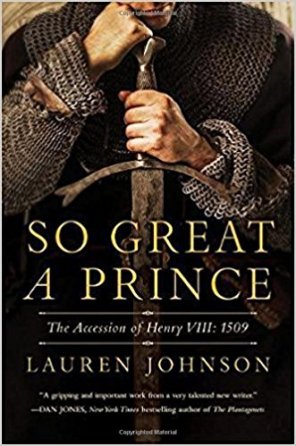 There are some books that leave a very good impression on you. Books that even when you stop reading it and move to another, you keep thinking about it. For me, this is one of those books. “So Great a Prince: The Accession of Henry VIII 1509” by Lauren Johnson is a page turner, but not because of the main character Henry VIII, but because Johnson writes about how the average citizen was affected by the accession of Henry VIII.
 Elizabeth I
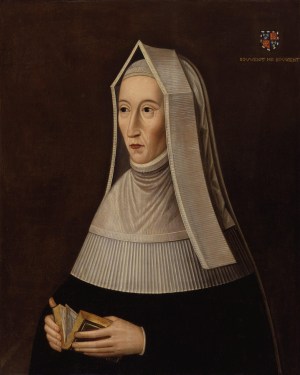 essential. It was a world controlled by men and Margaret played their game well. She was first married to Henry Tudor’s father Edmund when she was around 12 or 13 years old and had Henry when she was either 13 or 14. With the amount of trauma that she endured giving birth to Henry, he was her only child. Only a few months before Henry was born, Edmund died, leaving Margaret a widow and she had to give her son over to an enemy of the Beauforts. As the Wars of the Roses progressed, Henry soon became the last hope for the Lancastrian cause. His life hung in the balance as he and his uncle Jasper was forced into exile. It was through Margaret’s two other marriages that she was able to secure land for her son and was able to help create an army for her son so that he could claim the throne. Most of this she planned while her husband, Lord Stanley, was a strong supporter for the Yorkist cause. This was such a gamble, but the biggest gamble that Margaret made was when she convinced Elizabeth Woodville, the wife of Edward IV, to allow her daughter Elizabeth of York to marry Henry after he defeated Richard III at the Battle of Bosworth Field. All of her hard work paid off after Bosworth and her son Henry Tudor became Henry VII. Margaret had to be very strong in order to survive through all of this turmoil in order to see her only son succeed.
 between their children would help mend the rift in the country. With the marriage between Elizabeth and Henry Tudor, the York and Lancaster houses were united under the red rose of Tudor. I have always wondered what it must have been like for Elizabeth to know that she had to marry Henry who fought on the opposite side of her entire family. At first, it must have been rough but it did develop into love between the two. And then Henry had to deal with men who claimed to be her brothers who were led to the Tower of London and supposedly never heard of again. It must have been hard for Elizabeth to hear about these pretenders who claimed to be her long-lost brothers. At the same time she was building a family with Henry with her sons and daughters. Just when everything was going well for the family, Elizabeth and Henry’s eldest son Arthur died right after he had married Catherine of Aragon, the daughter of Isabella and Ferdinand of Spain. The blow must have rocked their marriage to the core, but luckily they had each other and their other son Henry VIII. It was the love that they had for one another that helped get Elizabeth of York and Henry VII through the rocky patches and helped establish the Tudor dynasty.
 her marriage, to Henry VIII, was arranged all while living in poverty. She could have thrown in the towel and asked to go back home but she stayed and married King Henry VIII, becoming Queen of England. Everything was going fine in their marriage until the miscarriages happened and the fact that she could only give birth to one child, a girl named Mary. This must have felt so horrible for Catherine since Henry only wanted a male heir and she could not give him what he wanted. Henry wanted a divorce and decided to use the fact that she was married to his brother as an excuse to divorce. Since Catherine said she was still a virgin after Arthur died, the Catholic church did not see a reason to hand out the divorce and took a long time to decide so Henry decided to break away from the church and divorced Catherine that way. She was then dismissed to never see him or her daughter Mary again, although she would argue that she was his one true and faithful wife until her dying breath. The amount of courage it must have taken to get through all the Henry through her way is very admirable and inspiring.
 Catherine was a scholar and had written two books, a first for a Queen of England. She acted as a king step mother to Henry’s three children; Edward, Elizabeth and Mary, but she had the best relationship with Elizabeth. After Henry died, Catherine married her sweetheart Thomas Seymour and had Elizabeth live with them. It is rumoured that Thomas Seymour had an inappropriate relationship with Elizabeth. It must have been hard for Catherine to accept this fact and in some cases, it is said that she even assisted Thomas with these incidents. Catherine had to make the hard decision to ask Elizabeth to leave her household, even though she loved her very much. Catherine died giving birth to a daughter. Catherine had to act as a nurse, scholar, wife, and step mother in a time when it was hard to even do one of these jobs properly.
 Adventures of a Tudor Nerd