
 England in the 9th century was a land full of dangers and was deeply divided in the form of four main kingdoms; Northumbria, East Anglia, Mercia, and Wessex. One by one, the kingdoms began to fall to the Danes until there was only Wessex that stood in the way of complete conquest. There was a young man who became a king who stood in the way of the invaders. His name was King Alfred the Great, but he was not alone in his quest to unite all of England. His right-hand man was a Northumbrian nobleman who lost his birthright, was raised by the Danes, and had to choose a side in this conflict. His name was Uhtred of Bebbanburg, and his story begins in the first novel of The Saxon Stories series by Bernard Cornwell, “The Last Kingdom.”
This is not my first adventure into the world of The Last Kingdom. Like so many others, I have enjoyed the Netflix series based on this book series. Once I finished the television series, I wanted to read the books to see what other adventures Uhtred had during his lifetime.
Uhtred is our narrator throughout this journey in 9th century England, albeit a bit older. He began his tale in 866 when he was Osbert, the second son of Lord Uhtred of Bebbanburg, and the day the Danes attacked his home. When his older brother Uhtred is slain, Osbert takes up the name of Uhtred and is baptized by the priest Beocca. After a fierce battle, Uhtred’s father is killed, and he is adopted by Ragnar, the leader of the same Danes who have taken everything from him. Uhtred is at first treated as a mere enslaved person, but Ragnar and his family begin to treat Uhtred as one of their own as if he was a Dane. During the time with Ragnar, he is introduced to Ragnar the Younger and Brida.
To see how the Danes raised Uhtred and how he learned to fight in the shield wall was spectacular, and it shows why even though he was born in Northumbria, he believes he is a Dane. Uhtred’s relationship with Ragnar and his family is broken when one of Ragnar’s enemies kills Ragnar and his family, except for Ragnar the Younger, and Thyra. Uhtred and Brida flee and are reunited with Beocca, who introduces Uhtred to the young man who will become King Alfred and one of his military men, Leofric. All Uhtred wants to do is recover Bebbanburg, but destiny changes one’s direction in life.
This is the first book that I have read by Bernard Cornwell, and it was brilliant. The way he could craft a remarkable beginning to Uhtred’s epic tale is astounding. The interactions between Uhtred and those who come to shape him into the legendary man are enjoyable and eye-opening. Cornwell was able to weave the differences in the Danish and Saxon cultures to create a diverse world, one that is vibrant as it is deadly.
The battle sequences set this novel and this series apart from other historical fiction series that I have read. From minor skirmishes to savage shield walls and bloody sea battles, Cornwell was able to create some of the most realistic battle sequences I have ever read.
“The Last Kingdom” by Bernard Cornwell is a triumph. An absolute joy to read and one that I cannot recommend enough for anyone who wants a fantastic historical fiction adventure into 9th century England. I look forward to many more adventures with Uhtred of Bebbanburg.
 During medieval wars, one’s fate is often determined by the spin of the Wheel of Fortune, even for those who did not fight a single battle. One could be living a life of luxury, stability reigning supreme, and is destined to marry a foreign king or prince, but when the wheel begins to spin, all seems lost, and the things that once were as good as guaranteed fall by the wayside. This description could fit any number of stories from the past. Still, the one highlighted in this particular novel is the story of the eldest daughter of King Edward IV and Elizabeth Woodville and the first Tudor queen. In the first book of her latest book series, “The Last White Rose: A Novel of Elizabeth of York,” Alison Weir shows how one woman was able to ride the highs and lows of life to secure her family’s legacy and transform English history forever.
 Blanche Wainfleet, a merchant’s wife living in England in 1590, has a reputation for finding items that others have deemed lost. Blanche has a gift for finding mementos important to others, from lost handkerchiefs to pets. However, there is one thing that she is searching for that will prove her greatest challenge yet, finding the truth about her sister’s murder. Blanche’s sister Alison fell in love with a Catholic man and converted to the Catholic faith when there was a war between Catholicism and Protestantism. To uncover the truth, Blanche must infiltrate the Otley family who took Alison in during her final days, but will she discover the truth and come out of the ordeal alive? This is the premise of Kathy Lynn Emerson’s latest novel, “The Finder of Lost Things.”
 Elizabeth Tudor is now the Queen of England and is learning quickly how her relationships with others would affect all of Europe, especially when it comes to her marriage. Marriage is difficult, as Margery Preston soon discovers. Margery is a lady in waiting to the fickle Queen Elizabeth and must navigate the intricacies of court life while learning to be a wife to Robin Lewis, a man she barely knows. She is treated like a child rather than a woman by those around her. Can Margery convince others that she is a strong woman and find love and happiness in the quagmire of court life? Margery’s story is told in the third installment of The Tudor Court series by Karen Heenan, “Lady, In Waiting.”
 For a woman from the past to leave a mark in history books, she had to have lived an extraordinary life. Some have notorious reputations, or they were considered women of immaculate character. In Foxe’s Book of Martyrs, there was one who was “a woman of noble wit.” She was the daughter of an ancient gentry family who had connections with the court of Henry VIII. Her large family would navigate political turmoil and religious reformations to survive. The name of this wife and mother was Katherine Raleigh, and her tale is told in Rosemary Griggs’ debut novel, “A Woman of Noble Wit.”
 A Woman of Noble Wit
 Author Bio:
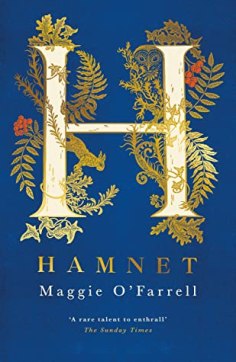 The Black Death has ravished England and Europe for centuries. Although the plague in the 16th century was not as devastating as in previous centuries, it still was a horrific disease that killed thousands. For example, in Warwickshire, England, a family understood how unforgiving death could be and how it can tear down even the strongest of familial bonds. The family of the playwright William Shakespeare must navigate the sudden loss of their beloved son while they keep their family together. “Hamnet” by Maggie O’Farrell is the story of the death of one child and how his death affected so many people.
 David Rizzio was one of Mary, Queen of Scots’ favorites at court and the private secretary to the queen. Being a royal favorite would not have been seen as a grave offense in any other country during this time, yet this is Scotland in the 16th century. Scotland was filled with deadly feuds between lords fighting for control of the crown, which would lead to numerous prominent men being murdered, including Rizzio. On March 9, 1566, David Rizzio was murdered in front of Mary, Queen of Scots, while she was several months pregnant. The tale of the grotesque crime and those who witnessed the events of that night are told in Denis Mina’s latest gripping novella, “Rizzio.”
 The Wars of the Roses was a time filled with dynamic figures who fought for the right to restore order to England. We often think about the strong warrior men who marched into battle, facing their inevitable doom just for the chance to wear the crown and rule the land. The women who stood by their husbands’ and sons’ sides were just as strong as their male counterparts, even if they did not wear armor. They were on the sidelines, ensuring that they could create alliances that would prove helpful in future conflicts. The most famous examples of strong women during the Wars of the Roses are Margaret of Anjou, Margaret Beaufort, and Elizabeth Woodville. Yet, there was another woman who stood firmly on the side of the Yorkist cause. She was known as the Rose of Raby and the wife of Richard, Duke of York. Her name was Cecily Neville, and she is the protagonist of Annie Garthwaite’s brilliant debut novel, “Cecily.”
 Today, I am pleased to welcome Clare Marchant to my blog to discuss her latest novel, “The Queen’s Spy,” and her use of dual timelines. I would like to thank The Coffee Pot Book Club and Clare Marchant for stopping by on this tour.
  (Blurb)
 Author Bio:
 Adventures of a Tudor Nerd