
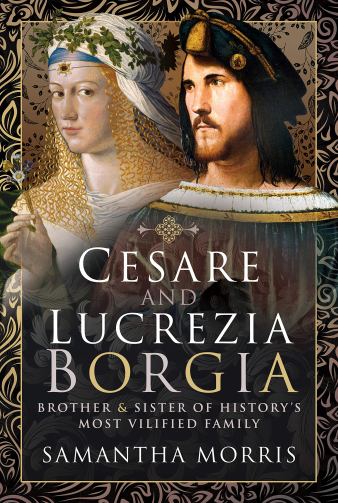
 A family mired in myths and rumors of incest, murder, and intrigue for centuries. A brother and sister caught in the middle, attracting the attention of gossips and historians alike. No, I am not referring to a royal family in England. In fact, this story starts in Spain with Alonso de Borja, who moved to Italy and helped create the infamous Borgia family. Caught in the middle were the son and daughter of Rodrigo Borgia, Alonso’s nephew, and his mistress Vanozza Cattanei; Cesare and Lucrezia Borgia. How close were these famous siblings? What were their lives really like? In Samantha Morris’ latest biography, “Cesare and Lucrezia Borgia: Brother and Sister of History’s Vilified Family”, she dives deep into the archives to find out the truth about the legendary Borgia family.
I would like to thank Pen and Sword Books and Net Galley for sending me a copy of this book. I will be honest and say that I did not know much about this family before I started reading this book. I knew about the rumors and that they had to do with the papacy, but that was it. I was excited to learn more about them and to understand why so many people are so fascinated with the Borgia siblings.
To understand how the Borgias rose to power, Morris takes her readers on a journey through papal history and the many different councils that occurred in the 14th and 15th centuries. This was familiar to me as I took a class in college on Church History, in which we did discuss these councils, but for those who are not familiar with them, Morris takes the time to explain the significance of each event. We see how Alonso de Borja rose through the ranks to become Pope Calixtus III and how his nephew, Rodrigo Borgia, was the complete opposite of his uncle. Rodrigo, later Pope Alexander VI, was a ladies man, and his children by his mistress, Vanozza Cattanei, were all illegitimate, including Cesare and Lucrezia.
It is the lives of Cesare and Lucrezia Borgia that historians, including Morris, tend to focus on. These siblings created so many enemies that rumors were bound to be associated with them. From incest between them to murder using poison, and numerous affairs, Cesare and Lucrezia endured scandals that made the Tudors look like a normal family. Morris takes on each myth and rumor head on to explore the truth about these siblings, which is of course more complex than the fictional tales of their lives.
I found myself enthralled in the true-life tales of Cesare and Lucrezia Borgia. Like most historical tales, the truth is much more compelling than the fictitious tales. The trials, triumphs, and tribulations of the siblings are so compelling and to realize that they lived when the Renaissance in Italy and the Tudor dynasty was still new in England is remarkable.
This book made me fall in love with the Borgia family. The story of their rise to greatness and what Cesare and Lucrezia had to endure to protect their family and its name was nothing short of extraordinary. Samantha Morris’s writing style is easy to understand but you can tell how much care she took in researching these simply sensational siblings. I want to study the Borgia family even more because of this book. If you want an engrossing nonfiction book about the Borgia family, I would highly suggest you read, “Cesare and Lucrezia Borgia: Brother and Sister of History’s Most Vilified Family” by Samantha Morris. A fabulous introduction to the Borgias and their tumultuous times.
 One of the most popular Tudor historical fiction series in recent memory has revolved around the enigmatic Thomas Cromwell. Of course, I am talking about the famous
 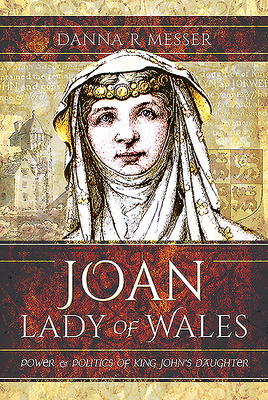 Medieval women held many different titles that defined their roles and their connections. Mothers, daughters, and wives tended to be the most popular and the most common. Titles such as queen, political diplomat, and peace weaver tend to be rare and given to women of power. Yet, these words accurately depict a unique woman who lived during the Angevin/ Plantagenet dynasty. She was the illegitimate daughter of the notorious King John and the wife of Llywelyn the Great, a Prince of Wales. She worked tirelessly to establish peace between England and Wales, yet she has not received much attention in the past. Her name was Joan, Lady of Wales, and her story is brought to life in Danna R. Messer’s book, “Joan, Lady of Wales: Power and Politics of King John’s Daughter”.
 When one thinks about Medieval Europe and buildings, we tend to focus on the luxurious castles with their impenetrable walls. It is a rather glamorous image, but the problem is it is not accurate. Castles were used for defensive measures to protect the kingdom from attacks, either from outsiders or, in some cases, from within. Medieval warfare and castles go hand in hand, but one conflict where we tend to forget that castles play a significant role is in the civil war between the Yorks and the Lancasters, which we refer to today as The Wars of the Roses. Dr. Dan Spencer has scoured the resources that are available to find out the true role of these fortresses, both in England and in Wales, in this complex family drama that threw England into chaos. His research has been compiled in his latest book, “The Castle in the Wars of the Roses”.
 The year of 1215 marked a turning point in English history with the sealing of a rather unique document; the Charter of Liberties, or as we know it today, the Magna Carta. It was a charter from the people to a king demanding the rights that they believed that they deserved. Those who sealed it were rebel barons who were tired of the way King John was running the country, yet instead of asking for his removal, they wanted reform. The clauses mostly concerned the problems of the men who made the charter, however, three clauses dealt with women specifically. In her latest book, “Ladies of Magna Carta: Women of Influence in Thirteenth Century England”, Sharon Bennett Connolly explores the lives of the women who were directly impacted by this document.
 The story and myths of Henry VIII’s second wife, Anne Boleyn, have been debated and dissected for centuries. Was she a cruel and calculating figure who got what she deserved or was she an innocent victim of an evil tyrant of a husband? The funny thing about history is that the truth is never clear cut. Historical figures are human beings, no matter how many centuries separate their lives from our own. They were not all good or all bad, which is the perspective that Claire Ridgway tries to show when she is writing about her favorite figure, Anne Boleyn, either in her books or on her blog, The Anne Boleyn Files. To celebrate the 10th anniversary of the Anne Boleyn Files, Claire Ridgway returns with the latest collection of articles, “The Anne Boleyn Collection III”.
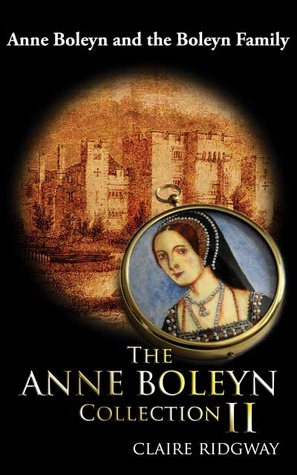 The Boleyn family have been viewed as social climbers, who only desired power and prestige, in history and novels for centuries; their fall from grace was due to their ambitions. But, is this true? Did Anne Boleyn’s family only care about getting to the top by any means necessary? Were they manipulative, cunning, and cruel like they have been portrayed in dramas and novels? Who were the Boleyns and why have they been so maligned in history? In her second book of this series, “The Anne Boleyn Collection II”, Claire Ridgway of The Anne Boleyn Files examines Anne Boleyn and the truth about her family.
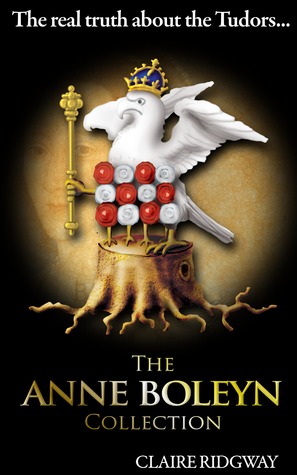 Have you ever watched a historical drama/ movie or read a historical fiction novel and started to wonder if the “facts” they a portraying are true? You start researching the history of these people and the times that they lived in and it soon becomes a passion. You have your favorite figures to study and you want to defend them when those online decide to criticize them in discussion boards. For some of us, that is as far as it goes, but some choose to make blogs to explore these topics even further. This scenario is similar to what happened with Claire Ridgway, the creator of the popular blog The Anne Boleyn Files; however, her inspiration came from a dream. To share her passion for all things Anne Boleyn, Ridgway has decided to compile some of the most popular articles from her blog into her debut book, “The Anne Boleyn Collection”.
 Adventures of a Tudor Nerd