
Biography: Margaret of Anjou

(Born March 23, 1430- Died August 25, 1482). Daughter of Rene, King of Naples and 220px-MargaretAnjouIsabella, Duchess of Lorraine. Married to King Henry VI of England. Mother of Edward of Westminster, Prince of Wales. Margaret of Anjou was the strong wife of the weak King Henry VI. She is the one who kept the Lancastrian cause going for the first half of the Wars of the Roses.
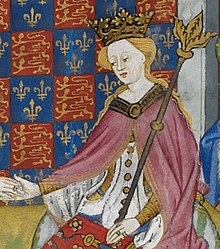
Margaret of Anjou was born on March 23, 1430 to her parents Rene King of Naples and Isabella Duchess of Lorraine. Her father was known to be a king with many crowns and yet he did not have the kingdoms. In order to help bring about the end of the Hundred Years’ War, her father arranged her marriage to the son of Henry V, Henry VI. The couple was married on April 23, 1445. Henry VI was technically also declared the King of France and because of this, Charles VII of France only agreed to this marriage if Henry gave France the areas of Maine and Anjou. Henry agreed but he kept this a secret from his people. Margaret was crowned Queen of England on May 30, 1445.  

Henry VI was a weak ruler who had really no desire to be king or an interest in politics. He often left the control of the government in the hands of men who really cared only about their titles than the well being of the kingdom. After the John Cade rebellion of 1450, Henry VI appointed Edmund Beaufort, the duke of Somerset, as his closest advisor. Somerset was a failure when it came to battles in France, but he was an ally of Margaret of Anjou. Somerset’s enemy was Richard Duke of York, who returned to England in August 1450, after being banished after the John Cade rebellion, and demanded that he should have a place on the Council. The council agreed, but Somerset’s  and York’s rivalry continued.

In August 1453, Henry VI had his first bout of mental illness. He had what some describe as a mental breakdown and was unresponsive for many months. During this time, Margaret was very pregnant and on October 13, 1453, she gave birth to the couple’s only child Edward of Westminster, Prince of Wales. However, even though Edward was the king’s son, Henry VI did not acknowledge him and said that the boy was the son of the Holy Ghost. Margaret thought that the perfect  Lord Protector for the king during this time would be her ally Somerset, however the person that became the Lord Protector was Richard Duke of York. York quickly arrested Somerset, but when the king recovered in 1454, Somerset was released and York was dismissed. This was the last straw for York.

During this time, Margaret had retired to Greenwich with her son, but she saw how powerful York had become and how weak her husband was, and she began to take an interest in politics. At the First Battle of St. Albans, on May 22, 1455, Edmund Beaufort, duke of Somerset was killed and the king was captured by the Yorkists, led by Richard duke of York. Henry wanted to reconcile with York, but then Henry had another bout of mental illness and York was made Lord Protector again in November 1455; he was dismissed in February 1456. Margaret decided that she had to defend her husband’s cause and so she raised an army to face off against York and she encouraged Henry Beaufort, the new duke of Somerset to fight with her. The Yorkists were led by Richard duke of York, Richard Neville earl of Salisbury and his son Richard Neville earl of Warwick. The Lancastrians were under Henry VI, but led by Margaret of Anjou, Somerset, and Henry Percy, third earl of Northumberland.

At the battle of Northampton, Warwick had captured the King and York came back to England.  In September 1460, Richard duke of York officially placed his claim to the throne to Parliament. In order to avoid more conflict, York was declared the heir to the throne, in place of Prince Edward. Margaret was not about to let this stand so she led her army to attack York at the battle of Wakefield on December 30, 1460. The Duke, Salisbury and York’s second son, the seventeen year old Edmund, Earl of Rutland, were killed, their cries for mercy were ignored.  The Queen had their heads impaled on spikes on the city walls of York. Margaret then faced against Warwick’s army at the Second Battle of St. Albans in 1461 and her army was able to defeat him, which forced Warwick to flee.

Warwick was not done. He raised an army with the son of Richard duke of York, Edward earl of March. They faced off against the Lancastrians at the battle of Towton, the bloodiest battle during the Wars of the Roses, where the Lancastrians were defeated; Margaret and her son Edward fled into Scotland, Edward earl of March became Edward IV, and Henry VI was taken prisoner. However, things would quickly sour between Edward and Warwick when  Edward IV married Elizabeth Woodville, not exactly the person that Warwick wanted the king to marry. Warwick was soon joined by the king’s brother George Duke of Clarence, who was Warwick’s son in law as he married Warwick’s daughter Isabel, in their rebellion against the king. Edward IV defeated Warwick and Clarence and so the two men fled to France. Meanwhile, Margaret made her way back to France where she seeked the aid of her cousin King Louis XI, also known as “the Spider”, of France.  

Louis XI had an idea that Margaret and Warwick should reconcile and join forces against Edward IV. This wasn’t an easy task as they hated each other, but they did agree to join forces. In order to show Warwick’s good will towards his new ally, Warwick’s daughter Anne Neville was betrothed to Edward of Westminster Prince of Wales. Warwick invaded England in 1470 in the name of King Henry VI, which forced Edward IV to flee and Henry VI was reinstated as king. Edward IV would come back and kill Warwick at the Battle of Barnet on April 14, 1471, the same day that Margaret and Edward of Westminster returned to England. Margaret wanted to return to France, but her son Edward of Westminster wanted to stay. Margaret reluctantly agreed and with her army, faced off against Edward IV one last time at Tewkesbury on May 4, 1471. Her 17 year old son Edward of Westminster was killed. This broke Margaret’s spirit and she was taken captive by William Stanley under the orders of Edward IV. She was first sent to Wallingford Castle and then she was imprisoned in the Tower of London.

Her husband Henry VI was also in the Tower where he died on May 21, 1471, the cause of death is unknown but it is suspected to have been a regicide. In 1472, a broken Margaret was placed in the custody of her former lady-in-waiting Alice Chaucer, Duchess of Suffolk. She remained in the custody of the Duchess of Suffolk until she was ransomed by Louis XI in 1475 through Treaty of Picquigny. Margaret returned to France where she was hosted by Francis de Vignolles and died in his castle of Dampierre-sur-Loire. She died on August 25, 1482 at the age of 52.
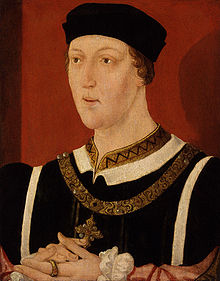
Biography: King Henry VI

220px-King_Henry_VI_from_NPG_(2)(Born December 6, 1421- Died May 21, 1471). Son of Henry V and Catherine of Valois. Married to Margaret of Anjou. He had one son Edward of Westminster. Henry VI was a weak ruler who, combined with his bouts of mental illness and no desire to rule, led England to lose its lands in France and brought England into a 30 year civil war known as the Wars of the Roses.
Henry VI was the only child of Henry V and his wife Catherine of Valois. He was born on December 6, 1421 and became king of England at the tender age of nine months when his father died on August 31, 1422. Six weeks later, he became king of France after his grandfather Charles VI died, which was agreed upon with the Treaty of Troyes. A regency council was called and Henry’s uncle John, duke of Bedford, became his first regent, and was charged with taking care of the French, led by the king that the French declared, Charles VI’s son Charles VII. Both Charles VII and John duke of Bedford kept the Hundred Years’ War dragging on. The English captured Orleans in 1427, but in May 1429, a young Joan of Arc led a siege on Orleans, which the French was able to reconquer. This led to French nationalism which allowed the French to drive the English out of the Loire Valley and Charles VII was officially crowned king of France in June 1429.

This made Bedford nervous so he quickly had Henry VI crowned king of England in November 1429 and crowned king of France in 1431.  He was the first English king who was also the king of France, but it did not last long. With the newly founded French nationalism, the English were losing their French lands that Henry V had conquered left and right. This made Philip the Good, duke of Burgundy, an ally of the English, nervous, and so he signed the Treaty of Arras with Charles VII in 1435, which recognized Charles VII as the King of France. The Hundred Years’ War would continue for another 18 years until John Talbot, the earl of Shrewsbury was defeated at Castillon in 1453. The English lost all of their French territories, except for Calais.

John, duke of Bedford, was regent until his death in 1435. After Bedford died, Humphrey, duke of Gloucester became the protector, but he did not have the same control of the government that Bedford did. In 1437, Henry declared himself of age before his 16th birthday. Henry was a weak ruler who was not interested in ruling at all, so he allowed some of the least scrupulous people to control the government. One of these men was William de la Pole, earl of Suffolk, who became the king’s steward in 1435. William was a peacemaker at heart, which led to the loss of France; his opponent at court was Humphrey of Gloucester, who wanted the war with France to continue. Suffolk was able to negotiate the marriage between Henry VI and Margaret of Anjou in 1444, in exchange for Henry surrendering Maine to the French.  The couple was married on April 23, 1445. This was not a popular decision and Henry’s life was threatened so Margaret, Suffolk and Henry left London. Margaret and Suffolk convinced the king that Gloucester was plotting an uprising so Henry had him arrested and confined at Bury St. Edmunds in February 1447, where he would die a week later. The people were not satisfied with this and Suffolk decided to switch from peacemaker to warmonger and invaded Brittany in 1449. This brought Normandy into the middle of the Hundred Years’ War and Brittany was conquered by the French in 1450. This was the last mistake by Suffolk, who was arrested and banished, but his ship was intercepted at Dover and Suffolk was killed.

Suffolk’s allies were scapegoats for everything that was going wrong in France, which led to the revolution led by John Cade in May 1450. It was similar to the Peasants’ Revolt, however Henry VI was no Richard II and the revolt lasted for two months, until John Cade’s death. The purpose of this revolt was to purge the government, but the king did not live up to their expectations. Instead he polarized the government even further when he appointed Edmund Beaufort, the Duke of Somerset as his closest adviser. Somerset was a failure in France and he gained some notable enemies at court, especially Richard, duke of York, who was banished  to Ireland in 1447 for supporting Gloucester, but returned to England and to court in August 1450, demanding his place in the Council.

Somerset’s and York’s  rivalry simmered for several years, until  August 1453, when Henry VI had his first bout with mental illness. We are not sure what he suffered from but for weeks, he was unresponsive to everything. Some believe it was triggered by the loss of France. It affected him so much that he did not even acknowledge his only son Edward, believing that his son was born of the Holy Ghost. During this time, Richard Duke of York was made Lord Protector  in 1454 and had Somerset arrested. When Henry recovered, he restored Somerset and had York dismissed. This was the last straw for York. York and Somerset met on the battlefield at St. Albans on May 22, 1455, where Somerset was killed. This should have been the end of the conflict, however it was only just the beginning.

Henry was going to reconcile with York but another bout of mental illness hit Henry in November 1455 and York was made Lord Protector again; he was dismissed in February 1456. It was then that Margaret of Anjou took up her husband’s cause. She encouraged the new duke of Somerset Henry Beaufort to fight against York. The battlelines were being drawn. The Yorkists were led by Richard duke of York, Richard Neville earl of Salisbury and his son Richard Neville earl of Warwick. The Lancastrians were under Henry VI, but led by Margaret of Anjou, Somerset, and Henry Percy, third earl of Northumberland. In 1459, at the battle of Ludlow, the Lancastrians won and sent the Yorkists into hiding; however the Yorkists came back with a vengeance at the battle of Northampton. In September 1460, Richard duke of York officially placed his claim to the throne to Parliament. In order to avoid more conflict, York was declared the heir to the throne, in place of Prince Edward.

Henry VI seemed to be okay with this arrangement, but Margaret was not about to let this insult stand. On December 30, 1460 at the battle of Wakefield, York was killed. Margaret continued her march to London when in 1461, she met with Warwick and defeated him at the second battle of St. Albans. Warwick fled and raised another army with York’s son Edward and marched into London on March 1461. Then, in the bloodiest battle of the Wars of the Roses, Towton, the Lancastrian forces were defeated and Edward became Edward IV. Henry and Margaret fled to Scotland to seek aid from King James III. In exchange for the aid, Henry gave the Scots Berwick. After a few years, Henry was seen as an embarrassment to the Scots and so they returned him to northern England, where he was captured and imprisoned in the Tower of London by English forces in July 1465.

It looked like Henry’s days were numbered, but then on October 3, 1470, he was removed from the Tower and made king yet again. What had happened was that the earl of Warwick switched sides and fought for Henry VI and Margaret of Anjou. Warwick even had his daughter married to Henry’s son Edward to show his allegiance. However, Edward IV came back in April 1471 and killed Warwick and recaptured Henry VI. On May 4, 1471, Margaret’s forces faced off against Edward IV at the battle of Tewkesbury. It was a devastating loss for the Lancastrians as Prince Edward was killed and Margaret was imprisoned in the Tower. On May 21, 1471, King Henry VI was murdered. It is unknown who killed him, but many suspect that it was under the orders of  King Edward IV.

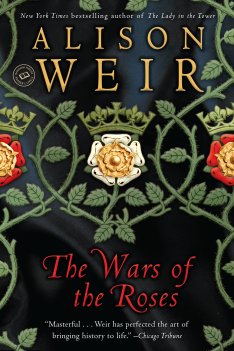
Book Review: “The Wars of the Roses” by Alison Weir

911GmwfEpdLThe Wars of the Roses was a series of wars from 1455 until 1487 for the throne of England. It is traditionally taught that it was between the houses of York and Lancaster, yet there were a lot more players involved than these two families. In fact the conflict started much earlier with the children of Edward III and Philippa of Hainault. The Lancasters were the descendants of John of Gaunt and his wife Blanche of Lancaster while the Yorks were descendants of Edmund of Langley Duke of York. This was a series over the question of who had the strongest claim to the throne. This question and the series of wars that would try to answer it is explored in depth in Alison Weir’s book “The Wars of the Roses”.

Alison Weir explains the struggle of studying this time period and what she is trying to accomplish in her book:

Sources for this period are meagre and often ambiguous, yet much research has been done over the last hundred years to illuminate a little for us what is often described as the twilight world of the fifteenth century. Many misconceptions have been swept away, yet even so the dynastic conflict still confuses many. My aim has been throughout to eliminate that confusion and try to present the story in chronological sequence, clarifying the problems of the royal succession in an age in which no certain rules of inheritance applied. I have also tried to bring the world of the fifteenth century to life by introducing as much contemporary detail as space permits, in order to make the subject relevant to any read, academic or otherwise. Chiefly, however, I have tried to re-tell an astonishing and often grim story of power struggles in high places that involved some of the most charismatic figures in English history. (Weir, xix).

Weir begins her book by explaining  what England in the fifteenth century was like before diving into the history of Edward III and the Plantagenets in the late 1300s. This may seem a little complex since there were many sons of Edward III, but the throne first went to Richard II, but when he was forced to abdicate, the throne went to Henry of Bolingbroke, who became Henry IV. He was the son of John of Gaunt and Blanche of Lancaster. John of Gaunt and his third wife Katherine Swynford had children who would become known as the Beauforts. They would become important later on.

Henry IV’s son would become Henry V who was married to Katherine of Valois. When Henry V died, their son Henry VI became king; he was a baby. His mother would remarry a Welsh man named Owen Tudor and they would have a few children, including Edmund and Jasper Tudor. Henry VI would marry Margaret of Anjou. Richard Earl of Cambridge, the son of Edmund of Langley, would have a son with his wife Anne Mortimer named Richard Plantagenet Duke of York. He would marry the “Rose of Raby” Cecily Neville and they would be the parents of Edward IV, George Duke of Clarence and Richard Duke of Gloucester, later Richard III.

This all may seem a bit complex, but it is important to understand how all of the players in the Wars of the Roses were connected. Henry VI was a weak king who was known for his madness and so someone had to lead the government. Richard Duke of York believed that he should have been Lord Protector, however Margaret of Anjou and her party at court had other ideas. The beginning of this conflict was a battle between court factions, but eventually it escalated rather quickly into a full on rebellion by Richard Duke of York. This was now a battle between the Yorks and the Lancasters. When Richard Duke of York died at the Battle of Wakefield on December 30, 1460, his son Edward took on the Yorkist cause and would become king after the battle of Towton on March 29, 1461, the bloodiest battle on English soil. After Towton, it was a battle between Edward IV and those who supported Henry VI, until 1471 when Edward IV ultimately won, thus ending the conflict between the Yorks and the Lancasters.

Weir chooses to end her book here at 1471 even though the Wars of the Roses will pick back up with the death of Edward IV in 1483 when his brother Richard becomes Richard III. Weir truly brought this time period to life. I have been studying the Wars of the Roses for a few years now and I have to say this book really simplified this complex family struggle in a way that makes sense. I love this book and I have read it several times. If you really want a great book that explains the causes of the Wars of the Roses, I highly recommend this book, “The Wars of the Roses” by Alison Weir. It is a fantastic introduction to this tumultuous time period.

Questions About The Wars of the Roses

The Wars of the Roses, the dynastic battle between the Yorks and the Lancasters for the throne of England, last from 1455 at the 1st Battle of St. Albans until 1487 at the Battle of Stoke Field. This is one of my absolute favorite time periods to study because it not only marked the beginning of the Tudor dynasty, but it was also so complex and full of intriguing questions. I have decided to take the questions that you all sent me and answer them to the best of my ability to start off August, which I have dedicated to exploring this time period in honor of the Battle of Bosworth Field. I hope this will encourage more discussions about this series of wars that changed English history forever.

1.) How mad was King Henry VI and was his condition widely known in court, the country, and France? If Henry VI wasn’t mad would York still have rebelled?

There are a lot of theories about King Henry VI and what exactly his “madness, but the leading theories are that it was either catatonic schizophrenia or a severe case of depression. Catatonic schizophrenia limits a person’s movements, which would explain why he is also known as the “sleeping king”. Compared to normal people, Henry VI would seem rather mad, but compare him to say someone like Charles VI of France, the father of Katherine of Valois who believed that he was made out of glass and couldn’t remember his wife and children, Henry VI’s madness doesn’t seem that bad. Margaret of Anjou and others close to the king kept his secret very close so at the beginning, his madness was only known in the court. As the Wars of the Roses progressed and seditious propaganda was made against Henry VI, I think the common people would have learned about his madness. As for the country of France, I am not sure if they knew about Henry VI’s madness because they do offer Margaret of Anjou aid to restore him back to the throne.

I believe that York would still have rebelled because it wasn’t just Henry’s madness that made him a less than average ruler. Henry was a pious, religious man who didn’t really like fighting. He didn’t have the courage that was needed in order to be a medieval ruler of England. I believe that York knew this and decided to act. At first, he might have only been fighting his enemies in court, but I think he believed that his bloodline had a better claim to the throne and he wanted to make England better, so he rebelled against Henry VI. It wasn’t because he was mad, but because he was a weak ruler, that York rebelled.

2.) Why did Lord Stanley, who was a staunch supporter of Richard III, switch sides and support Henry Tudor during the Battle of Bosworth Field? He would not have benefitted from supporting  Henry anymore than he had Richard and all of his wife’s estates were declared forfeit to himself. So couldn’t have been for financial gain?

This was the biggest switch during the Wars of the Roses, and ultimately it is what established the victory for Henry Tudor. Richard believed that he had Lord Stanley on his side, but the morning of the battle, Lord Stanley faked being sick to avoid fighting. Lord Stanley and his son Lord Strange sat on the sidelines during the battle. Then, when all hope seemed lost for Henry Tudor, Lord Stanley and Lord Strange come to the rescue. Lord Stanley broke his own oath Sans Changer (Without Changing)to help a young man, who was virtually unknown, become King of England and helped create the Tudor Dynasty.

So the question is why did he do it. Why did Lord Stanley switch sides? I believe he might have switched because he saw how much his wife Margaret Beaufort believed in her son’s cause. Think about it. She risked everything to make sure he was safe. Even when she had lost everything, Margaret was still funding his rebellion. Even though Lord Stanley saw favor from Richard III, it must have been disheartening for him to see Richard III’s closest allies being either killed or exiled. I think this must have freaked Lord Stanley out. He wanted to make sure that he would have survived so he took a risk and bet on the young man Henry Tudor.

3.) Do you think Edward IV regretted marrying Elizabeth Woodville instead of going with a foreign bride which could have given him an alliance and back up during the war?

I don’t think Edward IV ever regretted marrying Elizabeth Woodville. I believe he loved her very dearly. In the Historie of the Arrivall of Edward IV. in England and the Finall Recouerye of His Kingdomes from Henry VI (which is a very interesting read that I recommend if you want to study the Wars of the Roses), there is a moment where Edward IV returns to his throne in 1471 and sees his family again after being in exiled. He is described as having tears in his eyes as he embraces his wife and children. I believe that this passage, whether it was embellished a bit or not, shows Edward IV never regretted marrying Elizabeth Woodville. Sure a foreign bride may have established an alliance and back up during the war, but Edward was popular with the English people, even if his wife wasn’t popular with the people. Even with his numerous affairs, Edward IV’s true love was Elizabeth Woodville.

4.) Had Elizabeth (Woodville)Grey not gone into sanctuary before Richard III’s coronation, would she have survived his purge of her family members?

I really don’t think that Elizabeth (Woodville) Grey was in danger of being killed. Sure Richard III disliked the Woodvilles, but I don’t think he would have killed a woman, even if she was indeed the cause of his hatred towards one family. Richard III may have slandered his mother’s name, but I don’t think he would have murderous intentions towards women. I believe that she would have survived the purge of her family members.

5.) What was the nature of the relationship between Elizabeth of York and Richard III? Was it more than uncle and niece?

Elizabeth of York was the eldest daughter of Edward IV and Elizabeth Woodville. She was the niece of Richard III and there are some who say that he was planning on taking her as his wife after Anne Neville died. I believe that Richard III and Elizabeth of York had a normal uncle and niece relationship. We must remember that the Wars of the Roses was not only a series of wars that were fought on the battlefield, but also through propaganda. What better way to defame Richard III a bit further than claim that he had a relationship with his niece? There is no evidence that they had a relationship other than that of an uncle and niece.

6.) Was Edward IV a usurper?

A usurper is anyone who takes a position of power through force or illegal means. By this definition, Edward IV was indeed a usurper. He won his crown first at the battle of Towton on March 29, 1461, and then again at the battle of Tewkesbury in 1471. He took the crown of England twice. However, just because Edward IV was a usurper does not mean that he was a bad ruler. Henry VII was also a usurper and he was able to establish the Tudor dynasty, thus ending the Wars of the Roses and brought back a time of peace and prosperity to England. Edward IV did something similar while he reigned from 1471 until his untimely death in 1483. England had a strong and stable ruler, the opposite of what Henry VI was,  with Edward IV even though he was a usurper.

Book Review: “Owen: Book One of the Tudor Trilogy” by Tony Riches

Medieval knightOwen Tudor, the second husband of Catherine of Valois and the father of Edmund and Jasper Tudor. His affair with Catherine changed English history forever, yet not much is known about his past before he met Catherine. Was he married before  he met Catherine and after she died? What must have been like for him as the Wars of the Roses began to take hold of England and everything he worked hard for began to fade away. The man who started as a Welsh servant turned step- father to King Henry VI and the grandfather of King Henry VII, the patriarch of the Tudor Dynasty, this is the protagonist in Tony Riches’ book, “Owen: Book One of the Tudor Trilogy”.

Tony Riches explains his fascination with Owen Tudor:

I was born near Pembroke Castle and recently visited the small room where the thirteen- year old Margaret Beaufort gave birth to Henry Tudor. I also stood on the pebble beach at Mill Bay near Milford Haven, imagining how Jasper Tudor would have felt as he approached with Henry and his mercenary army to ride to Bosworth- and  change history. These experiences made me wonder about Owen Tudor, the Welsh servant who began this fascinating dynasty. I felt a responsibility to research his story in as much detail as possible and try to sort out the myths from the facts. There are huge gaps in the historical records, which only historical fiction can help to fill. As well as there being no surviving record of Owen’s marriage, no  reliable image of him exists….I would like to remember Owen , not as a victim of the Wars of the Roses, but as an adventurer, a risk- taker, a man who lived his life to the full and made his mark on the world through his descendants. (Riches, 168).

Tony Riches starts his book with Owen’s entrance into Catherine of Valois’ household as the Keeper of her Wardrobe after the death of her first husband, Henry V. Owen tries to focus on his job, and not on Catherine, but he cannot help it. He loves Catherine and she loves him. They decide to marry in secret and they have 3 boys; Edmund, Jasper, and a third son who joined the church. The happiness that Catherine and Owen had living in the countryside would not last long. Catherine dies shortly after giving birth to a daughter and their secret relationship is revealed. Owen is thrown in jail while his sons Edmund and Jasper are raised to be the step-brothers of King Henry VI.

Eventually, Owen is released and is allowed to live a good life as a commander in France while his sons are given titles and land. Owen helps escort Margaret of Anjou to England to marry Henry VI and he helps walk his daughter in law Margaret Beaufort down the aisle. Unfortunately, the wheel of fortune is always turning and the happiness is soon replaced with tragedy yet again. Edmund Tudor dies shortly before the birth of his son Henry Tudor and the Wars of the Roses tears the country apart. Owen is killed before he could see his family triumph as the new dynasty in England.

This is the story of Owen Tudor. I found Tony Riches’ book “Owen” a thrilling read. I have always been fascinated by the life of Owen Tudor and his sons and Tony Riches was able to write a story that made me want to study more about Owen Tudor and his life. Riches was able to combine the historical facts that we know about Owen with fictitious elements, including two other women that Owen fell in love with and a friend named Nathaniel, into a cohesive and engaging book. I did not want to stop reading this book. This was my first time reading a book by Tony Riches and I loved it. His writing style is engaging and very easy to read. I look forward to reading more books by him in the future.  I absolutely recommend this book to anyone who is interested in Owen Tudor and the beginning of the Tudor dynasty.