
 Two kings, two rivals from different countries defined the 16th century. One was the spare to his father’s crown, but when his eldest brother suddenly passed away, he became the next Tudor king. The other was the sole heir to his parent’s large kingdom and would become the Holy Roman Emperor. Wars, the Reformation, and family drama kept these two men, Henry VIII and Charles V, busy and at each other’s throats. They would sometimes join and fight for one another’s causes, showing the importance of international politics. With each new scenario, their relationship would shift, either for the best or the worst. Richard Heath has combined the stories of these two monarchs, these “frenemies,” into one joint biography, “Henry VIII and Charles V: Rival Monarchs, Uneasy Allies.”
Thank you, Pen and Sword Books and Net Galley, for sending me a copy of this book. I have read many books about Henry VIII, but Charles V was a side character in many of these books. When I saw this book, learning more about Charles V intrigued me.
Heath begins his book with Henry VIII, the second son of Henry VII and Elizabeth of York. He was never destined to become king, but when his eldest brother, Arthur, died unexpectantly, he became the next King of England. In contrast, Charles V was destined to become King of Spain as he was the only son of King Philip I, King of Castile, and Queen Juana of Castile and Aragon. Henry VIII had multiple wives and one legitimate son who would not live long as king. In contrast, Charles V had one wife, Isabella of Portugal, and numerous children, including the next King of Spain, Philip II.
Henry VIII and Charles V had similar ideals and were raised to be devout Christians, even if the way they fought for their faith was different. Charles V’s aunt, Catherine of Aragon, was Henry VIII’s first wife. The two monarchs and their respective countries, the Holy Roman Empire, Spain, and England, enjoyed close relationships. However, the 16th century was notorious for its ever-shifting political landscape, especially concerning the wars in France, and Italy, that involved King Francis I, the Pope, and Suleiman the Magnificient.
To untangle the messy political dilemma of the 16th century in a dual biography is quite a feat, which Heath does well. I wish he had included a chart to break down the different treaties and wars he chose to highlight in this book because I needed help figuring out which war was which and what each treaty agreed to do. Overall, I think if you want a decent introduction to the life of Charles V and how his relationship with Henry VIII changed over time, I would recommend you read “Henry VIII and Charles V: Rival Monarchs, Uneasy Allies” by Richard Heath.
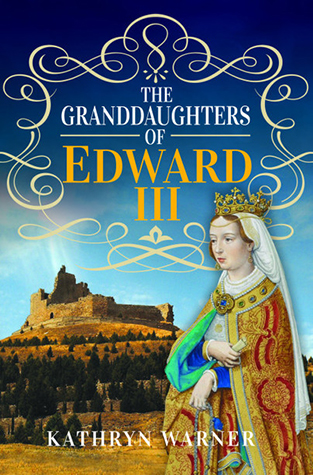 When we think about the legacy of Edward III, we often think about a warrior king who became king after his father, Edward II’s disastrous fall from grace. We know about his sons that he had with his beloved wife, Philippa of Hainault: Edward the Black Prince, Lionel of Antwerp, Duke of Clarence, John of Gaunt 1st Duke of Lancaster, Edmund of Langley, 1st Duke of York, and Thomas of Woodstock, Duke of Gloucester. Famously, we get the 15th-century conflict known as the Wars of the Roses through the descendants of Edward III. However, the male descendants only tell half the story of Edward III and Philippa of Hainault’s legacy in England and throughout Europe. In her latest book, “The Granddaughters of Edward III,” Kathryn Warner examines the lives of Edward III’s female descendants to better appreciate the strength of this group of branches of the Plantagenet family tree.
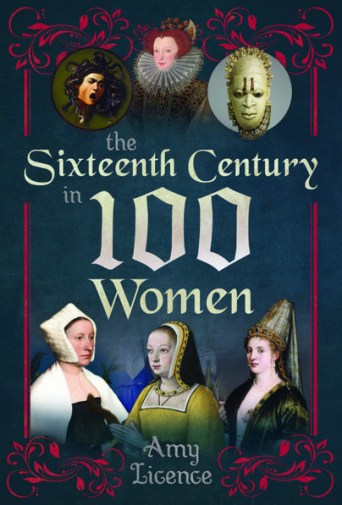 When we think of the phrase “16th-century women,” we often consider those from royal or noble houses throughout Europe. We tend to think of women like the six wives of Henry VIII, Mary I, Elizabeth I, Catherine de Medici, Mary Queen of Scots, and others associated who made an impact during the Renaissance and the Reformation. However, the 16th century did not stop at the borders of Europe; it extended all over the globe. There are many stories of women from all over the world and from different social classes that can help us understand how the world changed in the 16th century. Amy Licence took this concept and decided to write her latest book about a variety of women from around the world who lived in the 16th century, “The Sixteenth Century in 100 Women.”
 When we think of the word “education,” images of sitting in school rooms for hours, listening to lectures, and doing endless homework pop into our minds. Our modern education system tends to focus on math, science, language arts, and history as the core subjects we study, with music and physical education as something that we in America call an “elective.” But have you ever wondered what education looked like in the past? How did the Tudors pass on their knowledge to future generations? What subjects did the Tudors consider essential, and how did the amount of education you received change depending on your class? Amy McElroy explores these questions in her book, “Educating the Tudors.”
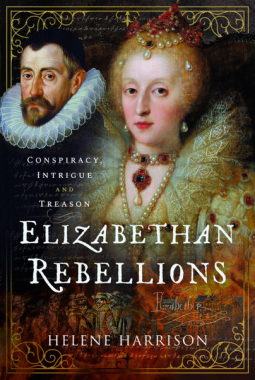 The struggle to be a king or queen in any country during Europe’s medieval or early modern era was only the beginning. They are either the next in line to the throne and inherit the crown, or they sometimes fight to the death to wear it. After the king or queen settles into ruling their respective countries, the real challenge emerges as they have to deal with rebellions and those who commit treason against their monarch. Take, for example, what happened during the reign of Elizabeth I. We consider her reign the “Golden Age” in English history. Still, she had to deal with numerous rebellions and conspiracies surrounding her viewpoints on religion and how she dealt with her cousin, Mary Queen of Scots. In her first book, “Elizabethan Rebellions: Conspiracy, Intrigue, and Treason,” Helene Harrison takes an in-depth look at each rebellion and how they left a mark on Elizabeth I’s reign.
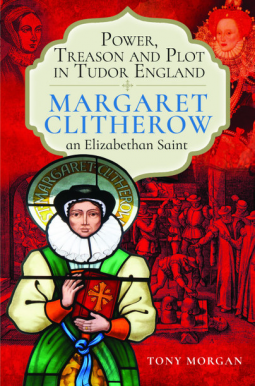 The Tudor dynasty was a time of significant political change, but it was also a time of tremendous religious change. Each Tudor monarch had a different view on the divide between Catholics and Protestants. Although we have an idea of what it might have been like during the reign of Mary I, the way Elizabeth I tackled the issue of religion during her reign. One story of how Catholics were treated in the so-called “Golden Age” of Elizabethan England is the story of Margaret Clitherow. She helped hide a couple of Catholic priests and ended up suffering for her actions by being crushed to death. Tony Morgan tells her story and how she became a Catholic martyr in his book, “Power, Treason, and Plot in Tudor England: Margaret Clitherow, an Elizabethan Saint.”
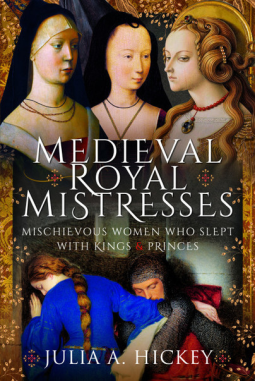 When we think about royal relationships from the past, we do not associate them with love; it is more about cementing power. Princes and kings knew how much was at stake, so they tended to have wives for politics and produce legitimate heirs that would inherit their kingdoms. For matters of love and lust, kings and princes would have mistresses, either of noble birth or lower, on the side. These women have been deemed whores and homewreckers but is that a fair assessment of their legacies? Julia A. Hickey takes a closer look at these misunderstood mistresses in her latest book, “Medieval Royal Mistresses: Mischievous Women who Slept with Kings and Princes.”
 The glitzy, glamorous life of the Tudors portrayed in popular TV shows and novels mask the truth of this infamous dynasty. It is more bloody than what has been described. It is filled with grotesque executions, deadly diseases, bloody battles, and bloody battles. What happened to Richard III’s remains? What was Tudor torture like for those unfortunate victims? What were other devious tales at play in 16th-century Europe? Mickey Mayhew has worked hard to answer these questions by combining 45 of the most gruesome stories from this dynasty into one book, “The House of Tudor: A Grisly History.”
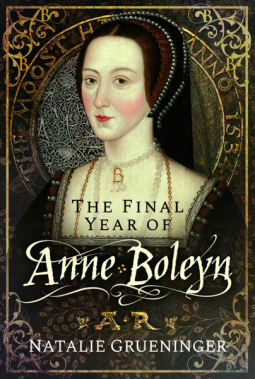 The world of someone close to a king, especially someone close to King Henry VIII, was full of hazards and great triumphs. All the glist and glamor of the Tudor court could not save them from the rage of the King. This could apply to anyone who fell during the reign of this infamous King, but none more so than his second wife and queen, Anne Boleyn. Much has been written about Anne Boleyn and her dramatic fall from grace, specifically the final month of her life, but what was she doing in her last year alive? Natalie Grueninger hopes to answer this question in her latest book, “The Final Year of Anne Boleyn.”
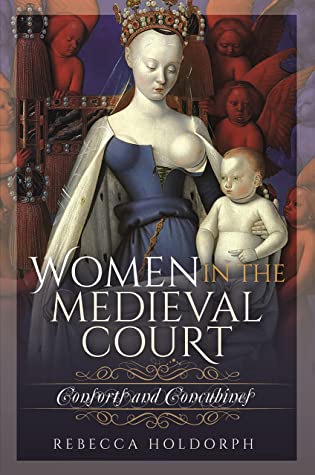 Medieval Europe was inundated with strong rulers and dominant figures who made a difference in how the policies of certain countries were formed. We tend to focus on the male figures, from kings to lords and rebels, when we study medieval European history. Still, the women in their lives significantly influenced how their countries were governed. Although many women stood by the side of their husbands and didn’t make much of an impact on European history, some women chose to stand out from the crowd and make a name for themselves. Rebecca Holdorph has chosen to highlight a handful of these dynamic women throughout medieval Europe in her book, “Women in the Medieval Court: Consorts and Concubines.”
 Adventures of a Tudor Nerd