
 When we study history, we tend to focus on the lives of the elite and the royalty because their lives are well documented. However, there was a large majority of the population who tends to be forgotten in the annals of the past. They are the lower classes who were the backbone of society for centuries, the people who we would call peasants. Now, if we know so much about the higher echelons of society, we must ask ourselves what was life like for those who had almost nothing in life. How did they work? When they did speak out about injustices through revolutions, how were they received? How did they worship? How were they educated? How did they relax after long days of back-breaking labor? Where did they live? These questions and more are answered in Terry Deary’s latest book, “The Peasants’ Revolting Lives”.
I would like to thank Pen and Sword Books for sending me a copy of this book. I had read the first book in this series, “The Peasants’ Revolting Crimes” and I thoroughly enjoyed it. When I heard that he had a sequel book coming out, I knew that I had to read it.
Like his previous book, Deary chooses to highlight the often unbelievable tales of the peasants, emphasizing that they are the true heroes of history. He explores numerous stories from several centuries; the malevolent medieval times, the tumultuous Tudors, and the greedy Georgians tend to be heavily focused upon, especially the evils of the Industrial Revolution. To explore so many different centuries shows Deary’s advanced knowledge of the past, which is quite extraordinary, especially when he combines his casual writing style with his wonderful wit to make this book so engaging.
Most of these tales are rather dark as they often tell the numerous ways peasants died while doing everyday activities. While dying is part of the story, I think it was valuable that Deary balanced it out with how they tried to make the best of a bad situation. His chapter on different revolts that peasants led and their causes was quite fascinating as it shows the peasants in a quasi- leadership role. Deary also lightened the mood a bit when he did a history of football (or what we Americans call soccer) and cricket. I didn’t know much about this version of football so sadly some of his jokes about the subject fell a bit flat for me.
Since I do know a bit about the medieval and Tudor times, the stories about peasants during those times was a tad repetitive for me. However, I did learn a copious amount about the Georgians and those who survived the Industrial Revolution. We tend to think about the Industrial Revolution as a glorious improvement in society, but for those who worked, it was full of hazards to one’s health around every corner.
Overall, I thought this book was good but not as good as the first one. There were some spelling errors, repetitions of facts that I already knew, and some of the humor felt a bit flat for me. However, this is just my opinion. I think that Deary’s writing style is for a younger audience, so if you are searching for a hard-hitting history book, this is not the book for you. However, if you want a casual read where the peasants and their many escapades from the past are highlighted, I would suggest you read, “The Peasants’ Revolting Lives” by Terry Deary.
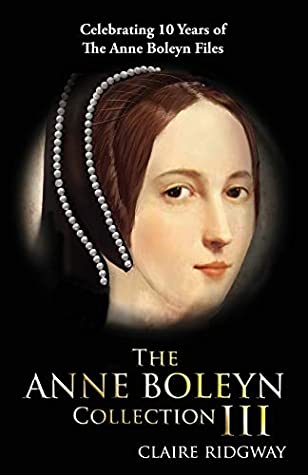 The story and myths of Henry VIII’s second wife, Anne Boleyn, have been debated and dissected for centuries. Was she a cruel and calculating figure who got what she deserved or was she an innocent victim of an evil tyrant of a husband? The funny thing about history is that the truth is never clear cut. Historical figures are human beings, no matter how many centuries separate their lives from our own. They were not all good or all bad, which is the perspective that Claire Ridgway tries to show when she is writing about her favorite figure, Anne Boleyn, either in her books or on her blog, The Anne Boleyn Files. To celebrate the 10th anniversary of the Anne Boleyn Files, Claire Ridgway returns with the latest collection of articles, “The Anne Boleyn Collection III”.
 Have you ever watched a historical drama/ movie or read a historical fiction novel and started to wonder if the “facts” they a portraying are true? You start researching the history of these people and the times that they lived in and it soon becomes a passion. You have your favorite figures to study and you want to defend them when those online decide to criticize them in discussion boards. For some of us, that is as far as it goes, but some choose to make blogs to explore these topics even further. This scenario is similar to what happened with Claire Ridgway, the creator of the popular blog The Anne Boleyn Files; however, her inspiration came from a dream. To share her passion for all things Anne Boleyn, Ridgway has decided to compile some of the most popular articles from her blog into her debut book, “The Anne Boleyn Collection”.
 The stories of the men behind the English crown can be as compelling as the men who wore the crown themselves. They were ruthless, cunning, power-hungry, and for many of them, did not last long. However, there were a select few who proved loyal to the crown and lived long and eventful lives. They are not as well known as their infamous counterparts, yet their stories are just as important to tell. One such man was the grandfather of two of Henry VIII’s wives and the great-grandfather of Elizabeth I. He lived through the reign of six kings and led his men to victory at the Battle of Flodden against King James IV of Scotland towards the end of his life. Thomas Howard, 2nd Duke of Norfolk had his fair shares of highs and lows, including imprisonment, but his story is rarely told. That is until now. Kirsten Claiden-Yardley has taken up the challenge to explore the life of this rather extraordinary man in her book, “The Man Behind the Tudors: Thomas Howards, 2nd Duke of Norfolk”.
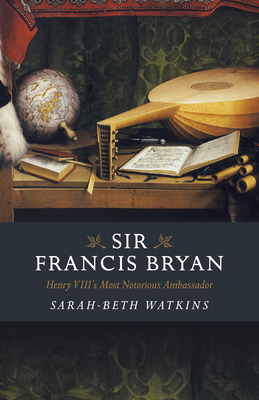 During Henry VIII’s reign, those who were most loyal and the closest to the king did not often last long to enjoy the rewards of his friendship. However, there was one man who stayed in relatively good favor with the king throughout his reign. He was a sailor, a soldier, a diplomat, and acted as an English ambassador mostly in France. He was a cousin to a few of Henry VIII’s wives, a lover of wine, and an infamous womanizer. The name of this rather extraordinary man was Sir Francis Bryan and the story of how he survived the tumultuous reign of Henry VIII is told in Sarah-Beth Watkins’ latest biography, “Sir Francis Bryan: Henry VIII’s Most Notorious Ambassador”.
 England throughout the centuries has known internal strife with civil wars to determine who had the right to rule the island nation. None more so than in the fifteenth century when a tug of war for the English crown broke out. Today, we call this time period “The Wars of the Roses”, but what was it all about? Who were the main figures during this time? What were the crucial battles that defined these wars? How did the Plantagenet Dynasty fall and how did the Tudors become the new dynasty to rule England? These questions and more are explored in Dan Jones’ book, “The Wars of the Roses: The Fall of the Plantagenets and the Rise of the Tudors”.
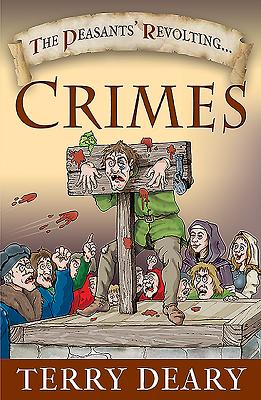 In history, we tend to look at people based on their class. There are the upper class (royalty and nobility), the middle class, and the underclasses (peasants). Most of the focus tends to be on the deeds of the upper and middle classes, yet the underclasses had there own struggles, some of which resulted in them committing crimes. What was life like for the criminals of the underclasses? What type of crimes did they commit and what sort of punishments did they suffer once they were caught? Terry Deary decided to explore the crimes of the British peasants throughout history, in his own humorous way, in his latest book, “The Peasants’ Revolting….Crimes”.
 The study of the Tudors tends to focus on England as a country of focus, however the Tudors did affect other countries like Spain, France, and Scotland. Many know the story of Mary, Queen of Scots and her relationship with Elizabeth I, but many do not know the tale of her mother, Marie de Guise. Her tale is one of love for her family and her adoptive country of Scotland. It is of loyalty and strength to do what she believed was right. She was a sister, a daughter, a mother, a queen, and a regent of Scotland. Marie’s story tends to be overshadowed by her daughter’s tragic tale, until now. Her story is the main focus of Melanie Clegg’s latest biography, “Scourge of Henry VIII: The Life of Marie de Guise”.
 In history, many people tend to focus on the big names. The kings and queens, the rebels, and those who really made an impact. The political advisors and men of the church tend to get left behind in the dust since they are not seen as “important”. However, it is these men who were the backbone of the monarchy, who helped make the king’s vision come to fruition. They tend to come and go, so that is why John Morton’s story is so extraordinary. John Morton helped three separate kings of England, was the enemy to a fourth king, tried to reform the church, and had numerous building projects. His life tends to be overshadowed by the kings that he served, but his life is brought into the light in this biography by Stuart Bradley, “John Morton: Adversary to Richard III, Power Behind the Tudors”.
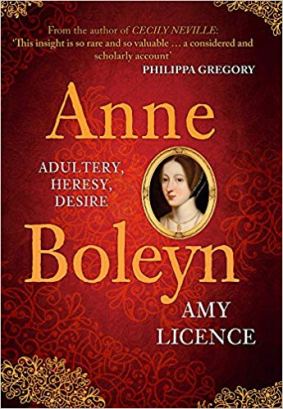 Anne Boleyn, the second wife of Henry VIII and the mother of the future Queen Elizabeth I, is one of the unique characters of the Tudor era. She was the sister of one of the king’s mistresses, Mary Boleyn, which she could have been, but Henry wanted Anne as his queen. Unfortunately, he was married to his first wife, Catherine of Aragon. It is Henry’s divorce to Catherine and his relationship with Anne, the rise and fall, is what many people look at, but there is more to Anne’s story than just her life with Henry. What was Anne’s life really like and what really caused her fall? These are just a few questions that Amy Licence tackles in her latest biography, “Anne Boleyn: Adultery, Heresy, Desire.”
 Adventures of a Tudor Nerd