
Today, I am pleased to welcome Olivia Longueville back to my blog to discuss her latest novel, “Between Two Kings: Book One in the Anne Boleyn Alternative History Trilogy”.
 Author Q&A
Anne Boleyn has been featured in many books, movies, and television shows. Her story has been told by writers many times. How is your historical fiction series different?
In my first book, Between Two Kings, I re-imagined the life of Anne Boleyn, the second wife of King Henry VIII of England. When I think about Anne and her tragic fate, I want to rescue her from execution on trumped-up charges of adultery, high treason, and incest. Every time I visit the Tower of London, I see the place where she was executed, and I imagine that if I had been in the crowd watching her unjust death, I would have shouted, “Stop it! She is innocent!”
As a result of my fascination with Anne and her tragic life, I decided to write an alternate history novel about her where she does not die on the 19th of May 1536. Between Two Kings is part one of my exciting series that reimagines Anne Boleyn’s story in a unique way: having narrowly escaped her execution, she becomes the Queen of France. In a sense, Anne follows in Eleanor of Aquitaine’s footsteps.
My writing style is characterized by lush romanticism and passionate lyricism with beautiful and compact descriptions. In this series, I’m working to re-create the cultural atmosphere of the Renaissance and Tudor eras (my favorite periods!), giving my readers a strong sense of place to let them make the imaginative leap into these captivating times.
This series will appeal to you because this story is about a one-of-a-kind medieval woman, who excelled in a man’s world, and whose fate has been transformed into something utterly spectacular. Over the course of the novel, Anne emerges as a great Renaissance queen, whose indomitable nature refuses to surrender and enables her ascent to power again.
Perfect for fans of Alison Weir, Philippa Gregory, Judith Arnopp, Laura Andersen, Tony Riches, and other Tudor authors, as well as fans of movies and shows of the Tudors.
Are there sequels to Between Two Kings?
In the second book, The Queen’s Revenge, Anne perseveres in her quest for justice and vengeance on the narcissistic, homicidal King Henry. Her odyssey takes Anne from a world of gloom, across the barren landscape of ruin and the tempestuous waters of peril, to a realm of potential happiness in her marriage to the flamboyant, chivalrous King François. Meanwhile, politics and disquieting intrigues abound…
The later sequels explore deadly plots against Queen Anne and King François, including those of Anne’s Catholic enemies. The Valois couple struggle and intrigues against Emperor Charles V and King Henry VIII are woven into their story, for the English monarch will try to exact his own vengeance on his former wife. This culminates in a war of kings with unexpected participants. King Henry’s marriages to his historical wives have their own interpretation. Charles V’s union with Isabella of Portugal might not have an outcome as tragic as the one in history.
Beyond its theme of vengeance, The Queen’s Revenge is an optimistic tale of good triumphing over adversity and of Anne finding new love and building a life in France. The third book, The Boleyn Queen of France, is the tale of Anne’s life in France after everyone in Europe learns the identity of the mysterious French queen. It also explores how she grows into her new role as a French queen. The political background of the story is organically embedded into the romantic and suspenseful storyline.
Do any of the books in the series end in cliff-hangers? Are the books stand alone?
I’ve structured the trilogy so that the books end with exciting, pivotal moments. I created a sense of completion in Between Two Kings. Although The Queen’s Revenge concludes the plotline of Anne’s vengeance, it includes a political cliff-hanger centering on themes that will be developed and resolved in the third book.
Enough information is provided in every book, so a new reader will not be lost.
What is important for writers to create a plausible alternate history reality?
I love history because it shows how people lived in a completely different world. It reveals something new about the world, people, human evolution, traditions, and the way of life in different periods of time. Nevertheless, I often wish to explore history from new angles and to re-imagine events or fates of my favorite historical figures. What if certain events had never happened or had occurred in a different way?
It is a challenge to imagine and construct a plausible alternate history reality. You have to take real historical events and people, analyze them meticulously, and think how events could have unfolded differently, and how people would have responded to altered circumstances. If you like alternate history, you will definitely adore my alternate history universe.
Many are aggrieved with the unjust end of Anne Boleyn’s life. She was most certainly innocent of all the accusations leveled against her, and our hearts weep at the thought of her last days in the Tower of London and how she lost everything, even her life. In my series, I’ve created an alternate universe for Anne that includes the Tudor, Valois, Habsburg, and even Medici storylines, combining them in a plausible way.
I hope you will join me as we reimagine the fate of one of history’s most intriguing woman.
Blurb
Anne Boleyn is imprisoned in the Tower of London on false charges of adultery, high treason, and incest on the orders of her husband, King Henry VIII of England. Providence intervenes – she escapes her destined tragedy and leaves England. Unexpectedly, she saves King François I of France, who offers her a foolhardy deal, and Anne secretly marries the French monarch.
With François’ aid, she seeks vengeance against the English king and all those who betrayed her and designed her downfall in England. Henry must face the deadly intrigues of his invisible enemies, while his marital happiness with his third queen, Jane Seymour, is lost and a dreadful tragedy also strikes the king. The course of English and French history hangs in the balance.
From the gloomy Tower of London to the opulent courts of England, France, and Italy, brimming with intrigue and danger – Anne Boleyn survives, becoming stronger and wiser, and fights to prove her innocence. Her hatred of Henry is inextricably woven into her existence.
If you are interested in “Between Two Kings”, you can purchase it either on Amazon or Amazon UK by clicking on the following links:
https://bit.ly/Between2Kings-UK
About the Author- Olivia Longueville
Olivia has always loved literature and fiction, and she is passionate about historical research, genealogy, and the arts. She has several degrees in finance & general management from London Business School (LBS) and other universities. At present, she helps her father run the family business.
During her first trip to France at the age of ten, Olivia had a life-changing epiphany when she visited the magnificent Château de Fontainebleau and toured its library. This truly transformed her life as she realized her passion for books and writing, foreshadowing her future career as a writer. In childhood, she began writing stories and poems in different languages. Loving writing more than anything else in her life, Olivia has resolved to devote her life to creating historical fiction novels. She has a special interest in the history of France and England.
Olivia’s social media profiles:
Personal website: http://www.olivialongueville.com/
Project website: http://www.angevinworld.com/
Twitter: @O_Longueville
 Have you ever wondered what it would be like to travel into the past? You could interact with your favorite historical figures and truly understand what they were like. You could dine like a king or a commoner, dress to impress and experience everyday life. There would be risks involved, but any history nerd might jump at the chance to explore the past. One lucky history student named Beth Wickers discovers that a ring in her professor’s office allows her to travel back into the past to visit her favorite historical icon, Anne Boleyn. Can Beth help Anne to survive the dangerous Tudor court of Henry VIII? Follow Beth’s adventures in Tudor England in Phillipa Vincent-Connolly’s first historical fiction novel, “Timeless Falcon- Volume One”.
 One of the most popular Tudor historical fiction series in recent memory has revolved around the enigmatic Thomas Cromwell. Of course, I am talking about the famous
 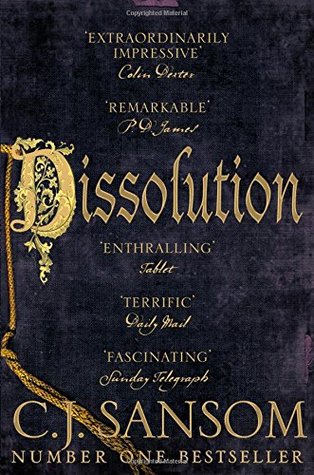 The Tudor dynasty marked tons of changes in society and religious norms. In 1537, the changes are in full force. Anne Boleyn was executed a year earlier and Henry’s third wife, Jane Seymour recently passed away after giving birth to Edward VI. Religious reformers are clashing with the Catholic Church after Henry VIII has declared himself the Supreme Head of the Church of England. Henry VIII’s reign marked the changing point in societal and religious norms, none more so than the dissolution of the monasteries. As monasteries and monks alike adjust to the new ways of life, the monastery at Scarnsea buzzes with activity and murder. Henry VIII’s right-hand man, Thomas Cromwell, sends an unlikely man to investigate the situation; the hunchback reformer lawyer, Matthew Shardlake. This is the world that C.J. Sansom has chosen to create in the first book of his Tudor mystery series, aptly named, “Dissolution”.
 The story and myths of Henry VIII’s second wife, Anne Boleyn, have been debated and dissected for centuries. Was she a cruel and calculating figure who got what she deserved or was she an innocent victim of an evil tyrant of a husband? The funny thing about history is that the truth is never clear cut. Historical figures are human beings, no matter how many centuries separate their lives from our own. They were not all good or all bad, which is the perspective that Claire Ridgway tries to show when she is writing about her favorite figure, Anne Boleyn, either in her books or on her blog, The Anne Boleyn Files. To celebrate the 10th anniversary of the Anne Boleyn Files, Claire Ridgway returns with the latest collection of articles, “The Anne Boleyn Collection III”.
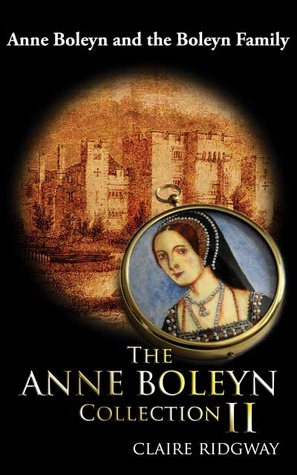 The Boleyn family have been viewed as social climbers, who only desired power and prestige, in history and novels for centuries; their fall from grace was due to their ambitions. But, is this true? Did Anne Boleyn’s family only care about getting to the top by any means necessary? Were they manipulative, cunning, and cruel like they have been portrayed in dramas and novels? Who were the Boleyns and why have they been so maligned in history? In her second book of this series, “The Anne Boleyn Collection II”, Claire Ridgway of The Anne Boleyn Files examines Anne Boleyn and the truth about her family.
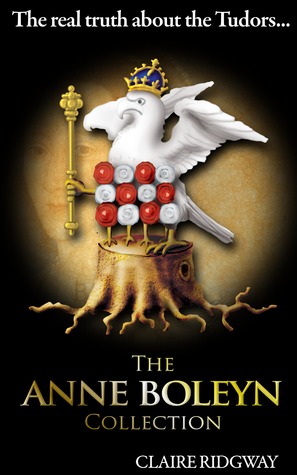 Have you ever watched a historical drama/ movie or read a historical fiction novel and started to wonder if the “facts” they a portraying are true? You start researching the history of these people and the times that they lived in and it soon becomes a passion. You have your favorite figures to study and you want to defend them when those online decide to criticize them in discussion boards. For some of us, that is as far as it goes, but some choose to make blogs to explore these topics even further. This scenario is similar to what happened with Claire Ridgway, the creator of the popular blog The Anne Boleyn Files; however, her inspiration came from a dream. To share her passion for all things Anne Boleyn, Ridgway has decided to compile some of the most popular articles from her blog into her debut book, “The Anne Boleyn Collection”.
 A foreign princess who travels to England to marry the king to establish a strong political alliance. To those who study history, this is a story that has been told numerous times, but what makes this particular story unique is the people involved. The bridegroom was the recently-widowed Henry VIII, the shadow of his former self and notorious throughout Europe for having his second wife Anne Boleyn executed. His new bride to be is the German princess Anna of Kleve. To say that they did not see eye to eye would be an understatement as the marriage did not last long. Her story is often swept under the rug. Anna is often viewed as the “lucky” wife of Henry VIII, but was she? What was Anna’s story and what was her marriage with Henry really like? Alison Weir has taken up the challenge to give her readers a taste of what Anna’s life might have been like in this novel, “Six Tudor Queens: Anna of Kleve, Queen of Secrets”.
 The stories of King Henry VIII and the men around him have fascinated generations of historians, but there was one man who has received a negative reputation for his actions. He was the supposed son of a butcher who rose to be Henry VIII’s right-hand man, until his dramatic fall in July 1540. Thomas Cromwell was credited for helping Henry with his Great Matter, the fall of Anne Boleyn, the establishment of the Church of England, and the disastrous marriage between Henry and Anna of Cleves. Diarmaid MacCulloch has taken on the challenge to figure out who Thomas Cromwell really was by sifting through all remaining archival records that we have from this extraordinary man. It is in this book, “Thomas Cromwell: A Revolutionary Life” that MacCulloch masterfully explores the story of this man who changed English and European history forever.
 Adventures of a Tudor Nerd