
 The study of the Tudors tends to focus on England as a country of focus, however the Tudors did affect other countries like Spain, France, and Scotland. Many know the story of Mary, Queen of Scots and her relationship with Elizabeth I, but many do not know the tale of her mother, Marie de Guise. Her tale is one of love for her family and her adoptive country of Scotland. It is of loyalty and strength to do what she believed was right. She was a sister, a daughter, a mother, a queen, and a regent of Scotland. Marie’s story tends to be overshadowed by her daughter’s tragic tale, until now. Her story is the main focus of Melanie Clegg’s latest biography, “Scourge of Henry VIII: The Life of Marie de Guise”.
I would like to thank Pen and Sword Books for sending me a copy of this pleasant biography. I knew quite a bit about her daughter, but Marie de Guise is just as remarkable and deserves to be told.
Clegg begins her biography in the most unusual way, but starting with the death of King James V, Marie de Guise’s second husband. This event, as Clegg will show, radically alters the path that Marie will take. Of course, Marie’s life took many turns, even from her early years. Marie de Guise was the eldest daughter of Claude de Lorraine, Duc de Guise and Antoinette de Bourbon, Duchesse de Guise. Her family, the Lorraines, were extremely close and very loyal to King Francois I of France, especially her father Claude de Lorraine, Duc de Guise. Clegg explores Marie’s formative years, both with her paternal grandmother Philippa de Geulders, Dowager Duchesse de Lorraine, and inside the glamorous court of Francois I, and how both experiences shaped Marie into the remarkable woman she would become.
It was truly a twist of fate that Marie de Guise would marry King James V of Scotland, who was her second husband. Marie was first married to Louis d’Orleans, Duc de Longueville and King James V was married to Princess Madeleine. However, both Louis and Madeleine died rather young, so Marie and James V both had to look for new spouses. James V wanted a French marriage, but he was not the only monarch who was looking for a bride. His uncle King Henry VIII just lost his third wife to illness and was trying to woo Marie. To say things did not go Henry’s way would be an understatement as Marie became Queen of Scotland.
It was in Scotland where we see Marie’s true colors come out in full force. Clegg shows that although Marie loved James, things were not smooth sailing as they would have hoped. Marie’s daughter Mary Stewart, later Mary Queen of Scots, was born only a few days before her father’s untimely death shortly after the Battle of Solway Moss in 1542. Such a triumph turned tragedy would have been agonizing for anyone to deal with, but Marie de Guise knew that she had to stay strong for her daughter. As Regent of Scotland, until Mary came of age, Marie did battle, both physical and spiritual, with every Tudor monarch, from Henry VIII to Elizabeth I.
This book was a joy to read. Melanie Clegg was able to make a biography read like a novel, yet stay informative and academic. I did not know what to expect, since this was the first book by Melanie Clegg that I have ever read, but from page one I was hooked. This was the first biography about Marie de Guise that I have ever read and now I want to read more about her. If you would like to read an engaging biography about Mary, Queen of Scots vivacious mother Marie de Guise, I highly recommend you read, “Scourge of Henry VIII: The Life of Marie de Guise” by Melanie Clegg.
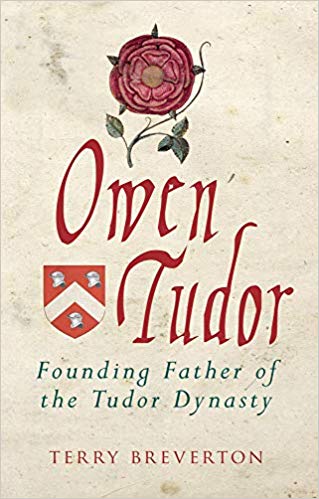 Henry VII winning at the Battle of Bosworth Field on August 22, 1485, is viewed as the beginning of the Tudor Dynasty. However, the story of the Tudor family goes back centuries in Wales. What we consider the story of the Tudors tends to start with a man named Owen Tudor, a servant, who fell in love and married the dowager Queen of England, Catherine of Valois. Quite a romantic tale, but how much of it is true? Were the Tudors simple folk or did they have a bigger role to play in their native Wales? What roles did Owen and his sons play in the Wars of the Roses? These questions and more are explored in Terry Breverton’s latest biography, “Owen Tudor: Founding Father of the Tudor Dynasty”.
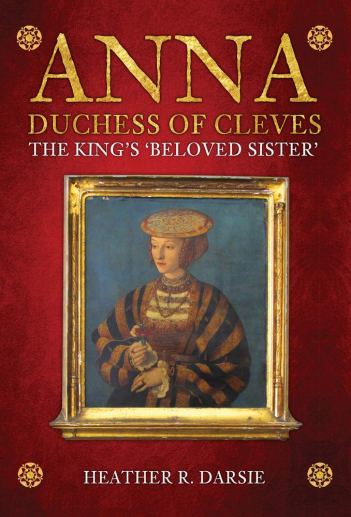 The wives of Henry VIII are some of the most hotly-discussed women of the Tudor Dynasty. They all had unique lives and origins before and after they met the man that connects them all. Two of his brides, Catherine of Aragon and Anna, Duchess of Cleves, were foreign princesses and their marriages were used to create alliances with Spain and Germany respectfully. While Catherine of Aragon and the rest of the wives of Henry VIII get a ton of attention, Anna Duchess of Cleves tends to be brushed aside. She is often seen as the wife that Henry did not approve of because of her looks. However, Heather R. Darsie decided to change how we view Anna with her groundbreaking debut biography, “Anna, Duchess of Cleves: The King’s ‘Beloved Sister’”.
  Every family has their own stories. Stories of how they became a family, how they fought hard to get where they are today. Stories filled with love, drama, and endurance. When it comes to royal families, their stories tend to be broadcast to the masses, and none more so than the Tudors, who have captured the imagination of history lovers for generations. The Tudor’s story is often told in parts, focusing on individual people like Henry VIII or Elizabeth I. The Tudor story is fascinating told in parts, but as a whole, one sees how hard they worked to become a dynasty that will be remembered for centuries after their deaths. It is time for the story of this extraordinary family to be told as a whole and Leanda de Lisle does so in her book, “Tudor”.
 In recent years, the study of the English conflict known as the “Wars of the Roses” has become rather popular. The Lancasters and the Yorks fighting for the English throne. Only one can be the winner. When we do look at this time period, we tend to focus on the people involved in the battles and the political aspect of the conflict. The battles, how they were fought, and why the conflict started in the first place tend to be pushed to the sideline. That is not the case with this particular book. In Hugh Bicheno’s book, “Battle Royal- The Wars of the Roses: 1440-1462”, the political and military aspects combine with family histories for a comprehensive look into what made this time period so fascinating.
 The deaths of the Duke of York, Earl Salisbury and Edmund Earl of Rutland at the Battle of Wakefield at the end of 1460 marked a changing point for how the Wars of the Roses was fought. Now it was not going to be simply a matter of who was going to be the King of England, but it was a war of revenge. What the Lancastrians did not realize at the time was the fact that these deaths would unleash two men who would mark the destruction of the Lancastrian cause; Edward Duke of York, the future King Edward IV, and Richard Neville Earl of Warwick “the Kingmaker”. In the third book of Conn Iggulden’s Wars of the Roses series called “Bloodline”, Iggulden explores the rise of these two dynamic men and how family matters tore the two best friends apart.
 When one thinks about epic tales stories of adventures and romance tend to come to mind. One hardly thinks about the construction of a magnificent building as an “epic tale” with monks and builders as the main characters. We see cathedrals as these massive buildings from the past used as churches, but we rarely think about how they were constructed and why. Who were the people who decided to make these spectacular buildings and what might have their lives have been like? These are just some of the questions that Ken Follett wanted to try and answer in his monumental historical fiction masterpiece, “The Pillars of the Earth”.
 Love stories tend to be rare during the Tudor dynasty. They are often of royal women marrying men well below their station in life and then the ruling monarch throwing them in the Tower until they ended up divorcing or dying. Nothing really romantic about these stories. However, there is one story that breaks the mold of disastrous love. It is the story of Mary Tudor, the sister of King Henry VIII and the Dowager Queen of France, who married the charming knight and best friend of her brother, Charles Brandon. Their story is often told in historical fiction novels, but Sarah-Beth Watkins decided to dive deep into the lives of these two lovebirds, before and after they were married, in her book, “The Tudor Brandons: Mary and Charles- Henry VIII’s Nearest and Dearest”.
 When one thinks about Queens of Scotland during the time of the Tudors, many automatically think of Mary Queen of Scots and her tragic life. However, there was another queen who had a deep connection to the Tudors and was also a queen of Scotland. She tends to be pushed aside in favor of her more famous siblings; Arthur Tudor, Henry VIII, and Mary Tudor. Her story is full of turmoil and triumphs. Her only desire was to unite England and Scotland peacefully, but the choices that she made in her lifetime would prove foolish, leading to more troubles between the two nations. This is the story of Henry VIII’s oldest sister Margaret, which is brought to life in Sarah-Beth Watkins’ book, “Margaret Tudor Queen of Scots: The Life of King Henry VIII’s Sister”.
  Adventures of a Tudor Nerd