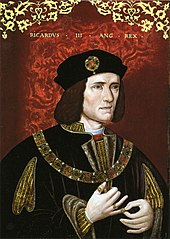
 In honor of the third anniversary of the reburial of King Richard III, I have decided to write down my opinions about this controversial king.
When one thinks of Richard III, one thinks of controversy especially about how he came to be on the throne. In a matter of months after Edward IV died, Richard became the notorious Richard III. It is the belief of his contemporaries that in order to retrieve the throne Richard had to have the most heinous act imaginable performed: he ordered the murder of his nephews.
In Desmond Seward’s book Richard III: The Black Legend, Seward characterizes the way this man has been viewed throughout history:
Richard has left two popular legends. The earlier is Shakespeare’s crookback, whose element of caricature has been heightened by a theatrical tradition stretching from Colly Cibber to Laurence Olivier (though Shakespeare was nearer the truth than some of the king’s latter day defenders). The second, later, legend is of a folk hero manque, a gallant young ruler, the supreme victim of vilification in English history. Supporters of this ‘white’ legend have produced some very entertaining literature in portraying Richard as a martyr to Tudor propaganda.
The two legends are the black legend that Richard III willfully had his nephews murdered, and the white legend that he is innocent of all crimes and that the Tudors framed him in order to promote their own dynasty. I have always been fascinated by the time known as the Wars of the Roses, especially this incident in particular. For me, Richard III is one of those controversial characters in history who we may never really truly understand all of his story. That being said, it is my firm belief that the black legend is the most accurate. I believe that Richard has his nephews murdered.
My opinion about Richard III was not made in haste, in fact I have read quite a bit about him. My senior thesis for my Bachelor’s degree was on how Richard III’s and Henry VII’s reputations have changed overtime so I read many biographies and histories about Richard III over the last 500 years in order to come up with my opinion on Richard.
I would like to first say that I do not believe that Richard III was this evil hunchback of 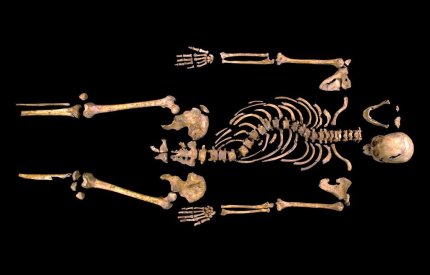 Shakespearean lore. I used to believe this and then his skeleton was discovered under the car park in Leicester. After looking at his skeleton, one would think he would be unfit to fit, but I came across a documentary that proved otherwise. “Resurrecting Richard III” by PBS was able to find a man in England who had the exact same amount of curvature in his back as Richard III. It proved that Richard could fight and that he wasn’t as Shakespeare described him. If you haven’t seen this documentary, I highly recommend that you do.
The next aspect I want to explore is his personality and his behavior. I believe that Richard was a complex man and he had to be in order to survive in the time that he lived in, the Wars of the Roses. With the examples of his father Richard duke of York and his brothers Edward IV and George Duke of Clarence, I believe that what he witnessed in his early life was what shaped him as he became king. Think about it. Richard’s father wanted to help the country by becoming the king’s Lord Protector but then decided to take the throne for himself. This did not work as well as he planned as he died at the battle of Wakefield on December 30, 1460. Since Richard III was still a young man when all of this happened, this must have affected him like it did his brothers Edward and George. Edward would fight with George and Richard by his side to become Edward IV. I believe that once Edward was able to take Henry VI into custody that he had ordered Richard III to help assist in the murder of the old king because he was the one brother who he could trust. George would become angry with Edward and would betray him not once but twice and so Edward had to order for George to be executed allegedly in “a butt of Malmsey wine” on February 18, 1478.
It was the death of George that I believe really was the turning point for Richard. He came from a family of men who coveted the throne so much that they would fight not only their cousins but their own brothers for the crown. George was careless and allowed himself to be caught in his betrayal. If Richard wanted the throne, he knew he had to be more careful. He couldn’t betray Edward while he was still alive or he risked his own death, like George. No, Richard would have to wait until the time was right. On April 9, 1483, King Edward IV died, leaving the throne to his young son Edward V. This was to be a happy occasion for the house of York, but it was not to be. The one man in charge of their care and well being was their uncle, Richard duke of Gloucester, their Lord Protector.
 Just like his father before him, Richard was granted the right to make orders for the king, not because he was well liked, but because he fought against the Woodvilles and the Rivers for the right. He was fighting his brother’s wife’s family for the right to control the country. Richard would have Lord Rivers killed because of “treason” to protect the boy king. Edward V and his younger brother Richard duke of York were led to the Tower of London “for protection” and were never to be seen again after 1483. Since the young king was out of the picture, I believe because Richard had the boys murdered, the only one who had the right to the throne was Richard himself. Just like he planned. To seal the deal, Richard III issued the Titulus Regius in 1484 which declared the children of Edward IV and his queen Elizabeth Woodville illegitimate because Edward had promised to marry another woman before Elizabeth.
These kinds of moves were cold and calculated. Richard had time to plan all of this out, from 1478 to 1483, 5 years to be exact. If Richard was really concerned about the kingdom, he would have raised Edward V and his brother as his own sons, allowing them to rule the country as their own. He does not and his name will be tarnished forever because of it.
However, Richard’s reign does not last as long as he hoped because on August 22, 1485, Richard is killed at the Battle of Bosworth Field. We all know that it is at Bosworth Field where Henry Tudor becomes Henry VII and the Tudor dynasty begins. Richard is hacked to death, carried on horseback like a boar (his symbol was a white boar so they were mocking him) and was buried at the Church of the Greyfriars. His death marked the end of the Plantagenets dynasty. This was not a proper death for a king but a hated villain. I do not believe that the amount of brutality was necessary for Richard to die. He was still an ordained king, even if his methods on obtaining the throne were questionable.
Richard III is one of those kings who will continue to fascinate those who study the Plantagenets dynasty, the Tudor dynasty and the Wars of the Roses. This one man is still being hotly debated even to this day.
What are your opinions on this controversial king?

 learning and discoveries. While that is true, like any age, there were good elements and bad elements. We tend to overlook the bad elements with Elizabeth’s “Golden Age” and move on to the good elements. However, we cannot get a full image of the age if we only look at the good elements. That is why A.N. Wilson wrote the book “The Elizabethans”:
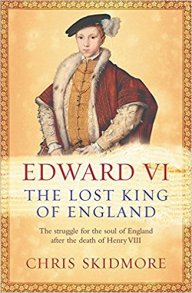 When we think of the Tudor rulers, we think of Henry VII, Henry VIII, Mary I and Elizabeth I. However, there was another king who ruled for only five years and was Henry VIII’s only legitimate male heir, Edward VI. Most people think that Edward was a mere pawn of his government officials but is that accurate? Chris Skidmore tackles that question of who was the real Edward VI in his book “Edward VI: The Lost King of England”.
 making a foothold in England. Most people think that Henry VIII was the one who helped bring the Protestant faith to England when he broke away from Rome. Henry VIII might of helped get the reform started, but Edward VI was the one who took the Protestant movement and was willing to make it known throughout England, even if it meant facing against his most formidable foe, his half-sister Mary who was a devout Catholic.
 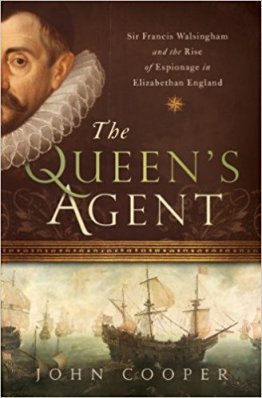 When we think about spies, we often think of modern examples like the ones we see in movies. However, spies and their spymasters have been working hard to protect their countries and their rulers for centuries. For Queen Elizabeth I, the only man she could trust to be her spymaster was Sir Francis Walsingham. But is it fair to call Walsingham as only Elizabeth’s “spymaster”? That is the question that John Cooper tries to answer in his book “The Queen’s Agent: Sir Francis Walsingham and the Rise of Espionage in Elizabethan England”. Who was Sir Francis Walsingham and what did he do to help his queen and his country?
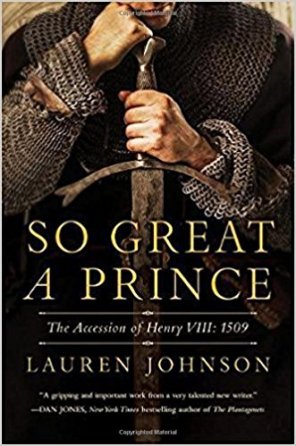 There are some books that leave a very good impression on you. Books that even when you stop reading it and move to another, you keep thinking about it. For me, this is one of those books. “So Great a Prince: The Accession of Henry VIII 1509” by Lauren Johnson is a page turner, but not because of the main character Henry VIII, but because Johnson writes about how the average citizen was affected by the accession of Henry VIII.
 attention towards women like Elizabeth I, Isabella of Castile, Katherine of Aragon, Mary I and Catherine de Medici. These seemed like extraordinary examples of power that stretched the boundaries on what was right and acceptable for women of the time. That, however, couldn’t be further from the truth. In fact, the sixteenth century in Europe was filled with powerful women who do not get the attention that they deserve. In Sarah Gristwood’s book “Game of Queens: The Women who made Sixteenth- Century Europe”, we are shown that it really wasn’t the men who had control, but their wives and daughters.
 On September 8, 1560, a young woman’s body is discovered at Cumnor Place alone at the bottom of the stairs with her neck broken with no other marks on her body. This would have been declared an accidental death by normal people, however the woman was anything but a normal woman; this was the wife of Robert Dudley, Amy Robsart. It was because of who she was and who her husband was that people speculated that foul play was afoot.
  became the Master of the Horse for Elizabeth, Robert changed. He was at home less and Amy had to take over the household affairs. It is through letters that Amy wrote that Skidmore is able to paint a picture for us about how their household worked. The day that Amy died was very peculiar in the fact that she wanted to be left alone; her husband was with the Queen miles away. The original jury found that this was a case of accidental death, however Skidmore decided to take a deeper look into the case. He decided to explore the possibility of accidental death by stairs, the possibility of a medical explanation on why Amy could have fallen down the stairs, and he found the original coroner’s report, which portrays a different story. The amount of research Skidmore pours into this one accidental death is admirable. The one issue I have with the book is the fact that he describes the type of staircases and the details of the coroner’s report but he doesn’t show pictures of these things so it’s a bit hard to visualize what he is talking about.
 Elizabeth I
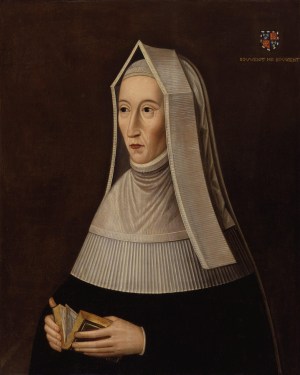 essential. It was a world controlled by men and Margaret played their game well. She was first married to Henry Tudor’s father Edmund when she was around 12 or 13 years old and had Henry when she was either 13 or 14. With the amount of trauma that she endured giving birth to Henry, he was her only child. Only a few months before Henry was born, Edmund died, leaving Margaret a widow and she had to give her son over to an enemy of the Beauforts. As the Wars of the Roses progressed, Henry soon became the last hope for the Lancastrian cause. His life hung in the balance as he and his uncle Jasper was forced into exile. It was through Margaret’s two other marriages that she was able to secure land for her son and was able to help create an army for her son so that he could claim the throne. Most of this she planned while her husband, Lord Stanley, was a strong supporter for the Yorkist cause. This was such a gamble, but the biggest gamble that Margaret made was when she convinced Elizabeth Woodville, the wife of Edward IV, to allow her daughter Elizabeth of York to marry Henry after he defeated Richard III at the Battle of Bosworth Field. All of her hard work paid off after Bosworth and her son Henry Tudor became Henry VII. Margaret had to be very strong in order to survive through all of this turmoil in order to see her only son succeed.
 between their children would help mend the rift in the country. With the marriage between Elizabeth and Henry Tudor, the York and Lancaster houses were united under the red rose of Tudor. I have always wondered what it must have been like for Elizabeth to know that she had to marry Henry who fought on the opposite side of her entire family. At first, it must have been rough but it did develop into love between the two. And then Henry had to deal with men who claimed to be her brothers who were led to the Tower of London and supposedly never heard of again. It must have been hard for Elizabeth to hear about these pretenders who claimed to be her long-lost brothers. At the same time she was building a family with Henry with her sons and daughters. Just when everything was going well for the family, Elizabeth and Henry’s eldest son Arthur died right after he had married Catherine of Aragon, the daughter of Isabella and Ferdinand of Spain. The blow must have rocked their marriage to the core, but luckily they had each other and their other son Henry VIII. It was the love that they had for one another that helped get Elizabeth of York and Henry VII through the rocky patches and helped establish the Tudor dynasty.
 her marriage, to Henry VIII, was arranged all while living in poverty. She could have thrown in the towel and asked to go back home but she stayed and married King Henry VIII, becoming Queen of England. Everything was going fine in their marriage until the miscarriages happened and the fact that she could only give birth to one child, a girl named Mary. This must have felt so horrible for Catherine since Henry only wanted a male heir and she could not give him what he wanted. Henry wanted a divorce and decided to use the fact that she was married to his brother as an excuse to divorce. Since Catherine said she was still a virgin after Arthur died, the Catholic church did not see a reason to hand out the divorce and took a long time to decide so Henry decided to break away from the church and divorced Catherine that way. She was then dismissed to never see him or her daughter Mary again, although she would argue that she was his one true and faithful wife until her dying breath. The amount of courage it must have taken to get through all the Henry through her way is very admirable and inspiring.
 Catherine was a scholar and had written two books, a first for a Queen of England. She acted as a king step mother to Henry’s three children; Edward, Elizabeth and Mary, but she had the best relationship with Elizabeth. After Henry died, Catherine married her sweetheart Thomas Seymour and had Elizabeth live with them. It is rumoured that Thomas Seymour had an inappropriate relationship with Elizabeth. It must have been hard for Catherine to accept this fact and in some cases, it is said that she even assisted Thomas with these incidents. Catherine had to make the hard decision to ask Elizabeth to leave her household, even though she loved her very much. Catherine died giving birth to a daughter. Catherine had to act as a nurse, scholar, wife, and step mother in a time when it was hard to even do one of these jobs properly.
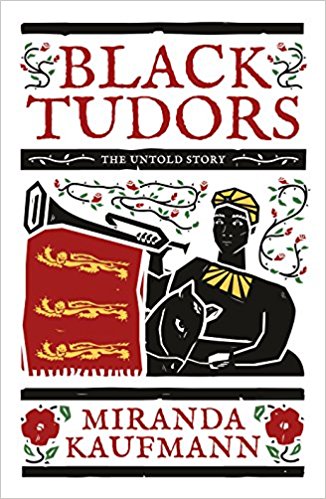 I have always enjoyed reading about the Tudor time period and learning new things about it. There have been some titles that have caught my eye and I have wanted to read for quite some time. This is one such books: “Black Tudors: The Untold Story” by Miranda Kaufmann.
 Adventures of a Tudor Nerd