
 Today, I am pleased to welcome Anne O’Brien to my blog to discuss the inspiration for her latest novel, The Queen’s Rival. I would like to thank Anne O’Brien and The Coffee Pot Book Club for allowing me to be part of this blog tour.
In past years I have written about a variety of medieval women, either royal or attached to the Court. I enjoy investigating how these women played a role in the political manoeuvrings of their day. Although we so rarely hear the voices of these women, since they lived in a man’s world and the history was invariably written by men, their involvement was often considerable and they deserve our interest.
Cecily Neville, Duchess of York, is one of the most appealing women of English medieval history, worthy of celebration. Most medieval women verge towards the invisible, a two-dimensional entity without character or apparent influence; Cecily Neville is an exception. The Wars of the Roses were both vast in scope and complex in the range of family connections. So was Cecily’s own Neville family with its royal blood inherited through their mother Joan, Countess of Westmoreland, daughter of John of Gaunt. Cecily demanded in a regal fashion that she be allowed to speak for herself. It was a challenge that lured me to become involved; I accepted the challenge and wrote about her.
Without a doubt, Cecily was a remarkable woman, living for eighty years through five reigns, interacting with a vast dramatis personae of famous, infamous, and influential characters in these tumultuous years. She was the mother of two kings, Edward IV and Richard III, and grandmother to a Queen Consort, Elizabeth of York, who stepped across the divide between York and Lancaster and married King Henry VII.
On the surface, this would seem to be a life bringing Cecily immense satisfaction and personal achievement, but it was also a life of tragedy. Cecily outlived all but two of her twelve children, both daughters, some dying in infancy, others meeting terrible ends. George, Duke of Clarence, was executed for treason, on the orders of his brother King Edward, in the Tower of London. Richard III died on the battlefield at Bosworth; Edmund of Rutland met his end in an act of revenge after the Battle of Wakefield. What heartbreak this must have inflicted on her, added to the death of her husband, Richard, Duke of York, at Wakefield.
Cecily’s life also witnessed its share of scandal. The rumour of her liaison with the common archer Blaybourne, thus prompting the blot of illegitimacy against King Edward IV, was too valuable a rumour to ignore for those such as the Earl of Warwick and Duke of Clarence who would willingly depose King Edward. Was the scandal true? Unlikely, but the widespread gossip must be faced. How difficult for a woman of Cecily’s pride to accept that her own family would dishonour her reputation.
Would such tragedy obliterate the strength of Cecily’s character? Cecily worked tirelessly for the House of York. She stood by her children as far as it was possible, even George of Clarence, trying to bring him back into the Yorkist fold. In Ludlow, abandoned by her husband, Cecily faced a leaderless Lancastrian army and howling mob intent on plundering the town. She proved to be a woman of great courage. As old age approached, she devoted herself to a life of duty and formidable piety almost worthy of the life of a nun, a life of loyalty to the family she had always supported.
Cecily, Duchess of York, was the doyenne of late medieval history, the Queen who was never crowned. It would have been unforgivable of me to leave her out of my pantheon of medieval ‘heroines’.
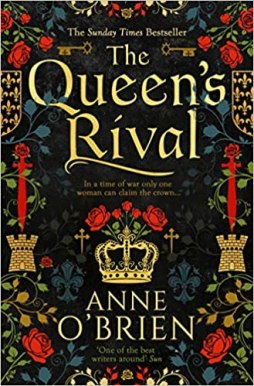 (Blurb)
England, 1459.
One family united by blood. Torn apart by war…
The Wars of the Roses storm through the country, and Cecily Neville, Duchess of York, plots to topple the weak-minded King Henry VI from the throne.
But when the Yorkists are defeated at the Battle of Ludford Bridge, Cecily’s family flee and abandons her to face a marauding Lancastrian army on her own.
Stripped of her lands and imprisoned in Tonbridge Castle, the Duchess begins to spin a web of deceit. One that will eventually lead to treason, to the fall of King Henry VI, and to her eldest son being crowned King Edward IV.
Buy Links
Amazon UK: https://www.amazon.co.uk/Queens-Rival-Anne-OBrien/dp/0008225532
Amazon US: https://www.amazon.com/Queens-Rival-Anne-OBrien/dp/0008225532
Amazon CA: https://www.amazon.ca/Queens-Rival-Anne-OBrien/dp/0008225532
Amazon AU: https://www.amazon.com.au/Queens-Rival-Anne-OBrien/dp/0008225508
Barnes and Noble: https://www.barnesandnoble.com/w/the-queens-rival-anne-obrien/1137842630
Waterstones: https://www.waterstones.com/book/the-queens-rival/anne-obrien/9780008225544
Audio: https://www.audible.co.uk/pd/The-Queens-Rival-Audiobook/0008225524
Blackwells: https://blackwells.co.uk/bookshop/product/The-Queens-Rival-by-Anne-OBrien-author/9780008225544
WHSmith: https://www.whsmith.co.uk/products/the-queens-rival/anne-obrien/hardback/9780008225544.html
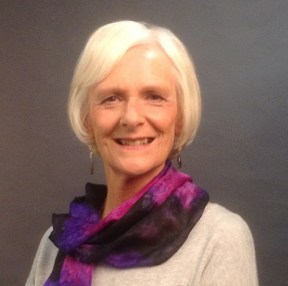 Author Bio
Anne O’Brien
Sunday Times Bestselling author Anne O’Brien was born in West Yorkshire. After gaining a BA Honours degree in History at Manchester University and a Master’s in Education at Hull, she lived in East Yorkshire for many years as a teacher of history.
Today she has sold over 700,000 copies of her books medieval history novels in the UK and internationally. She lives with her husband in an eighteenth-century timber-framed cottage in the depths of the Welsh Marches in Herefordshire. The area provides endless inspiration for her novels which breathe life into the forgotten women of medieval history.
Social Media Links:
Website: https://www.anneobrienbooks.com/
Twitter: https://twitter.com/anne_obrien
Facebook: https://www.facebook.com/anneobrienbooks/?ref=bookmarks
LinkedIn: https://www.linkedin.com/in/anne-o-brien-89668a45/
Pinterest: https://www.pinterest.co.uk/thisisanneobrie/_saved/
Amazon Author Page: https://www.amazon.co.uk/Anne-OBrien/e/B001HD1NHI
News Letter sign up: https://www.anneobrienbooks.com/
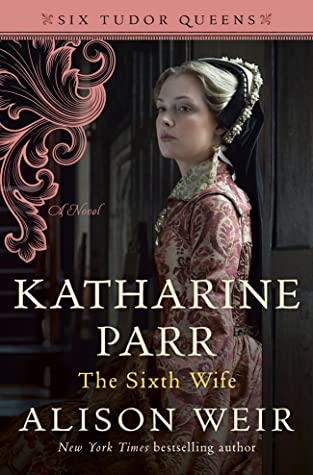 A woman twice widowed with no children of her own has the opportunity to choose who she will marry next. Will she marry the man of her dreams or marry the man who has been married numerous times and has killed two of his wives already? It seems like a no-brainer who she should choose, but the man she married for her third marriage was the man who was married numerous times before simply because he is the notorious King Henry VIII and you do not disobey the king. However, his last wife, Katharine Parr, is willing to fight for the religious reforms and her stepchildren that she loves dearly. In the last book of the Six Tudor Queens series, “Katharine Parr: The Sixth Wife”, Alison Weir takes her readers on an extraordinary journey to explore who this brave woman was and why she is the one who survived Henry’s last days.
 Today, it is my pleasure to welcome Catherine Meyrick to my blog to share an excerpt from her novel, “Forsaking All Other”. I would like to thank Catherine Meyrick and The Coffee Pot Book Club for allowing me to take part in this blog tour.
  (Blurb)
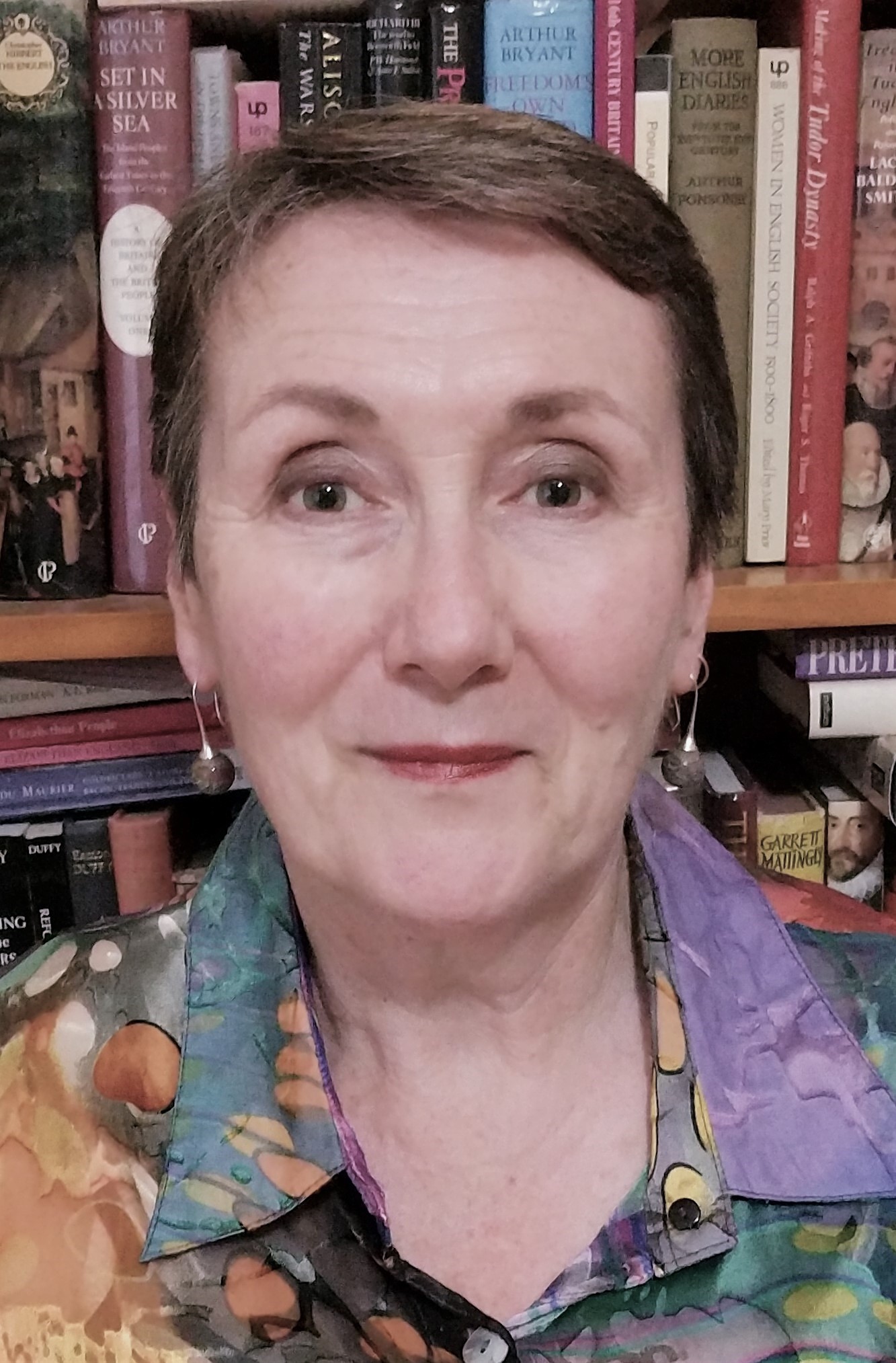 Author Bio:
 Margery Kempe, the only daughter of the mayor of Bishop’s Lynn, England has made a tough decision in 1413. She has decided to leave her home, her husband, and her fourteen children to go on a pilgrimage to the holy city of Jerusalem as a way to honor her late father’s dying wishes. As she begins her journey, she meets the famous anchoress Julian of Norwich, who entrusts Margery with an important mission. She gives Margery her book Revelations of Divine Love and tells her to spread her message throughout the world in secret. Margery’s pilgrimage, her connection to Julian of Norwich, and the aftermath of her journey are intricately woven together in Mary Sharratt’s stunning novel, “Revelations”.
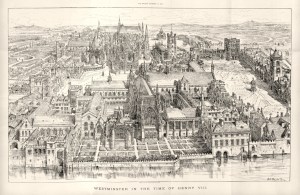
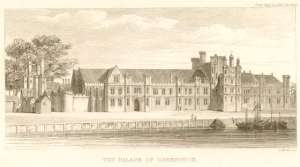
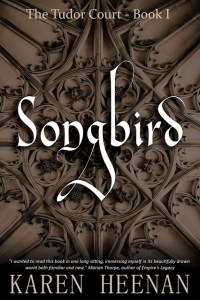
 I am pleased to welcome Karen Heenan to my blog today to discuss life at the Tudor Court. This is part of the book tour to promote Karen Heenan’s book, “Songbird (The Tudor Court, book 1). Thank you The Coffee Pot Book Club and Karen Heenan for allowing me to participate in this tour.
  “Bess!”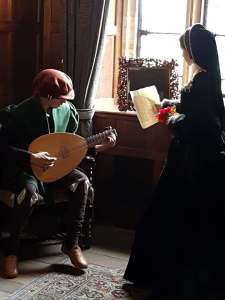
 Blurb
Blurb Author Bio
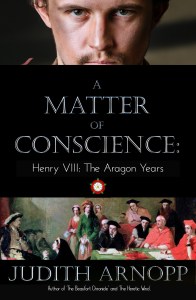
 I am pleased to welcome Judith Arnopp to my blog today to share an excerpt from her latest novel, “A Matter of Conscience: Henry VIII, The Aragon Years”. Thank you, The Coffee Pot Book Club and Judith Arnopp for allowing me to host a spot on this blog tour.
  Blurb
Blurb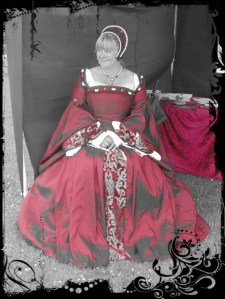 Author Bio:
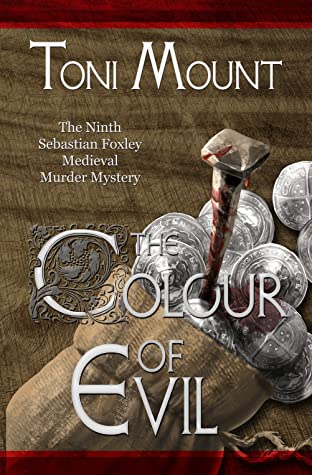 Money problems litter the streets of London like debris. Those who have money have power. Yet, there are those who try to beat the system by making their own counterfeit currency to beat the system. When this counterfeit currency leaves to murder, only Seb Foxley and his merry band of friends and family members can bring justice to those who were killed. When unexpected complications arise, like Seb’s wayward brother Jude coming home with an Italian child bride and a commission from King Edward IV himself, can Seb solve the case before anyone else becomes the next victim in this vicious cycle of greed and exploitation? Toni Mount takes her readers on another thrilling adventure in, “The Colour of Evil”, the ninth installment of the Sebastian Foxley Medieval Murder Mystery series.
 The year 1483 proved to be a pinnacle point of change for the short-lived Yorkist dynasty. After finally defeating the Lancastrian army, King Edward IV and his family bring peace and order to England, but even their happiness cannot last as King Edward IV dies unexpectedly on April 9, 1483. A power struggle ensues between Richard Duke of Gloucester and Elizabeth Woodville over who should be King of England. Most of Elizabeth Woodville’s children side with her, but there is one child who is staunchly loyal to the Yorkist cause and her uncle Richard; Cecily of York. In her latest novel, “Princess of Thorns”, Saga Hillbom tells the heartbreaking tale of Cecily of York showing how deep her loyalty to her family was and how loyalty came with a cost.
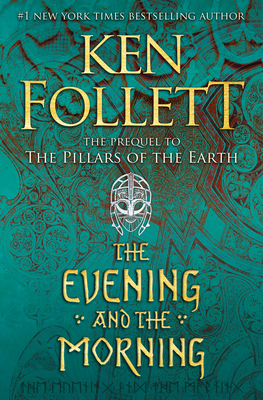 The year is 997 and England is in a dire situation. Fears of invasions from the Welsh and the Vikings leave the Anglo- Saxon residents rattled while those in power take advantage of their citizens. Chaos reigns supreme as those who rule the towns are in constant power struggles between themselves and their king, Ethelred the Unready, with the average villagers caught in the middle, like the villagers of Dreng’s Ferry. It is in this small village where three characters find their lives intertwined with the political and social drama. A young boatbuilder named Edgar endures heartache and sorrow when the Vikings attack his home. A Norman noblewoman named Ragna follows her heart to marry the man she loves and travels to a faraway land but soon finds out how difficult that love can be. Finally, a monk named Aldred works hard for the people while dreaming of transforming his meek abbey into a lively center of learning. Their tales are masterfully woven together in the much-anticipated prequel to the Kingsbridge series by Ken Follett. This is “The Evening and the Morning”.
  The year is 1540 and King Henry VIII has grown tired of his fourth wife from Germany, Anne of Cleves. The aging king longs for another heir to make sure that his dynasty is secure, which means he is searching for his fifth wife. Henry’s wandering eye lands on a young girl who happens to be a cousin of his second wife of Anne Boleyn. The young woman’s name who caught the king’s attention is Katheryn Howard. Henry believes that his new bride is virtuous as well as being very beautiful, but what secrets does this young queen hide? In her latest installment of the Six Tudor Queens series “Katheryn Howard: The Scandalous Queen”, Alison Weir takes a look into the life of this young woman and the men who loved her.
 Adventures of a Tudor Nerd