
 The Tudor dynasty was full of colorful characters and events that defined the era. Their lives were full of love affairs, marriages, births, wars, tragedies, and triumphs. In numerous books about these monarchs and this period in history, we have seen the significant events that defined the era, but what about lesser-known social events that these monarchs participated in. The bulk of the research into this dynasty focuses on those who ruled, from Henry VII to Elizabeth I, because their lives give us a brilliant insight into what it was like to live in the glittery Tudor court. In “The Tudor Socialite: A Social Calendar of Tudor Life,” Jan-Marie Knights gives her readers a glimpse into the social calendar of the Tudor rich and famous.
I want to thank Amberley Publishing for sending me a copy of this book. When I saw the title of this book, I was intrigued. I was hoping for a book that would include different religious holidays and festivals that the Tudors would have known.
Knights starts her book by giving her readers a brief history lesson from Richard II to Edward IV and the Wars of the Roses in five pages; talk about a whirlwind of an introduction. Readers then see how Knights will format her book by looking at each Tudor monarch with a broad lens and then taking a diary-style approach to their reigns to explain the significant events of their rules. I enjoyed how Knights included more minor pageants and visits that each monarch took part in and cases that average Tudor fans do not hear about as much.
I did have a few issues when I was reading this particular title. I wouldn’t say I liked that the entries for each event were written in the present tense; I know it was supposed to be a diary of the monarch, but as a nonfiction book about a historical period, it threw me for a loop. I also wish we saw more of the liturgical calendar and how it corresponded with the other events during each monarch’s reign, especially during the reformation when the Tudors wrestled between Catholicism and Protestantism. Finally, I do wish Knights would have included either footnotes or endnotes, especially with lesser-known events, so that readers could explore the social events themselves.
Knights has done her research, but I think it needed to be refined and maybe told in a different style to better connect with her audience. Overall, as an overview of the reigns of the Tudor monarchs and the critical events that defined their lives, this book does a decent job for those new to the Tudor dynasty. If you know your Tudor history, this might not be the book for you, but you may learn about a pageant or a strange case. If you are a novice Tudor fan, you might enjoy reading “The Tudor Socialite: A Social Calendar of Tudor Life” by Jan-Marie Knights.
 When we study the past, the stories of queens often begin when they marry their prince or the king. We don’t see their formative years unless they are extraordinary. One of the more extraordinary queens in English history was Anne Boleyn, a woman who was able to capture the heart of King Henry VIII, divide her nation, and gave birth to the legendary Queen Elizabeth I. We all know how the story of Anne Boleyn ends, but how did she become the woman who would one day be Queen of England? Hever Castle currently has an exhibition about Anne Boleyn’s formative years. This corresponding book, “Becoming Anne: Connections, Culture, Court” by Owen Emmerson and Kate McCaffrey, gives readers an in-depth look into her early years.
 Blanche Wainfleet, a merchant’s wife living in England in 1590, has a reputation for finding items that others have deemed lost. Blanche has a gift for finding mementos important to others, from lost handkerchiefs to pets. However, there is one thing that she is searching for that will prove her greatest challenge yet, finding the truth about her sister’s murder. Blanche’s sister Alison fell in love with a Catholic man and converted to the Catholic faith when there was a war between Catholicism and Protestantism. To uncover the truth, Blanche must infiltrate the Otley family who took Alison in during her final days, but will she discover the truth and come out of the ordeal alive? This is the premise of Kathy Lynn Emerson’s latest novel, “The Finder of Lost Things.”
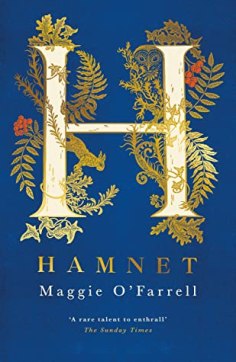 The Black Death has ravished England and Europe for centuries. Although the plague in the 16th century was not as devastating as in previous centuries, it still was a horrific disease that killed thousands. For example, in Warwickshire, England, a family understood how unforgiving death could be and how it can tear down even the strongest of familial bonds. The family of the playwright William Shakespeare must navigate the sudden loss of their beloved son while they keep their family together. “Hamnet” by Maggie O’Farrell is the story of the death of one child and how his death affected so many people.
 Today, I am pleased to welcome Sylvia Barbara Soberton back to discuss another forgotten Tudor woman, Gertrude Courtenay, who is the subject of her latest book, “The Forgotten Tudor Women: Gertrude Courtenay. Wife and Mother of the last Plantagenets”.
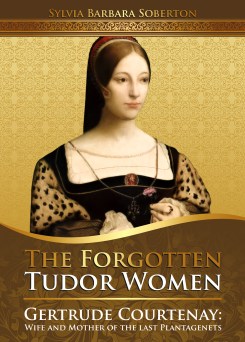 About the Book
 Today, I am pleased to welcome Clare Marchant to my blog to discuss her latest novel, “The Queen’s Spy,” and her use of dual timelines. I would like to thank The Coffee Pot Book Club and Clare Marchant for stopping by on this tour.
  (Blurb)
 Author Bio:
 The year is 1558, and Queen Mary I is dying. England is engaged in a war between the Reformation and Catholicism. Caught in the middle is an older man named Robin Lewis, who is being taken to London to face his death as a heretic. Fearful that his story may never be told, Robin Lewis tells his captor his tale through the reigns of three Tudor rulers, Henry VIII, Edward VI, and Mary I. Can his story save his life from certain destruction, or is Robin doomed for all eternity? This is the premise of Karen Heenan’s second book in The Tudor Court series, “A Wider World.”
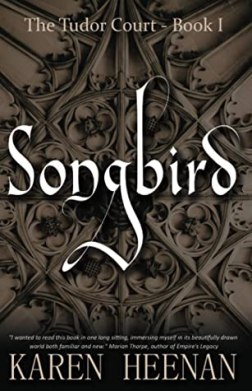 We all know about the man who would become King Henry VIII. We know about his love life and his ever-changing views on religious reform, yet a side of the infamous king rarely explored; his love of music. Henry’s court in literature is often viewed through the lenses of those who held power in government and the lady’s maids, but what if it was considered from a different perspective? What if it was viewed from the perspective of one of the performers of King Henry VIII’s court? What might their experiences have been like singing their hearts out for the rich and glamorous? Karen Heenan tries to give her readers a better look into the world of Music with Bess, the titular character of her first novel in The Tudor Court series, “Songbird.”
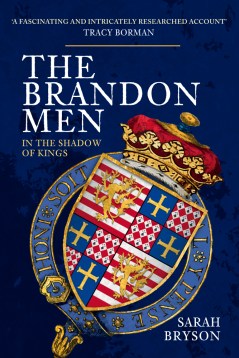 Loyalty to one’s king was imperative during times of war and strife. This statement was painfully true during periods of civil war when cousins fought against cousins. The Wars of the Roses was where we see families rise and fall like the tides, depending on which side they were loyal to and who was on the throne. One family who was able to navigate this political quagmire and end up on the side that would win in the end was the Brandons. Many recognize the name Brandon because of Charles Brandon and his rise in the court of Henry VIII, but how did they reach that point? What are the origins of the Brandon family? In her latest book, “The Brandon Men: In the Shadow of Kings”, Sarah Bryson takes her readers on a ride to find out what loyalty to the crown gave this family and why their legacy lives on today.
 Two cousins fighting for the right to rule England during the 16th century. One was the daughter of Henry VIII and Anne Boleyn who fought tooth and nail to rule without a man by her side. The other was the daughter of Mary of Guise and King James V of Scotland whose marriage record would prove to be fatal. Elizabeth I and Mary, Queen of Scots, may have been sister queens, but the way they were treated in their own countries differed completely. While Elizabeth I was praised and protected from harm in England, Mary was a scapegoat for so many in Scotland. The way that Mary was used as a pawn even though she wore a crown was nothing short of extraordinary. The story of how these two queens came on a collision course that would leave one queen beheaded and the other forever changed has been told in many different ways from both sides of the tale, but it has rarely been told as a cohesive nonfiction book. That is until Kate Williams’ marvelous biography, “The Betrayal of Mary, Queen of Scots: Elizabeth I and Her Greatest Rival”.
 Adventures of a Tudor Nerd